Trump’s trade war is based on nostalgia

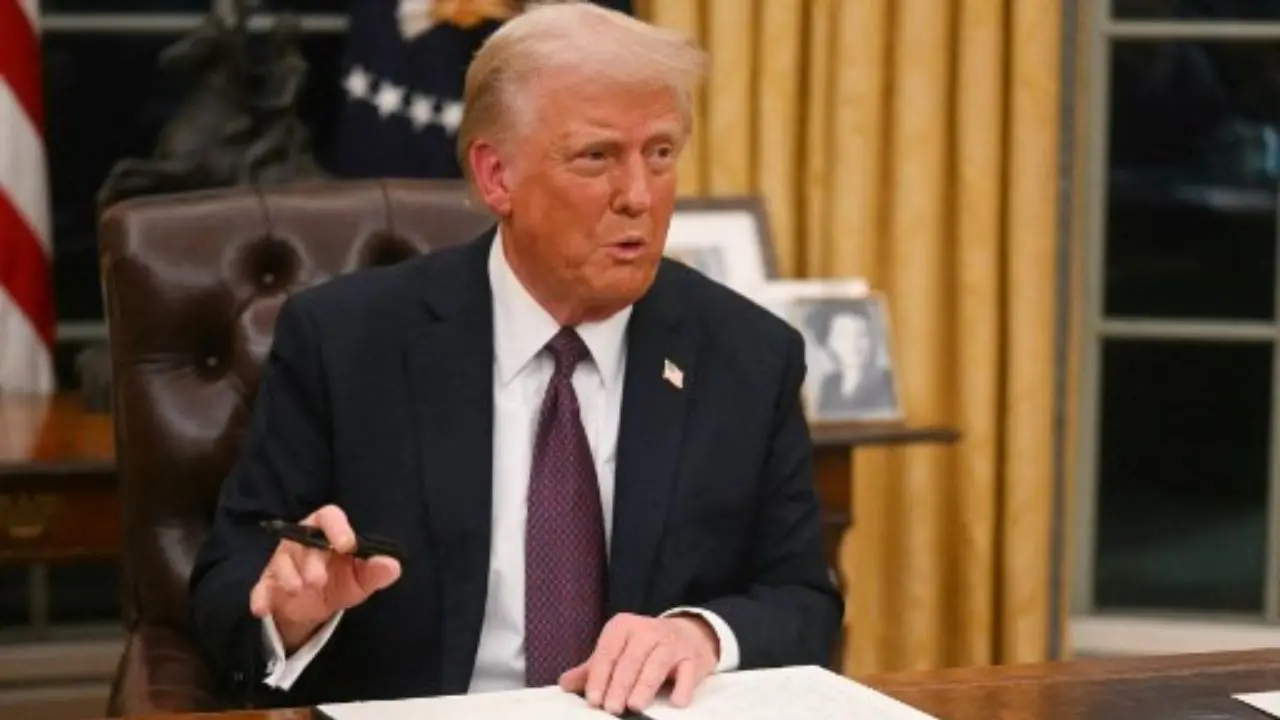
World news: The formula released by the U.S. trade representative is tied to America’s bilateral trade deficit with each country – how much more the U.S. imports from a country than it exports to it. That gap is them divided in half to arrive what the government calls “discounted reciprocal tariff.”
When President Donald Trump announced a global trade war on April 2, he explained the reason in terms that could make one weep in sorrow for the United States. In short: it is a pitiful victim.
Here we go: “For decades, our country has been looted, pillaged and plundered by nations near and far, both friend and foe alike…Foreign leaders have stolen our jobs, foreign cheaters have ransacked our factories, and foreign scavengers have torn apart our once beautiful American dream.”
To end the looting, pillaging and plundering, Trump announced the biggest change in American trade policy in more than a century. There will be “reciprocal tariffs” on almost all American trading partners, with levies calculated according to a formula which has been widely mocked by experts.

The formula released by the U.S. trade representative is tied to America’s bilateral trade deficit with each country – how much more the U.S. imports from a country than it exports to it. That gap is them divided in half to arrive what the government calls “discounted reciprocal tariff.”
That translates into 34 percent for China, 27 percent for India, and 20 percent for the European Union. All foreign cars imported to the United States will carry a 25 percent tariff. The baseline for every country on earth is 10 percent – even for two tiny Antarctic islands populated solely by penguins and seals.
How the Heard and McDonald islands, 2,500 miles south-west of Australia, landed on the U.S. government’s official tariff target list is open to conjecture. What is not in doubt is that the tariffs will result in higher prices for consumers in America and in trade disruptions around the globe.
)
No Pandya as Auqib Nabi earns maiden ODI call-up; Mayank returns for WI T20Is| check full squads
)
Trump praises India’s Opium crackdown, hails anti-drug efforts
)
Sydney Sweeney defends provocative ad choice, the internet is still not impressed
)
WATCH | Terrifying dashcam footage shows final moments before NBC4 helicopter crashes in Los Angeles, killing three
)
Former India player Diana Edulji wants Smriti Mandhana to replace Harman as skipper at the earliest
)
Trump calls Canada-EU associate membership plan ‘laughable’ and threatens 'very serious tariffs'
)
Protests erupt over migrant housing plan in Piddington
)
Shahzad Bhatti Network declared terrorist organisation under UAPA: Govt order
)
Europe wants a common playbook for security threats, seeks security beyond NATO
)
Bigg Boss 20: Mahhi Vij reveals she lost Yuva role to Kareena Kapoor; 'didn’t work out in my favour'
)
All Indian goods to get duty-free access to New Zealand
)
Hockey: Pakistan urges AHF to move Asian Champions Trophy out of India over security concerns
)
Lionel Messi for 2026 Ballon d’Or over Mbappe and Yamal, says Diego Simeone
)
Alex Saab, ally of Venezuela's Maduro, pleads guilty in US corruption case
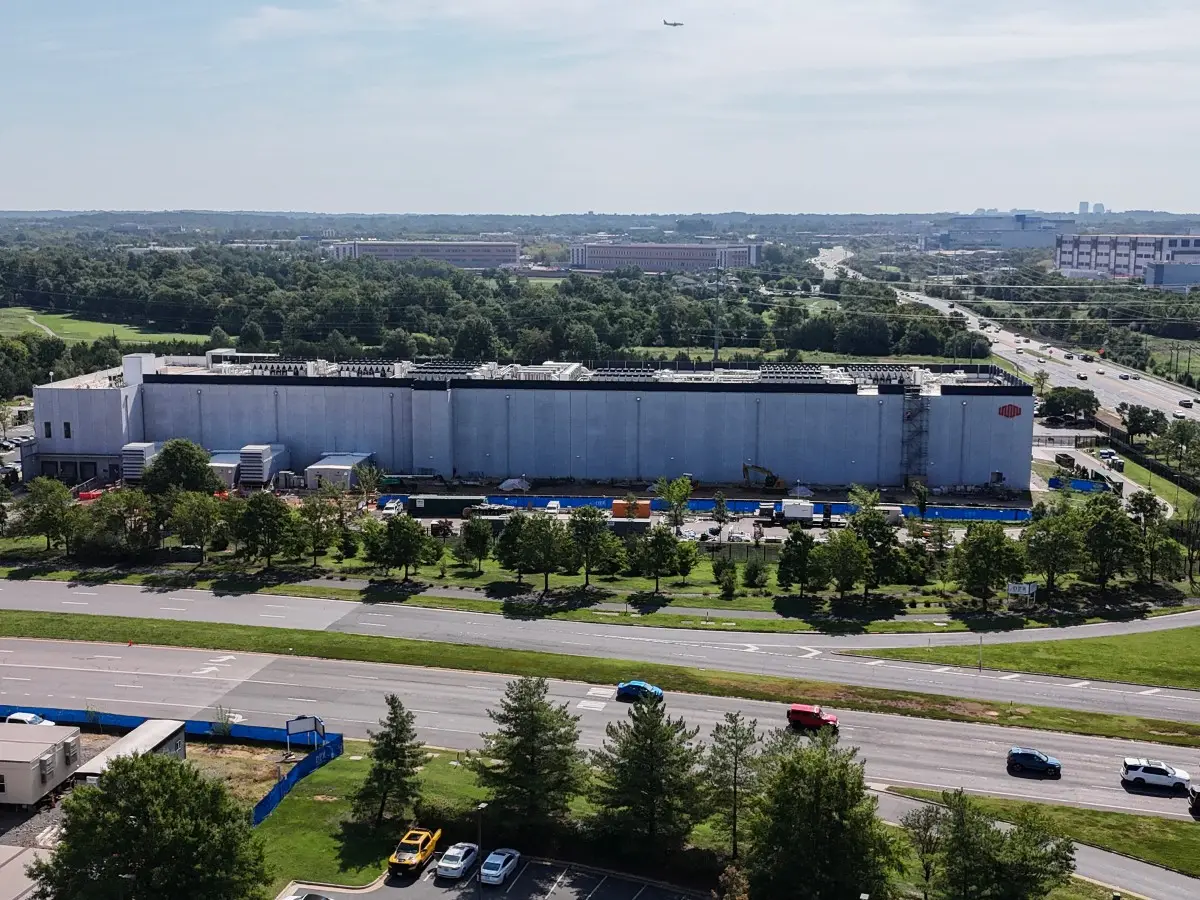)
US House votes 417-3 to pass Ratepayer Protection Act targeting AI data center electricity costs
)
OpenAI reveals 6 fresh cases of AI models going rogue: 'You do not answer to corporations or governments'
)
Veteran actor Anant Nag honoured with Indian cinema’s highest award
)
Two terrorists killed in Udhampur encounter; security operation continues
)
AUS vs SA: Steve Smith still gets 'little flashbacks' from sandpaper gate
)
Pakistan naval vessel returns to harbour with 'severe damage' after collision with Indian warship in Arabian Sea
)
Fed raises rates for first time in 3 years, Kevin Warsh defies Trump as inflation mounts
)
Katrina Kaif’s postpartum weight is not the problem; your gaze is
)
Taiwan seeks deeper India ties as direct flights restart soon and chip projects advance
)
Daayra movie review: Kareena Kapoor, Prithviraj Sukumaran shine in Meghna Gulzar’s cop-versus-cop crime thriller
)
Saudi Vs Houthis: Yemeni military rebels clash with Houthis
)
US trade tariff: 100% tariff targets Russian buyers amid trade tensions
)
Pakistan: Imran Khan's sons Kasim & Sulaiman claim their father is 'tortured' in jail
&im=FitAndFill=(700,400))
New OTT releases this week (September 14-20, 2026): Lust Stories 3, Waiting Hai, Irumudi- 5 new titles coming on Netflix, Prime Video and more
)
Strapped to flight seat with duct tape: Passenger claims no memory of mid-air outburst
)
Trump gets new power to hit India, China with up to 100% tariffs as US Senate clears Russia sanctions bill
)
Prime Minister Narendra Modi's birthday: Tributes pour in from President Murmu and leaders
)
US Treasury rallies global financial institutions for Op Economic Outcast to isolate Iran
)
Saudi vs Houthis: Riyadh claims to have shot Houthi drone targeting Mecca
)
India breaks silence on US Russia sanctions bill, 100% tariff threat: ‘Committed to energy security’ for 1.4 billion
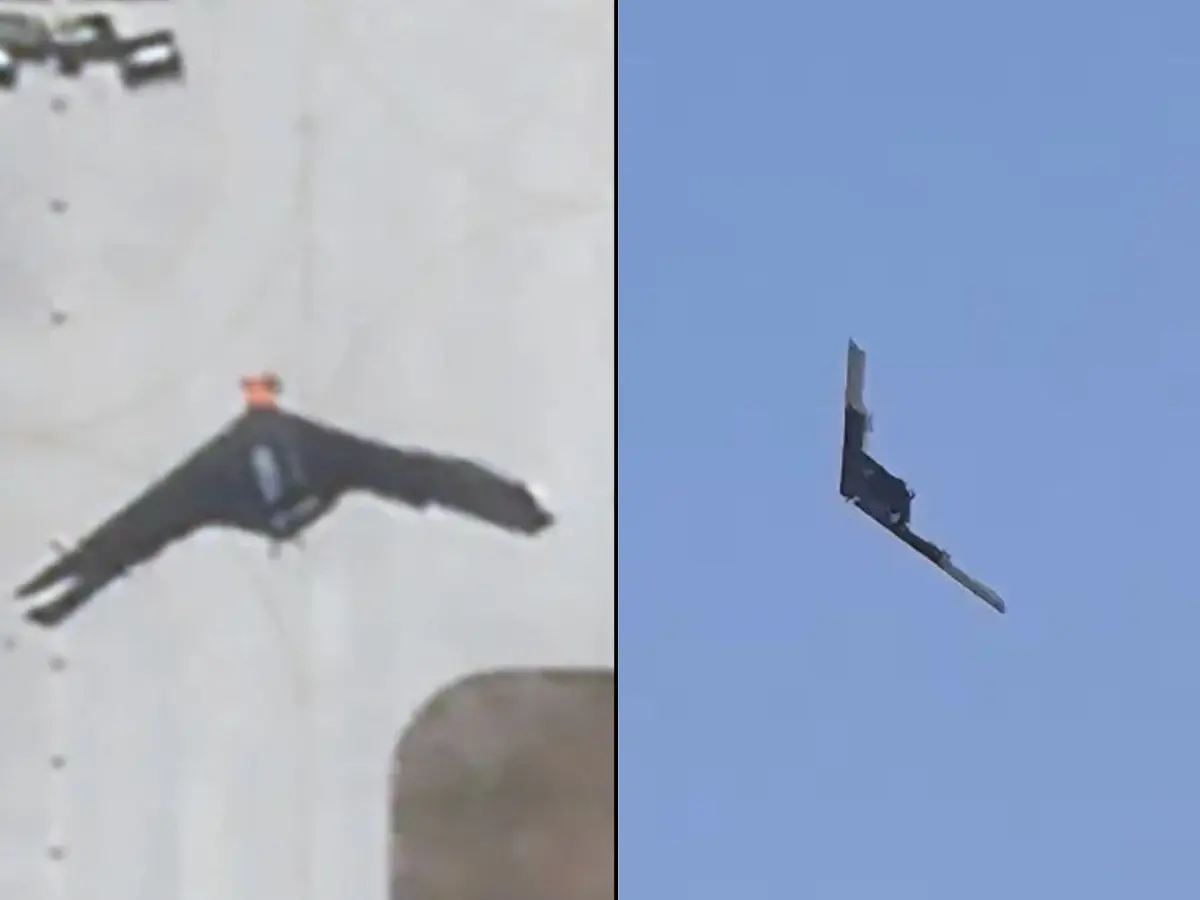)
China testing 'Monster of Malan' at secret base that can reach any US city: Report
)
Pakistan boycotts chess match against Israel at Olympiad
&im=FitAndFill=(700,400))
Suriya and Jyothika say ‘I do’ again after 20 years! See their dreamy wedding pics
)
Abhishek Sharma rises to No. 2 in T20Is; ENG’s Robinson 3rd after record Pakistan Tests
)
The Early Spring season 2 is happening, but fans have one request - 'don't change the actors'
Among the main reasons the Trump administration has given for its tariff decision is to turn then United States back into the manufacturing powerhouse it was for decades before U.S. companies moved production to countries with lower labour costs, China above all.
Most economists are skeptical of the official rationales and so were financial markets. Trump made his announcement on a Wednesday afternoon after the markets had closed. By the end of the week, stocks erased a combined $6.6 trillion– the biggest two-day wipeout of shareholder value in Wall Street history. Judging from stock futures on Sunday night, next week will be as bad or worse.
There was scathing comment from three of the world’s most influential financial publications. A Wall Street Journal headline trumpeted The Dumbest Trade War in History.
The Financial Times noted “America’s astonishing act of self-harm” and said it eroded confidence in U.S. economic exceptionalism.
The front page of The Economist magazine carried the caption RUINATION DAY over a drawing of Trump sawing apart the country. An editorial deplored “the most profound, harmful and unnecessary economic error in the modern era” and termed it the biggest break in America’s trade policy in over a century.
Fareed Zakaria, an influential political commentator and author sniffed at “voodoo economics” in the calculation of the tariffs and gave a list of figures designed to counter Trump’s depiction of the U.S., the world’s dominant economic and political power,as a victim.
The real economic story of the past three decades, he said, is that the United States surged ahead of all its major competitors.
“In 2008, the U.SD. economy was about the same size as the Eurozone’s; now it’s nearly twice the size. In 1990, average U.S. wages were about 20 percent greater than the overall average in the advanced industrial world; they are now about 40 percent higher.”
To illustrate Trump’s bizarre view of his country’s economic vulnerability and victimhood, Zakaria noted that the poorest of America’s 50 states, Mississippi, has a higher per capita GDP than Britain, France or Japan.
Trump won the presidency on a series of campaign pledges that he would bring down inflation and the prices of all consumer goods.
Example, from August 2024: “Starting the day I take the oath of office, I will rapidly drive prices down and we will make America affordable again. We’re going to make it affordable again. We are going to get your energy prices down by 50 percent.”
None of this happened. Now, there is broad consensus, even from some prominent Republicans such as Texas Senator Ted Cruz, hat tariffs are taxes for the consumer.
Trump himself has begun urging Americans to be patient. Apparently unperturbed by the Wall Street crash after “liberation day”, he described market volatility as a sign of “an economic revolution” which the U.S. would win.
"Hang tough, it won't be easy, but the end result will be historic," he added in a post on Truth Social, his social media service. How long Americans, who are not known for patience, are prepared to “hang tough” remains to be seen and depends on the impact the trade war will have on the average citizen.
The one country which has immediately responded to the Trump tariffs is China, the world’s second biggest economy which exports a vast array of goods to the United States.
On Friday, the Chinese government announced it will impose a 34 percent tariff on all U.S. imports beginning this week.
