

&imwidth=800&imheight=600&format=webp&quality=medium "China is involved in Mexico drug trade for over a century: From opium to precursor chemicals to money laundering and cartel weapons")
The killing of Mexican drug kingpin El Mencho — real name Nemesio Oseguera Cervantes — has brought sharp focus to how his cartel, the CJNG, depended on China and Chinese operators to build its fentanyl empire. While Chinese-sourced precursors have supported most Mexican cartels involved in synthetic drugs such as fentanyl and methamphetamine, the history of Chinese involvement in Mexico’s drug trade goes back to the 20th-century opium economy.
Here are the ways in which China and Chinese operators helped Mexican drug cartels:
Opium dens: Chinese involvement in Mexico’s drug trade began a century ago
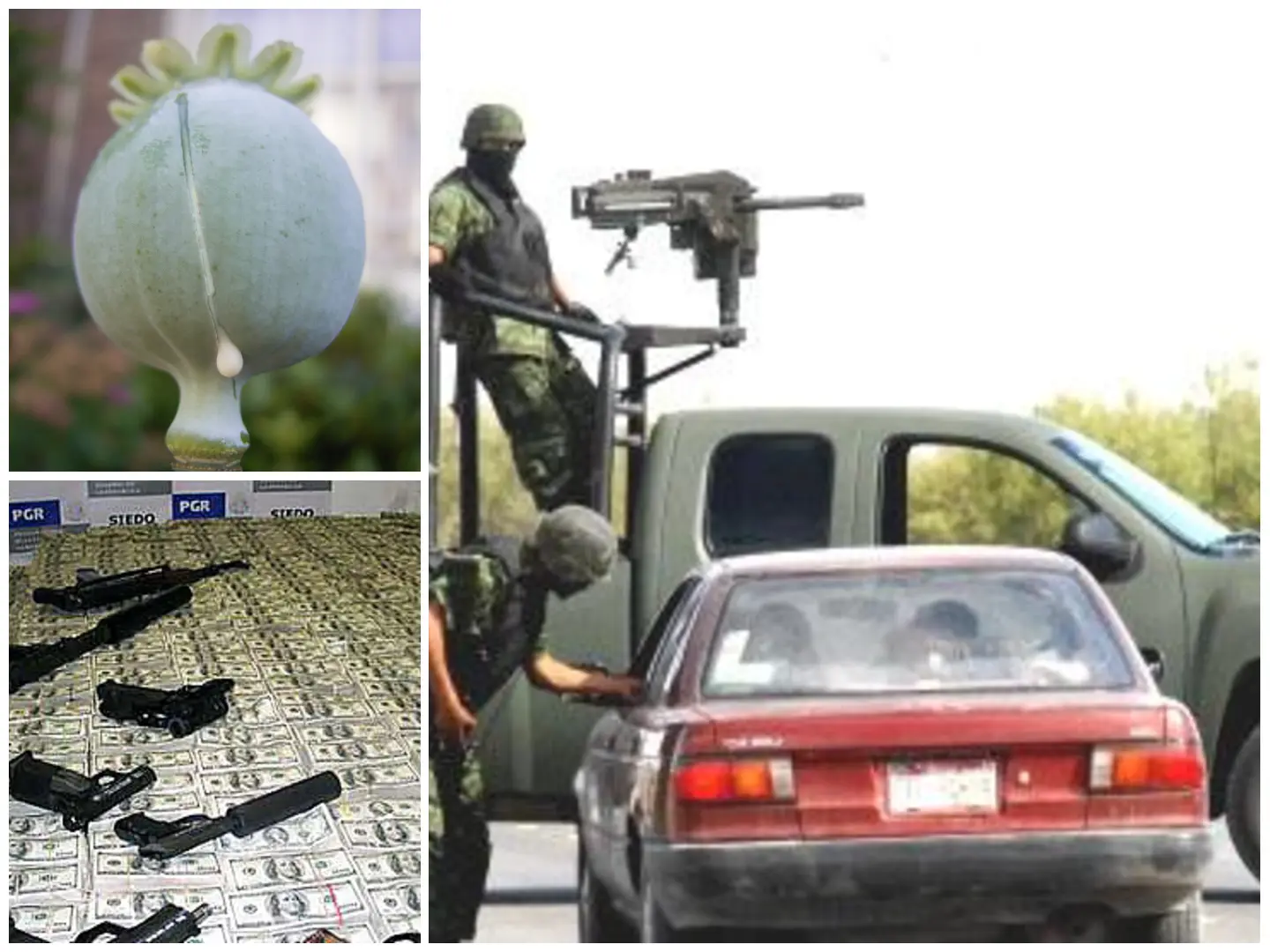
In the early 20th century, opium dens were introduced in Mexico, mainly catering to Chinese immigrant labourers. Initially, Chinese merchants and farmers grew poppies and processed opium for smoking dens, primarily serving local Chinese communities in Mexico’s Sonora and Baja California.
Gradually, the opium poppy was incorporated into Mexico’s agricultural landscape. By the mid-century, Mexican farmers and cartels dominated poppy cultivation, though Chinese networks had helped establish the crop’s illicit integration into north-west Mexico’s agricultural system.
This marked Mexico’s first tryst with the drug trade and paved the way for the country’s opium economy, which later expanded into heroin production for the American market.
Trending Stories
&imwidth=180&imheight=135&format=webp&quality=medium)
US troop deaths in Iran war on rise? Pentagon reveals latest toll
&imwidth=180&imheight=135&format=webp&quality=medium)
Lula campaign accuses Meta of election interference after social media content blocked
&imwidth=180&imheight=135&format=webp&quality=medium)
PM Modi inaugurates Rs 4,900 crore Chennai Metro Phase II stretch, takes ride with CM Vijay: VIDEO
&im=FitAndFill=(700,400)&imwidth=180&imheight=135&format=webp&quality=medium)
Navratri 2026: 9 days, 9 forms of Goddess Durga and 9 colours- Check the complete list
&imwidth=180&imheight=135&format=webp&quality=medium)
100,000 strikes in 3 years: How October 7 redefined Israel's war
&imwidth=180&imheight=135&format=webp&quality=medium)
‘Your people don’t even let us near it’: IAF chief’s blunt response on US F-35; India yet to decide on Russia’s Su-57
&imwidth=180&imheight=135&format=webp&quality=medium)
Trump claims ‘energy ceasefire’ between Russia and Ukraine; Zelensky says ‘news for me’
&imwidth=180&imheight=135&format=webp&quality=medium)
Saudi Arabia's King Khalid International Airport attack kills 12, injures 309; India calls it 'unacceptable'
&imwidth=180&imheight=135&format=webp&quality=medium)
HYBE’s Weverse Con India sets ticket sale date for March 2027 festival
&imwidth=180&imheight=135&format=webp&quality=medium)
Amitabh Bachchan celebrates birthday with fans at Jalsa during Sunday darshan | Watch
&imwidth=180&imheight=135&format=webp&quality=medium)
Messi scores twice in Inter Miami return following final match for Argentina
&imwidth=180&imheight=135&format=webp&quality=medium)
'Unwarranted interference': India slams UN human rights office over remarks on Delhi protests
&imwidth=180&imheight=135&format=webp&quality=medium)
'Jantar Mantar not the story of India': BJP's Sambit Patra claims 'anarchists' tried to hold Delhi captive
&im=FitAndFill=(700,400)&imwidth=180&imheight=135&format=webp&quality=medium)
Meet top 5 right-hand batters with most international runs
&imwidth=180&imheight=135&format=webp&quality=medium)
3rd T20I Preview: Another run-fest on cards as India face West Indies in Indore
&imwidth=180&imheight=135&format=webp&quality=medium)
Nicolas Cage refuses AI waiver for Spider-Noir, hints at Amazon exit and True Detective role
&imwidth=180&imheight=135&format=webp&quality=medium)
At least 109 migrants, including 15 children dead as boat sinks off Djibouti, 116 go missing
&imwidth=180&imheight=135&format=webp&quality=medium)
Riyadh airport hit in missile attack, dozens injured; 5 in intensive care
&imwidth=180&imheight=135&format=webp&quality=medium)
Powerful 7.7 magnitude earthquake strikes Panama, tsunami warning issued
&imwidth=180&imheight=135&format=webp&quality=medium)
US mid-term elections: What are PACs - Unique American System that lets corporates shape voting
&imwidth=180&imheight=135&format=webp&quality=medium)
Imran Khan released hours after Mumbai Police detain him during CJP protest
&imwidth=180&imheight=135&format=webp&quality=medium)
Nathan Lyon completes 1,000 Test runs at No. 10 to script rare cricket feat
&imwidth=180&imheight=135&format=webp&quality=medium)
CJP leaders claim their phones may be ‘hacked or cloned’ after 24-hour detention
&imwidth=180&imheight=135&format=webp&quality=medium)
Nepal flash floods swallow homes and bridges a month after devastating disaster
&imwidth=180&imheight=135&format=webp&quality=medium)
Sehwag sees reflection of himself in Sooryavanshi: ‘His thinking is similar to mine’
&imwidth=180&imheight=135&format=webp&quality=medium)
'Ouch!!! That must hurt': Kangana Ranaut hails Kamal Haasan's sharp reply to Elon Musk over Starlink row
&imwidth=180&imheight=135&format=webp&quality=medium)
Sidhu Moose Wala’s younger brother wins hearts by recreating late singer’s signature move at Toronto Hologram Show
&imwidth=180&imheight=135&format=webp&quality=medium)
Barry Manilow cuts short Las Vegas comeback show, cancels next concert over Bronchitis
&imwidth=180&imheight=135&format=webp&quality=medium)
UK school ditches technology, shifts from screen to pen and paper for learning
&imwidth=180&imheight=135&format=webp&quality=medium)
IND vs WI, 3rd T20I: Abhishek Sharma smashes 18-ball fifty, sets record for fastest to 2,000 T20I runs
&imwidth=180&imheight=135&format=webp&quality=medium)
Hamas used double agents, deceived Israel to carry out October 7 massacre
&imwidth=180&imheight=135&format=webp&quality=medium)
Bigg Boss 20: Who is Manish Goel? Meet the new wild card contestant on Salman Khan’s show
&imwidth=180&imheight=135&format=webp&quality=medium)
Portugal Federation confirms Cristiano Ronaldo’s return to national team despite suspension
&imwidth=180&imheight=135&format=webp&quality=medium)
Ganesh Dust To Stardust trailer: Ganesh Acharya directs a tale of dreams and sacrifice | Watch
&imwidth=180&imheight=135&format=webp&quality=medium)
BTS’ RM raises privacy concerns over drones, lasers outside hotel amid Lima concert, urges fan respect
&imwidth=180&imheight=135&format=webp&quality=medium)
The street cannot govern India, but the government cannot ignore it either
&imwidth=180&imheight=135&format=webp&quality=medium)
Thai queen becomes first reigning monarch to fly jet solothailand #queen #wion
&im=FitAndFill=(700,400)&imwidth=180&imheight=135&format=webp&quality=medium)
Food shortages, suicide attempts and more: USS Abraham Lincoln returns to US after 321 day deployment — What happened aboard the US carrier?
&imwidth=180&imheight=135&format=webp&quality=medium)
Rahul Gandhi calls Modi, Shah ‘cowards’ amid CJP protest crackdown in Delhi
&imwidth=180&imheight=135&format=webp&quality=medium)
Nana Patekar's cause of death confirmed; here's what his postmortem report says
&imwidth=180&imheight=135&format=webp&quality=medium)
Delhi Police arrest 4 men seen in viral video allegedly assaulting women protesters during CJP protest
&imwidth=180&imheight=135&format=webp&quality=medium)
Where are Abhijeet Dipke, Ashutosh Ranka, Saurav Das? CJP gives big update after flight detention
&im=FitAndFill=(700,400)&imwidth=180&imheight=135&format=webp&quality=medium)
Amitabh Bachchan turns 84: A look at Big B’s iconic dialogues that continue to win hearts
Precursor chemicals: The second major phase of Chinese involvement in Mexico drug trade
Many Mexican cartels have now pivoted to synthetic drugs such as methamphetamine and fentanyl. China is the primary global source of precursor chemicals and related equipment fuelling Mexico’s synthetic drug boom.
Chinese state-subsidised chemical industries, operating with lax enforcement of dual-use regulations, facilitated access to these key materials.
Fentanyl precursors — including NPP, ANPP, 4-AP and propionic anhydride — are produced in Chinese chemical plants and shipped to Mexican cartels, often using mislabelling or dark-web sales. Clandestine laboratories in Mexico synthesise fentanyl and its analogues, producing drugs that are far cheaper and more potent than heroin.
Methamphetamine precursors, such as ephedrine or pseudoephedrine derivatives, follow similar routes, enabling large-scale meth production in Mexico.
Mexican cartels such as El Mencho's CJNG (Cartel Jalisco Nueva Generación) and the Sinaloa cartel receive these imports through ports including Manzanillo, via brokers and Chinese-Mexican trafficking organisations such as the so-called “Zheng cartel”, which act as intermediaries.
The introduction of these synthetics devastated much of the agrarian economy in poppy-growing regions like Sinaloa and Guerrero, as demand shifted from heroin to fentanyl.
Rise of Chinese ‘pre precursors’:' Another disturbing trend in Mexico drug trade
In 2019, the Chinese government scheduled fentanyl as a controlled substance. Since then, some suppliers shifted to producing and marketing “pre-precursor” chemicals and custom analogues.
These are designed to evade both Chinese and international controls. The pre-precursors and analogues are sold through encrypted platforms and business-to-business marketplaces.
Some Chinese chemical executives and brokers have been charged in the US with knowingly providing technical guidance on synthesis methods and evasion tactics to buyers linked to Mexican cartels.
China supplies machinery, technology for mass production of drugs in Mexico
China supplies much of the machinery used for mass drug production in Mexico, from pill pressers to assembly-line equipment. Pill presses and other industrial machines enable the large-scale production of fentanyl-laced tablets and counterfeit oxycodone.
Chinese operators run extensive money laundering mechanisms to fuel Mexico drug trade in US
Chinese underground banking systems and brokers, some of them based in the US, launder cartel money. One method involves purchasing goods in China for resale in Mexico, thereby generating clean cash for cartels.
Funds are then moved back to Mexico using a variety of techniques that involves burner phones, apps and human networks. The intermediaries take a cut to repatriate billions generated from US drug sales to the Mexican cartels. Cryptocurrency and digital payment systems are among the technologies used in this process.
Some of the sophisticated Chinese underground banking networks in the US collect bulk cartel cash directly from distributors and settle accounts through mirror transactions in China. Then they offset the payments through trade-based schemes. In the whole process, money does not change hands physically across borders. It is a faster and cheaper method than traditional laundering channels, reducing cartels’ reliance on intermediaries in Colombia or Mexico.
Chinese-origin weapons and military-grade technology
The CJNG and the Sinaloa cartel have reportedly used weapons and military-style technologies of Chinese origin, including drones and tactical gear. This equipment has increased their operational capacity and lethality, both in cartel turf wars and in confrontations with Mexican authorities.
China–Mexico cartel cooperation fuelled US opioid crisis
Chinese participation in trafficking organisations, including Chinese-Mexican networks, forms another aspect of this cooperation. These groups act as intermediaries in chemical procurement and assist in laundering proceeds.
In short, China has played a significant role in fuelling the US opioid crisis through the supply of precursor materials for fentanyl, as well as chemicals used in counterfeit and poor-quality narcotics. A relationship that began with opium dens a century ago has evolved into a complex synthetic-drug supply chain that continues today.

