

&imwidth=800&imheight=600&format=webp&quality=medium "Will Russia help Iran rebuild nuclear programme hit hard by B2 bombers and Israeli strikes? Moscow is deeply involved in…")
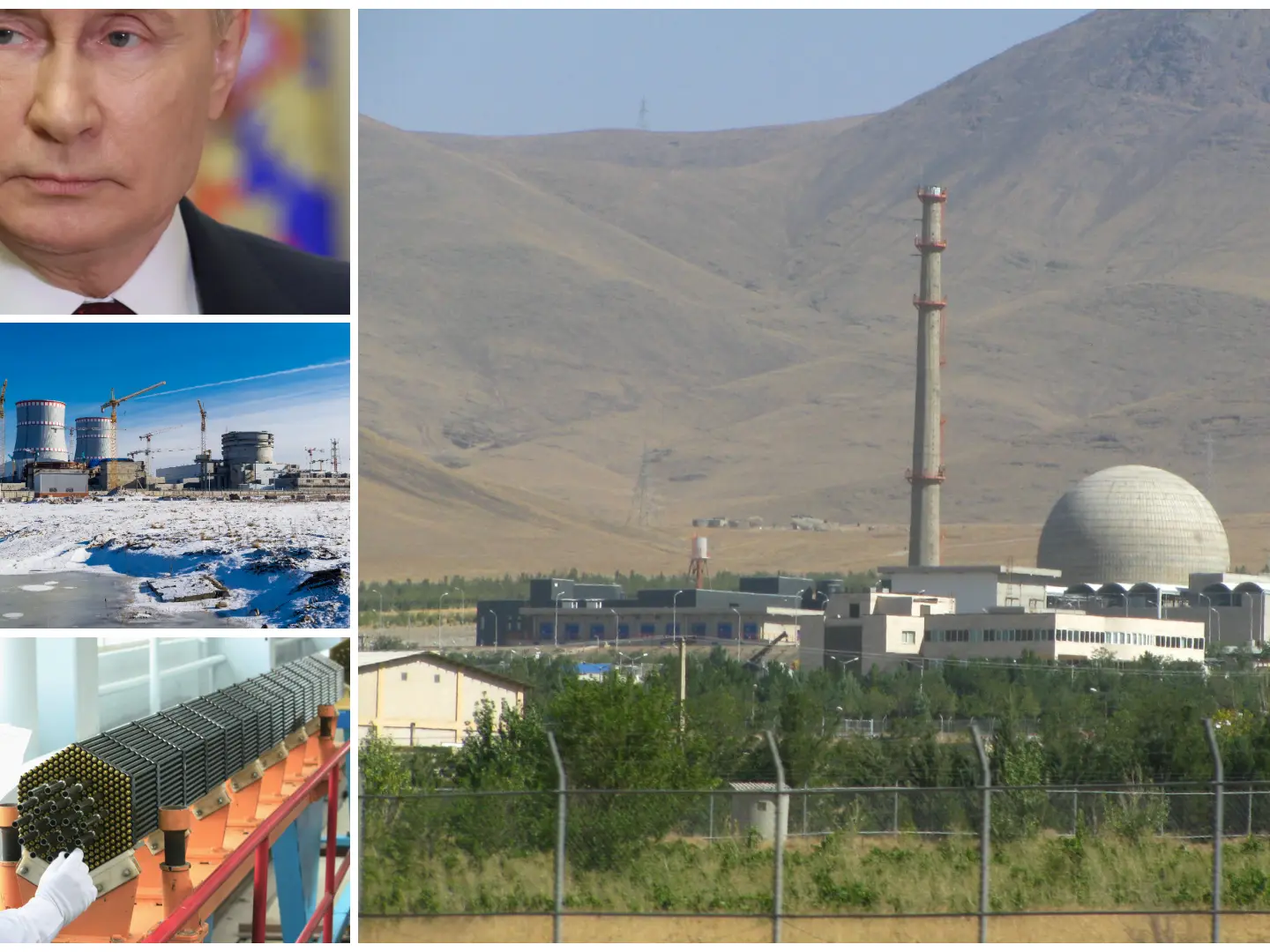
Iran-Israel war - Ceasefire and future of Iranian nuclear programme: Remarks made by former Russian president Dmitry Medvedev, hinting that other countries can help Iran get a nuclear weapon, have ruffled quite a few feathers, with even US President Donald Trump slamming him. While Medvedev later clarified his remarks that he didn't mean Russia will give Iran the bomb, the reality is that Moscow is deeply entrenched in the Iranian nuclear programme. The Russian nuclear export industry is in fact one of the biggest in the world, helping several countries in their peaceful nuclear programmes. While Russia may not directly help Iran with the nuclear bomb, one must not forget Russia's deep involvement in the Iranian nuclear programme through personnel, material and knowledge transfer. Here is what you should know about the Russian nuclear industry, and how it has been helping Iran.
Russian nuclear industry is a multi-billion-dollar enterprise
Led by state-run Rosatom, Russia is a top global player in the nuclear export industry. As of 2023, Rosatom made $11.8 billion in revenue. Nuclear material exports, reactor construction, fuel supply, and related services contributed to this. Globally, Russia controls nearly 38 per cent of uranium conversion and 46 per cent of uranium enrichment. This makes Russia a dominant supplier in the nuclear fuel cycle in the world.
Russian nuclear exports include a variety of services and materials: building nuclear power plants, supply of nuclear fuel, technical expertise and consulting. Russia has contracts with countries across continents.
Which countries' nuclear programmes has Russia helped?
Trending Stories
&im=FitAndFill=(700,400)&imwidth=180&imheight=135&format=webp&quality=medium)
What is the real meaning behind Pete Hegseth's tattoos?
&imwidth=180&imheight=135&format=webp&quality=medium)
Katie Zacharia likely to succeed Karoline Leavitt as Trump's White House press secretary
&imwidth=180&imheight=135&format=webp&quality=medium)
‘Never-ending flow of cheap labour’: JD Vance hits back at Indian-origin Congresswoman over US green card curbs for major tech companies
&imwidth=180&imheight=135&format=webp&quality=medium)
Trump's naked 23-karat gold statue unveiled near European Parliament
&imwidth=180&imheight=135&format=webp&quality=medium)
‘Ruh Roh’: Top US official mocks ‘Indian market collapse’ claim after Trump’s IT curbs. But did it? | FACT CHECK
&imwidth=180&imheight=135&format=webp&quality=medium)
Nigeria govt rolls out 30-day NNPC petrol discount, insists it is not a subsidy
&imwidth=180&imheight=135&format=webp&quality=medium)
JK Rowling announces two new 'Harry Potter' books
&im=FitAndFill=(700,400)&imwidth=180&imheight=135&format=webp&quality=medium)
Fastest-growing Asian economies in 2026: Who tops the chart? Where does India rank?
&imwidth=180&imheight=135&format=webp&quality=medium)
Houthis continue direct hits on Saudi targets, Türkiye and Pakistan missing in action | Gravitas
&imwidth=180&imheight=135&format=webp&quality=medium)
Prince Harry opens up about loss, depression, and recovery: 'I felt guilty being happy'
&imwidth=180&imheight=135&format=webp&quality=medium)
Jewar airport in Noida to be renamed Narendra Modi International Airport: CM Yogi
&imwidth=180&imheight=135&format=webp&quality=medium)
'Deeply offensive': India hits back at US Vice-President JD Vance for 'indentured labour' remark
&imwidth=180&imheight=135&format=webp&quality=medium)
Russia president Putin promises to 'do everything' to help settle Middle East conflict as US-Iran negotiations stall
&imwidth=180&imheight=135&format=webp&quality=medium)
Powerful 7.7 magnitude earthquake strikes Panama, tsunami warning issued
&imwidth=180&imheight=135&format=webp&quality=medium)
BTS agency HYBE announces first-ever Weverse Con Festival in India
&imwidth=180&imheight=135&format=webp&quality=medium)
South Africa High Commissioner Anil Sooklal speaks to WION, calls Pillay an inspiration
&imwidth=180&imheight=135&format=webp&quality=medium)
Trump has a new 'enemy': Anyone who calls it 'artificial intelligence'. Here's what we wants instead
&im=FitAndFill=(700,400)&imwidth=180&imheight=135&format=webp&quality=medium)
New Friday OTT releases (October 9, 2026): Reporting Live, Animals, Take Charge of My Heart- 6 new titles coming on Netflix, JioHotstar and more
&imwidth=180&imheight=135&format=webp&quality=medium)
BTS' RM urges Peru fans not to gather outside hotel: 'We can't sleep', It's becoming a nuisance'
&imwidth=180&imheight=135&format=webp&quality=medium)
Is Trump playing a double game with Iran?
&imwidth=180&imheight=135&format=webp&quality=medium)
Scientists find highly radioactive nuclear particles at Chernobyl 40 years after the disaster
&imwidth=180&imheight=135&format=webp&quality=medium)
Pakistan denies reports of PAF jets being used in attacks against Iran-backed Houthis in Yemen
&imwidth=180&imheight=135&format=webp&quality=medium)
New York ICE shooting sparks protests as Mamdani to call on Trump to halt ICE operations
&imwidth=180&imheight=135&format=webp&quality=medium)
IND vs WI: West Indies set record for highest successful run chase in T20Is against India
&im=FitAndFill=(700,400)&imwidth=180&imheight=135&format=webp&quality=medium)
Meet top 5 Indian batters fastest to 7000 runs in ODIs
&imwidth=180&imheight=135&format=webp&quality=medium)
Fact check | Is Sydney Sweeney considering conversion to Judaism?
&imwidth=180&imheight=135&format=webp&quality=medium)
French students light European bonfire, protests erupt in Belgium, Italy & Greece | Gravitas
&im=FitAndFill=(700,400)&imwidth=180&imheight=135&format=webp&quality=medium)
Food shortages, suicide attempts and more: USS Abraham Lincoln returns to US after 321 day deployment supporting war on Iran — The whole row explained
&imwidth=180&imheight=135&format=webp&quality=medium)
OpenAI shuts down Russian, Iranian influence operations using ChatGPT to spread propaganda
&imwidth=180&imheight=135&format=webp&quality=medium)
SC questions closure of 57 Delhi Metro stations, asks Centre to resume services in regulated manner
&im=FitAndFill=(700,400)&imwidth=180&imheight=135&format=webp&quality=medium)
435 House seats, 35 Senate races: The numbers behind US midterms 2026
&imwidth=180&imheight=135&format=webp&quality=medium)
Bangladesh named as Pakistan’s replacement for Asian Hockey Champions Trophy
&imwidth=180&imheight=135&format=webp&quality=medium)
‘We will end ICC’: US sanctions International court, threatens to cripple hours after Navi Pillay wins Nobel Peace Prize
&imwidth=180&imheight=135&format=webp&quality=medium)
US midterm elections 2026: What a blue wave or blue tsunami could mean for Trump
&imwidth=180&imheight=135&format=webp&quality=medium)
SC asks Centre to frame mechanism against unethical pharma marketing practices
&imwidth=180&imheight=135&format=webp&quality=medium)
Sri Lankan Tamil worker gets death sentence in Saudi Arabia over blasphemy, calls for pardon intensify
&imwidth=180&imheight=135&format=webp&quality=medium)
‘Real boss of India’: Elon Musk escalates attack over Starlink’s India entry
Russia's clients for mainly peaceful nuclear programmes include Iran, China, India, Turkey and Egypt. Much of this is in the nuclear power generation, such as Turkey's Akkuyu Nuclear Power Plant, Egypt's El Dabaa Nuclear Power Plant, India's Kudankulam Nuclear Power Plant, China's Tianwan and Xudabao Nuclear Power Plants, Bangladesh's Rooppur Nuclear Power Plant, Hungary's Paks II Nuclear Power Plant and Belarus' Ostrovets Nuclear Power Plant.
Russia has nuclear tech and fuel supply agreements with Vietnam and Uzbekistan.
Russian civilian nuclear partnerships have raised dual-use concerns
There are concerns that some of the dual-use material Russia has provided could cause the proliferation of nuclear weapons. The most significant currently is the case of Iran. Russia has, over the decades, extensively supported Iranian civilian nuclear infrastructure. From the Soviet Union era onwards, Russia has helped the nuclear programme of North Korea, though the cooperation currently is of limited scope. While Russia did discuss nuclear cooperation with Syria during the Assad regime, there are no active programmes, mainly due to international pressure.
While Russia maintains that its nuclear exports are for civilian purposes, how the technology transfers could be used for military capabilities is a cause of concern, something Moscow may not be able to control.
From manpower to fuel to infra, Russia has deep links to the Iranian nuclear programme
Hundreds of Russian specialists are working at Iran’s Bushehr Nuclear Power Plant. They are engineers and technicians from Rosatom, and come from prestigious institutions like the Kurchatov Institute. They are engaged in overseeing reactor operations and maintenance and have trained Iranians for years, enhancing the Islamic Republic's nuclear know-how. According to some recent estimates, there are some 300 Russian firms and research institutions involved in the Iranian nuclear programme.
On the one hand, it gives employment to Russians in the nuclear sector, while on the other, it provides an additional workforce for the Iranian nuclear programme.
How Russia is helping Iranian nuclear programme
Bushehr Nuclear Power Plant is the flagship entity in Iran's civil nuclear programme. Russia became the main contractor of the plant after the Germans, who started it, left the plant after the Islamic Revolution of 1979. Russia helped build the first VVER-1000 reactor at Bushehr in 2011 and is helping the construction of two more reactors - Bushehr 2 and 3. In 2014, the two nations signed contracts for up to eight more reactors. Russia exports the nuclear fuel for Bushehr, monitored by the IAEA. Moscow has also conducted feasibility studies for additional reactors.
Beyond nuclear fuel, the main help Iran gets from Russia is in technology transfer: reactor design, operational protocols and training. There is worry among the international community, particularly Israel and the US, that Iran could use the Russian expertise for a nuclear weapon, specifically in uranium enrichment and fuel cycle technologies.
The Medvedev remarks: Can countries other than Russia help Iran in building the bomb?
As per official records, Russia has not provided bomb-grade enrichment technology directly to Iran. But over the years, Russia has helped in Iran’s nuclear research and uranium mining capabilities, things that could be used by Tehran in its alleged quest for the bomb.
It is in this context that Medvedev’s remarks should be seen. He said that “a number of countries are ready to directly supply Iran with their own nuclear warheads”. His comments came after American B2 bombers struck Iranian nuclear facilities at Fordow, Natanz and Isfahan.
Was Medvedev making a threat?
Observers think Medvedevs' remarks were mostly rhetoric. An assessment by the United Nations Institute for Disarmament Research, for instance, said that direct transfer of nuclear warheads is not practical: it is technically complex and can be traced.
Note that nuclear weapons require specialised delivery systems and maintenance. Fissile material forensics can trace back any such transfers, including from Russia, if it indeed supplies nuclear warheads to Iran. Any such move by Russia will lead to global retaliation, particularly from the US, and will be violative of the Non-Proliferation Treaty (NPT).
For the civil nuclear programme, Russia will continue to be a key helper for Iran
In all likelihood, the Russian cooperation with Iran in its civilian nuclear programme will continue, partly due to the revenue and employment aspects mentioned earlier.
Russia’s foreign ministry has already condemned the Israeli and American strikes on Iranian nuclear sites as violating international law. Russia vowed it will continue cooperating with Iran for a peaceful nuclear programme, including ongoing work at Bushehr. It might also include support for new enrichment facilities, given that Iran said after the strikes that it plans to install advanced centrifuges.
What's Russia’s motivation to continue help in Iran's nuclear programme?
Much of it has to do with global power play. Russia, under President Vladimir Putin, wants to continue countering US dominance, and keep its influence alive in the West Asian region. Nuclear energy contracts are lucrative, and a key aspect of the Russian economy.
Therefore, Russia will most likely continue giving Iran fuel, technical expertise, and infrastructure support, ostensibly for the civilian nuclear programme, which might contain dual-use material that can be leveraged by Iran for the bomb.

