
&imwidth=800&imheight=600&format=webp&quality=medium "Is Iran's concrete unbreakable? Scientists believe even 'mother of all bombs' cannot shatter it")
United States President Donald Trump decided to join the Iran-Israel war this week and gave the go-ahead to use bunker-busting bombs to strike three key Iranian nuclear sites and their underground bunkers: the Fordow fuel-enrichment plant, the Natanz nuclear facility, and the Isfahan nuclear technology centre. The Pentagon codenamed it Operation Midnight Hammer. This was the first time the Massive Ordnance Penetrator (MOP), the 30,000-pound bomb, was ever used. The B-2 stealth bomber was engaged in the operation, as it is the only aircraft that can carry the monster bomb. Trump tooted his horn, saying that they had successfully taken out Iran’s underground nuclear facilities. But have they? A report by CNN suggests that Iran's nuclear program doesn't seem to have been destroyed and has only been pushed back by a few months. This has been claimed by early US intelligence.
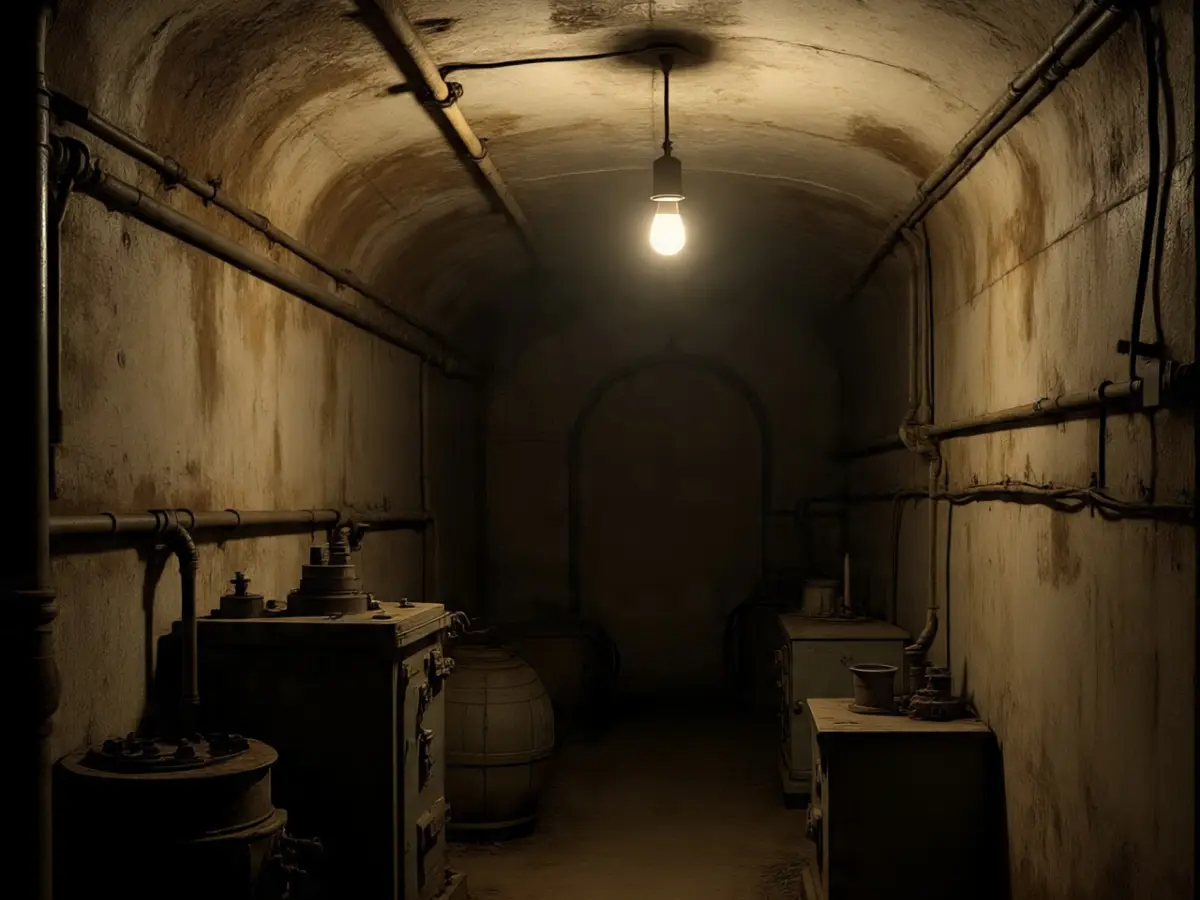
Iran's ultra-tough concrete saved the day?
Meanwhile, Iran has affirmed that the attacks did not affect it in any way. Scientists think that this could be true, if history is anything to go by. In fact, Iran's underground nuclear facilities could be partially or wholly intact. Iran might have been trying to build the nuclear bomb for years, but there is one race that it has seemingly already won - a highly resilient concrete. Experts say they have heard about Iran and its ultra-tough concrete. It is believed to be a world leader in the new technology of Ultra High Performance Concrete, or UHPC, Popular Mechanics reported. Rumours of a bunker-buster bomb failing terribly in the late 2000s hint at Iran's strength in the field of concrete.

A bunker-buster bomb failed got stuck on the surface
Reportedly, a bunker-buster bomb hit a bunker in Iran at the time. But, instead of smashing through it, the bomb got embedded in the surface and failed to explode or cause any destruction. A bomb-disposal team was called in to remove the bomb. This is when experts sat up and took notice of the advancements in concrete technology in Iran.
Trending Stories
)
Raaka creates history! Allu Arjun’s film secures Guinness World Record ahead of release
)
Yemen clashes kill 154 people in two days as cornered Saudi battles Houthi offensive | Gravitas
)
IND vs JPN, one-off T20I: Japan captain Kendel on pushing India to the brink - ‘It was special’
)
ICC plans T20I expansion and fewer ODIs in 2027–2031 FTP cycle: Report
)
Explainer: Why rare-earth export licences and Board of Trade are US priorities ahead of Trump-Xi summit
)
Over 4,200 books withdrawn from circulation in J&K colleges, 94% from Kashmir
)
Bomb scare in New York amid UNGA: Suspicious suitcase found near UN headquarters
)
Four female students raped during 'Red Zone' at California university. What we know
)
Most Americans want greater federal AI oversight
)
Trump signs Greenland security deal with Denmark, paving way for two new US military bases
)
Justice eludes Air India 1985 bombing victims as Canada probe goes 'inactive' | Gravitas
)
‘Strike a deal or drive Iran into hell’: Trump issues fresh warning to Tehran at UNGA
)
Saudi Arabia exits China-led mBridge digital currency platform amid Saudi-Houthi conflict
)
WION Iconic Tourism Summit and Awards 2026: Key voices to discuss India’s tourism future
)
Trump-Xi summit: From trade to Taiwan, what will the US and Chinese presidents discuss in Washington?
)
Cyclone Arnab: Landfall expected before midnight tomorrow as IMD issues orange alerts across six states
&im=FitAndFill=(700,400))
New OTT releases this week (September 21-27, 2026): Shaque: Trust No One, Hunkkaar, Don’t Be Shy- 5 new titles coming to Netflix, Prime Video and more
)
The Verdict | Moral policing isn’t culture or discipline, it’s crime
)
'This is normally what toddlers do': Why a psychiatrist is raising fresh questions about Trump’s recent behaviour
)
Trump revives India-Middle East-Europe economic corridor as India emerges central to West Asia’s future: What is it?
)
'Mumma’s boy from Gwalior who dared to dream': Kartik Aaryan pens long note after first National Award win
)
Trump calls on nations to quit ‘rogue’ and ‘out-of-control’ International Criminal Court, rips UN
)
Who is Clavicular? The 20-year-old controversial 'Looksmaxxing' influencer charged with rape allegations
)
Erdogan again raises Kashmir issue at UNGA, calls for dialogue under UN Charter
)
81st UN General Assembly: Burnham announces UK-US AI defence tie-up
)
Major League Soccer referee sacked for sexist comment about female match referee
)
WION Iconic Tourism Summit and Iconic Awards 2026: India's travel economy leaders gather in Delhi
&im=FitAndFill=(700,400))
National Film Awards 2026: Kartik Aaryan, Mammootty, Yami Gautam, Randeep Hooda and other key winners
)
Anne Hathaway to run in supporting race for Nolan's epic
)
From Gaddafi tearing up UN Charter to Trump’s ‘escalatorgate’: Most unforgettable UNGA moments
)
American manufacturing is reshoring faster than its factory floors can absorb
)
US and China vie for AI dominance as calls grow for regulation | Gravitas
)
Asia prepares for record El Nino, food shock
)
Gravitas | Boosting NHS productivity could save 20,600 lives in UK annually: Report
)
Oil slips to $98 as Saudi Arabia restarts East-West oil pipeline
)
IND vs JPN T20I: How an overturned wide became point of difference between India's win and a tie
)
IIT Bombay professor Suryanarayana Doolla sent on leave amid Sahil Wakode death probe
)
'What kind of confession is this?': Pakistan PM Shehbaz Sharif’s 'terrorists would be roaming New York' remark goes viral, raises alarm online. Watch
UHPC concrete is stronger and too strong for today's bombs
UHPC is a type of concrete that is way more advanced than regular concrete. Earlier, concrete rated as "high strength" had a yield of 5,000 pounds per square inch (psi). There were some that went up to 10,000 psi. But UHPC can withstand 40,000 psi or more. This is because in this technology, concrete is turned into a composite material by adding steel or other fibres. They hold the concrete together and prevent it from cracking. Stephanie Barnett, Ph.D, of the University of Portsmouth in the UK, who works to develop stronger concrete to protect civilian buildings from terrorist attacks, told Popular Mechanics, "Instead of getting a few large cracks in a concrete panel, you get lots of smaller cracks. The fibres give it more fracture energy."
An open-source Chinese study compared normal high-strength concrete with fibre-reinforced UHPC. It noted that projectiles smashed through the reinforced concrete targets, but the UHPC targets only had minor cracking. The bombs “either embedded in or rebounded from” the targets.
The United States Air Force had also launched a project to study bunkers made of UHPC. It was reportedly feared that even the 5,000-pound bombs would not get through UHPC. Then it got the 21,000-pound Massive Ordnance Air Blast, "mother of all bombs". This is the biggest bomb one can fly, with only the B-2 Spirit strategic bomber capable of doing so.
Experts say that even the biggest and toughest bomb could not get through UHPC. Gregory Vartanov of Toronto-based Advanced Materials Development Corp claims that current bombs cannot break down the high-grade UHPC. "Penetrators with monolithic cases made from materials such as … Eglin Steel … cannot penetrate bunkers made from UHPC,” he wrote in Aerospace & Defense Technology magazine in February 2021.

