Houthis enter Iran war: What we know about the Tehran-backed Yemen rebel group

&imwidth=600&imheight=450&format=webp&quality=medium "Houthis enter Iran war: What we know about the Tehran-backed Yemen rebel group")
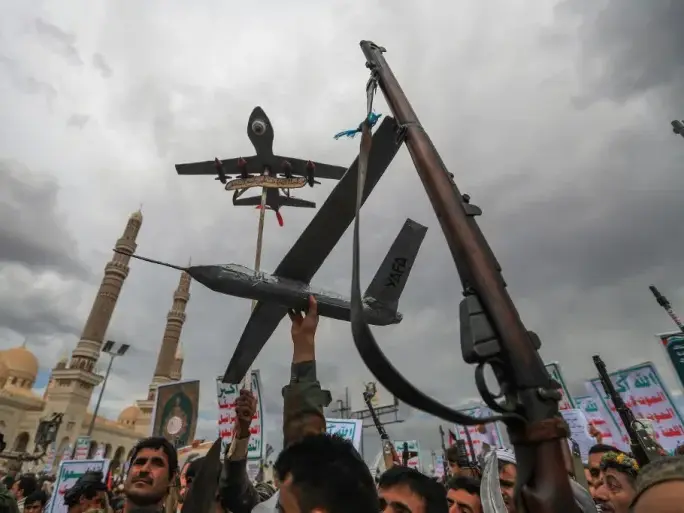
Yemenis brandish drone replicas and traditional rifles during a rally in solidarity with Palestinians and the Gaza Strip and in condemnation of Israel and the US (Image for representation) Photograph: (AFP)
Yemen's Iran-backed Houthi rebels officially entered the regional war by launching missiles at Israel, signalling an escalation in their military capabilities and their role within the “Axis of Resistance.”
Yemen’s Iran-backed Houthi rebels have announced their entry into the widening West Asia conflict, saying they fired missiles towards Israel on Saturday (March 28). The Israeli military earlier confirmed detecting a missile launched from Yemen, raising fears of a broader regional escalation.
Who are the Houthis?
The Houthi movement, formally known as Ansar Allah (Supporters of God), is a key faction in Yemen’s long-running civil war. The group traces its origins to the 1990s, when its founder, Hussein al-Houthi, launched a revivalist movement called “Believing Youth” to promote the interests of Zaidism, a branch of Shia Islam with deep historical roots in Yemen.
Zaidis once ruled much of Yemen for centuries but were sidelined after the 1962 revolution that brought a Sunni-led government to power. The Houthis emerged partly in response to this marginalisation and in opposition to the spread of hardline Sunni ideologies, particularly Wahhabism from neighbouring Saudi Arabia.
Role in Yemen’s civil war
Yemen’s conflict intensified in 2014 when Houthi fighters seized the capital, Sanaa, and overthrew the internationally recognised government. The crisis escalated further in 2015 after a Saudi-led coalition intervened militarily to restore the government.
Although a UN-brokered ceasefire in 2022 briefly reduced hostilities, it expired after six months. Despite the lapse, large-scale fighting has not fully resumed, leaving the country in a fragile and unresolved state.
Backed by Iran
The Houthis are widely seen as a key regional ally of Iran, which has steadily increased its support since the war escalated in 2014. According to security analysts, Tehran has supplied weapons, training, and advanced technology, including ballistic and cruise missiles, drones, and naval mines.
The group is also considered part of Iran’s “Axis of Resistance,” a loose coalition of militias and political movements opposed to Israel and Western influence in the region.
Trending Stories
)
)
)
)
)
)
)
)
)
)
)
)
)
)
)
)
)
)
)
)
)
)
)
)
)
)
)
)
)
&im=FitAndFill=(700,400))
&im=FitAndFill=(700,400))
Military capabilities and reach
Over the years, the Houthis have significantly improved their military capabilities. US officials have tracked advances in the range, precision, and impact of their missile systems, many of which are believed to be built locally using smuggled Iranian components.
The group has also demonstrated its ability to target maritime traffic in the Red Sea using drones and anti-ship missiles. In past incidents, attacks on commercial vessels, some with no clear links to Israel, prompted responses from US naval forces, including the USS Carney.

