
&imwidth=800&imheight=600&format=webp&quality=medium "Europe wants 7 AI gigafactories, each 4 times bigger than anything it has now")
The European Union has spent two years writing rules for artificial intelligence. It is now trying to build the machines to run it.
The Plan
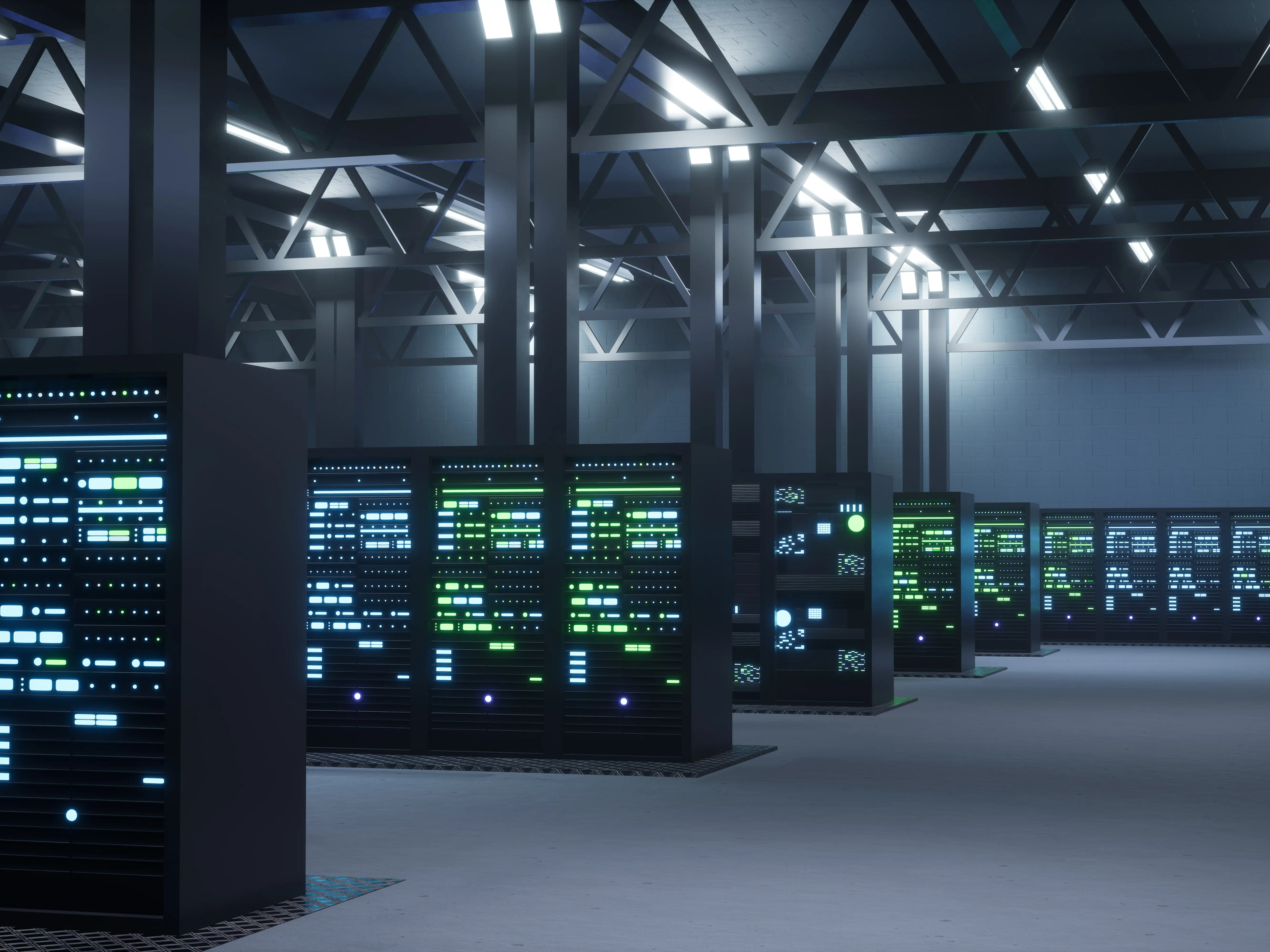
The European Commission has opened a call for proposals to construct up to seven facilities it calls AI Gigafactories, at a combined scale of €30 billion. Each site is intended to house at least 100,000 advanced AI chips.

For context on what that means in European terms: a single such facility would be roughly four times the size of the largest data centre currently operating anywhere in the EU. Seven of them would represent a step change in the bloc's computing capacity rather than an incremental expansion.
Why Europe Is Doing This
The gap the programme is meant to close is stark. The frontier of AI development is presently a contest between American and Chinese laboratories, and the binding constraint on both is compute. OpenAI has raised its projected spending on computing infrastructure to roughly $750 billion through 2030. Meta has guided to as much as $145 billion in capital expenditure this year alone. Alphabet has guided to $195–205 billion.
Trending Stories
)
India ‘deeply concerned’ as Houthi strikes hit Saudi civilian & energy sites
)
Three labourers killed as DU student loses control of his car, rams into them on Dwarka Expressway
)
Pentagon revives mandatory testosterone testing for male troops aged 30 and above
)
FACT CHECK: Why did PM Modi ask Xi ‘is it okay’ at BRICS Summit? New video reveals...
)
India seeks to build a full semiconductor supply chain
)
North Korea's last nuclear test in 2017 set off 1,399 earthquakes over 8 years, each stronger than previous
&im=FitAndFill=(700,400))
From Abhishek Sharma to Sahil Chauhan, 5 batters with fastest T20I hundreds
)
Indian activist-lawyer Prashant Bhushan's post brings focus on ‘conflict of interest’ appointments of ex-govt officials at Reliance, Adani groups
)
Former India player Diana Edulji wants Smriti Mandhana to replace Harman as skipper at the earliest
&im=FitAndFill=(700,400))
Meet top 5 batters in the latest ICC T20I Rankings
)
UNGA 2026 theme explained: What does ‘Restoring trust, managing transformation: A United Nations that delivers for all’ mean?
)
Godfather of AI Geoffrey Hinton gives US lawmakers a one-year warning on AI
)
US F-16 fighter jet crashes in Michigan during training mission, pilot ejects safely
)
Xi-Trump summit may boost military links
)
Shivakumar attends 79th Kalyana Karnataka Utsav in Kalaburagi
)
A first in 100 years: New cat species discovered in Bolivia is incredibly tiny
)
Hong Kong extends newborn cash support scheme by three years
)
How did an Australian river with 500 crocodiles pass the Olympic test? Here's how
)
‘Will go to any extent’: Pakistan vows to defend Saudi Arabia amid Houthi attacks
)
'He will always be ahead': India coach Gambhir says Sooryavanshi won't walk into team ahead of Samson
)
The Verdict | When precision fails: US commits war crime in Minab school strike, UN finds
&im=FitAndFill=(700,400))
New Friday OTT releases (September 18, 2026): Lust Stories 3, You+Me, Best of the Best- 8 new titles coming on Netflix, Prime Video and more
&im=FitAndFill=(700,400))
Which country has the most F-35s outside America?
)
Africa is splitting, and a lot sooner than estimated, giving way to a new ocean
)
'Gangsta' crab shoves knife blade at man and his dog in Florida - Watch
)
Trump bans CNN, MS NOW and Politico from White House over ‘FAKE NEWS’
)
Trump 2.0: Dark days ahead for America’s ‘imperial presidency’
)
Laura Wolvaardt sets new world record for most WT20I runs in a year
)
Drone strikes cooling tower at Russia's Kursk Nuclear Plant, IAEA confirms
)
Who is Khalilur Rahman? All you need to know about 81st UN General Assembly President
&im=FitAndFill=(700,400))
Meet top 5 bowlers in latest ICC T20I rankings
&im=FitAndFill=(700,400))
Suriya and Jyothika say ‘I do’ again after 20 years! See their dreamy wedding pics
)
Cristiano Ronaldo returns to Portugal squad for Nations League under new coach
&im=FitAndFill=(700,400))
Meet top 5 Indian batters with fastest T20I centuries
)
Ukraine plans record $109 bn defence spending, nearly two thirds of budget amid Russia war
Against those figures, €30 billion spread across seven sites is modest. But Europe's problem has not only been the money — it has been that European companies wanting to train large models have had to rent capacity from American cloud providers, on American terms, frequently on servers subject to American jurisdiction. Sovereign compute is the specific gap the Gigafactories are meant to fill.
The Timing Against The AI Act
The announcement lands days before August 2, when the core obligations of the EU AI Act take effect for the majority of AI systems operating in the European market — the date legal analysts have described as the most consequential in the history of AI regulation.
That sequencing is not accidental. The persistent criticism of European AI policy has been that the bloc regulates a technology it does not build, imposing compliance costs on companies headquartered elsewhere while producing few frontier systems of its own. Announcing a major compute build-out immediately before the rulebook activates is an attempt to answer that criticism directly: the EU intends to be a producer as well as a regulator.
The Practical Questions
Three obstacles sit between the announcement and the outcome.
The first is chips. Housing 100,000 advanced AI accelerators per site means procuring them, and the global supply of high-end AI silicon is allocated years in advance to buyers with far larger orders and longer-standing relationships.
The second is power. Facilities at this scale consume electricity at the level of small cities, and European energy prices are substantially higher than those in the American regions where comparable data centres are being built.
The third is timing. A call for proposals is the beginning of a procurement process, not a construction schedule. The American and Chinese build-outs the programme is responding to are already underway.
None of that makes the effort futile. It does mean the Gigafactories are best read as a statement of intent about where Europe wants to be at the end of this decade, rather than as a near-term change in the competitive balance.
