China says World Health Organization chief against virus-related evacuations, as countries plan pull-outs

Coronavirus outbreak
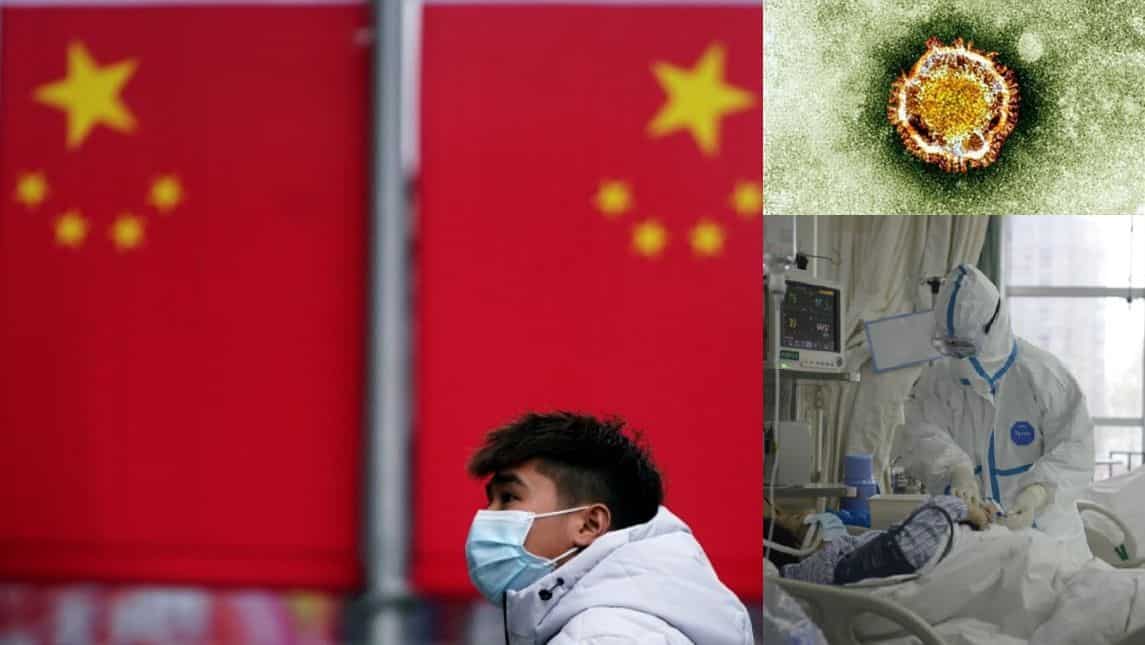
The head of the World Health Organisation said on Tuesday he was confident inChina's ability to contain a new coronavirusthat has killed 106 people and that he did not think foreigners should be evacuated,China's foreign ministry said.
A growing number ofcountrieshave said they will evacuate their citizens from Wuhan, a central city of 11 million people and the epicentre of the outbreak.
A charteredplane taking out USconsulate staff was set to leave Wuhan on Wednesday, a spokeswoman at the USembassy in Beijing said.

Some space was being offered to other UScitizens.
India said it was preparing to evacuate its citizens from Hubei province, of which Wuhan is the capital.
)
Imran Khan’s sons accuse Asim Munir of holding ‘personal grudge’ against imprisoned father
)
1,200 Indian and US troops begin high-altitude and desert drills
)
Amid AI safety fears, OpenAI, Anthropic and Google move to create standards body
)
2026 El Niño will create new extreme weather patterns. Worse, no one can predict them
)
Spanish officer sent home from NATO base over affair with 'Russian spy' | Gravitas
)
'Definitely feel bad for yourself': Kuldeep Yadav opens up on India Test snubs
)
Trump's name cannot return to Kennedy Center, US judge rules
)
West Bengal IPS officer Bushra Bano transferred after objections to ‘Assalamualaikum’, ‘Inshallah’
)
'She married her brother': Ilhan Omar faces criminal probe over immigration fraud claims
)
US Treasury yields cross 5% as Scott Bessent warns of ‘global issues’ impacting bonds
)
Water equivalent to two Pacific Oceans could be stashed 2,900 km inside Earth
)
Saudi turns to Israel for intelligence help as Houthi attacks intensify: Report
)
Ex-CIA officer caught with gold bars worth $40 million seeks plea deal | Gravitas
)
Top military commanders from US, Israel, and 7 Arab nations held secret meeting on Iran War
)
Extreme warming in Indian Ocean added 695 billion tons of ice to Antarctica ice sheet
)
India’s imports from Russia jump 57% in five months; China remains top import source
)
Elephants hide behind trees, stage surprise attack on poachers targeting rhinos in South Africa
)
IND vs AFG, 2nd T20I: Reddy, Samson shine as India defeat Afghanistan by 7 wickets to clinch series
)
‘US military task force aiding Saudi Arabia forces with intel, planning support’: Official
&im=FitAndFill=(700,400))
New OTT releases this week (September 14-20, 2026): Lust Stories 3, Waiting Hai, Irumudi- 5 new titles coming on Netflix, Prime Video and more
)
800 million years old - Scientists discover 'fingerprints' of supercontinent Gondwana in ancient rocks
)
Trump downplays China's alleged 'help' to Iran in strike on Jordan base | Gravitas
)
Saudi Arabia discovers 110 million tonnes of Uranium-rich ore in Madinah region
)
‘US ensuring global energy supplies’: Trump demands reimbursement for securing Strait of Hormuz
)
'Now Trump is copying us': Shivakumar links US $5,000 plan to Congress guarantees
)
Delhi schools receive bomb threats in Punjabi, security checks find nothing suspicious
)
A big shift in modern air power & control
)
Russia proposes to build 360 kmph Ivolga FG trains in India: What happened on sidelines of BRICS
)
Legendary costume designer Bob Mackie dies at 87: A look back at his iconic legacy
)
Bitter Zelensky snubs Trump for playing politics with Ukraine war | Gravitas
)
Who is Kalyan Bainsla, accused in the Gurugram hit-and-run case involving woman biker?
)
China's property crisis deepens as investment plunges nearly 20%
Watch:Three suspected cases of coronavirus in New Delhi
Concern is mounting about the impact of the coronavirusmay have on the world's second-biggest economy amid travel bans and an extended Lunar New Year holiday. Global stocks fell again, oil prices hit three-month lows andChina's yuan currency dipped to its weakest in 2020.
The head of theWHO, Tedros Adhanom Ghebreyesus, in a meeting with State Councillor Wang Yi in Beijing, said he approved of the government's measures to curb the outbreak, the foreign ministry said.
"Tedros said theWHOdoes not advocate forcountriesto evacuate their citizens fromChina, adding there was no need to overreact," the foreign ministry said in a statement. "He said theWHOis confident inChina's ability to prevent and control the epidemic."
TheWHOchief,whoalso met President Xi Jinping, was not available for comment. AWHOpanel of 16 independent experts twice last week declined to declare an international emergency over the outbreak.
The flu-likevirushas spread overseas, with Sri Lanka and Germany the latestcountriesto be hit, but none of the 106 deaths has beenoutsideChinaand all but six have been in the central city of Wuhan, where thevirusemerged last month.
Thailand confirmed six more infections among visitors fromChina, taking its tally to 14, the highestoutsideChina.
Far eastern Russian regions would close their borders withChinauntil February7, Tass news agency said, citing the regional government.
Chinese-ruled Hong Kong said cross-border ferry services would stop.
Watch: Hong Kong confirms 8th case of coronavirus, Hubei residents banned
Wuhan, where thevirusapparently jumped to a human in an illegal wildlife market, has been all but put under quarantine, with a lockdown on transport and bans on gatherings.
Tens of millions of others in Hubei live under some form of travel curbs set up to try to stifle thevirus.
TheWHOsaid only one of the overseas cases involved human-to-human transmission.
"That’s still one case too many. But we’re encouraged that so far we have not seen more human-to-human transmissionoutsideChina," theWHOsaid on Twitter.
"We’re monitoring the outbreak constantly."
Tuesday's toll of 106 dead was up from 81 the day before. The number of total confirmed cases inChinasurged to 4,515 as of Monday from 2,835 the previous day, the National Health Commission said.
Incubationestimates
Analysts saidChina's travel and tourism would be the hardest-hit sectors, together with retail and liquor sales, though healthcare and online shopping were seen as likely outperformers.
Officially known as "2019-nCoV", the coronaviruscan cause pneumonia, but it is too early to know just how dangerous it is and how easily it spreads.
Some health experts question whetherChinacan contain it.
Chinese health officials say the incubation period could range from one to 14 days, and thevirusis infectious during that time. TheWHOestimated an incubation period of two to 10 days.
Also see:Coronavirus attack: Deadly virus outbreaks across the world which created panic in the past
USPresident Donald Trump on Monday offeredChinawhatever help it needed, while the State Department said Americans should reconsider visitingChina.
Canada, which has two infections and 19 potential cases, warned its citizens to avoid travel to Hubei.
Authorities in Hubei, home to nearly 60 million people, have been the focus of public outrage onChina's heavily censored social media over what many see as a bungled initial response to thevirus.
In rare public self-criticism, Mayor Zhou Xianwang said Wuhan's management of the crisis was "not good enough" and indicated he was willing to resign.
China's ambassador to the United Nations, following a meeting with UN Secretary-General Antonio Guterres, said his government put "paramount importance" on the epidemic and was working with the international community in a spirit of "openness, transparency and scientific coordination".
Communist Party-ruledChinahas been eager to seem open in its handling of the epidemic after it was heavily criticised for efforts to cover up an epidemic of Severe Acute Respiratory Syndrome (SARS) that killed about 800 people globally in 2002-2003.
SARS, which was also believed to have originated in a wildlife market, led to a 45 percentplunge in air passenger demand in Asia. The travel industry is more reliant on Chinese travellers now, andChina's share of the global economy has quadrupled.
With Chinese markets shut for the holiday, investors were selling the offshore yuan and the Australian dollar as a proxy for risk. Oil was also under pressure as fears about the wider fallout grew.
The USS&P 500 closed down nearly 1.6 percent.