

&imwidth=800&imheight=600&format=webp&quality=medium "Change the headline: Did Trump extract Maduro to divert attention from Epstein files fallout? Clinton, Bush, Reagan took similar actions")
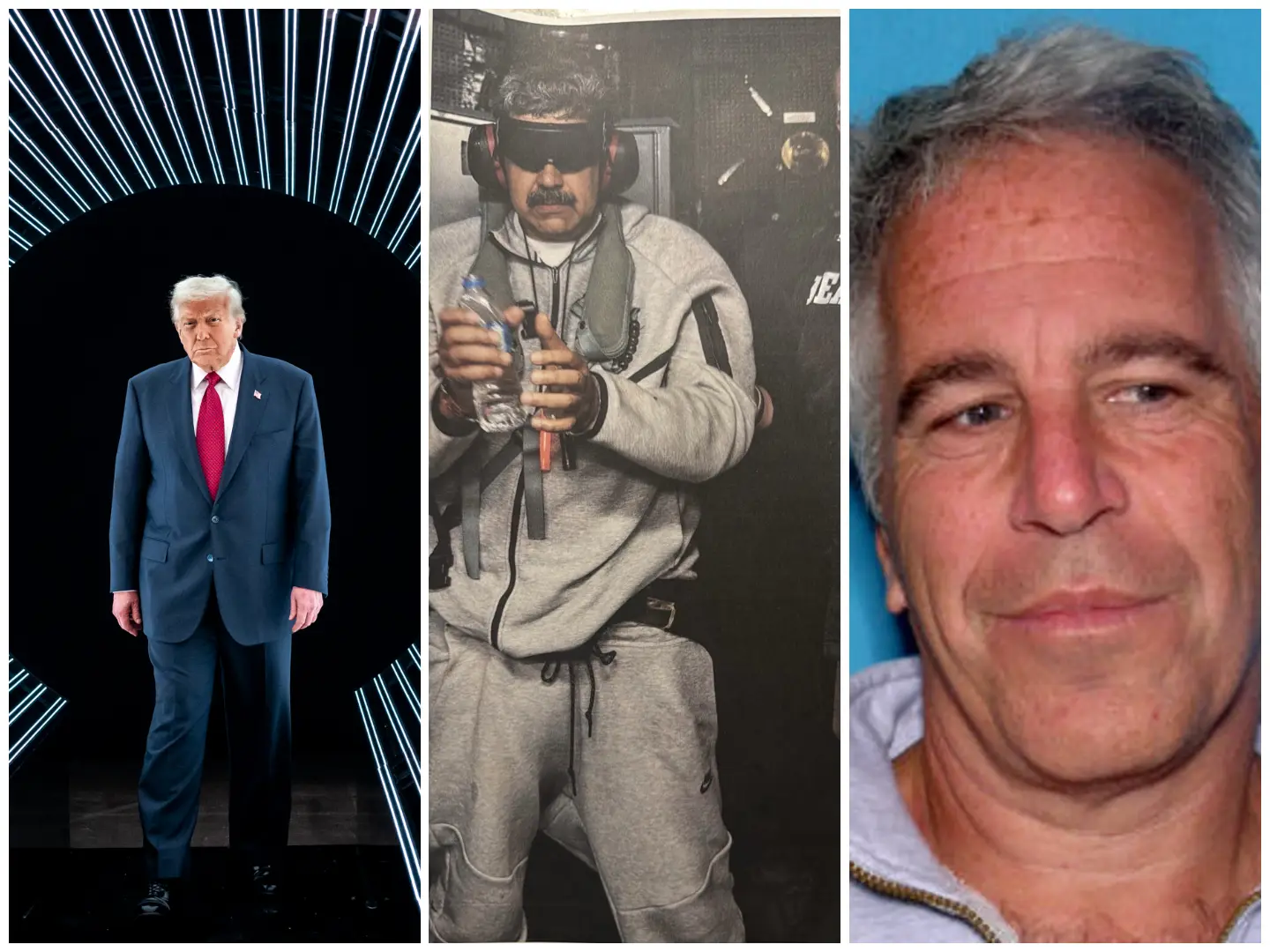
Critics are claiming that President Donald Trump hurriedly ordered a military operation in Venezuela to extract its leader Nicolas Maduro to the US in order to tide over scandalous headlines surrounding the Epstein file release. For a president averse to foreign military interventions and who claims to have solved “eight and a quarter” wars, the Venezuela military operation of January 3 was as stunning as it was successful. But the development came amid discontent within Trump’s own support base about how his administration dealt with the release of the Epstein files, exposing connections of the late paedophile- trafficker to many politicians, including Trump. As more allegations tumbled out, some in his MAGA base were slowly turning against him. With midterm elections approaching and control of Congress at stake, Trump definitely needed a change of headlines. If Maduro was the scapegoat for that, it would not be the first time such an action was taken by a beleaguered president. Trump is only acting like some of his predecessors, who intervened abroad when pressured by domestic issues.
Trump Venezuela opration: The timing is odd, or is it clever?
Illinois Governor JB Pritzker had already warned that Trump might escalate to war with Venezuela to shift focus from Epstein-related scrutiny. House Oversight Democrats noted the convenient timing of the strikes, coinciding with Epstein file deadlines.
Political commentators like James Carville explicitly accused Trump of using the Venezuela operation as a desperate distraction from the Epstein controversy, economic issues and rising cost of living in the US.
Some criticised Trump for violating both the US Constitution and international law for personal gain.
Democratic Representative Alexandria Ocasio-Cortez called the operation a distraction from Epstein, not narcotics, which is being cited as the reason for the Maduro extraction.
Some Democrats labelled it a regime change effort tied to oil interests.
Trending Stories
&imwidth=180&imheight=135&format=webp&quality=medium)
Nathan Lyon completes 1,000 Test runs at No. 10 to script rare cricket feat
&imwidth=180&imheight=135&format=webp&quality=medium)
McSweeney reveals how studying Virat Kohli’s YouTube clips helped Australia A conquer India
&imwidth=180&imheight=135&format=webp&quality=medium)
Houthis claim Riyadh airport attacks, Aramco strikes; issue fresh warning to airlines, travellers and workers
&imwidth=180&imheight=135&format=webp&quality=medium)
China imposes first-ever sanctions on ministers from Taiwan allies: What this means
&imwidth=180&imheight=135&format=webp&quality=medium)
Anthropic's AI invented a murder witness and sent the fake tip to Philadelphia police
&imwidth=180&imheight=135&format=webp&quality=medium)
Sidhu Moose Wala’s younger brother wins hearts by recreating late singer’s signature move at Toronto Hologram Show
&imwidth=180&imheight=135&format=webp&quality=medium)
Wasim Jaffer blames Ajit Agarkar-led selection panel for Virat Kohli’s Test retirement
&imwidth=180&imheight=135&format=webp&quality=medium)
Are Gold and Silver poised for a rebound soon?
&imwidth=180&imheight=135&format=webp&quality=medium)
Top AI models flunked a test of inventing new AI research, so much for self-improving AI
&imwidth=180&imheight=135&format=webp&quality=medium)
'Say no to Muse': Meta has no control over its own moderation AI while it forces a security nightmare on everyone
&imwidth=180&imheight=135&format=webp&quality=medium)
iPhone Duo price index: Tracking Apple’s latest pricing trends
&im=FitAndFill=(700,400)&imwidth=180&imheight=135&format=webp&quality=medium)
Navratri 2026: 9 days, 9 forms of Goddess Durga and 9 colours- Check the complete list
&imwidth=180&imheight=135&format=webp&quality=medium)
UK school ditches technology, shifts from screen to pen and paper for learning
&im=FitAndFill=(700,400)&imwidth=180&imheight=135&format=webp&quality=medium)
Is sending robots to Mars easier than sending humans?
&imwidth=180&imheight=135&format=webp&quality=medium)
The street cannot govern India, but the government cannot ignore it either
&imwidth=180&imheight=135&format=webp&quality=medium)
Meta's Muse AI could be a security nightmare for India's billion-plus users
&imwidth=180&imheight=135&format=webp&quality=medium)
Iran: US accepted some conditions, Clarity needed on others
&imwidth=180&imheight=135&format=webp&quality=medium)
Microsoft's Nadella says treat every AI model as already hacked, and build an 'emergency brake'
&imwidth=180&imheight=135&format=webp&quality=medium)
Imran Khan released hours after Mumbai Police detain him during CJP protest
&imwidth=180&imheight=135&format=webp&quality=medium)
One Indian killed in Riyadh airport attack; 11 others injured : MEA
&imwidth=180&imheight=135&format=webp&quality=medium)
Nana Patekar's cause of death confirmed; here's what his postmortem report says
&imwidth=180&imheight=135&format=webp&quality=medium)
'Just coincidence': Police mistakes protester as AISA chief Neha Bora, arrests her from site
&imwidth=180&imheight=135&format=webp&quality=medium)
Delhi wakes up to heavy rain, thunderstorms; yellow alert in place; temperature drops
&imwidth=180&imheight=135&format=webp&quality=medium)
Delhi Protest: Congress calls for march to Supreme court
&imwidth=180&imheight=135&format=webp&quality=medium)
Delhi protest: CJI Surya Kant declines to meet India Bloc leaders
&imwidth=180&imheight=135&format=webp&quality=medium)
1,500 drones illuminate Mumbai sky as Cordelia Cruises unveils second ship, Cordelia Sky
&im=FitAndFill=(700,400)&imwidth=180&imheight=135&format=webp&quality=medium)
New OTT releases this week (October 12-18, 2026): Sacrifice, Koffee with Karan S9, Roadies Rebirth- 6 titles coming on Netflix, JioHotstar and more
&imwidth=180&imheight=135&format=webp&quality=medium)
A watchdog rated 'ChatGPT for Teens' an unacceptable risk and says keep under-18s off it
&imwidth=180&imheight=135&format=webp&quality=medium)
Other Mommy leads North American box Office as Verity, Resident Evil round out top four
&imwidth=180&imheight=135&format=webp&quality=medium)
IND vs WI, 3rd T20I: Abhishek Sharma smashes 18-ball fifty, sets record for fastest to 2,000 T20I runs
&imwidth=180&imheight=135&format=webp&quality=medium)
'Ouch!!! That must hurt': Kangana Ranaut hails Kamal Haasan's sharp reply to Elon Musk over Starlink row
&imwidth=180&imheight=135&format=webp&quality=medium)
Maharashtra appoints FDA commissioner Tukaram Mundhe as secretary of committee for MPSC overhaul amid stir
&imwidth=180&imheight=135&format=webp&quality=medium)
CJI Surya Kant declines INDIA bloc leaders’ request for meeting ahead of march to SC, asks them to file petition
&imwidth=180&imheight=135&format=webp&quality=medium)
Portugal Federation confirms Cristiano Ronaldo’s return to national team despite suspension
Even some Republicans like Representative Thomas Massie called it unconstitutional.
Social media awash with claims on Trump Venezuela attack - Epstein file coincidence
In online debates, a prominent view was that the Venezuela strikes are a deliberate diversion from the Epstein files, with X user saying that invading Venezuela would make people forget the Epstein files. Interestingly, the keywords 'Epstein files' went down in online search trends almost overnight when the Venezuela strikes took place. Online commentary ranged from 'it’s all about Epstein' to speculation that Venezuela’s oil was the secondary motive for the attack.
But some Trump supporters are dismissing the criticism as 'liberal spin'.
Trump's role in Epstein files
Trump has been mentioned in the Epstein files several times, mainly as having been part of the late financier’s social circle. No new criminal charges have stemmed from the files, but Trump’s Department of Justice faces deadlines to explain redactions and release more details. These demands came just around the time of the Venezuela attack.
But Trump had for long expressed interest in intervening in Venezuela, starting from his first term in office. He had often discussed seizing its oil reserves which are among the world’s largest. Even as Epstein file pressure was building up, Trump escalated rhetoric against Venezuela including threats over disputed oil fields and invoking the Alien Enemies Act for deportations of Venezuelans in the United States. This was seen as laying groundwork for the eventual military action that followed.
How past presidents acted abroad when faced with domestic crises
This is not the first time that, when faced with domestic issues, scandals and a slowing economy, American presidents chose to change the headlines by making military interventions abroad.
In 1998, Democratic President Bill Clinton was mired in the Monica Lewinsky scandal and impeachment proceedings over his affair with the intern. Out of the blue, Clinton authorised missile strikes on alleged al-Qaeda targets in Sudan and Afghanistan. This happened after US embassy bombings in Africa. But even then, the timing was suspect. Republicans called it a 'wag the dog' tactic to distract from domestic scandals. Clinton insisted that the air strikes were a necessary response to terrorism.
In the early 2000s, Republican President George W Bush was facing a number of issues including criticism for not predicting and properly tackling the 9/11 terror attack of 2001. As he was fighting for another term, the Bush administration made a buildup against Iraq, saying it was acquiring weapons of mass destruction. This was used as an alibi to invade Iraq, only to discover that there were no such weapons.
In 1986, Republican President Ronald Reagan bombed Libya. While this was ostensibly in response to a terror bombing of a Berlin cafe that killed American servicemen, it took place as Reagan’s presidency faced criticism over the Iran-Contra affair, approach to terrorism, concerns over economy and the then-unfolding HIV/AIDS crisis.

