US Supreme Court upholds state bans on transgender women in female sports

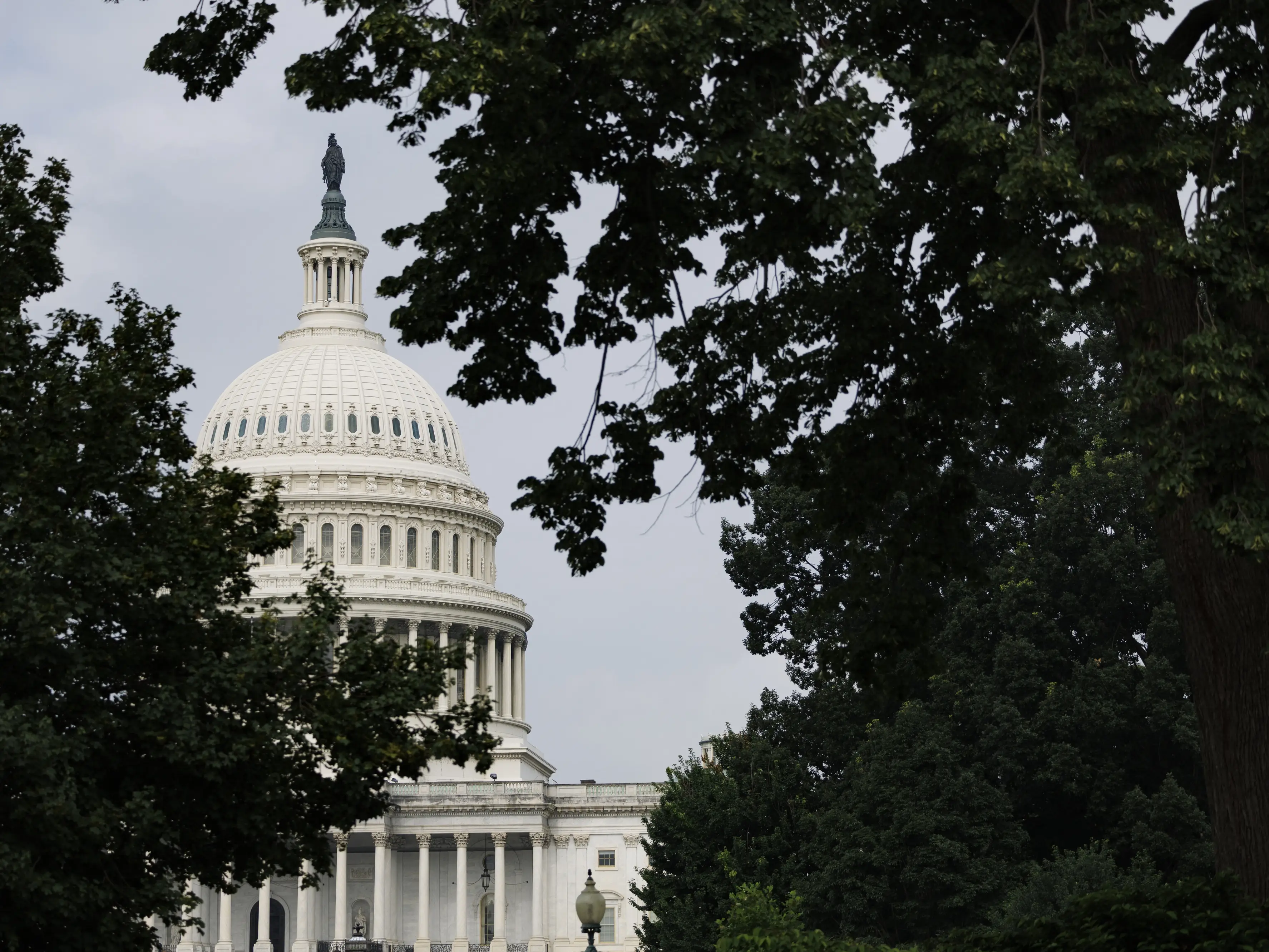&imwidth=600&imheight=450&format=webp&quality=medium "US Supreme Court upholds state bans on transgender women in female sports")
US Supreme Court Photograph: (AFP)
The US Supreme Court upholds state bans on transgender athletes in girls' sports, ruling the laws do not violate the Constitution or Title IX
The US Supreme Court on Tuesday (June 30) delivered another significant setback for LGBTQ rights by upholding state laws that prohibit transgender athletes from competing in girls' and women's sports. In a 6-3 decision, the court ruled against two transgender students, Becky Pepper-Jackson and Lindsay Hecox, who challenged laws in West Virginia and Idaho that restrict participation based on biological sex assigned at birth.
Justice Brett Kavanaugh, writing for the majority, concluded that the laws do not violate the 14th Amendment, which guarantees equal protection under the law, or Title IX of the Education Amendments of 1972, which prohibits sex discrimination in education.
“The Constitution and Title IX do not require an overhaul of women’s and girls’ sports throughout America,” Kavanaugh wrote.
Why did the Supreme Court uphold the transgender sports bans?
According to the majority opinion, the court determined that the state laws are consistent with constitutional protections and federal education law. The ruling found that neither the Equal Protection Clause of the 14th Amendment nor Title IX requires states to allow transgender athletes to compete in female sports categories.
Kavanaugh also acknowledged the challenges faced by transgender athletes. “Their desire to compete warrants respect” and that they should not be “ostracized or vilified.” Although the ruling directly applies only to West Virginia and Idaho, legal experts expect it to influence 25 other states that have enacted similar restrictions. The decision adds to a series of recent Supreme Court rulings limiting transgender rights. Last year, the court upheld state laws restricting gender transition treatments for transgender minors.
Trending Stories
)
)
)
)
)
)
)
)
)
)
)
)
)
)
)
)
)
)
)
)
)
)
)
)
)
)
)
)
)
)
)
)
)
)
&im=FitAndFill=(700,400))
)
)
)
)
Earlier this year, it sided with parents challenging California policies designed to protect transgender students. In separate decisions last year, the court also allowed Trump administration policies restricting transgender military service and limiting gender identity changes on US passports. However, the court's 2020 decision interpreting Title VII of the Civil Rights Act of 1964 to protect employees from discrimination based on gender identity and sexual orientation remains in place, though it increasingly stands apart from more recent rulings.
What impact will this ruling have across the United States?
The ruling is expected to strengthen similar laws across the country. While the decision formally addresses only West Virginia and Idaho statutes, it is likely to serve as a legal precedent for more than two dozen states with comparable bans. Becky Pepper-Jackson, a 16-year-old high school sophomore, has undergone puberty-blocking treatment and estrogen therapy and previously competed in girls' cross-country, shot put and discus events.
Lindsay Hecox, a 25-year-old college student, has received testosterone suppression and estrogen treatments. She unsuccessfully tried out for her college's women's track and cross-country teams and has since participated in running and club soccer. The ruling comes amid a broader national shift in transgender policy. President Donald Trump, a vocal opponent of transgender participation in women's sports, signed an executive order after taking office titled “Keeping Men Out of Women’s Sports.” His administration supported West Virginia and Idaho before the Supreme Court and has also filed a lawsuit challenging California's policies on transgender athletes.
International and national sports organisations have also adopted stricter eligibility rules. The IOC announced in March that transgender women would no longer be eligible to compete in Olympic female sports categories. The NCAA and the US Olympic and Paralympic Committee have likewise introduced new restrictions governing transgender athlete participation.
West Virginia's law, enacted in 2021, defines gender as being “based solely on the individual’s reproductive biology and genetics at birth.” It further states that a female is a person “whose biological sex determined at birth as female.” Idaho's law, passed in 2020, similarly provides that sports “designated for females, women, or girls should not be open to students of the male sex.”

