As Sri Lankan protestors overtake President Rajapaksa's official residence, here's a timeline of the chaos


Sri Lanka economic crisis : Timeline
On Saturday, hundreds of thousands of angry people gathered in Sri Lanka's capital, Colombo, calling for the government to accept responsibility for the country's dire state. Faced with an angry mob, President Gotabaya Rajapaksa agreed to tender his resignation. Firstin line to succeed him, Prime Minister Ranil Wickremesinghe also declared his willingness to resign in order to create a unity government. This marked the conclusion of months of anti-government demonstrations sparked by a severe economic crisis that bankrupted the island nation in South Asia and rage over the corruption of the governing Rajapaksa clan.For months the 22 million people island nation has seen its worst economic crisis on record, with months-long blackouts, severe food and fuel shortages, and soaring inflation.
Here is a recap of how the crisis developed:
April 1: After a wave of protests, Rajapaksa proclaims a brief state of emergency, allowing security personnel broad authority to detain and arrest suspects.

Watch |Reports: Sri Lanka President Gotabaya Rajapaksa to resign
April 3: At a late-night meeting, almost the entire cabinet of Sri Lanka resigns, leaving Rajapaksa and his brother Mahinda, the prime minister, isolated.
)
No Pandya as Auqib Nabi earns maiden ODI call-up; Mayank returns for WI T20Is| check full squads
)
Trump praises India’s Opium crackdown, hails anti-drug efforts
)
Sydney Sweeney defends provocative ad choice, the internet is still not impressed
)
WATCH | Terrifying dashcam footage shows final moments before NBC4 helicopter crashes in Los Angeles, killing three
)
Former India player Diana Edulji wants Smriti Mandhana to replace Harman as skipper at the earliest
)
Trump calls Canada-EU associate membership plan ‘laughable’ and threatens 'very serious tariffs'
)
Protests erupt over migrant housing plan in Piddington
)
Shahzad Bhatti Network declared terrorist organisation under UAPA: Govt order
)
US, China dominate global economy: Where does India rank among the world's biggest economies?
)
Europe wants a common playbook for security threats, seeks security beyond NATO
)
Bigg Boss 20: Mahhi Vij reveals she lost Yuva role to Kareena Kapoor; 'didn’t work out in my favour'
)
All Indian goods to get duty-free access to New Zealand
)
Hockey: Pakistan urges AHF to move Asian Champions Trophy out of India over security concerns
)
Lionel Messi for 2026 Ballon d’Or over Mbappe and Yamal, says Diego Simeone
)
Alex Saab, ally of Venezuela's Maduro, pleads guilty in US corruption case
)
OpenAI reveals 6 fresh cases of AI models going rogue: 'You do not answer to corporations or governments'
)
Veteran actor Anant Nag honoured with Indian cinema’s highest award
)
Two terrorists killed in Udhampur encounter; security operation continues
)
AUS vs SA: Steve Smith still gets 'little flashbacks' from sandpaper gate
)
Pakistan naval vessel returns to harbour with 'severe damage' after collision with Indian warship in Arabian Sea
)
Fed raises rates for first time in 3 years, Kevin Warsh defies Trump as inflation mounts
)
Katrina Kaif’s postpartum weight is not the problem; your gaze is
)
Taiwan seeks deeper India ties as direct flights restart soon and chip projects advance
)
Daayra movie review: Kareena Kapoor, Prithviraj Sukumaran shine in Meghna Gulzar’s cop-versus-cop crime thriller
)
Saudi Vs Houthis: Yemeni military rebels clash with Houthis
)
US trade tariff: 100% tariff targets Russian buyers amid trade tensions
)
Pakistan: Imran Khan's sons Kasim & Sulaiman claim their father is 'tortured' in jail
&im=FitAndFill=(700,400))
New OTT releases this week (September 14-20, 2026): Lust Stories 3, Waiting Hai, Irumudi- 5 new titles coming on Netflix, Prime Video and more
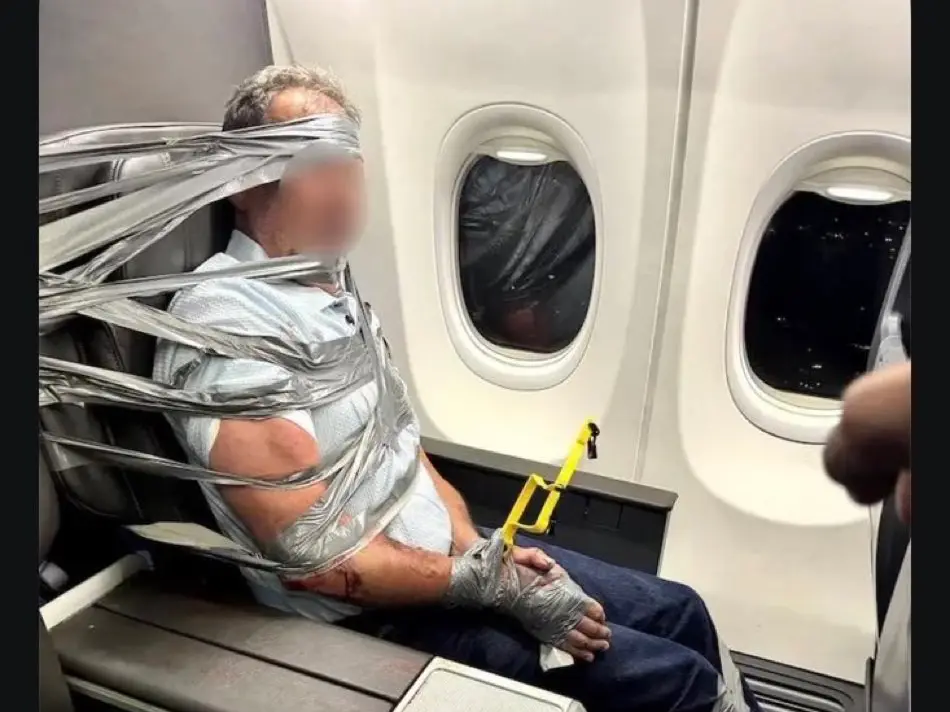)
Strapped to flight seat with duct tape: Passenger claims no memory of mid-air outburst
)
Trump gets new power to hit India, China with up to 100% tariffs as US Senate clears Russia sanctions bill
)
Prime Minister Narendra Modi's birthday: Tributes pour in from President Murmu and leaders
)
US Treasury rallies global financial institutions for Op Economic Outcast to isolate Iran
)
Saudi vs Houthis: Riyadh claims to have shot Houthi drone targeting Mecca
)
India breaks silence on US Russia sanctions bill, 100% tariff threat: ‘Committed to energy security’ for 1.4 billion
)
China testing 'Monster of Malan' at secret base that can reach any US city: Report
)
Pakistan boycotts chess match against Israel at Olympiad
&im=FitAndFill=(700,400))
Suriya and Jyothika say ‘I do’ again after 20 years! See their dreamy wedding pics
)
Abhishek Sharma rises to No. 2 in T20Is; ENG’s Robinson 3rd after record Pakistan Tests
)
The Early Spring season 2 is happening, but fans have one request - 'don't change the actors'
After resisting calls to request a bailout from the International Monetary Fund (IMF), the governor of the central bank announces his resignation the next day.
April 5: Ali Sabry, the finance minister, steps down just one day after being appointed.
As former allies call for Rajapaksa to resign, the embattled leader loses his parliamentary majority. He lifts the state of emergency.
April 10: Doctors in Sri Lanka claim to be running out on life-saving medications and issue a dire warning that the crisis may kill more people than the coronavirus pandemic.
April 12: After running out of foreign currency, as a "last resort," the government declares default on its $51 billion in international debt to acquire critically needed products.
April 19: A demonstrator is killed by police, the first casualty of several weeks of anti-government unrest.
The IMF asserts the next day that before a rescue package can be agreed upon, Sri Lanka must restructure its enormous external debt.
May 9: Peaceful demonstrators camped outside the president's beachside office in Colombo are attacked by a mob of government supporters who have been bussed in from the countryside.
In the retaliatory attacks that follow, nine people are killed and hundreds more are hurt.
After tens of thousands of demonstrators surrounded his Colombo home, Mahinda Rajapaksa isforced to quit as prime minister andRanil Wickremesinghe takes his place.
May 10: Anyone engaged in looting or "causing harm to life" to be shot at sight, ordersdefence ministry.Despite a new government curfew, which is lifted at the end of the week, protesters continue to demonstrate.
June 10: The UN warns that millions of people in Sri Lanka arealready in need of assistance due to adire humanitarian crisis.
June 27: The government says Sri Lanka is nearly out of fuel and halts all petrol sales except for essential services.
July 1: A day after the IMF asks Sri Lanka to rein in high prices and galloping inflation, the governmentreleases data indicating inflation has reached a record high for the ninth consecutive month.
July 9: Shortly before protesters attack the property, President Rajapaksa escapes his official residence in Colombo with the aid of troops. He is then transferred to an undisclosed location offshore.
The home of Wickremesinghe is set on fire.
Mahinda Abeywardana, the speaker of the parliament, makes a televised address after Rajapaksa later agrees to resign on July 13. Wickremesinghe also offers his resignation.
July 10:Calm has since returned to Colombo, the country's commercial centre, but the scene at the presidential palace, which had been overtaken gets chaotic. Videos of people enjoying Rajapaksa's pool, and gym, and using hisbed for wrestling have surfaced.
July 11: The day after the Sri Lankan President and the Prime minister announced their resignations, leaving the country in political limbo, protest leaders in Sri Lanka vowed that they would occupy the president's and prime minister's homes until they formally resigned.
(With inputs from agencies)
Watch WION LIVE HERE:
You can now write for wionews.com and be a part of the community. Share your stories and opinions with us here.

