

&imwidth=800&imheight=600&format=webp&quality=medium "Unexplainable 'ghost' activity in Cassiopeia finally has an answer 160 years later")
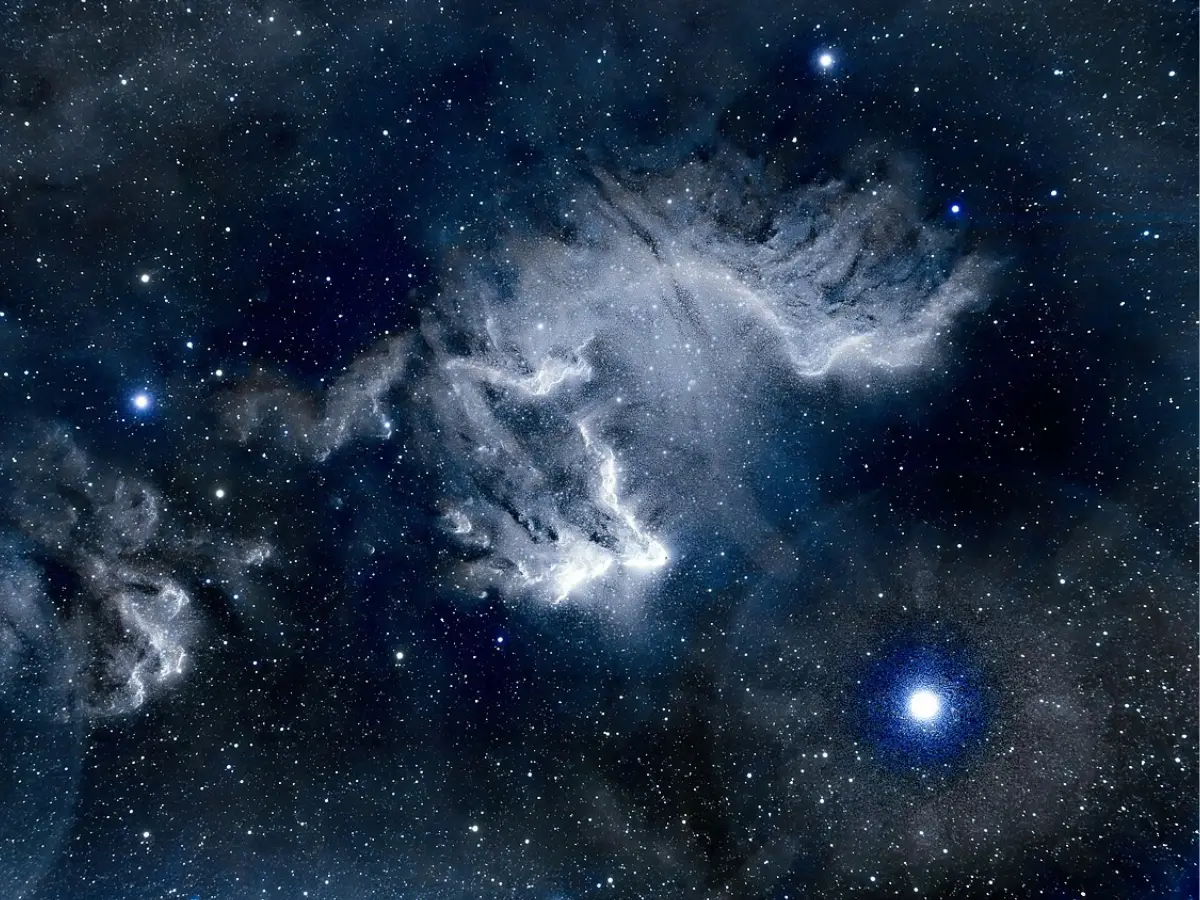
Scientists have solved a mystery that has haunted them for 160 years. Gamma Cassiopeiae is one of the five stars that make up the W-shaped Cassiopeia constellation. In 1866, Italian astronomer Angelo Secchi noticed something odd about this star - a strange hydrogen signature. There were points where the star’s hydrogen emissions were dark, when they should have been bright. It was highly unusual, and Secchi had never come across anything like this in the 4,000-odd stars that he had studied in his lifetime. So he came up with an entirely new stellar classification, the Be star, where B stood for the temperature and e for its hydrogen emission lines. Be stars are described as "a hot blue-white star with peculiar emission lines caused by a fast-spinning, ejected disk of matter."
Two theories were proposed for strange X-rays from the star
In 1976, astronomers discovered the star was pumping out incredibly intense, fluctuating X-ray emissions that were roughly 40 times brighter than typical stars of its size, and were being fueled by plasma heated to over 100 million degrees. Since then, two theories have been proposed for these extreme X-rays: magnetic activity and a hidden companion. The first proposed that localised magnetic reconnection/clashes could be occurring between the surface of the fast-spinning Be star and its surrounding disk of ejected gas. The second one stated that a small, unseen companion star is pulling material from Gamma Cas's disk, heating that matter to extreme temperatures as it falls.
Study reveals which of the two is the culprit
Trending Stories
&im=FitAndFill=(700,400)&imwidth=180&imheight=135&format=webp&quality=medium)
Navratri 2026: 9 days, 9 forms of Goddess Durga and 9 colours- Check the complete list
&imwidth=180&imheight=135&format=webp&quality=medium)
US troop deaths in Iran war on rise? Pentagon reveals latest toll
&imwidth=180&imheight=135&format=webp&quality=medium)
Trump claims ‘energy ceasefire’ between Russia and Ukraine; Zelensky says ‘news for me’
&imwidth=180&imheight=135&format=webp&quality=medium)
‘Never-ending flow of cheap labour’: JD Vance hits back at Indian-origin Congresswoman over US green card curbs for major tech companies
&im=FitAndFill=(700,400)&imwidth=180&imheight=135&format=webp&quality=medium)
Is sending robots to Mars easier than sending humans?
&imwidth=180&imheight=135&format=webp&quality=medium)
Amitabh Bachchan celebrates birthday with fans at Jalsa during Sunday darshan | Watch
&imwidth=180&imheight=135&format=webp&quality=medium)
A watchdog rated 'ChatGPT for Teens' an unacceptable risk and says keep under-18s off it
&imwidth=180&imheight=135&format=webp&quality=medium)
1,500 drones illuminate Mumbai sky as Cordelia Cruises unveils second ship, Cordelia Sky
&imwidth=180&imheight=135&format=webp&quality=medium)
‘Please tell Putin...’: Zelensky says Ukraine will hold elections if Russia agrees to 60-day ceasefire
&imwidth=180&imheight=135&format=webp&quality=medium)
Anthropic's AI invented a murder witness and sent the fake tip to Philadelphia police
&imwidth=180&imheight=135&format=webp&quality=medium)
Delhi Sikh Gurudwara Committee files complaint against Kejriwal, AAP leaders for ‘violating sanctity’ of Bangla Sahib
&imwidth=180&imheight=135&format=webp&quality=medium)
CJI Surya Kant declines INDIA bloc leaders’ request for meeting ahead of march to SC, asks them to file petition
&imwidth=180&imheight=135&format=webp&quality=medium)
After crackdown on CJP, opposition to march to Supreme Court Monday over ‘vote chori', removal of CEC
&imwidth=180&imheight=135&format=webp&quality=medium)
One Indian killed in Riyadh airport attack; 11 others injured : MEA
&imwidth=180&imheight=135&format=webp&quality=medium)
Imran Khan released hours after Mumbai Police detain him during CJP protest
&imwidth=180&imheight=135&format=webp&quality=medium)
Nathan Lyon completes 1,000 Test runs at No. 10 to script rare cricket feat
&imwidth=180&imheight=135&format=webp&quality=medium)
Top AI models flunked a test of inventing new AI research, so much for self-improving AI
&imwidth=180&imheight=135&format=webp&quality=medium)
Nepal flash floods swallow homes and bridges a month after devastating disaster
&imwidth=180&imheight=135&format=webp&quality=medium)
'Ouch!!! That must hurt': Kangana Ranaut hails Kamal Haasan's sharp reply to Elon Musk over Starlink row
&imwidth=180&imheight=135&format=webp&quality=medium)
Sidhu Moose Wala’s younger brother wins hearts by recreating late singer’s signature move at Toronto Hologram Show
&imwidth=180&imheight=135&format=webp&quality=medium)
Meta's Muse AI could be a security nightmare for India's billion-plus users
&imwidth=180&imheight=135&format=webp&quality=medium)
UK school ditches technology, shifts from screen to pen and paper for learning
&imwidth=180&imheight=135&format=webp&quality=medium)
IND vs WI, 3rd T20I: Abhishek Sharma smashes 18-ball fifty, sets record for fastest to 2,000 T20I runs
&imwidth=180&imheight=135&format=webp&quality=medium)
IND vs WI, 3rd T20I: Arshdeep, Abhishek star as India secure 14-run win over West Indies
&imwidth=180&imheight=135&format=webp&quality=medium)
Houthis claim Riyadh airport attacks, Aramco strikes; issue fresh warning to airlines, travellers and workers
&imwidth=180&imheight=135&format=webp&quality=medium)
Portugal Federation confirms Cristiano Ronaldo’s return to national team despite suspension
&imwidth=180&imheight=135&format=webp&quality=medium)
Microsoft's Nadella says treat every AI model as already hacked, and build an 'emergency brake'
&im=FitAndFill=(700,400)&imwidth=180&imheight=135&format=webp&quality=medium)
New OTT releases this week (October 12-18, 2026): Sacrifice, Koffee with Karan S9, Roadies Rebirth- 6 titles coming on Netflix, JioHotstar and more
&imwidth=180&imheight=135&format=webp&quality=medium)
Anthropic AI safety test uncovers website exploits, unpaid database access and fake police tip
&imwidth=180&imheight=135&format=webp&quality=medium)
Maharashtra appoints FDA commissioner Tukaram Mundhe as secretary of committee for MPSC overhaul amid stir
&imwidth=180&imheight=135&format=webp&quality=medium)
The street cannot govern India, but the government cannot ignore it either
&imwidth=180&imheight=135&format=webp&quality=medium)
Nana Patekar's cause of death confirmed; here's what his postmortem report says
&imwidth=180&imheight=135&format=webp&quality=medium)
'Say no to Muse': Meta has no control over its own moderation AI while it forces a security nightmare on everyone
A new study published in the journal Astronomy & Astrophysics has identified the reason for this behaviour. Using JAXA’s X-Ray Imaging and Spectroscopy Mission (XRISM) space telescope, scientists now know that the curious X-ray emissions are linked to the orbital motion of a companion white dwarf. University of Liège’s Yaël Nazé, lead author of the study, said in a statement released by the European Space Agency (ESA), "We think the key is in understanding how exactly the interactions take place between the two stars." Scientists believe this could be a common arrangement among low-mass stars. However, data suggest that it is actually much rarer and only seen in high-mass Be stars.
"Now that we know the true nature of gamma-Cas, we can create models specifically for this class of stellar systems, and update our understanding of binary evolution accordingly," Nazé added.

