
&imwidth=800&imheight=600&format=webp&quality=medium "Indian scientists discover Alaknanda, a Milky Way twin galaxy that lived 12 billion years ago")
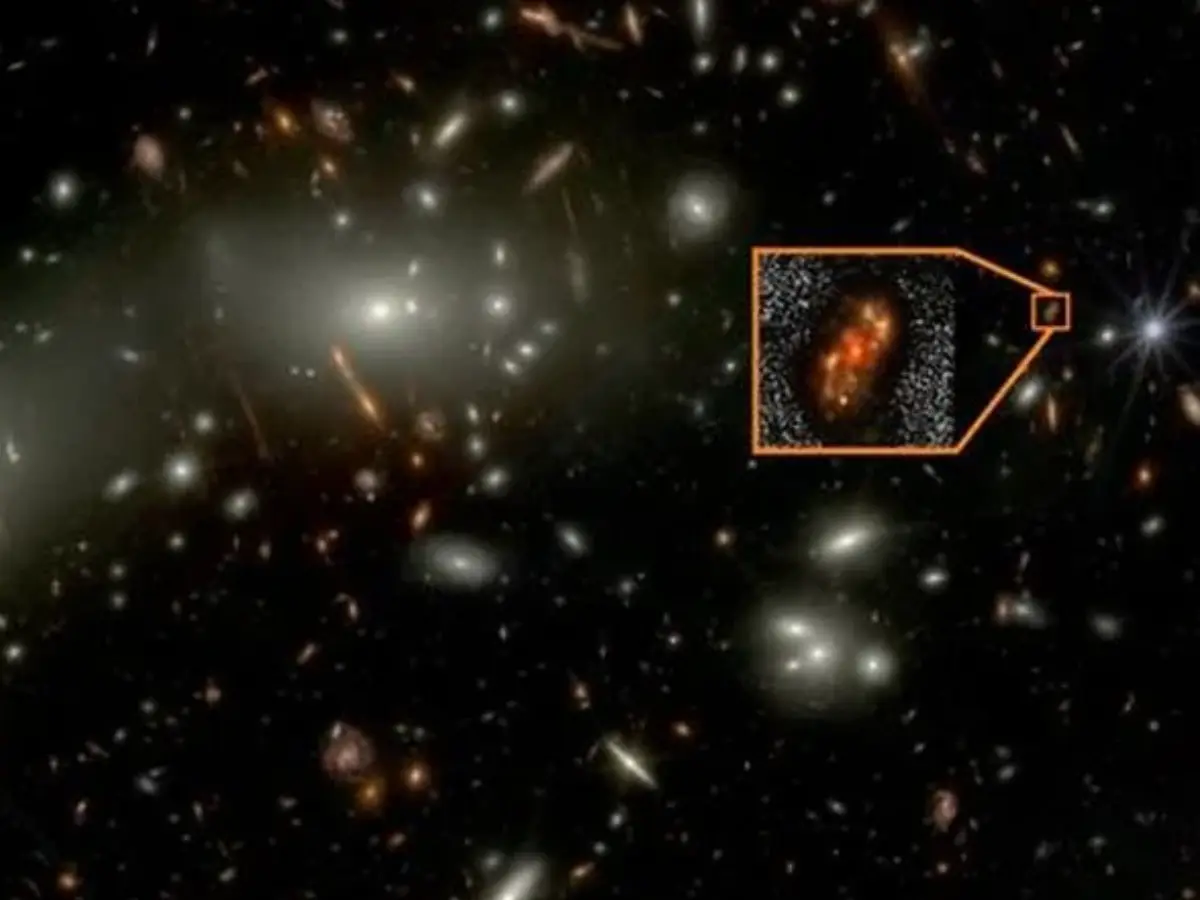
Scientists in India have discovered a galaxy similar to the Milky Way. The only difference is that it formed when the universe was only 1.5 billion years old. Today, the universe is already 13.8 billion years old, which means that what they saw belongs to an ancient world. Named Alaknanda, after a Himalayan river, this galaxy is defying common beliefs about the universe's infancy. Astronomers have long thought that right after the universe was born, galaxies were mostly irregular and chaotic. However, when researchers Rashi Jain and Yogesh Wadadekar used the James Webb Space Telescope (JWST) to scan this portion of the universe, they came across a perfectly spiral galaxy, "a massive, beautifully structured cosmic pinwheel".
Alaknanda lived when universe was only 10% of its current age
The study, published in Astronomy and Astrophysics, states that this "galaxy looks remarkably similar to our own Milky Way". Wadadekar said this is even though "it existed when the universe was only 10% of its current age." It was first spotted by Jain, a PhD researcher at the Pune-based National Centre for Radio Astrophysics of the Tata Institute of Fundamental Research (NCRA-TIFR) earlier this year. She then told her supervisor, Wadadekar, about it, who was in disbelief.

Alaknanda galaxy is 30,000 light-years in diameter
Jain stumbled upon this ancient structure while going through the details of 70,000 objects. "Only one there that was a grand design spiral galaxy, spanning approximately 30,000 light-years in diameter," she says. The galaxy had two symmetrical arms emerging from a disc at the centre, wrapping around a bright central bulge. She said there were "clusters of stars along the spiral arms, similar to what we see in nearby spiral galaxies today."
Trending Stories
Alaknanda consists of 10 billion stars
The researchers say Alaknanda is very different from the perceived galaxies in the early universe. "It's massive, it's one-third of the Milky Way in size, and has 10 billion stars," Wadadekar said. They also saw new stars being born roughly 20-30 times faster than what is seen in the Milky Way. They are now planning to ask for access to James Webb or the Alma observatory in Chile fow follow-up research to learn more about Alaknanda.

