
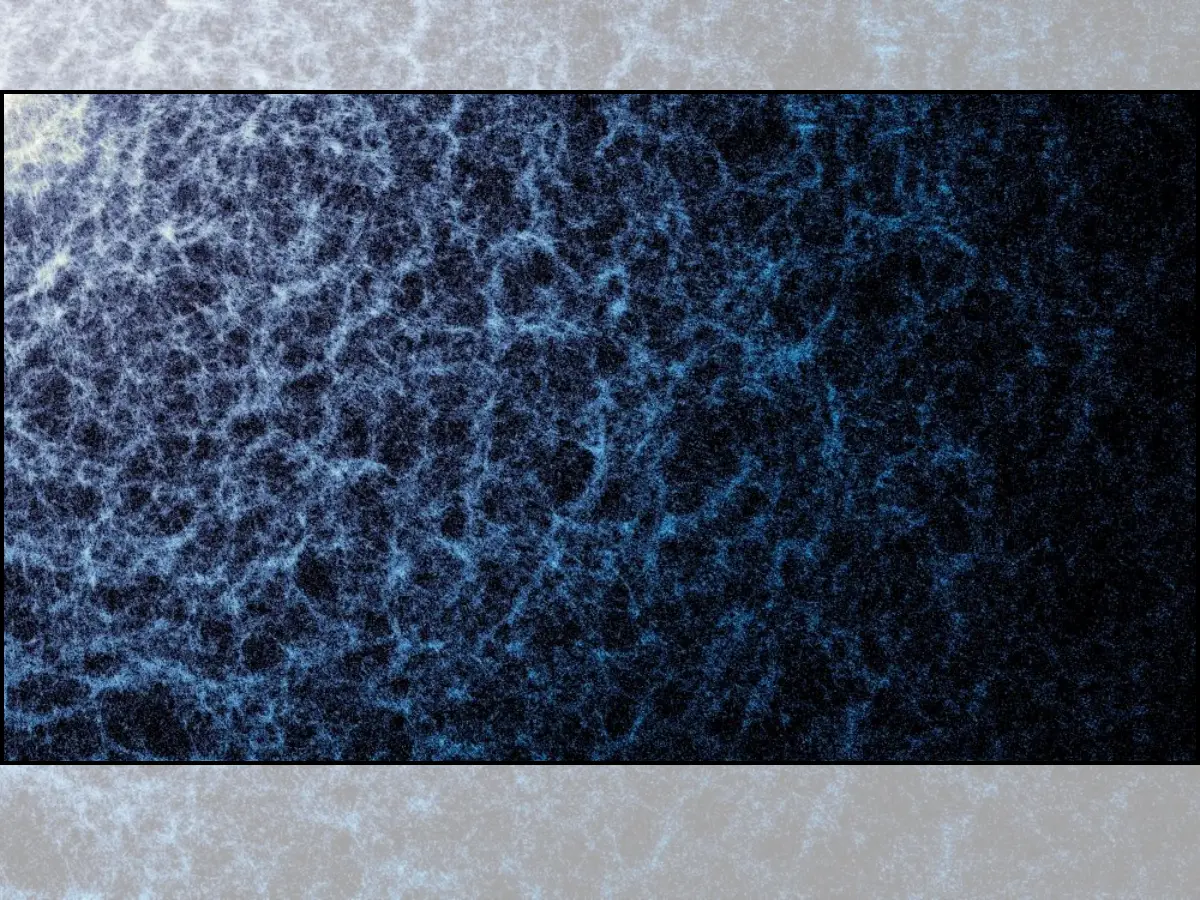
&imwidth=800&imheight=600&format=webp&quality=medium "MIND BLOWN! See 47 million galaxies in the largest 3D map of the universe. Each dot in this photo is a galaxy")
Scientists have pieced together the largest CT scan of the universe, with a whopping 47 million galaxies and 20 million additional stars present in one picture. This was part of a project that ran for over five years to create the largest and most detailed 3D map of our cosmic outdoors. The Dark Energy Spectroscopic Instrument (DESI)'s 5,000 eyes have been locking in on tiny portions of the sky since 2021, and we finally have the much-awaited picture. Now all of those images have been combined to create this unimaginable spectacle. The observations made by the DESI survey are a massive leap forward, combining observations from over six times as many galaxies and quasars—the brilliant signals emitted by black holes—than all previous surveys put together. The stunning image shows light from galaxies as old as 11 billion years, merely two billion years after the universe was born.
Map of galaxies
Dr Seshadri Nadathur, a Portsmouth University researcher, who serves as co–chair of the DESI galaxy and quasar clustering working group, said, "We've barely scratched the surface so far" and termed "this DESI map of galaxies" extremely important for cosmology. The fibre–optic lens with an accuracy of 10 microns, or less than the width of a hair, moved and observed a new spot every 20 minutes. By splitting the collected light into a spectrum of colours, ten spectrographs allowed researchers to determine the chemical composition, velocity, and spatial position of each target. This led to the creation of the most detailed and precise 3D map of the universe. Each dot in the photo is a galaxy, while the dark spots are areas where the thick edge of the Milky Way blocked out light from distant stars. Initially, DESI projected a view of 34 million galaxies and quasars, but it exceeded that number.

Dark energy project
The project involved over 900 scientists from 70 institutions who started off with the aim of studying dark energy, the force believed to be responsible for the expansion of the universe. How and when the universe will end depends on the balance between matter and dark energy. The first three years of the program collected data, which showed that dark energy could be changing. Scientists are hoping that the full map will offer a view into whether this evolution is bigger or smaller than estimated. The first dark energy results from the five–year survey are expected in 2027.
Trending Stories
)
The Early Spring is proof not everyone can talk about their real feelings, and it is perfectly OK
)
UN votes to ‘correct the map’ as India backs fairer world view
)
Nigerian Navy discovers 99,000 litres of suspected stolen, illegally refined products as it intensifies anti-crude oil theft operations
)
Who is Aditi Paudel? 17-year-old becomes Japan's first literacy ambassador
)
Bengaluru: Officials find 40 kg expired chilli at chairman's club
)
Jaishankar rejects trade link to ending Ukraine war
)
Israeli strikes on Lebanon kill three, injure 23 despite truce
)
Alpine glacier was covered with sheep wool sheets to prevent melting. It worked
)
South Korea mulls deploying military assets to Strait of Hormuz
)
World's fifth-largest economy, British army can't afford to train
)
Breaking | Vance takes the podium: First White House briefing since Leavitt's exit
)
Taiwan raises 'concerns' over China's missile test
)
BRICS 2026: $1 trillion sovereign capital set to converge in Delhi for first iBRICS Summit
)
What is Iran's Pickaxe Mountain that Trump has again threatened to bomb?
)
UN votes to correct world map that visually shrank Africa for 450 years
)
Former NewJeans member Danielle launches YouTube channel, hints at new solo journey
)
Bangladesh batter Towhid Hridoy creates history with 350 not out in South Africa
)
Brendan Fraser’s transformation fuels The Mummy 4 excitement as fans welcome back Rick O’Connell
&im=FitAndFill=(700,400))
Krishna Janmashtami 2026: From Dhaniya Panjiri to Makhana Kheer- 5 best sweet dishes perfect for celebrating Lord Krishna’s birth
)
Donald Trump plans to travel to Ireland on Qatari-donated jet amid security concerns
)
Nazi-looted art to return to Jewish heirs
)
Eight killed in Kerala’s Thrissur after car rams into lorry parked on highway
&im=FitAndFill=(700,400))
Why Russian fighter jets use bulky, low-pressure tyres compared to US jets
)
FBI-wanted fraud accused arrested in Jalandhar over $600,000 scam
&im=FitAndFill=(700,400))
Why US tanks weigh over 20 tons more than Russian tanks
&im=FitAndFill=(700,400))
New Friday OTT releases (September 4, 2026): GDN, Dhamaal 4, Jagamae Sangeetham- Watch 6 new movies and TV shows on Netflix, Prime Video and more
)
Killing the Himalayas slowly: Human urine is melting a glacier on Mount Everest

