

&imwidth=800&imheight=600&format=webp&quality=medium "Xi Jinping's new AI bloc: China launches 'World AI Body' with Pakistan and Russia in, India out")
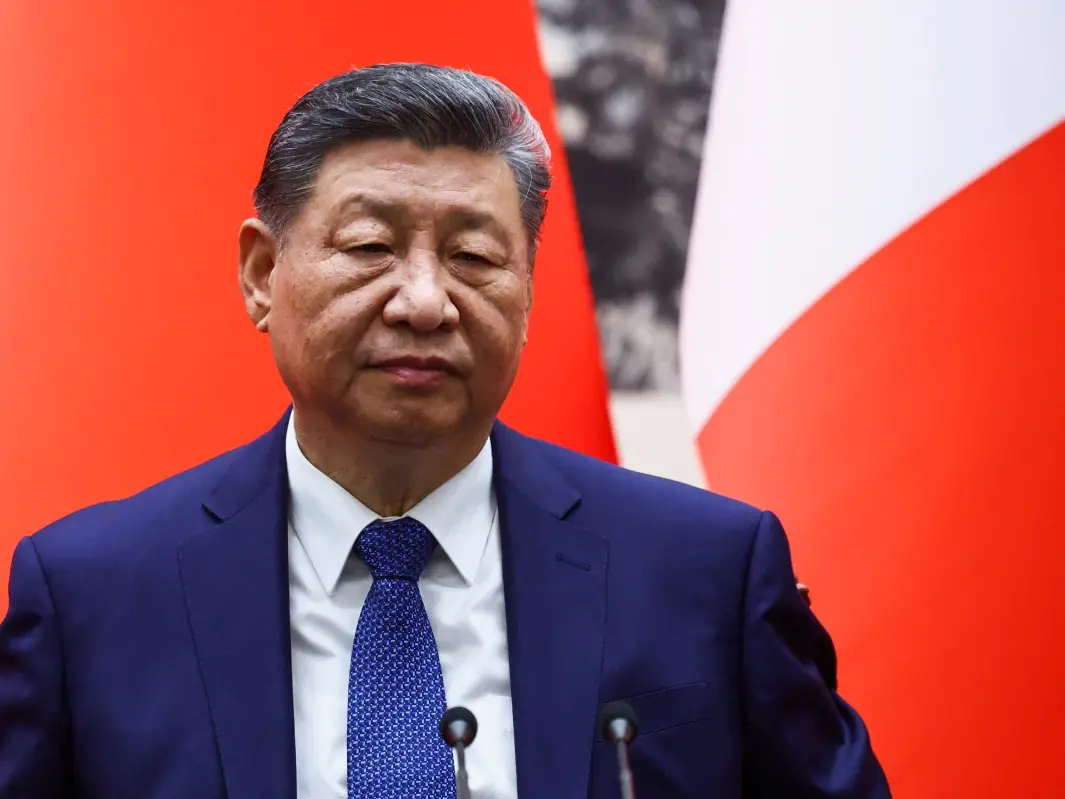
On July 16 in Shanghai, twenty-nine countries signed the founding agreement of a new world body for artificial intelligence, built by China, headquartered in China, and launched by Xi Jinping himself. Pakistan signed. Russia signed. Brazil and South Africa signed. India did not.
What Is WAICO
The World Artificial Intelligence Cooperation Organisation, WAICO, is an intergovernmental organisation headquartered in Shanghai, formally established on July 16 and unveiled at the World AI Conference the following day. Its founding accord commits members to promoting international cooperation and global governance of AI under the principles of the UN Charter, with the stated aim of ensuring the technology develops in a direction that is beneficial, safe and equitable for humanity. Reports from the ceremony say UN Secretary-General Antonio Guterres attended, a significant nod of legitimacy for a Chinese-convened body.
Xi Jinping set the tone: ‘AI development should not be a solo performance by a single country, but a symphony of international cooperation.’ He also urged members to jointly oppose what he called the overstretching of national security concepts in AI, an unmistakable jab at Washington's export controls on advanced chips.
Who Is In, And Who Is Not
The founding membership tilts heavily toward the Global South: reports name Russia, Pakistan, Kazakhstan, Indonesia, Malaysia, Laos, Brazil, South Africa, Senegal, Belarus, Serbia, Cuba and Venezuela among the 29, with ten African and twelve Asian countries signing on.
Trending Stories
&imwidth=180&imheight=135&format=webp&quality=medium)
Viral video shows cross falling on Colombia priest, no official confirmation | WATCH
&imwidth=180&imheight=135&format=webp&quality=medium)
France reports first human case of livestock virus Shamonda, patient dies; what we know so far
&imwidth=180&imheight=135&format=webp&quality=medium)
Two BrahMos missiles on Tejas, triple the range and 100% indigenisation, says former BrahMos CEO
&imwidth=180&imheight=135&format=webp&quality=medium)
India-China face-off continues near Arunachal’s Taksing, reveals ITBP chief in first official confirmation of tensions
&imwidth=180&imheight=135&format=webp&quality=medium)
Ilhan Omar breaks silence over alleged marriage to her brother; Trump thinks it's 'really good answer'
&imwidth=180&imheight=135&format=webp&quality=medium)
WATCH: Trump demands Ilhan Omar removal from Congress for 'using fake name to be sworn in'. So what is her real name?
&imwidth=180&imheight=135&format=webp&quality=medium)
Netanyahu dials PM Modi, invites him and Capt Smit Machchhar to light torch on Israel’s Independence Day
&imwidth=180&imheight=135&format=webp&quality=medium)
Christa Pike's failed execution: Tennessee team struggled to insert IV lines, lawyer says
&imwidth=180&imheight=135&format=webp&quality=medium)
Did Neha Bora call for Bangladesh-like GenZ protest, 'anarchy' in India? WION Fact-checks viral claim
&imwidth=180&imheight=135&format=webp&quality=medium)
US midterms 2026: US Supreme Court allows New Hampshire to restrict student IDs for voting
&imwidth=180&imheight=135&format=webp&quality=medium)
A secret code, a midnight escape and 300 deaths: The Russian officer who turned on Putin
&imwidth=180&imheight=135&format=webp&quality=medium)
Trump ordered to answer questions under oath in BBC defamation lawsuit by December 11
&imwidth=180&imheight=135&format=webp&quality=medium)
Putin says Russia is ready to resume Ukraine-US peace talks but rejects 'short ceasefire' amid deadly attacks
&imwidth=180&imheight=135&format=webp&quality=medium)
Horrific video shows the moment 18-year-old fell to her death from Mexico amusement park ride
&imwidth=180&imheight=135&format=webp&quality=medium)
From Agni-V to Project Kusha: How are India’s indigenous missile systems and defence shield reshaping modern warfare
&imwidth=180&imheight=135&format=webp&quality=medium)
'It's a crime not to see this scene': Tehran puts Trump 'behind bars'
&imwidth=180&imheight=135&format=webp&quality=medium)
What is the ‘heat ray’ weapon? Pete Hegseth reportedly authorises DHS to test it at US-Mexico border
&imwidth=180&imheight=135&format=webp&quality=medium)
Meghan Markle’s father Thomas under investigation over alleged child abuse images: Report
&imwidth=180&imheight=135&format=webp&quality=medium)
SA vs AUS 2nd Test: Temba Bavuma reveals 'Tendulkar inspiration' behind career-best 179
&imwidth=180&imheight=135&format=webp&quality=medium)
China's dancing robot turns violent bodyguard, lifts cars and fights intruders - Watch
&imwidth=180&imheight=135&format=webp&quality=medium)
Watch: India rejects ‘imprecise and unsupported’ references in UN migrant rights report
&imwidth=180&imheight=135&format=webp&quality=medium)
US to get 850 F-35 stealth fighter jets under 10-year Pentagon-Lockheed deal
&imwidth=180&imheight=135&format=webp&quality=medium)
GRAVITAS | Putin fires nuclear-capable hypersonic missiles, Zelensky ready to surrender 25% territory
&im=FitAndFill=(700,400)&imwidth=180&imheight=135&format=webp&quality=medium)
New Friday OTT releases (October 23, 2026): Gajab Raat, Dorothy, Chaar Yaar- Watch these 6 new movies and TV shows on Netflix, Prime Video and more
&im=FitAndFill=(700,400)&imwidth=180&imheight=135&format=webp&quality=medium)
Serbia elections: Nearly 150,000 people take to streets in massive rally against Aleksandar Vucic | In pics
&imwidth=180&imheight=135&format=webp&quality=medium)
BCCI’s CoE cautious over Hardik Pandya’s fitness, sets expected comeback timeline
&imwidth=180&imheight=135&format=webp&quality=medium)
'This is despicable': Amy Acton hits back at Vivek Ramaswamy over Ohio campaign ad featuring her estranged mother
&imwidth=180&imheight=135&format=webp&quality=medium)
Finance influencer dies by suicide in Chennai; father accuses tech CEO, who denies charge
&imwidth=180&imheight=135&format=webp&quality=medium)
'Vivek should keep it up': Trump defends Ramaswamy's controversial campaign ad targeting Amy Acton
&imwidth=180&imheight=135&format=webp&quality=medium)
One man, 8 months of work, and a river dirty again: Why Bittu Tabahi may quit
&imwidth=180&imheight=135&format=webp&quality=medium)
US midterms 2026: Elon Musk’s political spending hits $445 million as Republicans battle to retain Senate control
&imwidth=180&imheight=135&format=webp&quality=medium)
ENG vs SL: Harry Brook breaks Shubman Gill’s record for fastest ODI double century
&imwidth=180&imheight=135&format=webp&quality=medium)
450 villagers in UP rush to take anti-rabies shots after consuming 'charnamrit'
&imwidth=180&imheight=135&format=webp&quality=medium)
ENG vs SL: Harry Brook’s 202 goes in vain as Sri Lanka pull off second-highest ODI chase
&imwidth=180&imheight=135&format=webp&quality=medium)
Saudi Arabia targeted yacht carrying 14 Indians in Red Sea, rescue underway, Houthis claim
One absence stands out above all others. Every founding member of BRICS, Brazil, Russia, China, South Africa, has signed on to WAICO. Except India. New Delhi's chair in Shanghai stayed empty while Islamabad took a founding seat.
Why China Built It
Analysts read WAICO as Beijing's move to institutionalise its influence over the rules of the global digital economy, promoting a state-centric model of AI governance that appeals to developing nations, and building a platform to shape AI policy discussions at the UN level.
The timing is not accidental. WAICO arrives as American export controls on advanced AI chips tighten around China: rules announced in May 2026 require licenses for any Blackwell-class Nvidia chip transfer to Chinese entities, and US officials said this month that only a ‘trivial’ number of H200 chips have shipped under the limited licenses approved. Locked out of the hardware club, Beijing is building a governance club and inviting everyone Washington's rules leave behind.
And the diplomacy has a technology twin. On the same day WAICO's agreement was signed, Chinese startup Moonshot AI released Kimi K3, the largest open-weight AI model ever built, its full weights free for the world to download from July 27. Open models for the world's developers, a governance bloc for the world's governments, the technology and the rulebook, both made in China.
The India Question
India's absence reads as a deliberate choice, and New Delhi's strategic establishment is openly wary. India's former Permanent Representative to the United Nations has warned that WAICO could end up determining the ‘new global AI order’ and that ‘India must be vigilant.’ The concern is straightforward: a Chinese-headquartered body writing global AI rules, with Pakistan at the founding table, is not a forum where New Delhi starts with influence.
India's own AI debate is meanwhile dominated by sovereignty. Policy commentary in New Delhi this month has centred on ‘sovereign AI’ the push to build domestic capability rather than depend on foreign models, whether American or Chinese. India has the world's largest developer population outside the US and a fast-growing AI startup ecosystem, but no frontier model of its own.
That leaves New Delhi with a genuine dilemma. Staying out of WAICO keeps India clear of Chinese-led rule-making, but it also means the rules get written without India in the room, in a body more than a fifth of the world's countries have already joined. Joining would legitimise a Beijing-convened order that India, four years after Galwan, has every strategic reason to distrust.
What It Means
The world's AI order is visibly splitting into blocs. On one side: American chip controls, closed frontier models, and alliances of advanced economies. On the other: Chinese open-weight models given away free, and now a formal governance organisation headquartered in Shanghai, recruiting the Global South state by state.
The countries in the middle, the ones choosing which stack to build on and which table to sit at, are the prize. Twenty-nine of them just chose Shanghai.
India is betting it can write its own rules and build its own capability instead. Whether an empty chair in Shanghai proves to be strategic patience or a strategic mistake is a question that will take years to answer, but the table has been set, and the seat next to Pakistan is filled.
