

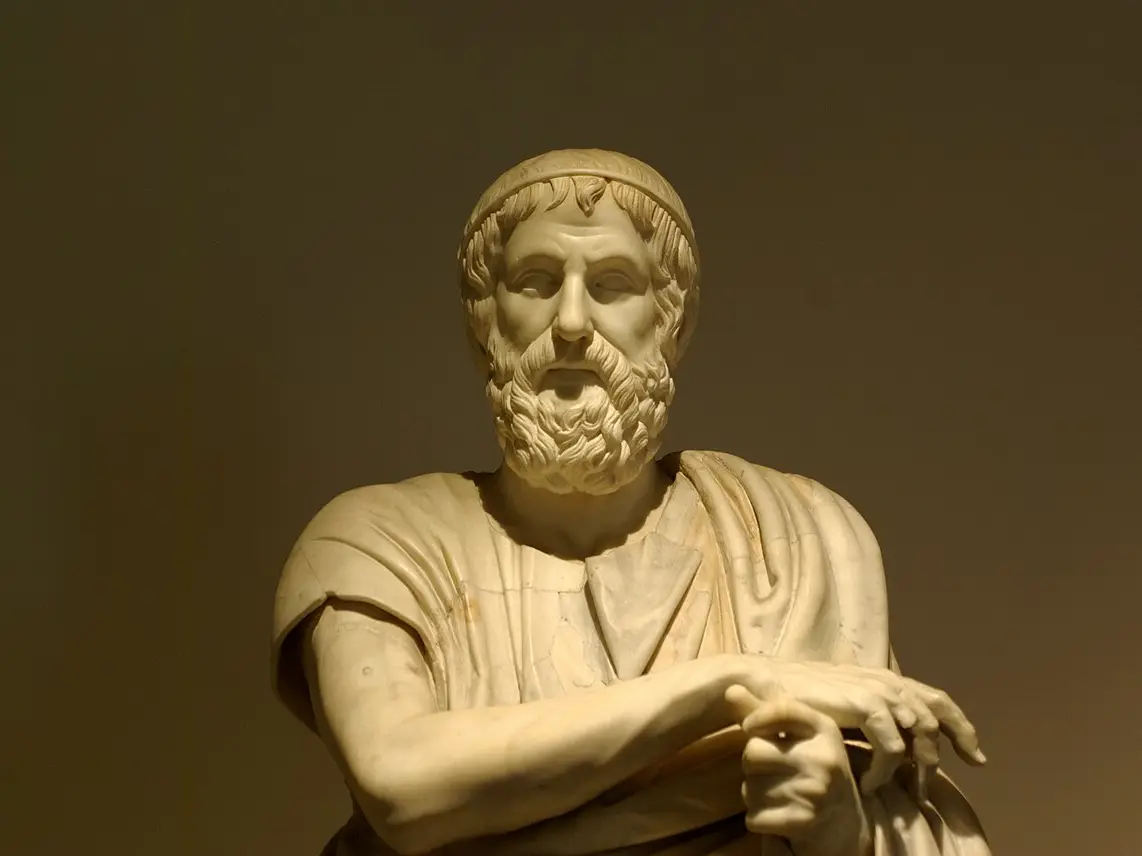
&imwidth=800&imheight=600&format=webp&quality=medium "Homer's Iliad written before The Odyssey found inside an Egyptian mummy")
In a bizarre and unheard-of discovery, scientists have found a papyrus containing a passage from Homer's Iliad inside a Roman-era mummy. The nearly 1,600-year-old mummy was kept at the Egyptian site of Oxyrhynchus. Researchers say this is the first time in archaeological history that a Greek literary text was intentionally added to the mummification process. Oxyrhynchus Archaeological Mission, directed by Maite Mascort and Esther Pons, helmed the project carried out by the Institute of Ancient Near East Studies (IPOA) at the University of Barcelona.
A team led by Núria Castellano carried out excavations between November and December 2025 and came across the mummy in Tomb 65. They were surprised to see a papyrus resting on the mummy's abdomen, deliberately placed as part of the embalming ritual. Previous excavations have revealed Greek papyri positioned on mummies, but they were all linked to magic and rituals. This is the first time that a literary work has been found on a mummy. It is Homer's Iliad, which makes the discovery even more exciting.
"This is not the first time we have found Greek papyri, bundled, sealed, and incorporated into the mummification process, but until now, their content was mainly magical," Professor Ignasi-Xavier Adiego said. Even though several papyri have been discovered at Oxyrhynchus since the late 19th century, "the real novelty is finding a literary papyrus in a funerary context."
The piece of papyrus was studied in detail between January and February 2026 in a second campaign. Papyrologist Leah Mascia and Ignasi-Xavier Adiego deciphered the writing and determined that the fragment comes from the "Catalogue of Ships" in Book II of Homer's Iliad. This section talks about the Greek forces preparing for the Trojan War, when forces hid inside a fake horse and attacked Troy.
Excavations revealed a funerary complex at the Al Bahnasa necropolis where three limestone burial chambers containing Roman-era mummies and decorated wooden sarcophagi were found.

