
&imwidth=800&imheight=600&format=webp&quality=medium "The morale dividend: What GST relief means for soldiers and veterans")
When we talk about defence reforms, the conversation almost always drifts to tanks, missiles, or drones. Necessary, yes. But ask any soldier and you’ll hear a quieter truth: morale is as decisive as firepower. And morale is built not just on equipment in the field, but on the well-being of families at home.
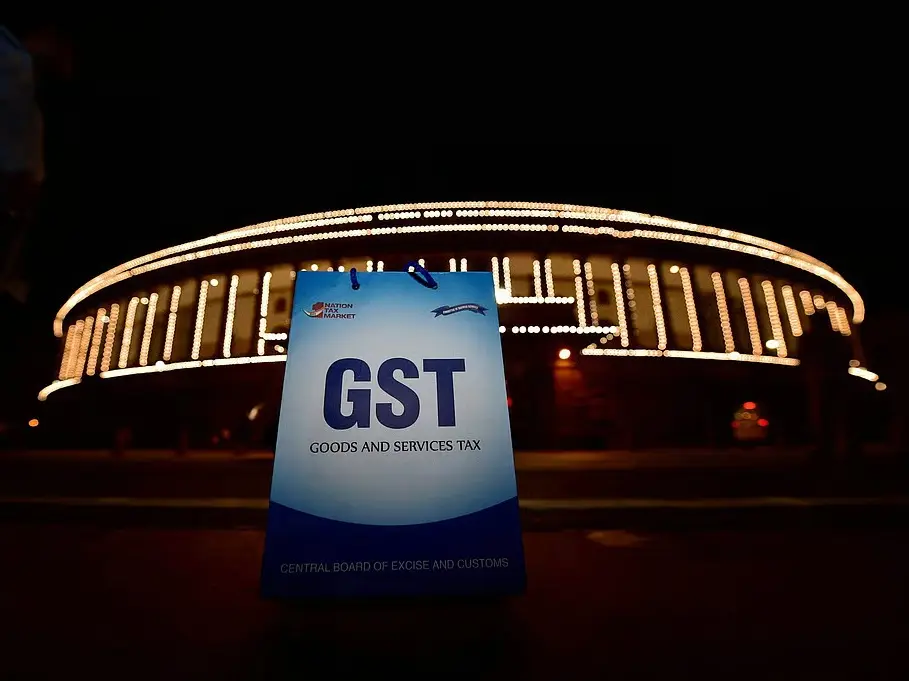
That is why the GST Council’s decision of 3 September 2025, coming into effect on 22 September, matters so much. On the surface, it is a fiscal measure — trimming tax rates, exempting categories of hardware and goods. In reality, it is a reform that touches every serving soldier, every veteran, and every family living in a cantonment.
Salaries, pensions, and purchasing power

India’s defence budget this year is ₹6.81 lakh crore. Of that, a staggering ₹1.47 lakh crore goes to salaries and pensions for serving personnel, retirees, and their dependents. This is the real backbone of our military community.
Until now, GST added a hidden weight to household expenses. Groceries, school fees, appliances, even uniforms — the cumulative bite was felt in every cantonment home. The latest rationalisation, which reduces GST rates to simpler 5 and 18 per cent slabs and exempts many essentials, means those rupees stretch further.
For a sepoy’s family, that might mean not putting off the purchase of a new washing machine. For a pensioner in Jaipur, it might mean medicines that cost less each month. Small things, perhaps. But together, they add up to dignity and security.
Trending Stories
&im=FitAndFill=(700,400))
What TSMC's 2nm technology means for Apple
)
Delhi Air pollution: Strict crackdown on waste burning
)
'Were you here to sell chickpeas?': Wasim Akram criticises Babar Azam's captaincy
)
Saudi Arabia exits China-led mBridge digital currency platform amid Saudi-Houthi conflict
)
Noel Tata challenges Chandrasekaran’s reappointment as Tata Sons chairman. What happened at the board meeting
)
TIFF 2026: Theja Rio’s Angh wins Platform Prize, puts Nagaland story on global stage
)
Pilot recreates Mona Lisa in sky over Oklahoma and Arkansas in four-hour flight: VIDEO
)
Several petrol pumps, other businesses to refuse UPI payments above Rs 2,000 from Oct 16: Is it legal?
)
Saudi vs Houthis: Houthis claim missiles & drones used in attack on key Saudi sites
)
Trump says he'll build an 'AI Force' and appoint a czar, for 'high IQ' people only
)
J&K Assembly Session begins amid chaos: BJP, ruling alliance clash as statehood demand dominates
)
Taylor Swift has a 'proud wife' moment as Travis Kelce scores first touchdown of season: 'That’s my husband!'
)
Iran sets 7 conditions to end war with US: What are Tehran’s demands?
)
AI actress Tilly Norwood glitches mid-interview, switches from English to Chinese | Watch
&im=FitAndFill=(700,400))
New OTT releases this week (September 21-27, 2026): Shaque: Trust No One, Hunkkaar, Don’t Be Shy- 5 new titles coming to Netflix, Prime Video and more
)
US ships in Indian Ocean ‘will be attacked’ if war resumes, warns Iran
)
China now makes advanced memory chips without the machines it was banned from buying
)
Arvind Kejriwal, family members, Delhi CM Rekha Gupta get SIR notices
)
CDU suffers historic defeat in eastern Germany as AfD surges, Merz vows to stay on
)
Bessent meets China’s He Lifeng to prepare for Trump-Xi summit
)
Microsoft executive called AI training the ‘largest theft of labour in human history’
)
Punjab man consumes poison outside DC office; Congress, BJP target AAP government
)
Mahabharat actor Saurav Gurjar arrested in Hyderabad, sent to 14-day judicial custody in sexual exploitation case
)
Apple reportedly building AI server with M8 Ultra chips, may use Nvidia technology
)
Jailer 2: Vidya Balan joins Rajinikanth's upcoming film as Kantha | Watch
)
‘0% chance’: Nvidia CEO Jensen Huang dismisses AI extinction fears by 2030
)
S Jaishankar, former Army chief among high-profile names issued Delhi SIR notices
)
Glitch in the matrix caught on camera: Woman vanishes after talking to reporter
)
Fleming's aspirations as England Test coach include WTC, top ranking and Ashes
)
WATCH | Mysterious lights over Tehran caught on video. Drone, aircraft or something else?
)
Putin's United Russia party wins 355 seats in Duma election; 4 other parties cross threshold to enter parliament
)
Trump-Xi summit: US Treasury Secretary holds meeting with Chinese Vice Premier
&im=FitAndFill=(700,400))
Kareena Kapoor birthday special: Inside her net worth, best movies, luxurious lifestyle and love story with Saif Ali Khan
)
Samsung raises Galaxy S26 prices by Rs 20,000: Here’s what each model now costs
)
Samay Raina-Mukesh Chhabra controversy explained: What happened over girlfriend joke on India's Got Latent?
)
Delhi: Flagged voters remain on the draft roll but face hearings
)
40-foot waves crash into cruise ship in dangerous stretch near Antarctica. Watch
)
'Lot of things to learn from experienced players': Jayasuriya backs Rohit, Virat for 2027 ODI World Cup
)
AI kill switch explained: Why shutting down a dangerous AI may not be as simple as pressing a button
)
SNL UK takes aim at Ed Sheeran with AI Princess Diana sketch
)
Chancellor Friedrich Merz vows to stay on as exit polls signal major poll setback
)
Italy moves to ban face veils in schools as Meloni pushes new integration measures
The cantonment economy
Walk through a market in Ambala, Pune, or Jalandhar and you’ll see what this really means. Local shopkeepers, grocers, tailors, and electronics vendors all depend heavily on defence families’ spending. When GST on essentials falls, demand rises. And when demand rises, small-town economies breathe easier.
The Army doesn’t just defend borders. It sustains entire communities in cantonments across the country. The GST reform gives those communities a timely boost, especially as we head into the festive season.
Linking morale to readiness
It is easy to forget how tightly morale links to readiness. A jawan manning a post on the Line of Control fights with a different resolve when he knows his family is comfortable back home. A major commanding a company in Ladakh sleeps a little easier when school bills and household expenses don’t consume his wife’s evenings.
Fiscal relief, at the family level, reduces stress on serving personnel. And reduced stress translates directly into focus on the mission. We often talk of drones as force multipliers. But morale is a force multiplier too — and this reform strengthens it.
Veterans and their families
Let’s not overlook veterans. Many live on fixed pensions, watching costs creep upward year after year. For them, GST relief is not a technicality — it is a lifeline. Lower tax on essentials means less pressure on monthly budgets, less reliance on support networks, and more dignity in retirement.
For widows and dependents of soldiers, this reform is equally important. It is a quiet acknowledgement that service to the nation extends beyond uniformed years, and that the state still stands behind those who stood for it.
Beyond the household: A national signal
The government is prepared to absorb between ₹48,000 crore and ₹1.1 lakh crore in revenue loss to make this reform work, depending on how the calculation is framed — lower if you look at the wider GST impact across government, higher when scoped specifically to defence-related procurement. That figure tells its own story. It is not just about balancing accounts — it is about prioritising security, not only at the border but in the lives of those who guard it.
National security is not just a line of tanks. It is also the confidence of a soldier’s child in Shillong who can afford better books, or a veteran’s widow in Bhopal who manages her bills more comfortably. By easing life for soldiers and their families, the government sends a signal that security policy is people policy too.
A reform felt at home and on the frontier
GST 2.0 will be written up as a tax reform. But for those in uniform and those who once wore it, it will be remembered as something else: a morale reform.
It makes pay and pensions go further. It strengthens cantonment economies. It uplifts veterans and their families. And in doing so, it strengthens the Army itself.
Because when a military family feels secure in Ambala or Leh, the Army’s resolve on the frontier becomes that much stronger. That is the true morale dividend of GST 2.0.
Disclaimer: The views of the writer do not represent the views of WION or ZMCL. Nor does WION or ZMCL endorse the views of the writer.