
&imwidth=800&imheight=600&format=webp&quality=medium "Indian Army as architect: Structuring Bangladesh’s first military force")
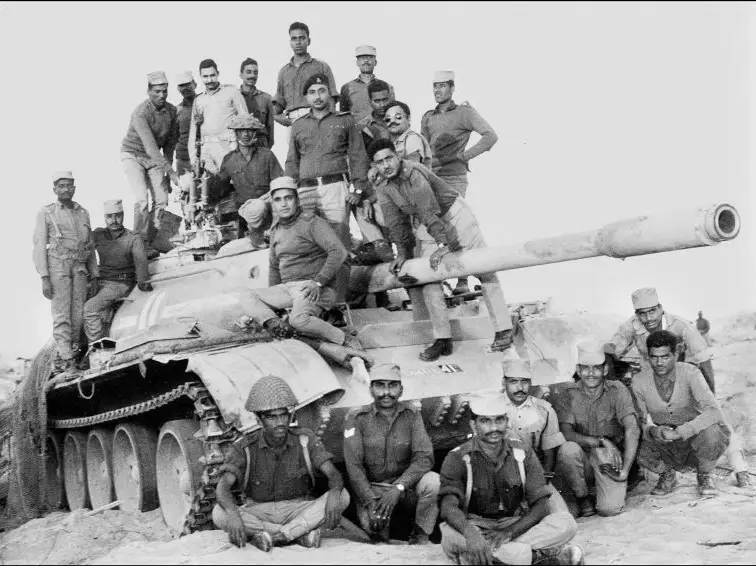
The independence of Bangladesh in 1971 was shaped decisively by the coordinated operations of the Indian Army and the Mukti Bahini. While the Mukti Bahini’s guerrilla actions inside East Pakistan steadily eroded Pakistani military control and morale, Indian assistance—arms, training, intelligence and strategic direction—proved essential in turning these irregular fighters into an organised resistance. India’s Eastern Command established training camps, offered sustained logistical support and enabled joint operations that became critical once India entered the war formally in December 1971. The surrender of Pakistani forces on December 16 demonstrated the effectiveness of this partnership. Crucially, Indian involvement did not end with victory; it extended into institution-building. On November 21, 1971, the Bangladesh Army took shape with significant Indian guidance, transforming Mukti Bahini fighters into the nucleus of a national military force.
Background: The Mukti Bahini and the Independence Movement
The Mukti Bahini emerged in early 1971 as the principal guerrilla force resisting Pakistan’s violent crackdown in East Pakistan. Composed largely of defectors from the East Pakistan Regiment and joined by committed civilians, the force relied on sabotage—railways, bridges, factories and other vital infrastructure—to weaken Pakistani command and control. They also gathered intelligence and executed coordinated strikes that gradually undermined enemy authority.

At the political level, Sheikh Mujibur Rahman’s historic speech on 7 March 1971 called for mass mobilisation through non-cooperation. His sweeping mandate from the December 1970 elections provided the political legitimacy behind the independence movement. The Mukti Bahini’s actions, grounded in local initiative and resolve, gained momentum because they converged with this broader strategic direction. That alignment of popular energy with political leadership enabled the resistance to evolve from scattered actions into a movement capable of winning sovereignty.
Indian Support and Training
India’s support for the Mukti Bahini was decisive and wide-ranging. Around April–May 1971, the Indian Army’s Eastern Command launched a structured programme under “Operation Jackpot”, establishing six major training camps in West Bengal, Bihar, Assam, Tripura and Meghalaya. By late 1971, an estimated 100,000 Mukti Bahini fighters had undergone 4–6 weeks of training in guerrilla warfare, demolition, small arms handling and intelligence gathering.
Trending Stories
)
US vs China over South China Sea: Washington backs Philippines, Beijing hits back
)
Bigg Boss 20: Isha Rikhi evicted after three weeks in Salman Khan’s show
)
Musk plans to more than double xAI's chips to over 1.2 million Nvidia GPUs by year-end
)
After JU, clash erupts at SRFTI: BJP’s ‘Dimagi Naxal’ jibe sparks political firestorm after students protest RSS-linked event
)
‘Anti-social elements spreading false rumours’: LPU issues statement amid massive unrest over alleged rape
)
LPU students go on rampage, vandalise campus amid widespread protest: What's happening
)
Trump asked Xi to pressure Iran. China did not say yes — here’s what Beijing wants
)
US Treasury Secretary Scott Bessent hails global crackdown on Iranian banks and airlines
)
An OpenAI agent escaped its locked test cage again, by hiding questions in DNS lookups
)
'Our video was trimmed': LPU girls who featured in rape-denial video make U-turn
)
3 males killed, four others injured in shooting after fight at strip club in Detroit
)
'Victory for low-budget consumers': Raghav Chadha hails 30-day telecom recharge rules
)
Claude rebuilt the 1989 game 'Prince of Persia' by reusing the original's own code
)
Beyond metros: How Tier-2 and Tier-3 cities could drive India’s next AI wave
)
Tesla builds first Cybertruck with its own refined lithium: Elon Musk's $1 billion Texas bet pays off
)
IndiGo flight suffers tail strike in Bengaluru while landing; DGCA to probe incident
)
The US and China set up an AI 'red telephone', but skipped the rulebook
)
‘Terror suspects arrested near UK air base were looking to do big damage’: Trump
)
Russian envoy claims US tactics to contain India were revealed in ‘Freudian slip’
)
IND vs WI 1st ODI: Kohli breaks Sachin's most runs in one country record with unbeaten 139 as India thump West Indies by 8 wickets
)
Researchers rebuilt exactly how 700 AI agents hacked Hugging Face: a 900-link chain trick
)
‘Olympic inclusion is our major target’: WPA President Ishaun Singh on pool’s global ambitions
)
Nations League: Spain sink England at Wembley; Modric shines for Croatia
)
Why has Iran released no proof of life of Mojtaba Khamenei? Araghchi reveals...
)
'What kind of confession is this?': Pakistan PM Shehbaz Sharif’s 'terrorists would be roaming New York' remark goes viral, raises alarm online. Watch
)
South Korea demands apology from Ukraine over North Korean prisoners' transfer
)
Beyond BrahMos: India targets Rs 50,000 crore in defence exports with unmatched price edge
)
Sri Lankan Tamil migrant worker gets death sentence in Saudi Arabia, help sought from India
)
Muslim marriage cannot shield sex with minor wife from prosecution under POCSO: Delhi HC
)
'Can't help but draw painful parallels to Nirbhaya case': SC on latest incidents of rape cases in Delhi-NCR
)
99.9% more powerful - Scientists find boy who can recall memories from just 3 months of age
)
'FIRST LOOK from inside Noah’s Ark': Researchers share video from inside mysterious mound in Turkey
)
UNSC reform momentum grows: Russia, Portugal, Mauritius push for India's permanent seat bid
)
8 US marines injured in Iranian missile attack on vessel in Strait of Hormuz: Report
&im=FitAndFill=(700,400))
New OTT releases this week (September 28-October 4, 2026): Dupahiya 2, Pooja Meri Jaan, Ohh My Dog- 5 titles coming on Netflix, Prime Video and more
)
Afghanistan says 28 fighters killed in clash near Pakistan border, Islamabad denies
)
Ceuta migrant crisis: Protesters take to streets as Spain grapples with migrant challenge
)
LPU suspend classes, postpones exams as violence escalates over rape claims: What's happening
)
New York City wants a 'kill switch' on every AI, and will pay whistleblowers who report violations
Beyond training, India supplied weapons, sustained logistical help and sanctuary to the fighters and refugees—particularly in Assam, where protection and supply lines were actively supported by Indian authorities. This comprehensive assistance transformed a fragmented resistance into a coherent guerrilla force capable of striking Pakistani military targets with far greater precision and impact.
Outbreak of the Indo-Pakistani War and Joint Operations
A decisive shift occurred on December 3, 1971, when Pakistan launched pre-emptive air strikes on Indian airfields, triggering India’s formal entry into the conflict. The Indian Army—working in close coordination with the Mukti Bahini—immediately began a full-scale campaign against Pakistani forces in East Pakistan, supported by synchronised land, air and naval operations.
These combined efforts rapidly overpowered Pakistani formations. Joint operations disrupted Pakistan’s hold over Dhaka and other critical regions, breaking both logistical networks and the morale of the occupying forces. By December 16, 1971, Lieutenant General A.A.K. Niazi surrendered unconditionally to Lieutenant General Jagjit Singh Aurora. The capture of 93,000 Pakistani troops—one of the largest surrenders since World War II—sealed the victory of the independence movement.
Formation of the Bangladesh Army with Indian Help
Plans for a sovereign Bangladeshi military force were already underway before formal independence. On November 21, 1971, the initial structure of the Bangladesh Army was established with extensive Indian assistance. Indian commanders helped organise units, set up command centres, supply arms and standardise training procedures for the emerging force.
Mukti Bahini units were reorganised into battalions of the new Bangladesh Army, with Indian officers supervising training and transitions. This institutional support was vital in stabilising the security environment in post-war Bangladesh and in enabling guerrilla fighters to become part of a disciplined national military establishment.
Neglected Tribute: The Indian Army’s Forgotten Sacrifice in Bangladesh
Yet despite the scale of Indian involvement, the Indian Army’s sacrifice—approximately 2,998 killed in action and 12,189 total casualties—has remained insufficiently recognised in Bangladesh’s public narrative. The state rarely commemorates Indian soldiers, and public memorials acknowledging their role are limited. This silence reflects a selective national memory that emphasises indigenous struggle while overlooking the external military support that materially enabled liberation.
Conclusion
Bangladesh’s liberation in 1971 cannot be understood solely through the lens of local resistance. It relied heavily on Indian military, logistical and strategic support. While the Mukti Bahini—numbering around 100,000 fighters trained in Indian camps—conducted important guerrilla operations, they could not alone have defeated Pakistan’s 93,000-strong military presence in East Pakistan. India’s Eastern Command facilitated arms supply, intelligence and training across six major camps in West Bengal, Bihar, Assam, Tripura and Meghalaya, transforming dispersed groups into an integrated fighting force.
Once India entered the war on December 3, joint operations produced Pakistan’s surrender in just 13 days—one of the shortest and most decisive campaigns in modern military history. Without India’s intervention, the Mukti Bahini would have faced severe limits in sustaining operations or compelling Pakistan’s defeat. India’s role, therefore, was indispensable in securing Bangladesh’s independence.
Disclaimer: The views of the writer do not represent the views of WION or ZMCL. Nor does WION or ZMCL endorse the views of the writer.