Nitish Kumar resigns from Bihar Legislative Council to pave way for new leadership

&imwidth=600&imheight=450&format=webp&quality=medium "Nitish Kumar resigns from Bihar Legislative Council to pave way for new leadership")
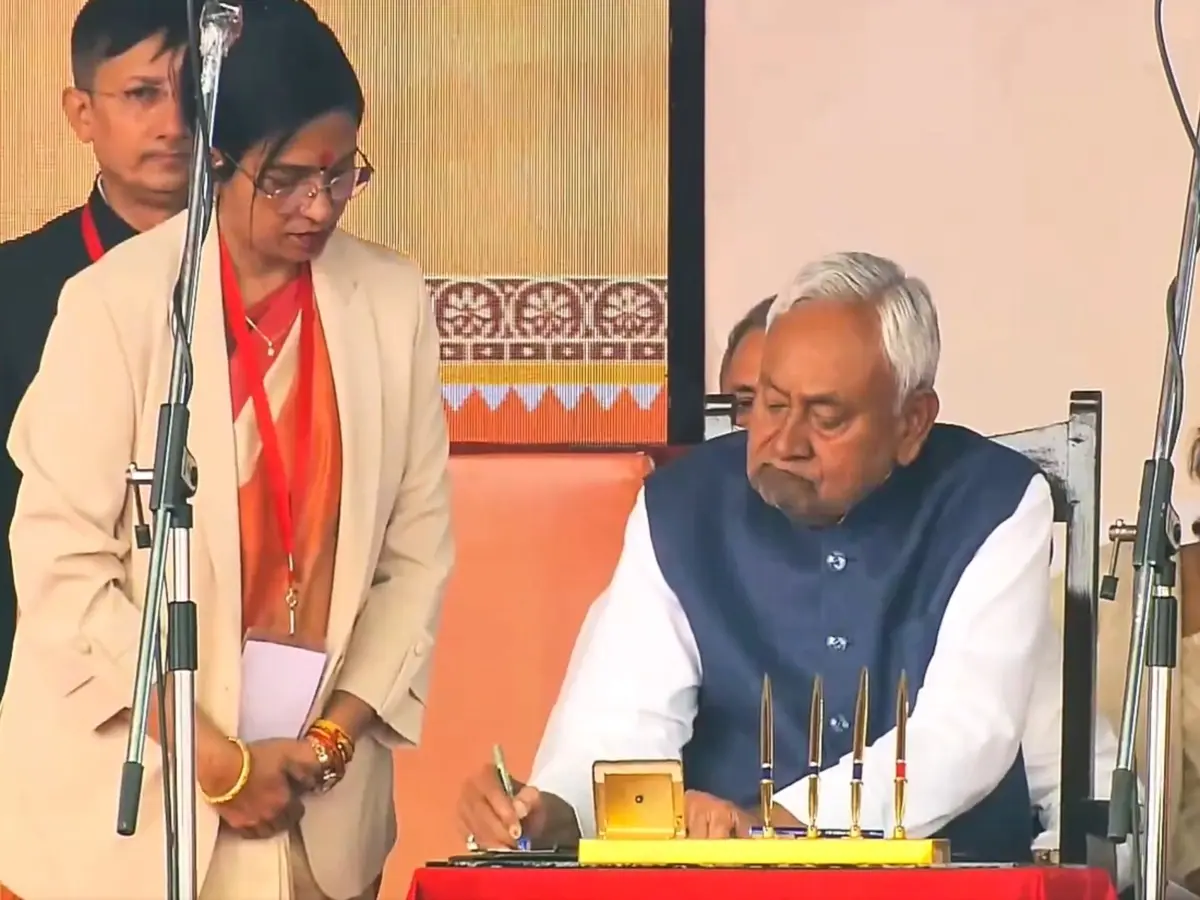
Former Bihar Chief Minister Nitish Kumar
The move by Nitish Kumar is meant to pave way for new leadership in the state that has seen him remain the CM for almost two decades.
Nitish Kumar, Bihar's longest serving chief minister resigned from his membership of Bihar Legislative Council on Monday (March 30). Kumar tendered his resignation after being elected to the Rajya Sabha earlier this month. The move is meant to pave way for another leader to take his place.
A week earlier, Chief Minister Nitish Kumar was unanimously elected as President of the Janata Dal (United) after no other candidate filed a nomination for the post.
BJP national president Nitin Nabin also tendered his resignation along with Nitish Kumar. The resignation letter of Kumar was carried by MLC Sanjay Gandhi, and Parliamentary Affairs Minister Vijay Kumar Choudhary to the Legislative Council Chairman.
Bihar Legislative Council Chairman Avadhesh Narayan Singh accepted Kumar's resignation and said, “He has been an invaluable leader of the House and devoted himself to Bihar’s cause."
Both Nitish Kumar and Nitin Nabin were elected to the Rajya Sabha on March 16, and the deadline for their resignation from the state legislature was March 30.
Trending Stories
)
)
)
)
)
)
)
)
)
)
)
)
)
)
)
)
)
)
)
)
)
)
)
)
)
)
)
)
)
)
)
)
)
)
&im=FitAndFill=(700,400))
)
)
)
)
Nitish Kumar's political career is a masterclass in coalition manoeuvring, marked by a series of high-stakes ideological shifts. Beginning his journey as an MLA in 1985 and later serving as a Union Minister under the Vajpayee government, he first ascended to the Bihar Chief Minister's office in 2005 as a pillar of the NDA.
Since 2013, however, his tenure has been defined by a "revolving door" of alliances, alternating between the BJP and the Mahagathbandhan (RJD and Congress) in 2013, 2017, 2022, and 2024. Despite these frequent realignments, his political survival remains unparalleled; most recently, he secured a fifth electoral landslide in 2025, taking the oath as Chief Minister for a record-breaking tenth time.
(With inputs from agencies)
