
&imwidth=800&imheight=600&format=webp&quality=medium "A more subdued form of social media is making its pitch as Meta faces trial for 'addictive' design")
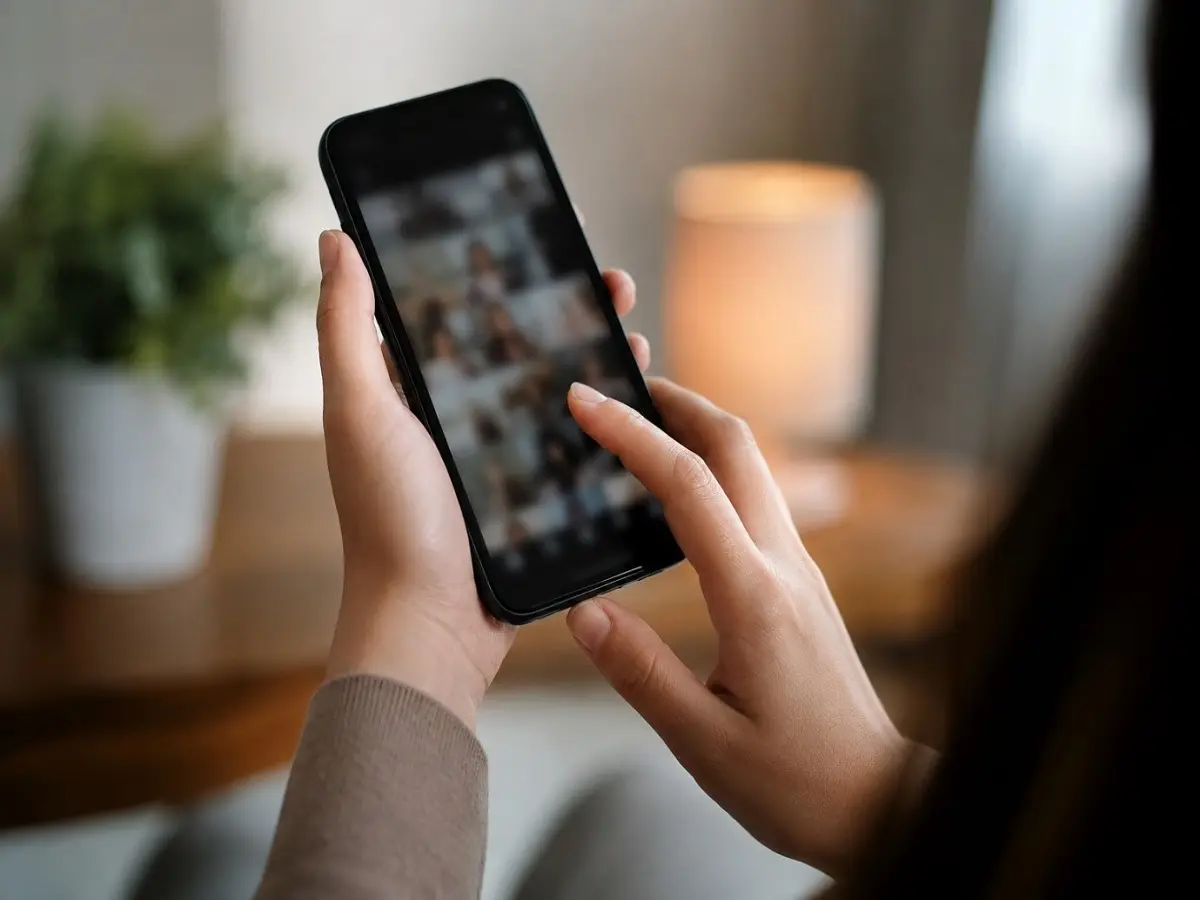
Everything that holds attention has been on trial in the United States lately, thanks to the high cost of a courtroom battle. There are already some users who are already casting their votes with their thumbs and they are searching for a platform that asks less from them.
Meta will face a claim in its US federal court trial in August that would have seemed ridiculous 10 years ago: that it designed Facebook and Instagram to be essentially "hard to put down. The case is being filed by a coalition of at least 40 attorneys general, including California, Colorado, Kentucky and New Jersey and 29 other states, which are asking for a maximum fine of 1.4 trillion dollars. To put this in perspective, that's nearly the entire market value of Meta.
These are accusations, and they're denied by Meta. The company says that was done by multiplying tens of millions of teen users with the highest possible penalty it could impose, even if during any given time period a particular teen didn't use the features at issue. It also has noted that no unfair-practices or child-privacy case ever has appeared anywhere close to a trillion dollars—a figure reached in the tobacco settlement in 2006, which represented a typical proportion. A judge, and subsequently a jury, will determine the justices.

The real interesting part of the case is not the headliner. It's under it. It's not a complaint against a single company. Here it's a collection of design decisions that are embedded in virtually every app on the typical phone.
Consider functionality, not brands. The never-ending feed. The next one video that you see before you even know that you want to watch it. The recommendation system that analyzes yesterday's browsing behavior and recommends more of the same today. The call to come back. The punishment for failing to attend class once. Brief snippets of video that are a couple seconds each, and each designed to make you stay for one more second. What is not unique about this is that none of it is from Meta. It's the common language of social media these days.
This sense of unease has already tempted some to leave the sites. A small group of alternative networks has been emerging, including mewe, Mastodon and Bluesky — and they are attracting just the sort of users that the big platforms tend to lose: those who feel disenfranchised, unwelcome or simply fed up with the big platforms that harvest their data to serve them a steady diet of ads. None of these players are anywhere near the size of the incumbents. What they provide is something else. They provide an arrangement in which the person taking advantage of the service is not the product they are selling.
Trending Stories
)
Three labourers killed as DU student loses control of his car, rams into them on Dwarka Expressway
)
Pentagon revives mandatory testosterone testing for male troops aged 30 and above
)
FACT CHECK: Why did PM Modi ask Xi ‘is it okay’ at BRICS Summit? New video reveals...
)
India seeks to build a full semiconductor supply chain
)
North Korea's last nuclear test in 2017 set off 1,399 earthquakes over 8 years, each stronger than previous
&im=FitAndFill=(700,400))
From Abhishek Sharma to Sahil Chauhan, 5 batters with fastest T20I hundreds
)
Indian activist-lawyer Prashant Bhushan's post brings focus on ‘conflict of interest’ appointments of ex-govt officials at Reliance, Adani groups
)
US And Denmark reach Greenland deal, Trump announces expanded military presence
)
Former India player Diana Edulji wants Smriti Mandhana to replace Harman as skipper at the earliest
)
China may have gained access to US's classified F-35 jets; parts meant for repairs diverted to Hong Kong, sparking Pentagon inquiry
&im=FitAndFill=(700,400))
Meet top 5 batters in the latest ICC T20I Rankings
)
Godfather of AI Geoffrey Hinton gives US lawmakers a one-year warning on AI
)
US F-16 fighter jet crashes in Michigan during training mission, pilot ejects safely
)
Shivakumar attends 79th Kalyana Karnataka Utsav in Kalaburagi
)
Trump signs Russia sanctions law: India faces fresh 100% tariff threat over Russian oil
)
Why Ranveer Singh’s Dhurandhar missed India’s Oscar entry; FFI jury member reveals what happened
)
Hong Kong extends newborn cash support scheme by three years
)
How did an Australian river with 500 crocodiles pass the Olympic test? Here's how
)
‘Will go to any extent’: Pakistan vows to defend Saudi Arabia amid Houthi attacks
)
'He will always be ahead': India coach Gambhir says Sooryavanshi won't walk into team ahead of Samson
)
The Verdict | When precision fails: US commits war crime in Minab school strike, UN finds
)
Trump signs Russia sanctions bill into law, targets Moscow’s energy sector
&im=FitAndFill=(700,400))
New Friday OTT releases (September 18, 2026): Lust Stories 3, You+Me, Best of the Best- 8 new titles coming on Netflix, Prime Video and more
)
Africa is splitting, and a lot sooner than estimated, giving way to a new ocean
)
'Gangsta' crab shoves knife blade at man and his dog in Florida - Watch
)
Trump bans CNN, MS NOW and Politico from White House over ‘FAKE NEWS’
)
Trump 2.0: Dark days ahead for America’s ‘imperial presidency’
)
Trump's Greenland dream comes true? POTUS announces 'Infinite Life' deal with Denmark, claims permanent US control
)
Laura Wolvaardt sets new world record for most WT20I runs in a year
)
Drone strikes cooling tower at Russia's Kursk Nuclear Plant, IAEA confirms
)
Who is Khalilur Rahman? All you need to know about 81st UN General Assembly President
&im=FitAndFill=(700,400))
Meet top 5 bowlers in latest ICC T20I rankings
)
Ukraine plans record $109 bn defence spending, nearly two thirds of budget amid Russia war
&im=FitAndFill=(700,400))
Meet top 5 Indian batters with fastest T20I centuries
Instagram and Facebook are based on personalised feeds and social validation. Tiktok made the "For You" feed, the hyper-personalised feed, a focal point of their whole experience, then everyone else did. To keep the session going, YouTube's autoplay and suggestions are designed in this way. There are streaks and there's the consistent drip of notifications on Snapchat. X and Threads rank posts based on what is most likely to elicit a response. To pretend all this is bad, is unfair. A good recommendation can lead you to know a musician that you now love or even a support group that you needed or a corner in the world that you would never have known on your own. The more honest question is whether these systems allow people to have enough influence over what they see without them being largely geared to propsing that they keep the session going a bit longer.
The implications for us are yet to be determined, and there's no time for hyperbole. It's no accident that phrases such as doomscrolling or social-media fatigue have become part of everyday language. They say that they feel overstimulated, scattered, exhausted from a feed that brings up the same anxieties continually. Others are conscious of the quiet buzz of performance, the counting of likes and followers, of knowing that being online is a performance that is evaluated. The key is that you'll want to keep the difference between reaching for the phone to talk to someone, versus reaching for the phone out of habit, then looking at it forty minutes later and wondering what you did.
Follow the money and the tension becomes more clear. For an ad-funded platform, attention is inventory. The longer you spend on the platform, the more information you will generate, the more accurately you will be targeted, and the more the platform will generate profits. Not all algorithms are villains. A ranking system is just a piece of software and will optimize for whatever it's told to optimize for. The issue is that when the parameter it is instructed to maximize, time on the app, quietly tugs against the reason the user visited the app. When the incentive is to stay connected, it doesn't seem like the business has much to say about "put the phone down and go to bed.
mewe is a social network where people can create communities, private groups and connections that they want, without an algorithm telling them what connections they must have. This is the opening that a smaller set of networks is trying to walk through and it's the opening that a platform like mewe positions itself in. The company states it does not engage in surveillance advertising and has no personalised feed to optimize engagement. When there is advertising, mewe calls it opt-in, meaning that the user chooses whether or not to participate. It has over 21 million users globally and over 700,000 groups and has started to develop subscription and creator tools, allowing it to monetise, rather than selling its members' behaviour.
People still want to connect online, the issue is whether platforms can do that without making everything you do a push to get you even more attention. Social media doesn't have to be oppressive to use.
Carlos Betancourt, the Chief Executive Officer, mewe
As the aforementioned names indicate, mewe is by no means the only one doing this. Mastodon, which is an open network of independently-run servers, and Bluesky, which is an open protocol designed to grant users more control over their feeds, are going about the initiative in different ways. They have in common a bet that a greater number will want social spaces that offer choice built in, and their time spent quietly optimised away. Even if it wins, that wager is definitely up for question. However, these platforms are small when compared to the incumbents, and ‘less addictive by design' is more difficult to tout than a feed that already knows what you like.
However, things might be changing underfoot. Throughout most of social media's existence, people have evaluated a social media site based on its size and its features: Who else was there and what could they do when they arrived? Regardless of the outcome of the Meta trial, a third question is raised. What does the platform do to your attention, your privacy and your information when you don't watch it? However, if sufficient people begin to ask that before they join, the quieter networks will not have to win. They will just have to provide the solution that some people were seeking.