
&imwidth=800&imheight=600&format=webp&quality=medium "Trump’s tariff blitz hits Asia: Who got hurt, who escaped, and how it impacted their economies?")
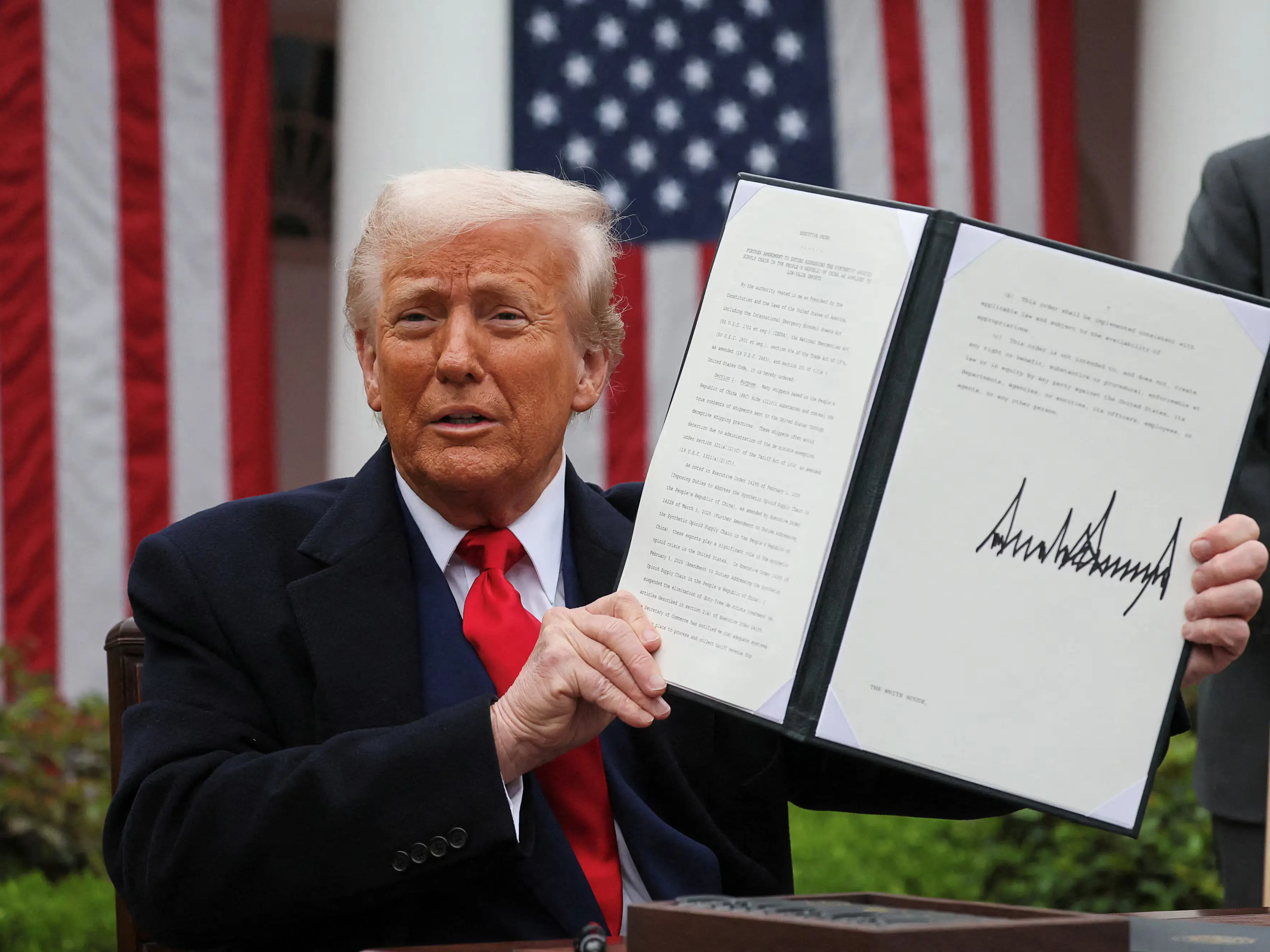
US President Donald Trump’s latest tariff move has landed like a thunderclap across Asia. From long-standing allies like Japan and South Korea to smaller ASEAN economies, much of the continent is scrambling to recalibrate trade ties with Washington as the August 1 deadline for new duties kicks in. These tariffs, announced on “Liberation Day” in April, are the most sweeping since the first US-China trade war in 2018. And while some nations have managed to soften the blow through backdoor diplomacy, others are facing brutal levies of up to 40 per cent.
So, who got what and why?
US allies found a diplomatic lifeline

For Japan and South Korea, key US military allies, the stakes were high. Both initially faced a steep 25 per cent tariff on cars and semiconductors, a sector vital to both economies and critical to US supply chains. But trade delegations from both countries rushed to Washington in June and July. It paid off. As per BBC and Bloomberg reports, they successfully brought the tariffs down to 15 per cent by late July. President Trump even called the Japan deal the “largest trade deal in history” on July 22.
Taiwan which is home to chip giant TSMC, was also in the line of fire, facing 32 per cent tariffs back in April. But Taipei managed to negotiate a cut to 20 per cent, though the semiconductor sector may face additional “sectoral duties,” pending further talks. Australia, which faced a 10 per cent rate, appears to have dodged an increase. But New Zealand wasn’t as lucky , its rate jumped to 15 per cent. Its trade minister called the hike “unfair” and requested emergency talks with Washington, according to BBC.
What about China & India?
Trending Stories
)
Oxford United's new clothing line featured 'United 93' phase
)
Pentagon revives mandatory testosterone testing for male troops aged 30 and above
)
Mark Carney mimics Trump in hilarious moment over C$70 billion clean-energy investment; room erupts in laughter
)
Iran rebuilding nuclear facilities? New satellite images show Tehran may be rapidly restoring bombed Parchin base
)
It's a girl! Deepika Padukone and Ranveer Singh welcome their second child
)
FACT CHECK: Why did PM Modi ask Xi ‘is it okay’ at BRICS Summit? New video reveals...
)
Putin: European leaders using war rhetoric to save falling ratings
)
China may have gained access to US's classified F-35 jets; parts meant for repairs diverted to Hong Kong, sparking Pentagon inquiry
)
Cochin shipyard starts building Indian Navy's next-gen missile vessels
)
Claude led 26% of Anthropic's AI R&D work
)
Brigitte Bardot’s private collection set for Paris auction; key items and prices revealed
)
Why Ranveer Singh’s Dhurandhar missed India’s Oscar entry; FFI jury member reveals what happened
)
How did an Australian river with 500 crocodiles pass the Olympic test? Here's how
)
‘Will go to any extent’: Pakistan vows to defend Saudi Arabia amid Houthi attacks
&im=FitAndFill=(700,400))
Ananya Panday to Sharvari: 5 actresses serving major princess vibes
66 years of the Indus Waters Treaty: How India and Pakistan settled a bitter river dispute
)
The Verdict | When precision fails: US commits war crime in Minab school strike, UN finds
Russia attacks Ukraine with 174 drones, kills 8; 2 vessels hit in Black Sea
)
Trump signs Russia sanctions bill into law, targets Moscow’s energy sector
)
Pak: A series of counter terrorism operations in Khyber Pakhtunkhwa
)
Ajit Agarkar’s future as chief selector to be decided at right time, says BCCI secretary
)
Flying cars in UAE: Ras Al Khaimah signs deal with Chinese company to test new transport
)
Reacher star Alan Ritchson opens up about alleged blackmail, suicide attempt during difficult period
)
Africa is splitting, and a lot sooner than estimated, giving way to a new ocean
)
Trump bans CNN, MS NOW and Politico from White House over ‘FAKE NEWS’
)
Trump 2.0: Dark days ahead for America’s ‘imperial presidency’
)
New brain discovery could aid neurological disease studies
)
Drone strikes cooling tower at Russia's Kursk Nuclear Plant, IAEA confirms
&im=FitAndFill=(700,400))
How many F-35s does Britain, Japan and Israel have?
)
Tirupati Laddu ghee adulterated with chemicals, says ED, supplier arrested
)
IIT Bombay student dies by suicide, was caught seeking AI help during exams
)
Trump extends H-1B visa's $100,000 fee until September 2027: What it means for Indians?
)
Russia holds first parliamentary elections since the beginning of the Ukraine war
&im=FitAndFill=(700,400))
Meet top 5 Indian batters with fastest T20I centuries
)
Extreme warming in Indian Ocean added 695 billion tons of ice to Antarctica ice sheet
)
)
China was conspicuously absent from Trump’s July 30 announcement. But that doesn’t mean the heat is off. Diplomatic negotiations are intensifying, with meetings in Geneva, London, and most recently Stockholm, as Beijing tries to secure a 90-day extension to the current trade truce expiring August 12, reported Reuters. China is pushing for a suspension of US export controls on semiconductors. In return, Washington wants Beijing to increase US goods purchases, curb fentanyl exports, and open its market wider to American firms.
India, meanwhile, wasn’t spared. Despite being described by Trump as a “good friend,” New Delhi saw a 25 per cent tariff slapped on its exports, along with what BBC termed an “unspecified penalty” over its continued purchases of Russian arms and oil. That’s a slight improvement from the earlier proposed 27 per cent in April, but still a blow. “Delhi’s ties with Moscow remain a point of irritation,” said US Secretary of State Marco Rubio, quoted by BBC.
ASEAN: Fragmented outcomes for Southeast Asia
Perhaps the hardest hit region was Southeast Asia, where tariff rates originally ranged from 10 to 49 per cent. The region’s growth engine exports, now faces major headwinds. Vietnam was the first ASEAN country to act, sealing a deal to reduce its rate from 46 per cent to 20 per cent. That quickly became the benchmark. Now, most ASEAN nations face rates between 19 to 20 per cent, according to updated BBC and Bloomberg data.
Brunei is slightly worse off at 25 per cent. Laos and Myanmar have been hit with the harshest levy, 40 per cent, despite unclear justification. Trade expert Dr Deborah Elms told the BBC this could be linked to their low purchasing power and strategic ties with China. Singapore, interestingly, retains its 10 per cent rate. Since it imports more from the US than it exports, Washington sees it less as a trade threat.
Pakistan rewarded for warming ties
Pakistan has emerged as a quiet beneficiary. While its neighbours, India, Bangladesh, and Vietnam, all face higher duties, Islamabad has received a relatively lenient 19 per cent tariff. According to Bloomberg, that’s due in part to improving US–Pakistan ties in Trump’s second term. Pakistan even nominated Trump for the Nobel Peace Prize in June, a gesture that likely didn’t go unnoticed.
The lower rate could boost Pakistan’s textile exports, which make up nearly 60 per cent of its total exports, most of which head to the US.
Asia’s tariff scoreboard (2025 US Tariffs)
| Country | April Tariff (%) | Final Tariff (%) |
| Japan | 25 | 15 |
| South Korea | 25 | 15 |
| Taiwan | 32 | 20 |
| Australia | 10 | 10 |
| New Zealand | 10 | 15 |
| India | 26 | 25 |
| Vietnam | 46 | 20 |
| Thailand, Indonesia, Malaysia, Cambodia, Philippines, Sri Lanka, Bangladesh | 30–49 | 19–20 |
| Brunei | 25 | 25 |
| Laos, Myanmar | 40 | 40 |
| Singapore | 10 | 10 |
| Pakistan | 19 | 19 |
| Afghanistan, Fiji, PNG, Nauru | 15 | 15 |
| Kazakhstan | 25 | 25 |
What happens next?
The White House insists these rates are not final. As trade expert Dr Elms told the BBC, “The president reserves the right to change them based on ongoing negotiations or new developments.
It’s a fluid situation and with Asia’s export-reliant economies on edge, the next 90 days could be crucial in shaping the future of US-Asia trade.
(With inputs from agencies)