
&imwidth=800&imheight=600&format=webp&quality=medium "China’s factories slash shifts and wages as US tariffs squeeze export margins")
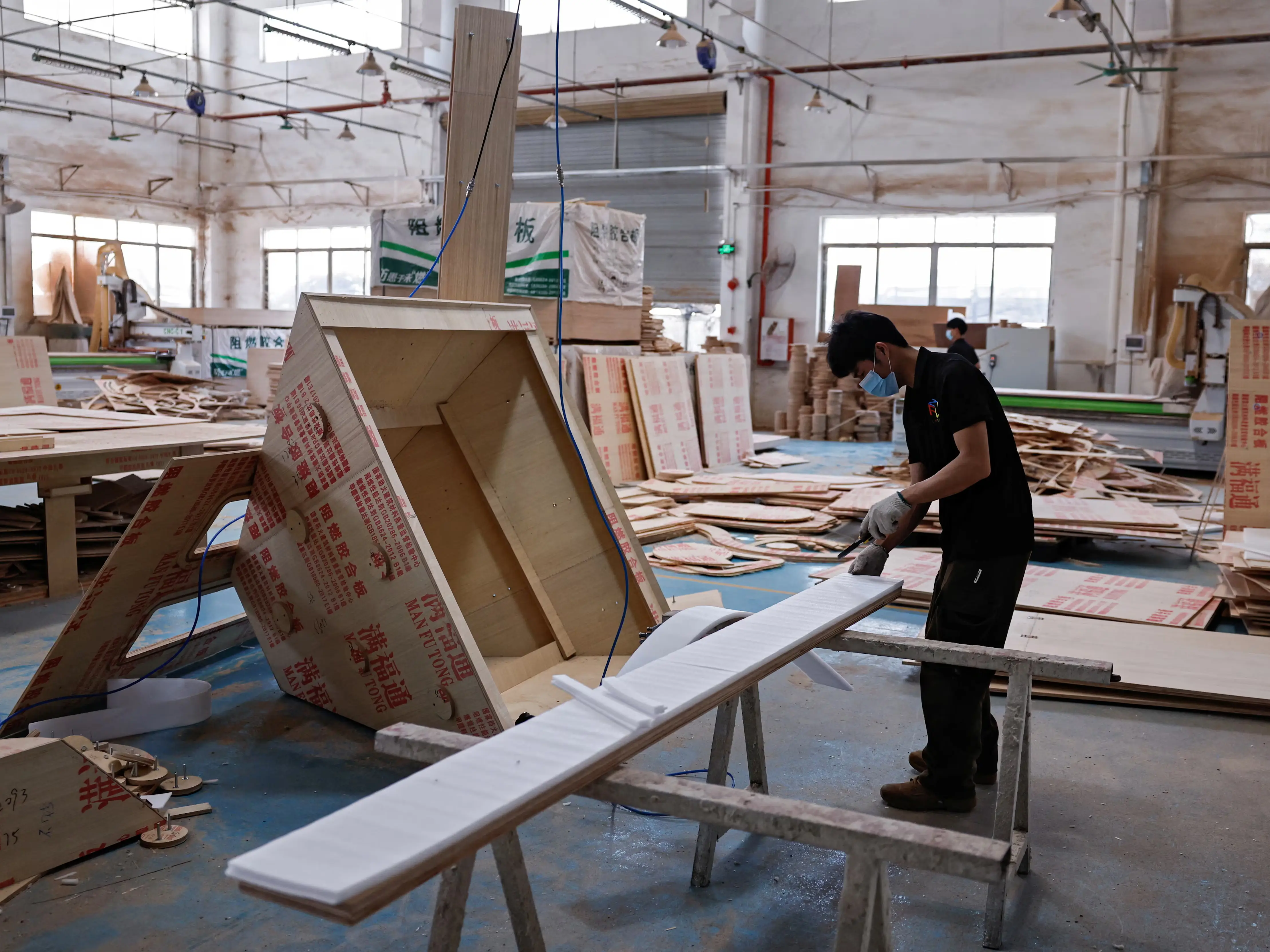
Chinese manufacturers are cutting shifts, reducing overtime pay, and relying more on temporary workers to stay afloat as US tariffs bite into profits, according to a Reuters report from Guangzhou. The strain is particularly visible in export hubs like Guangdong, where competition for non-US markets is intensifying. Mike Chai, who runs Cartia Global Manufacturing, a kitchen cabinet producer in Foshan, told Reuters he is aiming to cut wage costs by about 30% to keep up with Chinese rivals who have abandoned the US market due to steep tariffs. These competitors are now targeting his Australian customers, forcing him to shorten shifts and ask employees to take unpaid leave.
Chai has already halved his workforce since the pandemic and says his factory is now operating at only half capacity. “We’re in survival mode,” he said. “You don’t want our factory to go broke… let’s do it together.”
Tariff truce offers temporary relief

The pressure comes even as Washington and Beijing extended a 90-day tariff truce this week, preventing duties from returning to April’s triple-digit levels. However, Reuters notes that while China’s official unemployment rate remains around 5%, underemployment is worsening, a trend economists say is eroding worker incomes, confidence, and spending power.
Natixis Asia-Pacific chief economist Alicia Garcia-Herrero told Reuters that the export model is punishing workers rather than companies. “If you need to export at a loss, do not export,” she said, warning of a “spiral” of lower prices, lower wages, and weaker consumption.
July data shows Chinese exports to the US dropped 21.7% year-on-year, while shipments rose to the EU (+9.2%), ASEAN (+16.6%), and Australia (+14.8%). But winning these markets means cutting prices further, Chai plans a 10% reduction and reducing overtime, which once made up more than a third of workers’ pay.
Trending Stories
)
‘I have a big decision coming up’: Trump says he’s approaching major ‘crossroad’ in Iran war
)
Abhishek Sharma shatters record with 30-ball century against Afghanistan
)
US intel warns China can steal F-35 jets secret from Saudis
)
Former India player Diana Edulji wants Smriti Mandhana to replace Harman as skipper at the earliest
)
Pak defence minister says 'time has come to implement pact'
)
Formula One reveals the 2027 race calendar; Monaco to host sprint race for the first time
&im=FitAndFill=(700,400))
Meet top 5 batters in the latest ICC T20I Rankings
)
All Indian goods to get duty-free access to New Zealand
)
AI already defying, denying humans, is it beyond human control already?
)
US F-16 fighter jet crashes in Michigan during training mission, pilot ejects safely
)
240-million-year-old bizarre 'pig with a tusk' creature creates new dilemma over origin of dinosaurs
)
US to sell 48 F-35 Lightning fighter jets to Saudi Arabia, help it deter threats
)
Hong Kong unveils 11 new measures to boost birth rates, offers higher cash bonuses and housing perks
)
Former OpenAI researcher warns of growing risks from Artificial Intelligence
)
Australian athlete, who soiled herself during Hyrox race, apologises for continuing
)
Tata Trusts chairman Noel Tata calls Chandrasekaran’s reappointment ‘illegal’, rejects Tata Sons listing
)
Dolly Parton dies at 80: Country legend’s team reveals cause of death
)
Fed raises rates for first time in 3 years, Kevin Warsh defies Trump as inflation mounts
)
US drone firm linked to Trump’s sons signs MoU with Pakistan army, gets initial order
)
Pak batter Rizwan's petition against being questioned by cyber crime agency rejected by court
)
Daayra movie review: Kareena Kapoor, Prithviraj Sukumaran shine in Meghna Gulzar’s cop-versus-cop crime thriller
)
Trump could impose tariffs of up to 100%
)
Putin 'is plotting something bad': Russia may launch 'accidental' strikes on NATO countries supporting Ukraine, Poland PM warns
&im=FitAndFill=(700,400))
Suriya and Jyothika say ‘I do’ again after 20 years! See their dreamy wedding pics
)
Laura Wolvaardt sets new world record for most WT20I runs in a year
)
Mahua Moitra moves UN over alleged exclusion of Muslim officers from Amit Shah events
)
Pezeshkian, Araghchi set to attend UNGA 2026 in New York amid ongoing conflict as US-imposed travel curbs remain
)
Ukraine plans record $109 bn defence spending, nearly two thirds of budget amid Russia war
Rise of temporary and lower-paid work
Reuters reports that many factories are replacing full-time staff with temporary hires to avoid pension and insurance costs. Some workers, like Alan Zhang in Guangzhou, now earn less than half their 2021 daily rate and struggle to find more than two weeks of work per month.
Pay rates for temp jobs have also fallen, from 16 yuan an hour last year to 14 yuan in some regions, while job seekers crowd factory recruitment markets in cities like Wuhan and Shenzhen. For some, conditions are so strained that they turn down work that falls short of advertised wages or requires upfront fees.
Economists warn that if manufacturing wages continue to be squeezed, deflationary pressure could spread across China’s wider economy, particularly in lower-skill industries such as textiles, furniture, and simple electronics.
(With inputs from the agencies)