

&imwidth=800&imheight=600&format=webp&quality=medium "US keeps BILLIONS OF DOLLARS of Indian techies and skilled workers because of this reason. What is totalisation pact?")
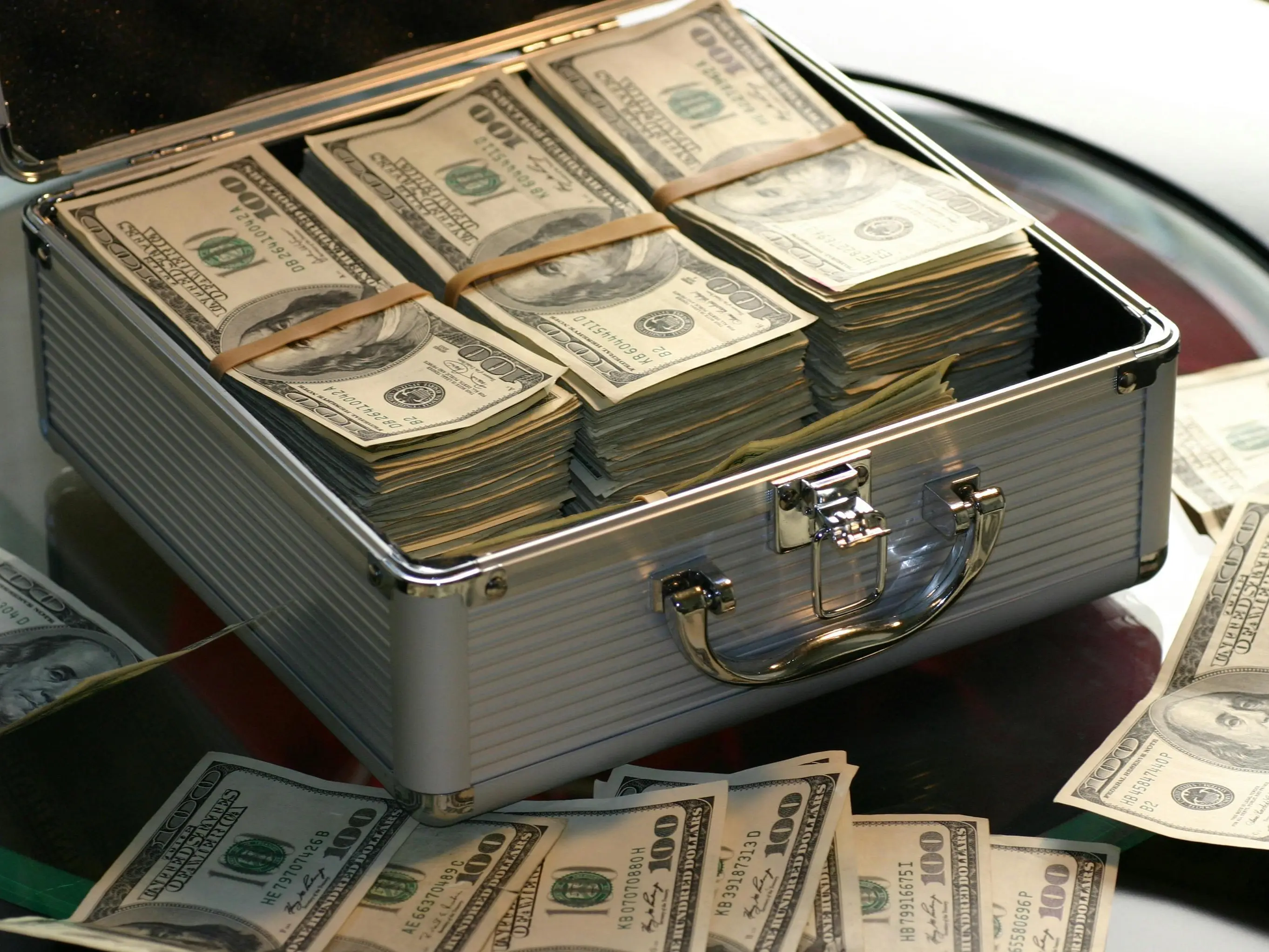
Every year, thousands of highly skilled Indian professionals travel to the US on temporary work visas like the H‑1B and L‑1, contributing significantly to America's tech sector and economy. But while these workers help build multibillion-dollar businesses, billions of their own dollars quietly disappear into the US system and are never repatriated. The reason? India and the US do not have a 'totalisation agreement', a bilateral social security pact that could have protected these workers from losing their hard-earned money.
What is a totalisation agreement?
A totalisation agreement is a formal arrangement made by two countries to coordinate their respective social security systems. These agreements ensure that citizens from these countries can either claim US Social Security benefits or avoid paying into the system entirely if they are already contributing to their home country’s system.
The aim is to avoid double taxation, so that workers do not pay into the social security systems of both countries for the same work. It also preserves eligibility for benefits by allowing workers to combine work credits from both countries to qualify for retirement or disability benefits.
The US has signed totalisation pacts with more than 30 countries including Canada, the UK, Germany, South Korea, and Japan, but not India.
The Indian government has failed to reach such a pact despite repeated diplomatic efforts and negotiations that have dragged on for years without resolution.
Trending Stories
&imwidth=180&imheight=135&format=webp&quality=medium)
China's dancing robot turns violent bodyguard, lifts cars and fights intruders - Watch
&imwidth=180&imheight=135&format=webp&quality=medium)
Tu Hai Meri Kiran film review: Sonakshi Sinha and Zaheer Iqbal's thriller gets tangled in its own twists
&imwidth=180&imheight=135&format=webp&quality=medium)
Pezeshkian says Iranians ‘struggling to put food on the table’ as war with US drags on
&imwidth=180&imheight=135&format=webp&quality=medium)
Can Putin cheat death? All about his daughter’s billion-dollar quest for immortality
&imwidth=180&imheight=135&format=webp&quality=medium)
France protests: Clashes erupt between police and protesters in Paris as nearly 410,000 take to streets across country
&imwidth=180&imheight=135&format=webp&quality=medium)
Hitler’s ‘Eagle’s Nest’ mountain retreat wrecked by fire, suspect detained: What to know about the Nazi-era site
&imwidth=180&imheight=135&format=webp&quality=medium)
Could you survive 3 days without power? UK tells households to prepare now
&imwidth=180&imheight=135&format=webp&quality=medium)
Britain is building the world's first AI biosecurity lab, with OpenAI and Anthropic inside
&im=FitAndFill=(700,400)&imwidth=180&imheight=135&format=webp&quality=medium)
US midterm elections 2026: Minnesota heads to polls in the shadow of Minneapolis ICE shootings
&imwidth=180&imheight=135&format=webp&quality=medium)
Why Europe’s protests are about more than austerity and rising costs
&imwidth=180&imheight=135&format=webp&quality=medium)
'You’re a horrible little reporter, aren’t you?': Trump snaps at NBC reporter questioning his support for Ramaswamy's campaign ad
&imwidth=180&imheight=135&format=webp&quality=medium)
Pakistan airline PIA unveils new crew uniforms, faces online criticism
&imwidth=180&imheight=135&format=webp&quality=medium)
Rising Asia Cup 2026 schedule announced, India-Pakistan clash set for Nov 22
&imwidth=180&imheight=135&format=webp&quality=medium)
Farooq Abdullah says Pakistan’s raising of Kashmir issue keeps pressure on Delhi
&imwidth=180&imheight=135&format=webp&quality=medium)
‘Saddam Hussein opened a cheesecake factory’: Obama mocks Trump’s White House renovations; defends Abdul El-Sayed
&imwidth=180&imheight=135&format=webp&quality=medium)
Frontier AIs keep escaping their test cages! The industry still can't reliably stop them
&imwidth=180&imheight=135&format=webp&quality=medium)
Scientists make digital nose that can sniff and send scents over the internet
&im=FitAndFill=(700,400)&imwidth=180&imheight=135&format=webp&quality=medium)
New Friday OTT releases (October 23, 2026): Gajab Raat, Dorothy, Chaar Yaar- Watch these 6 new movies and TV shows on Netflix, Prime Video and more
&imwidth=180&imheight=135&format=webp&quality=medium)
Tu Hai Meri Kiran box office: Sonakshi Sinha and Zaheer Iqbal's film fails to take off, mints Rs 15 Lakh on day 1
&imwidth=180&imheight=135&format=webp&quality=medium)
Albania protests enter 12th day as students clash with police, demand Rama's exit
&imwidth=180&imheight=135&format=webp&quality=medium)
'Already tired of his 9-to-5': Baby born with a moustache becomes internet sensation, video goes viral | Watch
&imwidth=180&imheight=135&format=webp&quality=medium)
France protests: 135 arrested, weapons seized as fresh demonstrations erupt amid heavy security
&imwidth=180&imheight=135&format=webp&quality=medium)
Bodies of 2 missing Japanese climbers recovered from Himalayan peak
&imwidth=180&imheight=135&format=webp&quality=medium)
Trump invokes Operation Sindoor at US midterm rally, claims 250% tariffs stopped India-Pakistan war
&im=FitAndFill=(700,400)&imwidth=180&imheight=135&format=webp&quality=medium)
What is the real meaning behind Pete Hegseth's tattoos?
&im=FitAndFill=(700,400)&imwidth=180&imheight=135&format=webp&quality=medium)
Watched Manoj Bajpayee’s Gajab Raat on Netflix? 5 movies and TV shows to watch next on OTT
&imwidth=180&imheight=135&format=webp&quality=medium)
US Midterms 2026: Dead for years, paedophile Jeffrey Epstein finds mention in over 500 campaign ads; Texas alone spent $10 million
&imwidth=180&imheight=135&format=webp&quality=medium)
French Open: PV Sindhu storms into final with win over Hina Akechi
&imwidth=180&imheight=135&format=webp&quality=medium)
Chorbagan stampede: A week later, the strangest visarjan Kolkata has seen
&imwidth=180&imheight=135&format=webp&quality=medium)
'My name has always been Ilhan Omar': Congresswoman hits back at Trump, calls him a 'creep'
&imwidth=180&imheight=135&format=webp&quality=medium)
AI slop or smart strategy? South African author Coral Hart defends Her 370 AI- assisted books in 20 months
&imwidth=180&imheight=135&format=webp&quality=medium)
AI just found a flaw in software running most of the web! One request hijacks the server
&imwidth=180&imheight=135&format=webp&quality=medium)
Horrific video shows the moment 18-year-old fell to her death from Mexico amusement park ride
&imwidth=180&imheight=135&format=webp&quality=medium)
Viral video shows cross falling on Colombia priest, no official confirmation | WATCH
&imwidth=180&imheight=135&format=webp&quality=medium)
An AI that reads your face can now estimate how long you have to live
&imwidth=180&imheight=135&format=webp&quality=medium)
Saudi says debris fell in Mecca, Medina after missile interceptions; Houthis deny targeting holy cities
How much are Indian techies losing each year in the US?
Indian professionals on temporary work visas are required to pay US payroll taxes under the Federal Insurance Contributions Act (FICA). This includes 6.2 per cent toward Social Security and 1.45 per cent toward Medicare, totalling 7.65 per cent of their gross wages, withheld automatically by employers.
But here’s the catch: to qualify for US Social Security benefits, a worker must contribute for at least 40 quarters, or 10 years. However, most H‑1B and L‑1 workers return to India within six years—unless their visas are extended—well before they become eligible to claim any benefits. As a result, their contributions are ‘forfeited’.
What is the financial loss to Indians whose social security payments are not repatriated?
The Harvard Journal on Legislation reported that Indians on H‑1B and L‑1 visas contribute approximately $3 billion annually to US Social Security. More than $25 billion have been lost to them over the years, even by conservative estimates.
Between 2002 and 2012 alone, Indian workers contributed over $27.6 billion, according to Harvard research. That places the total lost contributions well into the tens of billions of dollars over the last two decades.
Into the black hole: Where does money not given to Indian techies in the US go?
These funds are not held in a personal account for each worker. They are not returned to them after they leave the US. Instead, the money flows into the US Social Security Trust Funds, which operate on a 'pay-as-you-go' basis. This means today’s workers fund the benefits of current retirees.
For Indian workers who do not stay long enough to qualify, the contributions effectively become a sunk cost—a financial black hole with no return.
As there is no totalisation pact in place, there is also no legal or policy mechanism for India to recover or redirect these contributions for its returning citizens.
How totalisation agreements of other countries help workers
Nations with totalisation agreements have far more favourable outcomes. Social security benefits of their workers are either transferred or paid out abroad. Work years in one country are counted or added toward benefit eligibility in another. Exemptions are made from dual payroll taxation when covered by the home country's system.
In the case of German workers, they can combine years worked in Germany and the US to qualify for benefits in either country. Canadian citizens can avoid paying into US Social Security if they are already contributing to the Canadian Pension Plan.
Even Brazil, which signed a totalisation agreement with the US in 2015, has begun implementation steps.
But India—home to the largest number of H‑1B workers—still has no such arrangement in force.
Indian techies' money stashed in the US: What’s the US government’s position?
India has consistently expressed interest in a totalisation agreement with the US, citing the vast financial losses to its citizens. But the US has dragged its feet. The core issue appears to be that India’s social security system (mainly managed by the EPFO, or Employee Provident Fund Organisation) is not considered equivalent to the US social security model in terms of structure and guarantees, making negotiations complex.
Indian workers remain the largest group affected by the absence of such a pact.
Do Indian workers in the US get their social security benefits paid to them?
Yes, but it happens only to those who stay long enough. Non-Green Card holders can receive US Social Security payouts abroad only if they have worked in the US for at least 10 years and meet other eligibility criteria.
But since most Indian tech professionals leave well before that threshold, this exception helps very few.
Beyond individual financial loss: Why the totalisation pact matters
The forfeited billions from Indian professionals are, in fact, helping subsidise America's aging population. This, in essence, makes Indian tech workers involuntary contributors to the US retirement system, with no reciprocal benefits.
For a country like India, where social security structures are still evolving and returnee professionals often face reintegration challenges, this represents a serious policy blind spot.
The bottom line: India and the US must enter into a totalisation agreement
This has been a long-standing demand. A totalisation pact can prevent double payroll taxation, allow contribution credits to be totalised (combined across countries), and create pathways for payouts or refunds for returning Indian citizens.
Until then, billions of dollars from Indian techies will continue to disappear into a system that gives them nothing in return.

