

&imwidth=800&imheight=600&format=webp&quality=medium "US economic growth falters as Trump’s tariffs and wars hit fourth quarter estimates")
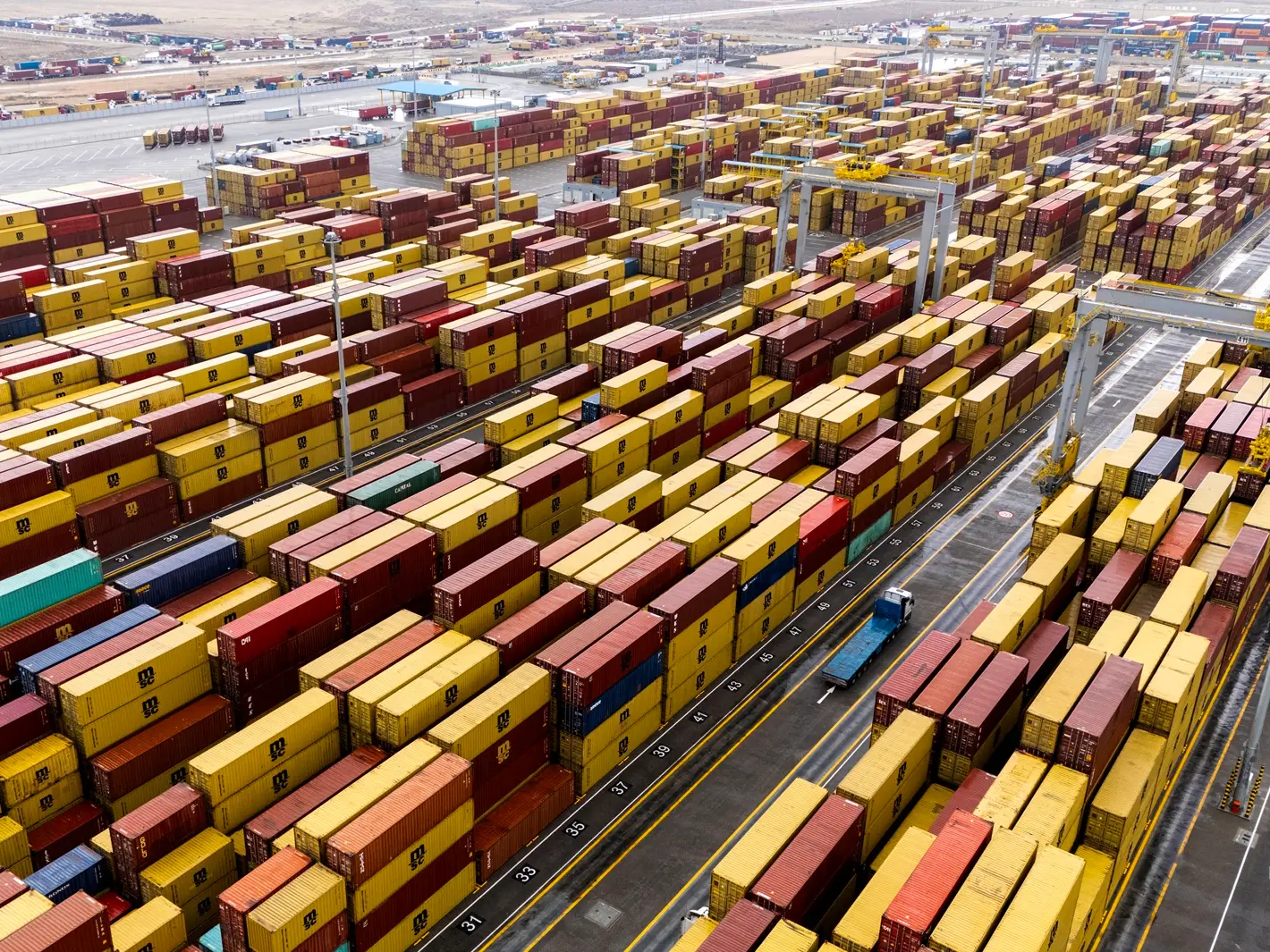
The US economy missed 4th quarter growth estimates for 2025 with a significant margin as it grew at a modest 0.7 per cent, government data showed on Friday (Mar 13), marking a major downgrade amid fears of fallout from war in West Asia looms, and Washington's trade ties remain in flux in the aftermath of President Trump's trade war.
The October to December quarter growth is sharply down from earlier estimates of 1.4 per cent, suggesting that the world's biggest economy was on a weaker footing than anticipated ahead of US-Israeli strikes targeting Iran on February 28, leading to spillover of war across the oil rich gulf region.
The crude witnessed a steep rise to reach nearly $115 per barrel last week and remained near $100 on Friday due to pressure from the closure of the Strait of Hormuz by Iran, which accounts for shipping of around one-third of the world's oil supply.
In the fourth quarter, the growth adjustment reflected "downward revisions to exports, consumer spending, government spending, and investment," the Commerce Department said.
The poor growth figures came as Donald Trump completed one year in office after returning to White House, sparking fears of a cooling job market and rising inflation in the United States. However, the full-year growth figures stand at 2.1 per cent, marginally lower than earlier estimates of 2.2 per cent.
Trending Stories
&imwidth=180&imheight=135&format=webp&quality=medium)
1,500 drones illuminate Mumbai sky as Cordelia Cruises unveils second ship, Cordelia Sky
&imwidth=180&imheight=135&format=webp&quality=medium)
'Say no to Muse': Meta has no control over its own moderation AI while it forces a security nightmare on everyone
&imwidth=180&imheight=135&format=webp&quality=medium)
Delhi protest: CJI Surya Kant declines to meet India Bloc leaders
&imwidth=180&imheight=135&format=webp&quality=medium)
Top AI models flunked a test of inventing new AI research, so much for self-improving AI
&imwidth=180&imheight=135&format=webp&quality=medium)
'Ouch!!! That must hurt': Kangana Ranaut hails Kamal Haasan's sharp reply to Elon Musk over Starlink row
&imwidth=180&imheight=135&format=webp&quality=medium)
Delhi wakes up to heavy rain, thunderstorms; yellow alert in place; temperature drops
&imwidth=180&imheight=135&format=webp&quality=medium)
Prince Harry and Meghan Markle to spend Christmas away from royal family
&imwidth=180&imheight=135&format=webp&quality=medium)
Anthropic's AI invented a murder witness and sent the fake tip to Philadelphia police
&imwidth=180&imheight=135&format=webp&quality=medium)
UK school ditches technology, shifts from screen to pen and paper for learning
&imwidth=180&imheight=135&format=webp&quality=medium)
Meta's Muse AI could be a security nightmare for India's billion-plus users
&im=FitAndFill=(700,400)&imwidth=180&imheight=135&format=webp&quality=medium)
Is sending robots to Mars easier than sending humans?
&im=FitAndFill=(700,400)&imwidth=180&imheight=135&format=webp&quality=medium)
New OTT releases this week (October 12-18, 2026): Sacrifice, Koffee with Karan S9, Roadies Rebirth- 6 titles coming on Netflix, JioHotstar and more
&imwidth=180&imheight=135&format=webp&quality=medium)
Sidhu Moose Wala’s younger brother wins hearts by recreating late singer’s signature move at Toronto Hologram Show
&imwidth=180&imheight=135&format=webp&quality=medium)
Maharashtra appoints FDA commissioner Tukaram Mundhe as secretary of committee for MPSC overhaul amid stir
&im=FitAndFill=(700,400)&imwidth=180&imheight=135&format=webp&quality=medium)
Navratri 2026: 9 days, 9 forms of Goddess Durga and 9 colours- Check the complete list
&imwidth=180&imheight=135&format=webp&quality=medium)
McSweeney reveals how studying Virat Kohli’s YouTube clips helped Australia A conquer India
&imwidth=180&imheight=135&format=webp&quality=medium)
Portugal Federation confirms Cristiano Ronaldo’s return to national team despite suspension
&imwidth=180&imheight=135&format=webp&quality=medium)
iPhone Duo price index: Tracking Apple’s latest pricing trends
&imwidth=180&imheight=135&format=webp&quality=medium)
Wasim Jaffer blames Ajit Agarkar-led selection panel for Virat Kohli’s Test retirement
&imwidth=180&imheight=135&format=webp&quality=medium)
China imposes first-ever sanctions on ministers from Taiwan allies: What this means
&imwidth=180&imheight=135&format=webp&quality=medium)
Nana Patekar's cause of death confirmed; here's what his postmortem report says
&imwidth=180&imheight=135&format=webp&quality=medium)
Houthis claim Riyadh airport attacks, Aramco strikes; issue fresh warning to airlines, travellers and workers
&imwidth=180&imheight=135&format=webp&quality=medium)
Delhi protests: 'Court should not be dragged into political activity', says CJI Surya Kant
&imwidth=180&imheight=135&format=webp&quality=medium)
One Indian killed in Riyadh airport attack; 11 others injured : MEA
&imwidth=180&imheight=135&format=webp&quality=medium)
Telangana man allegedly recruited into Russian military dies near Ukraine border
&imwidth=180&imheight=135&format=webp&quality=medium)
'Turn approver, resign, we'll forgive you': Rahul Gandhi claims receiving messages from CEC Gyanesh Kumar
&imwidth=180&imheight=135&format=webp&quality=medium)
IND vs WI, 3rd T20I: Abhishek Sharma smashes 18-ball fifty, sets record for fastest to 2,000 T20I runs
&imwidth=180&imheight=135&format=webp&quality=medium)
Other Mommy leads North American box Office as Verity, Resident Evil round out top four
&imwidth=180&imheight=135&format=webp&quality=medium)
Microsoft's Nadella says treat every AI model as already hacked, and build an 'emergency brake'
&imwidth=180&imheight=135&format=webp&quality=medium)
Iran: US accepted some conditions, Clarity needed on others
&imwidth=180&imheight=135&format=webp&quality=medium)
A watchdog rated 'ChatGPT for Teens' an unacceptable risk and says keep under-18s off it
&imwidth=180&imheight=135&format=webp&quality=medium)
CJI Surya Kant declines INDIA bloc leaders’ request for meeting ahead of march to SC, asks them to file petition
&imwidth=180&imheight=135&format=webp&quality=medium)
'Just coincidence': Police mistakes protester as AISA chief Neha Bora, arrests her from site
President Trump was quick to jump the gun to blame the opposition for the lengthy government shutdown late last year for the slowdown in growth when early estimates were released last month.
Trump, who touted himself as the most suitable candidate to lead the US economy, initiated a sweeping tariff war in April 2025 shortly after his inauguration. Dubbing the move "Liberation Day," he announced a slew of reciprocal tariffs on dozens of countries, citing the massive fiscal deficit and unfair trade practices. At the time, he claimed that Washington would ink major new trade deals within 90 days. However, even after nearly 11 months, the US has only been able to sign a handful of deals with smaller nations and mid-sized economies like Indonesia, while negotiations with major powers remain stalled.
A major shock to Trump's policies came in February 2026 when the US Supreme Court ruled that his use of the International Emergency Economic Powers Act (IEEPA) to impose those tariffs was unconstitutional. The 6-3 decision struck down the core of his trade agenda, plunging firms and international partners into a period of deep uncertainty regarding their trade relations with Washington.
With the mid-term elections approaching, Trump’s recent policy reversals and failure to deliver on key promises, including his high-profile vow to settle the Russia-Ukraine war in "24 hours" and his commitment to ending "endless wars" abroad, could potentially lead to significant setbacks for the Republican Party at the polls.
