&imwidth=800&imheight=600&format=webp&quality=medium "Is presence of a leader needed to unite Iran? How smuggled audio tapes of Khomeini from exile helped establish Islamic Republic")
When Mojtaba Khamenei’s first message as Iranian Supreme Leader was read out by TV anchors of the Islamic Republic on Thursday (Mar 12), historical parallels were not lost on observers. Smuggled audio cassettes containing the messages and sermons of Ayatollah Ruhollah Khomeini had once contributed to sparking the Iran Revolution that established the Islamic Republic in 1979. Mojtaba’s message was a clear call for Iranians to fight to safeguard that revolution and the Islamic Republic. He may or may not succeed in ruling through audio or text messages, but Iranians certainly remember the parallels from history.
Mojtaba is ‘ghosting’. But this is nothing new for the Islamic Republic
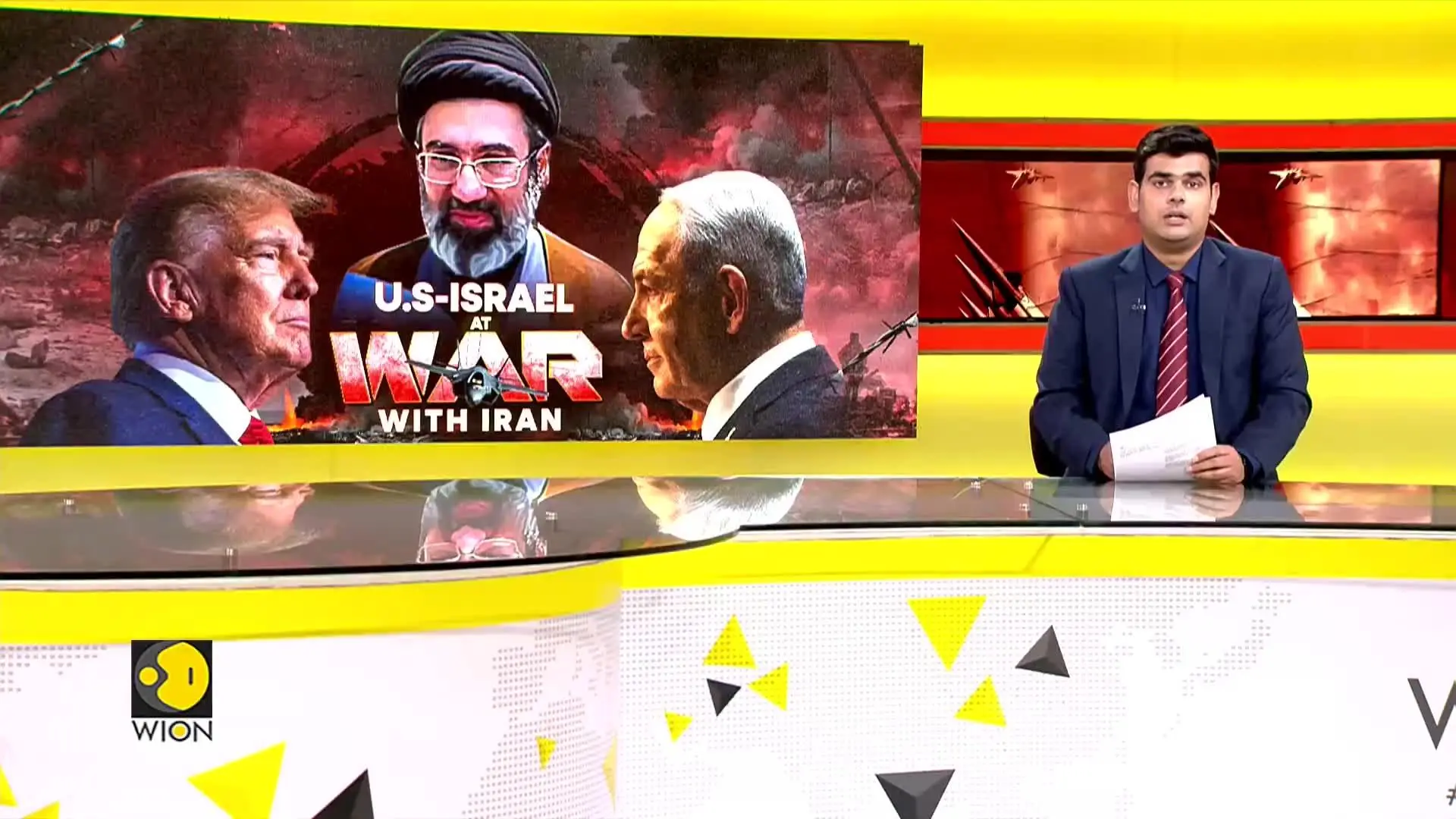
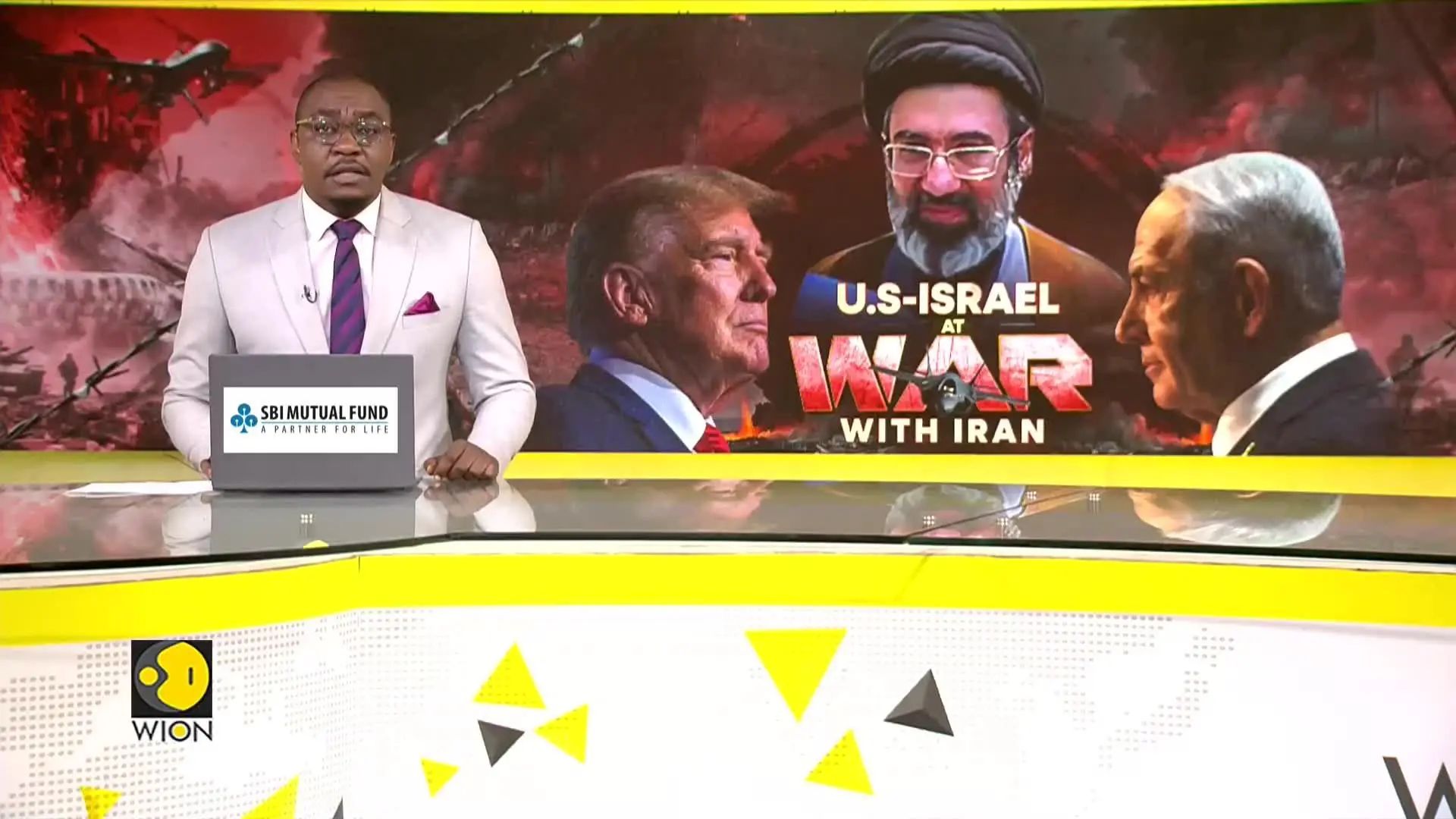
Mojtaba Khamenei was appointed Supreme Leader this month after his father and the second Supreme Leader of the Islamic Republic, Ali Khamenei, was killed in a joint Israel-US strike on February 28 that sparked the ongoing Iran war. Mojtaba’s first public statement was primarily a written one, without him making himself seen. This creates an ironic modern parallel with Khomeini: the founder of the Islamic Republic built revolutionary momentum through prolific voice recordings while in exile, and the current leader is operating through messaging without making any appearance since being chosen.

Khomeini’s audio tape revolution
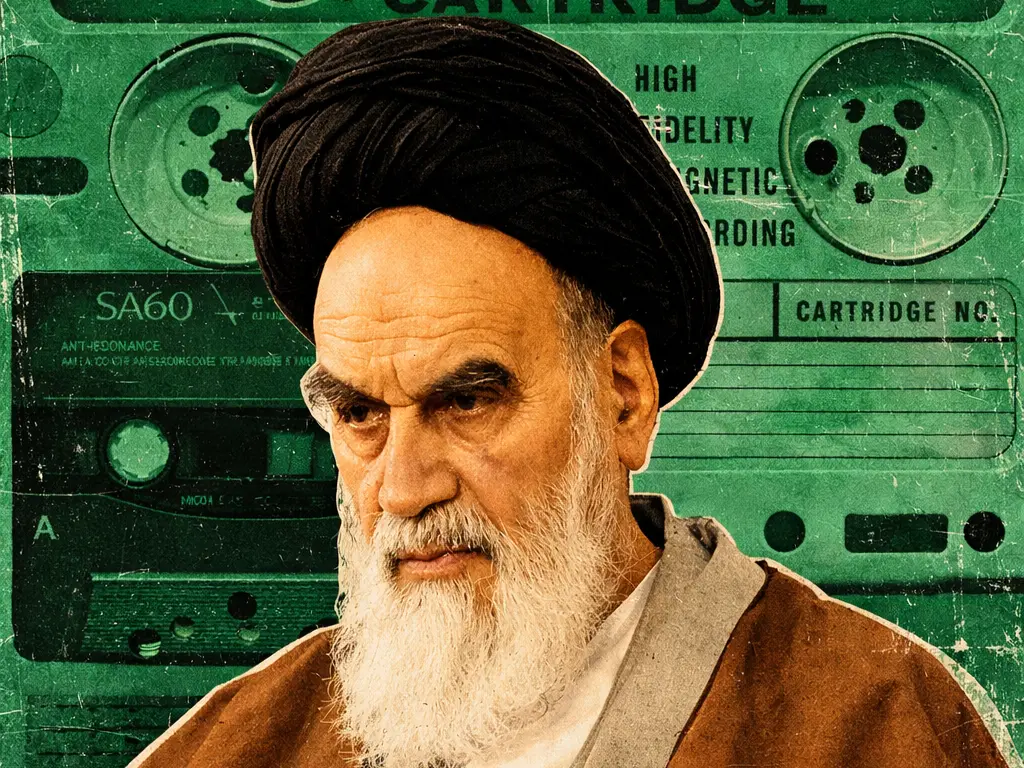
The audio cassette phenomenon took place ahead of and during Iran’s 1979 Islamic Revolution, making it one of the most striking instances of low-tech media being used to power a mass uprising. Exiled since 1964, Ayatollah Ruhollah Khomeini recorded sermons and political speeches while living in Najaf, Iraq, until 1978, and later from a rented house in Neauphle-le-Château, a village west of Paris in France, from October 1978 until his return to Iran. The tapes became the most powerful and ubiquitous underground communication tool of the revolution.
Trending Stories
)
Why asking questions could be more important than memorising answers
)
BRICS Summit 2026: Iran's Pezeshkian praises PM Modi at BRICS
)
Osama Bin Laden ‘planned’ to target India, CIA reveals dozens of declassified documents
)
PM Modi and China's Xi offered to help resolve Russia-Ukraine war: Kremlin
)
BRICS Summit 2026: Global leaders of BRICS nations attend main open session
)
BRICS rejects EU carbon tax as ‘punitive’, ‘discriminatory’; warns of burden on Global South
)
Why dehydration is the hidden cause of travel fatigue on long flights
)
Top 5 places to visit in Goa beyond its famous beaches
)
'He is popular...': Malaysian PM Anwar Ibrahim's praise for PM Modi during bilateral meeting | WATCH
)
BRICS Summit 2026: 30+ countries seek BRICS membership
)
Frustrated man demolishes his kitchen after thousands flock to see Mother Mary his wife spotted on the wall
)
BRICS Summit 2026: PM Modi, Xi reach key consensus on ties, China to assume BRICS chairmanship in 2027
)
Trump says Canada eager to reach a deal, it could come ‘fairly soon’ if Ottawa treats US farmers better
)
From drones to KAAN fighters: Turkey outlines 229% surge in defence spending amid regional shifts
)
‘Partners, not rivals’: Xi outlines four point plan for stronger India-China ties
&im=FitAndFill=(700,400))
Why Chinese PL-15 air-to-air missiles use dual-pulse motors compared to European interceptors
)
Could staying indoors all day affect your health?
)
Who is the smiling man beside Modi, Putin and Xi at BRICS Summit 2026?
)
800 million years old - Scientists discover 'fingerprints' of supercontinent Gondwana in ancient rocks
)
Why going digital does not always mean becoming more efficient
&im=FitAndFill=(700,400))
Why do air defence missiles explode near their target instead of hitting it?
)
From severe mobility problems to recovery: Madhuri the elephant’s journey of wildlife care
)
BRICS Summit day 1: New Delhi declaration adopted with full consensus, big diplomatic win for India
)
From India, Putin warns Europe against sending troops to Ukraine, Zelensky expresses willingness to meet him at G20 Summit
)
Did Iran President Pezeshkian touch feet of Hindu spiritual leader at Delhi event as shown in viral video?
)
9-year-old Chennai prodigy clears Cambridge IGCSE grade 10 exams
)
Why does your body need time to adjust after a long journey?
)
Baba Vanga's first prophecy for 2027 is out, and straight out of science fiction
)
BRICS Summit 2026: PM Modi to hold bilateral with leaders of seven countries
)
Ramanathaswamy temple takes centre stage as PM Modi welcomes world leaders at BRICS
)
Why does your skin need protection from UV rays?
)
How does the loss of forests affect the way wildlife lives and moves?
)
IND vs AFG, 1st T20I: When and where to watch live streaming in India?
)
Why do wild animals need quiet places to survive?
)
Humans may lose control of AI: Anthropic CEO calls for slowdown, Altman, Musk back him
How Khomeini’s tapes were produced, smuggled and distributed
Khomeini’s most influential tapes, which were played via loudspeakers during and after the Islamic Revolution, were recorded on ordinary tape recorders in the 1970s, mostly from the French village. Cassette copies were cheaply duplicated in France or Iraq and then smuggled into Iran through clandestine channels. Trusted couriers, merchants, and Shia pilgrims returning from holy sites in Iraq brought the tapes to Iran, often hidden in personal luggage, clothing, suitcases, or mixed with ordinary goods. Despite strict monitoring by SAVAK, the Iranian Shah’s secret police, many of these cassettes still found their way into the nation.
Audio messages of Khomeini mobilised a grassroots network
The tapes were eagerly listened to by Khomeini’s followers, creating a grassroots network primed for revolution. Cheap home cassette recorders were used by activists and mosque networks to reproduce hundreds of duplicates from a single master copy of Khomeini’s cassettes. At the peak of revolutionary mobilisation in Iran, some 90,000 mosques across the country simultaneously duplicated and circulated Khomeini’s audio messages. His voice became ubiquitous while he remained physically absent from the country.
The cassettes were passed through bazaars, private homes, student circles, and religious gatherings, and were sold cheaply on the streets. They were so much in demand that the cassettes were resold for around $1.25, giving daily profits to the sellers. Khomeini’s speeches and sermons were openly played during Friday prayers, effectively turning mosques into revolutionary broadcast hubs. The regime could not fully suppress the spread of his message, as the cassettes bypassed the Shah’s tight control over radio, television, and the print media networks.
What followed was the Islamic Revolution.
What was the message of Khomeini in the smuggled audio tapes?
In the tapes, Khomeini’s calm, authoritative and slow voice denounced the Shah as a tyrant. He described the Westernisation of Iran at the time as cultural imperialism and called for a new government based on Islamic identity. His voice reached millions directly, bypassing media censorship.
He framed the revolution as a war to safeguard the Islamic faith. The message resonated with vast segments of Iranian society — from bazaari merchants and clerics to students and ordinary Shia Muslim believers who formed the backbone of the revolution.
The silent revolution that paralysed Iran
Historians described the tapes as a “silent revolution” organised in mosques and religious seminaries. They helped coordinate protests, strikes, and mass demonstrations that paralysed the country in 1978–79. Even though Khomeini had not been physically present in Iran for over a decade, his voice remained in constant contact with followers inside the country.
The tapes also contained specific instructions to clerics. According to one description, the recordings became “as vital as a daily newspaper” by late 1978. Bloody crackdowns eroded the Shah’s legitimacy and convinced millions that an Islamic Republic under Khomeini was not only possible but inevitable.
Under the weight of the public uprising, the Shah, Mohammad Reza Pahlavi, fled Iran on 16 January 1979. On 1 February 1979, Khomeini returned from exile in a chartered Air France jet to a hero’s welcome by millions in Tehran.
All this while, he was not a ghostly figure to them. His voice had already enabled the nationwide unification of people under the principles and ideas he had shared for years through those audio messages.