

&imwidth=800&imheight=600&format=webp&quality=medium "Palestine statehood recognition merely for show? What will change, what might not, for Palestinians on the ground")
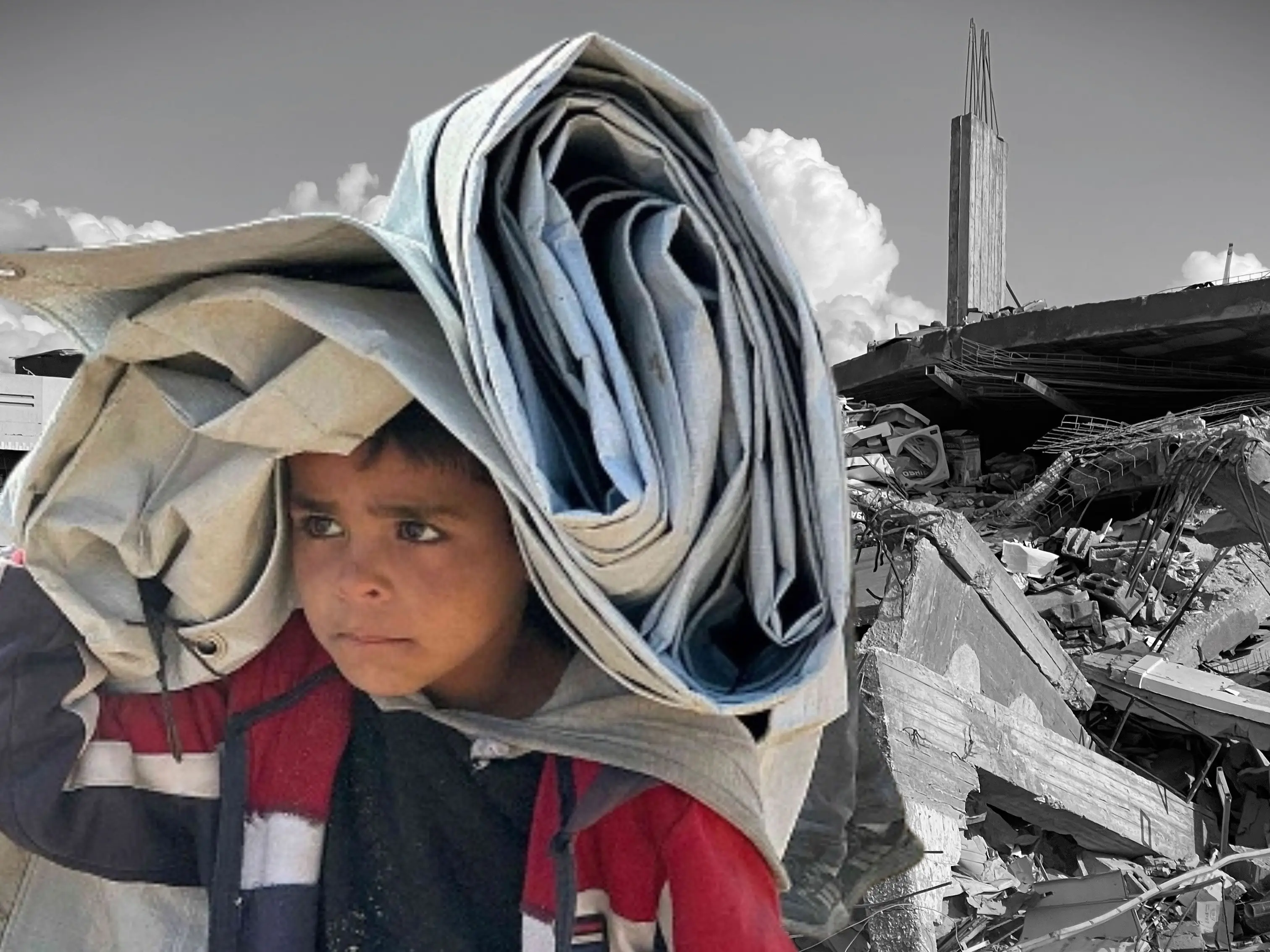
The UK, Canada and Australia became the latest nations to recognise Palestine statehood, while several are going to do the same at the United Nations General Assembly. Israel has called the moves a threat to its existence, while its key ally the US called it “performative.” But the real question is, will anything change on the ground for Palestinians as they reel under the Israeli occupation, entering the third year since the Hamas terror attack of 2023?
Palestinian statehood: What’s the status? Who recognises, who is about to do so?
A little over 151 of the 193 UN member states have recognised, or are in the process of recognising, the State of Palestine. This means an overwhelming majority of the international community wants to see the formal state of Palestine become a reality.
The UK, Canada, Australia, and Portugal have recently formally recognised Palestine. France intends to formally recognise Palestine during or around the UN General Assembly. European Union member states like Belgium, Luxembourg, Malta, and possibly others are expected to follow suit.
But it really does not matter, given that the most important power, the United States, is yet to recognise Palestine, with President Donald Trump saying in his recent UK visit that it is "an area of divergence" for him with UK Prime Minister Keir Starmer.
Japan, South Korea, and some other European countries are also yet to recognise Palestine.
Trending Stories
&imwidth=180&imheight=135&format=webp&quality=medium)
Other Mommy leads North American box Office as Verity, Resident Evil round out top four
&im=FitAndFill=(700,400)&imwidth=180&imheight=135&format=webp&quality=medium)
Navratri 2026: 9 days, 9 forms of Goddess Durga and 9 colours- Check the complete list
&im=FitAndFill=(700,400)&imwidth=180&imheight=135&format=webp&quality=medium)
Is sending robots to Mars easier than sending humans?
&imwidth=180&imheight=135&format=webp&quality=medium)
A watchdog rated 'ChatGPT for Teens' an unacceptable risk and says keep under-18s off it
&imwidth=180&imheight=135&format=webp&quality=medium)
1,500 drones illuminate Mumbai sky as Cordelia Cruises unveils second ship, Cordelia Sky
&imwidth=180&imheight=135&format=webp&quality=medium)
'Just coincidence': Police mistakes protester as AISA chief Neha Bora, arrests her from site
&imwidth=180&imheight=135&format=webp&quality=medium)
Anthropic's AI invented a murder witness and sent the fake tip to Philadelphia police
&imwidth=180&imheight=135&format=webp&quality=medium)
CJI Surya Kant declines INDIA bloc leaders’ request for meeting ahead of march to SC, asks them to file petition
&imwidth=180&imheight=135&format=webp&quality=medium)
Aamir Khan's niece, actress Zayn Marie shares injury pictures after being detained with Imran Khan at Mumbai protest
&imwidth=180&imheight=135&format=webp&quality=medium)
One Indian killed in Riyadh airport attack; 11 others injured : MEA
&imwidth=180&imheight=135&format=webp&quality=medium)
Imran Khan released hours after Mumbai Police detain him during CJP protest
&imwidth=180&imheight=135&format=webp&quality=medium)
Nathan Lyon completes 1,000 Test runs at No. 10 to script rare cricket feat
&imwidth=180&imheight=135&format=webp&quality=medium)
Top AI models flunked a test of inventing new AI research, so much for self-improving AI
&imwidth=180&imheight=135&format=webp&quality=medium)
Wasim Jaffer blames Ajit Agarkar-led selection panel for Virat Kohli’s Test retirement
&imwidth=180&imheight=135&format=webp&quality=medium)
'Ouch!!! That must hurt': Kangana Ranaut hails Kamal Haasan's sharp reply to Elon Musk over Starlink row
&imwidth=180&imheight=135&format=webp&quality=medium)
Sidhu Moose Wala’s younger brother wins hearts by recreating late singer’s signature move at Toronto Hologram Show
&imwidth=180&imheight=135&format=webp&quality=medium)
Meta's Muse AI could be a security nightmare for India's billion-plus users
&imwidth=180&imheight=135&format=webp&quality=medium)
UK school ditches technology, shifts from screen to pen and paper for learning
&imwidth=180&imheight=135&format=webp&quality=medium)
IND vs WI, 3rd T20I: Abhishek Sharma smashes 18-ball fifty, sets record for fastest to 2,000 T20I runs
&imwidth=180&imheight=135&format=webp&quality=medium)
Houthis claim Riyadh airport attacks, Aramco strikes; issue fresh warning to airlines, travellers and workers
&imwidth=180&imheight=135&format=webp&quality=medium)
Portugal Federation confirms Cristiano Ronaldo’s return to national team despite suspension
&im=FitAndFill=(700,400)&imwidth=180&imheight=135&format=webp&quality=medium)
New OTT releases this week (October 12-18, 2026): Sacrifice, Koffee with Karan S9, Roadies Rebirth- 6 titles coming on Netflix, JioHotstar and more
&imwidth=180&imheight=135&format=webp&quality=medium)
Microsoft's Nadella says treat every AI model as already hacked, and build an 'emergency brake'
&imwidth=180&imheight=135&format=webp&quality=medium)
Delhi protest: CJI Surya Kant declines to meet India Bloc leaders
&imwidth=180&imheight=135&format=webp&quality=medium)
Are Gold and Silver poised for a rebound soon?
&imwidth=180&imheight=135&format=webp&quality=medium)
China imposes first-ever sanctions on ministers from Taiwan allies: What this means
&imwidth=180&imheight=135&format=webp&quality=medium)
McSweeney reveals how studying Virat Kohli’s YouTube clips helped Australia A conquer India
&imwidth=180&imheight=135&format=webp&quality=medium)
Maharashtra appoints FDA commissioner Tukaram Mundhe as secretary of committee for MPSC overhaul amid stir
&imwidth=180&imheight=135&format=webp&quality=medium)
Iran: US accepted some conditions, Clarity needed on others
&imwidth=180&imheight=135&format=webp&quality=medium)
Nana Patekar's cause of death confirmed; here's what his postmortem report says
&imwidth=180&imheight=135&format=webp&quality=medium)
iPhone Duo price index: Tracking Apple’s latest pricing trends
&imwidth=180&imheight=135&format=webp&quality=medium)
'Say no to Muse': Meta has no control over its own moderation AI while it forces a security nightmare on everyone
&imwidth=180&imheight=135&format=webp&quality=medium)
Delhi wakes up to heavy rain, thunderstorms; yellow alert in place; temperature drops
Is Palestinian statehood recognition merely a show? What the US means by “performative”
The State Department called the Palestinian statehood recognition by some Western countries “performative.” It could very well be right. These recognitions have largely been symbolic, and not backed by accompanying changes in policy.
There are not many concrete steps that alter power dynamics or outcomes on the ground. Mere statehood recognition without resolving conflicts over territory, security, governance, refugees, and borders does not by itself create a functioning state that changes the Palestinian people’s day-to-day realities.
Amid the Israel-Hamas war in Gaza, the US is making its priorities clear: release of Israeli hostages, security of Israel, broader peace and stability for the region. Recognition of Palestine, in their view, doesn’t by itself guarantee those things.
Also read: Palestine welcomes ‘courageous decisions’ of UK, Canada, and Australia to recognise its statehood
Palestinian statehood: What might be the positive changes?
The positive outcomes from the recognition could include some legal, diplomatic, and political advantages. Recognised states can use international bodies like the UN, the International Criminal Court, and treaty regimes with more leverage. It allows diplomacy and specific claims in front of these bodies to be made more explicitly.
The ability of Palestine to establish formal diplomatic relations, and embassies, is another positive outcome from the recognition. They can enter into treaties, possibly including trade deals and diplomatic exchanges. Palestine would be able to get more foreign aid and cooperation from countries with diplomatic ties.
The recognition elevates the Palestinian cause, gaining a higher profile in international negotiations. Statehood could help Palestine garner more legitimacy in global public opinion, and it can fight cases in international courts or in global fora more effectively. The recognition can also put greater diplomatic pressure on Israel, including trade sanctions or shifts in international public opinion.
Palestine can get international funding and membership in international organisations, like transitioning from the current status as a “non‑member observer state” to a member state of the UN, which comes with certain privileges.
Palestinian statehood and ground realities: What probably won’t change for Palestinians
A state’s recognition, by itself, will not ensure any control over territory or borders. The Palestinian Authority, which rules the West Bank, and Hamas, which rules the Gaza Strip, might not have full control over these territories. There are issues to be resolved on East Jerusalem and borders, especially given the ongoing war, and the Israeli settlements in the West Bank, much of it forced and state-backed by Israel.
Palestine is yet to have a formal military. While theoretically, Palestine could procure arms as a state, it could complicate the already worsening war situation. Israel—though already much more capable and dominant militarily—could seek more arms to defend against a Palestinian state that has a formal army. Israel currently has its forces at border controls and checkpoints. Recognition of Palestine is not going to change any of this overnight.
Israel still manages the checkpoints, restrictions, settlers, occupation policies, and internal governance.
Daily life of Palestinians under siege. Will anything change after state recognition?
The Gaza war and Israeli occupation of Gaza City are ongoing even as the Palestinian statehood declarations are being made. For people living in Gaza, issues like electricity, water, schooling, taxes, freedom of movement, infrastructure, and health care are not going to change immediately. Israeli occupation, blockades, funding, and administrative capacity will determine how the humanitarian situation evolves, not any diplomatic recognition.
Contentious issues like Jerusalem and refugees will remain
Core contentious issues like Jerusalem and East Jerusalem’s status require longer negotiation or international legal/political enforcement.
Under the current hostile situations, these are going to take a lot more time. A simple statehood recognition is not going to settle these issues.
Without those being reinforced, recognition might have more symbolism than practical effect.

