&imwidth=800&imheight=600&format=webp&quality=medium "Nepal prioritises economic diplomacy amid major shifts in geopolitics: Foreign Minister")
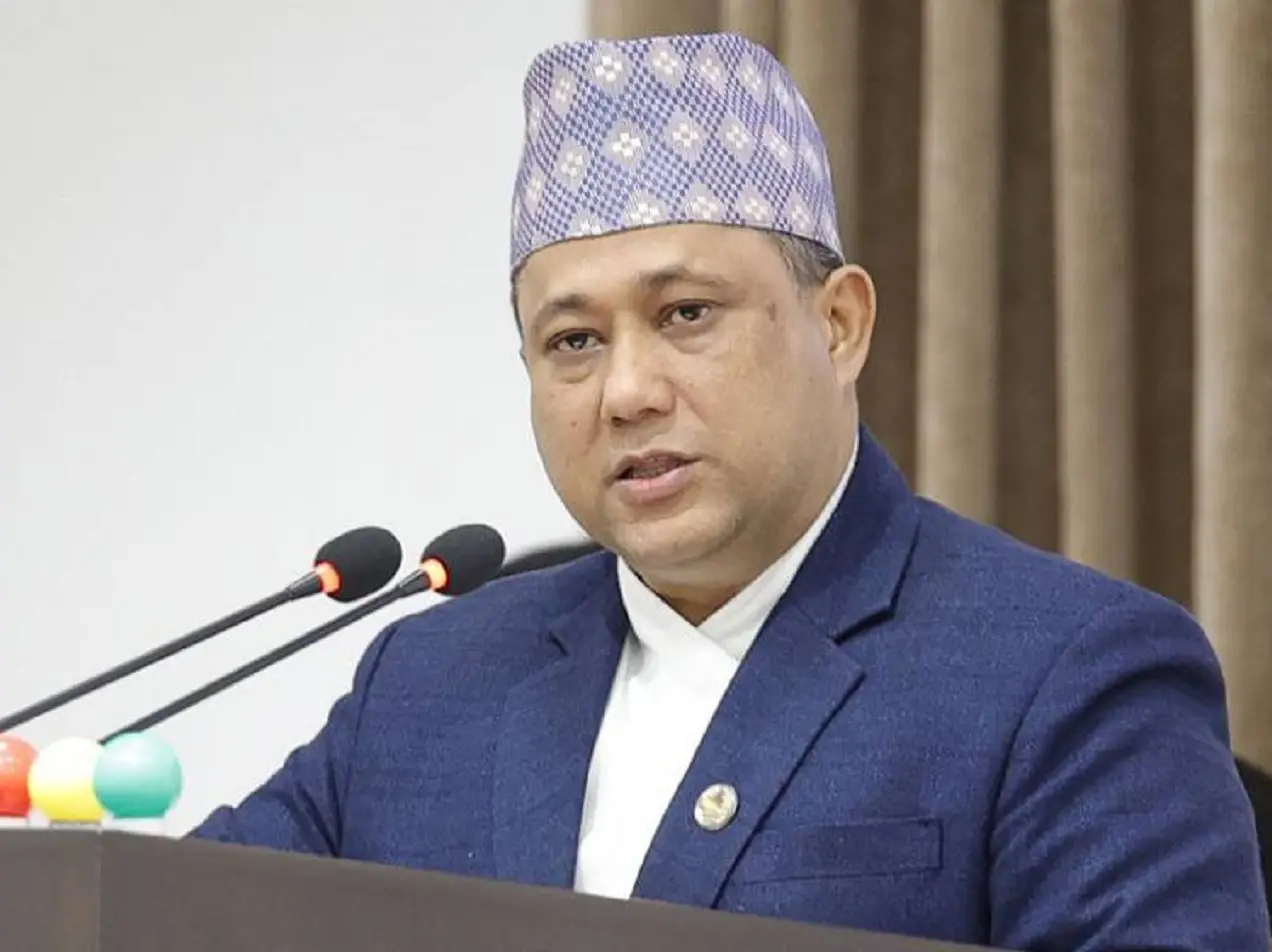
Kathmandu: Nepal should avoid interpreting international relations primarily through geopolitical rivalry and instead focus on practical partnerships that advance economic growth, Foreign Minister Shisir Khanal said on Monday, setting out what he described as a more development-oriented approach to foreign policy.
Speaking at the fifth Professor Yadu Nath Khanal lecture series in Kathmandu, Khanal said Nepal’s diplomacy must increasingly serve national economic priorities, including trade, investment, tourism, technology cooperation and market access.
He said the global environment is undergoing rapid change with rising competition among major powers, shifting supply chains and the growing influence of technology and artificial intelligence on international power structures.

“For countries like Nepal, these changes present both challenges and opportunities,” he said, adding that foreign policy must remain anchored in national interest while adapting to evolving realities.
Khanal said geography should not be viewed narrowly as a constraint shaped by geopolitical pressure but as a platform for connectivity and economic opportunity.
Trending Stories
)
Why asking questions could be more important than memorising answers
)
BRICS Summit 2026: Iran's Pezeshkian praises PM Modi at BRICS
)
Osama Bin Laden ‘planned’ to target India, CIA reveals dozens of declassified documents
)
'Iran won't surrender': Pezeshkian sends blunt message to US while attending BRICS Summit in India
)
BRICS Summit 2026: Global leaders of BRICS nations attend main open session
)
PM Modi and China's Xi offered to help resolve Russia-Ukraine war: Kremlin
)
Why dehydration is the hidden cause of travel fatigue on long flights
&im=FitAndFill=(700,400))
Meet top 5 batters fastest to 3000 runs in T20Is
)
Top 5 places to visit in Goa beyond its famous beaches
)
'He is popular...': Malaysian PM Anwar Ibrahim's praise for PM Modi during bilateral meeting | WATCH
)
BRICS Summit 2026: PM Modi, Xi reach key consensus on ties, China to assume BRICS chairmanship in 2027
)
BRICS Summit 2026: Consensus on joint declaration, diplomatic win for India
)
Trump says Canada eager to reach a deal, it could come ‘fairly soon’ if Ottawa treats US farmers better
)
‘Partners, not rivals’: Xi outlines four point plan for stronger India-China ties
&im=FitAndFill=(700,400))
Why Chinese PL-15 air-to-air missiles use dual-pulse motors compared to European interceptors
)
Could staying indoors all day affect your health?
)
BRICS Summit 2026: PM Modi addresses Day 2 of 18th BRICS summit
)
Who is the smiling man beside Modi, Putin and Xi at BRICS Summit 2026?
)
800 million years old - Scientists discover 'fingerprints' of supercontinent Gondwana in ancient rocks
)
Why going digital does not always mean becoming more efficient
&im=FitAndFill=(700,400))
Why do air defence missiles explode near their target instead of hitting it?
)
War is making Russia stronger? How Ukraine is shaping Moscow’s next generation of weapons
)
From severe mobility problems to recovery: Madhuri the elephant’s journey of wildlife care
)
BRICS Summit day 1: New Delhi declaration adopted with full consensus, big diplomatic win for India
)
Did Iran President Pezeshkian touch feet of Hindu spiritual leader at Delhi event as shown in viral video?
)
9-year-old Chennai prodigy clears Cambridge IGCSE grade 10 exams
)
Why does your body need time to adjust after a long journey?
)
BRICS Summit 2026: PM Modi to hold bilateral with leaders of seven countries
)
Ramanathaswamy temple takes centre stage as PM Modi welcomes world leaders at BRICS
)
Houthis launch cross-border strike on Saudi Arabia as Yemen war escalates
)
BRICS Summit 2026: Chinese president Xi Jinping departs from New Delhi after attending BRICS summit
)
Why does your skin need protection from UV rays?
)
How does the loss of forests affect the way wildlife lives and moves?
)
IND vs AFG, 1st T20I: When and where to watch live streaming in India?
)
Why do wild animals need quiet places to survive?
)
Bigg Boss 20: Qazi Touqeer gets a special ‘rockstar’ moment from Salman Khan
)
Humans may lose control of AI: Anthropic CEO calls for slowdown, Altman, Musk back him
The foreign minister said Nepal’s recent engagements with India and China reflected this approach.
During recent visits, he said discussions with India focused on connectivity, infrastructure, digital cooperation, cross-border payment systems, education and emerging technologies, including artificial intelligence and regional language tools.
With China, he said talks centred on connectivity, energy cooperation, agricultural technology, customs modernisation and infrastructure development.
Nepal’s external relations, he said, were “neither a zero-sum exercise nor a matter of choosing between partners.”
Khanal said this approach reflected Nepal’s commitment to non-alignment, which he described not as passivity but as active engagement based on independent judgement and national interest.
He said Nepal remained committed to the principles of the United Nations Charter, Panchasheel, peaceful coexistence and non-alignment which continue to guide its foreign policy.
The foreign minister said diplomacy was inseparable from domestic credibility, adding that political stability and economic progress at home shaped Nepal’s standing abroad.
He said the government had placed good governance and rapid economic growth at the centre of its priorities, and foreign policy was being aligned accordingly through what he called “result-oriented development diplomacy.”
“Our people today aspire to greater opportunities, development and prosperity and our foreign policy must increasingly serve these national aspirations. In this context, the government has placed good governance and rapid economic growth at the centre of its priorities. Our citizens, particularly the younger generation, expect results, opportunities and accountable institutions,” Khanal said.
Also Read: Starmer announces extra £15bn for defence, says road and energy projects to be scrapped for funds
Nepal’s diplomatic missions, he said were being reoriented towards economic objectives including investment promotion, tourism, trade facilitation and technology partnerships.
Khanal also said the protection of Nepali citizens abroad remained a core responsibility with strengthened crisis response systems, communication channels and consular support mechanisms.
Reflecting on the legacy of Professor Yadu Nath Khanal, he said diplomacy required discipline, knowledge and historical understanding and could not be reduced to slogans or reactive analysis.
He added that effective diplomacy also required the ability to communicate a country’s identity and aspirations clearly to the world, a function increasingly linked to public diplomacy and international perception.