
&imwidth=800&imheight=600&format=webp&quality=medium "'Iran won't surrender': Pezeshkian sends blunt message to US while attending BRICS Summit in India")
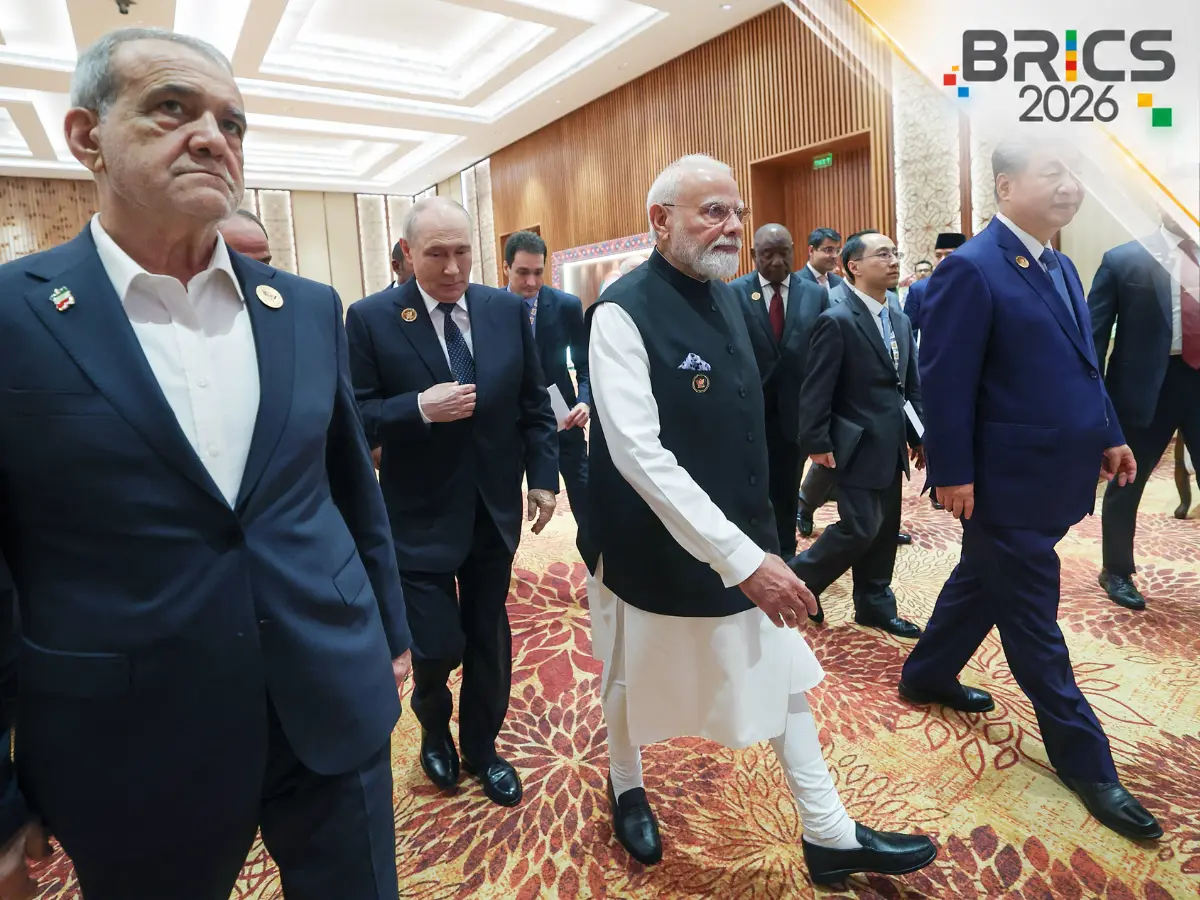
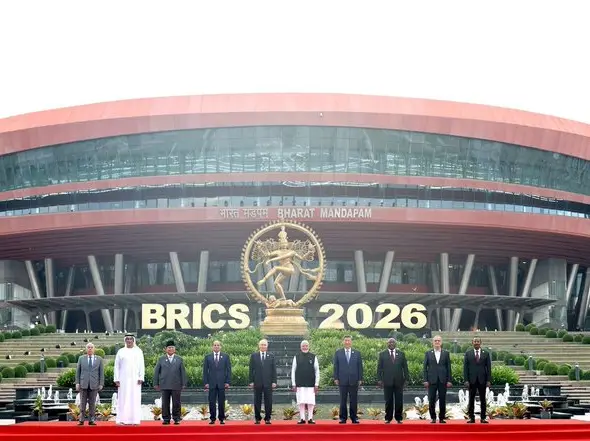
Iranian President Masoud Pezeshkian on Saturday (Sep 12) sent a message to the US amid rising tensions in West Asia. He said that Iran would not surrender to pressure from the US and Israel, while accusing them of targeting civilian infrastructure, food supplies and livelihoods. He stated that if Americans are warriors, they should engage in a military conflict and not target civilian infrastructure. The message from the Iranian President comes from India as he met several leaders during BRICS Summit 2026. The message also comes soon after he met Abu Dhabi Crown Prince Sheikh Khaled bin Mohamed bin Zayed Al Nahyan - the first highest-level direct meeting since the outbreak of the US-Iran war earlier in the year.
“If Americans are warriors, let them face our valiant military forces. Why wage war on civilian infrastructure, food supplies, and livelihoods?” Pezeshkian said in a post on X. “If they're human, why deny people access to water, food, and medicine? Our people can't be bullied into submission. Iran won't surrender," he added.

BRICS New Delhi Declaration
The BRICS New Delhi Declaration was adopted on Sep 12 and it expressed deep concern over escalating tensions in West Asia and called for "maximum restraint." It also rejects "unilateral acts of war" and calls for safeguarding seafarers and commercial shipping routes. “We express deep concern over the continued escalation of tensions in Middle East/West Asia and, recalling our respective national positions, call for exercising maximum restraint, as well as avoiding actions that could further aggravate the situation. We encourage increasing efforts, through dialogue and diplomacy, towards a long-term understanding that will contribute to lasting peace, security and stability in the region. We stress the need to work together to maintain smooth flow of global trade, supply chains and energy, in accordance with applicable international law,” it said.
Trending Stories
)
Why asking questions could be more important than memorising answers
)
BRICS Summit 2026: Iran's Pezeshkian praises PM Modi at BRICS
)
Why dehydration is the hidden cause of travel fatigue on long flights
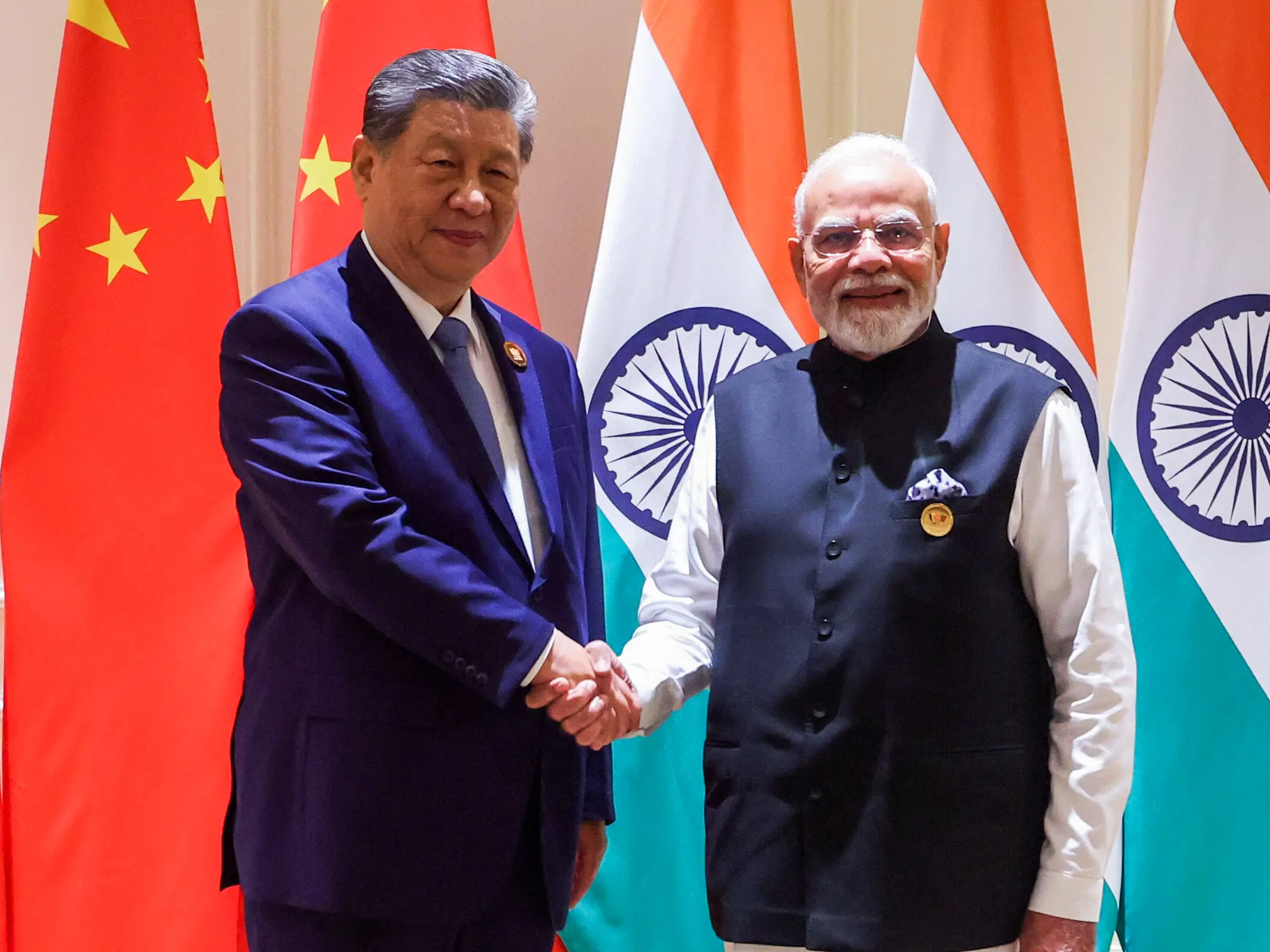)
‘Differences should not become disputes’: Modi, Xi stress long term India-China ties during bilateral talks
)
Top 5 places to visit in Goa beyond its famous beaches
)
BRICS Summit: All about Xi Jinping's armoured limousine Hongqi that will ferry him in New Delhi
)
BRICS Summit 2026: Modi-Xi meeting to test India-China reset after border tensions
)
BRICS Summit 2026: 30+ countries seek BRICS membership
)
Frustrated man demolishes his kitchen after thousands flock to see Mother Mary his wife spotted on the wall
)
Trump says Canada eager to reach a deal, it could come ‘fairly soon’ if Ottawa treats US farmers better
)
From drones to KAAN fighters: Turkey outlines 229% surge in defence spending amid regional shifts
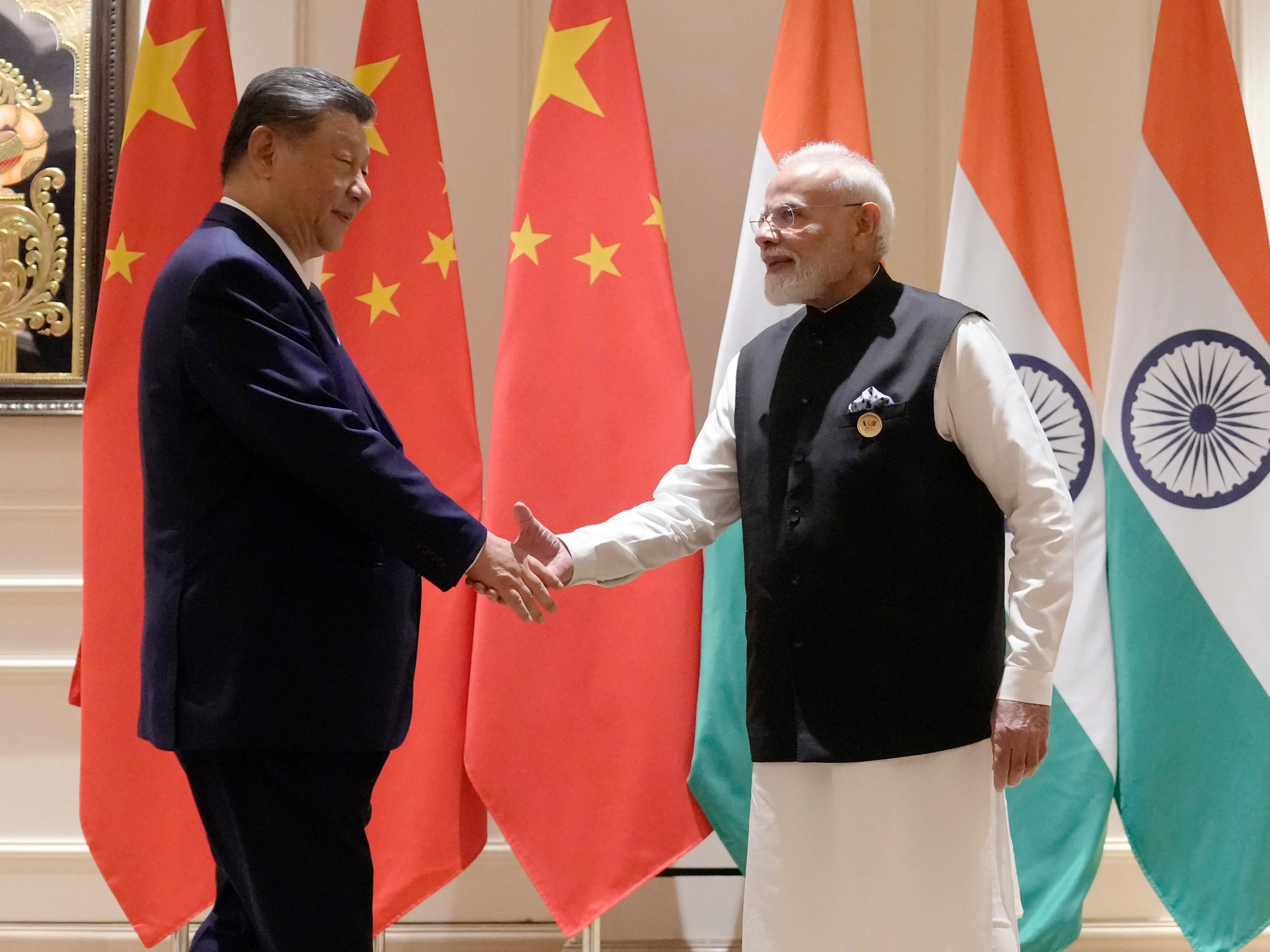)
‘Partners, not rivals’: Xi outlines four point plan for stronger India-China ties
)
Could staying indoors all day affect your health?
)
Odisha gets investment proposals worth Rs 2.42 trillion from UAE with 6.18 lakh potential jobs
)
Bigg Boss 20: Uditi Singh reacts to ex Karan Wahi’s possible wildcard entry
)
800 million years old - Scientists discover 'fingerprints' of supercontinent Gondwana in ancient rocks
)
Why going digital does not always mean becoming more efficient
)
ENG vs PAK: Joe Root breaks Sachin Tendulkar’s record for most Test fifties
)
Israel spent nearly $470,000 on PM's hair, makeup since 2019, data shows
)
From severe mobility problems to recovery: Madhuri the elephant’s journey of wildlife care
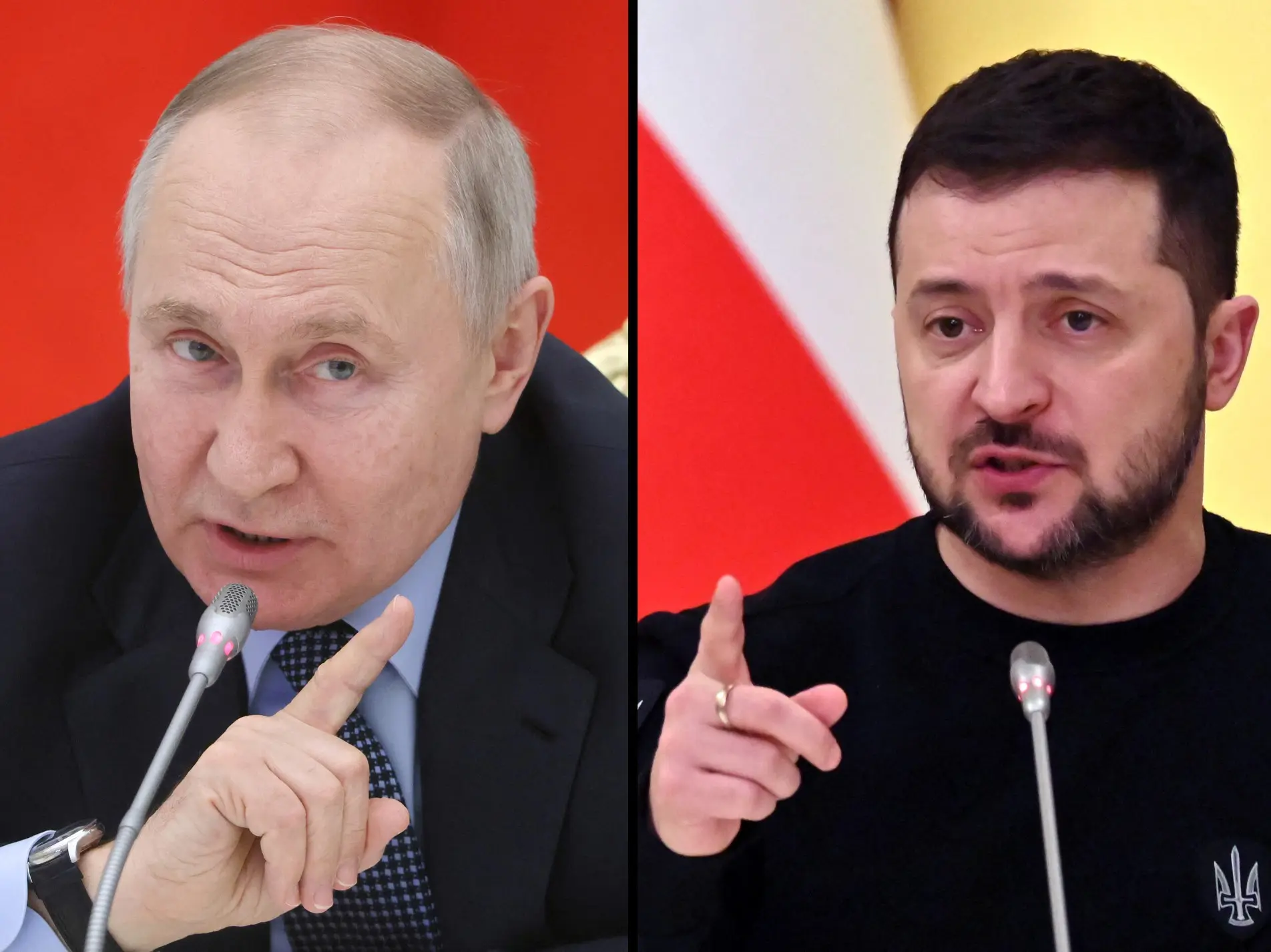)
From India, Putin warns Europe against sending troops to Ukraine, Zelensky expresses willingness to meet him at G20 Summit
)
BRICS Summit 2026: Special BRICS session on 'inclusive global governance'
)
9/11 attack anniversary: The day that changed America forever
)
9-year-old Chennai prodigy clears Cambridge IGCSE grade 10 exams
)
BRICS Summit 2026: PM Modi says India and Iran should pursue win-win strategy
)
Why does your body need time to adjust after a long journey?
)
BRICS Summit 2026: India ensures consensus: BRICS nations to issue joint statement today
)
Baba Vanga's first prophecy for 2027 is out, and straight out of science fiction
)
BRICS declaration calls for stronger people ties, women-led growth and greater youth cooperation
)
Why does your skin need protection from UV rays?
)
Modi, Putin, Xi ‘bromance’ goes viral as leaders captured holding hands at BRICS Summit
)
How does the loss of forests affect the way wildlife lives and moves?
)
IND vs AFG, 1st T20I: When and where to watch live streaming in India?
)
Anthropic is giving Claude to schools free, and the reason is not philanthropy
)
BRICS Summit: China resumes Guangzhou-New Delhi flight, issues 'good-neighbourliness' remark ahead of Xi-Modi meet
)
Why do wild animals need quiet places to survive?
)
Humans may lose control of AI: Anthropic CEO calls for slowdown, Altman, Musk back him
Modi-Pezeshkian meet
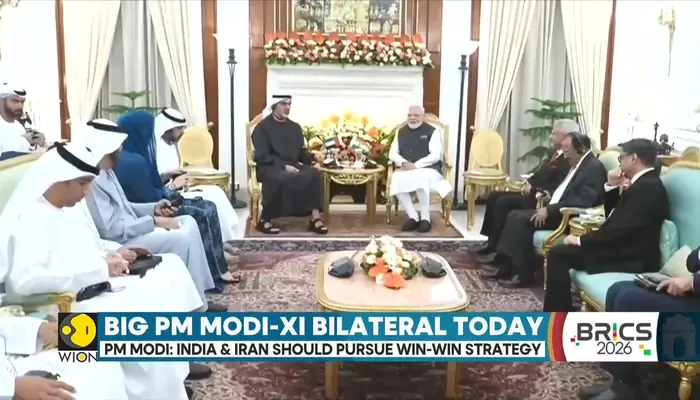
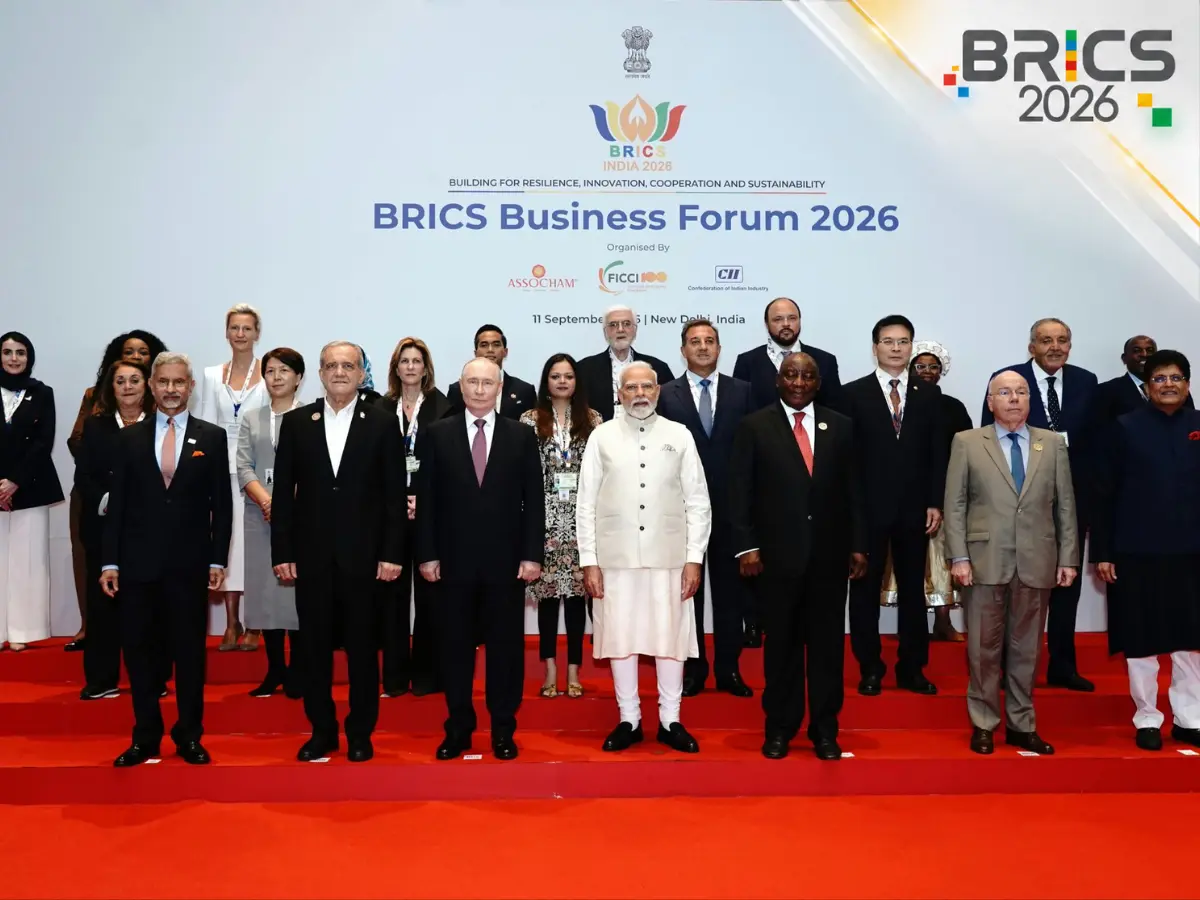
PM Narendra Modi met President Pezeshkian on Sep 11 ahead of BRICS Summit. While the Indian PM thanked Iran for its active participation in BRICS-related meetings including in the BRICS Business Forum, Pezeshkian praised India's efforts to strengthen cooperation among BRICS member nations. PM Modi reiterated India’s call for conflicts to be resolved through dialogue and diplomacy.
While addressing the BRICS Business Forum, Pezeshkian publically thanked India and Prime Minister Narendra Modi for making "valuable efforts" to strengthen cooperation amongst the members of the grouping. "I would like to sincerely thank the friendly government and people of India for the graciously hosting of this meeting, as well as the Honourable Prime Minister of India for his valuable efforts to strengthen BRICS cooperation," Pezeshkian stated.
On West Asia war, Pezeshkian said that economic security remains inseparable from national and regional security. "Disruptions in supply chains and the increasing use of economic tools to exert political pressure have made the economic environment of countries more complex. The question is, what is the BRICS response to these problems?" he added. The Iranian President mentioned that Tehran believes that the true power of BRICS is not limited to the economic size of its members, but becomes more evident when these capacities are transformed into a network of joint trade, investment, and financing - transition from potential cooperation to operational cooperation.

