
&imwidth=800&imheight=600&format=webp&quality=medium "Why asking questions could be more important than memorising answers")
In modern education and professional environments, the focus is rapidly shifting from rote memorisation to inquiry-based learning. While repeating facts was once considered a primary marker of intelligence, research indicates that this approach limits cognitive development and problem-solving skills. Asking questions actively engages the brain, helping individuals navigate a complex, rapidly changing world far better than passively receiving information.
The Hidden Costs of Rote Learning
Memorising information through repetition has been a cornerstone of traditional education systems for decades. However, recent studies reveal its severe limitations in the modern era. Students who rely entirely on rote learning often demonstrate weaker critical thinking abilities compared to those who engage in reflective, deeper learning.

Furthermore, the pressure to memorise vast amounts of data can lead to emotional burnout and academic anxiety. Traditional lecture-based formats teach isolated facts, which might help an individual pass an examination, but often leave them unable to apply that knowledge in real-world scenarios.
Why Asking Questions Rewires the Brain
Curiosity acts as a catalyst for cognitive development. When a person is genuinely curious and begins asking questions, their brain physically prepares itself to learn more effectively. This natural process stimulates mental pathways that result in deeper learning and longer-term retention.
Trending Stories
)
BRICS Summit 2026: PM Modi addresses Day 2 of 18th BRICS summit
)
Bigg Boss 20: Qazi Touqeer gets a special ‘rockstar’ moment from Salman Khan
)
'Iran won't surrender': Pezeshkian sends blunt message to US while attending BRICS Summit in India
)
Did Iran President Pezeshkian touch feet of Hindu spiritual leader at Delhi event as shown in viral video?
)
Why going digital does not always mean becoming more efficient
)
Humans may lose control of AI: Anthropic CEO calls for slowdown, Altman, Musk back him
)
Who is the smiling man beside Modi, Putin and Xi at BRICS Summit 2026?
)
PM Modi and China's Xi offered to help resolve Russia-Ukraine war: Kremlin
)
IND vs AFG, 1st T20I: When and where to watch live streaming in India?
)
BRICS Summit 2026: Consensus on joint declaration, diplomatic win for India
)
BRICS Summit 2026: PM Modi, Xi reach key consensus on ties, China to assume BRICS chairmanship in 2027
)
BRICS Summit day 1: New Delhi declaration adopted with full consensus, big diplomatic win for India
)
War is making Russia stronger? How Ukraine is shaping Moscow’s next generation of weapons
)
Why does your body need time to adjust after a long journey?
)
Why does your skin need protection from UV rays?
&im=FitAndFill=(700,400))
Meet top 5 batters fastest to 3000 runs in T20Is
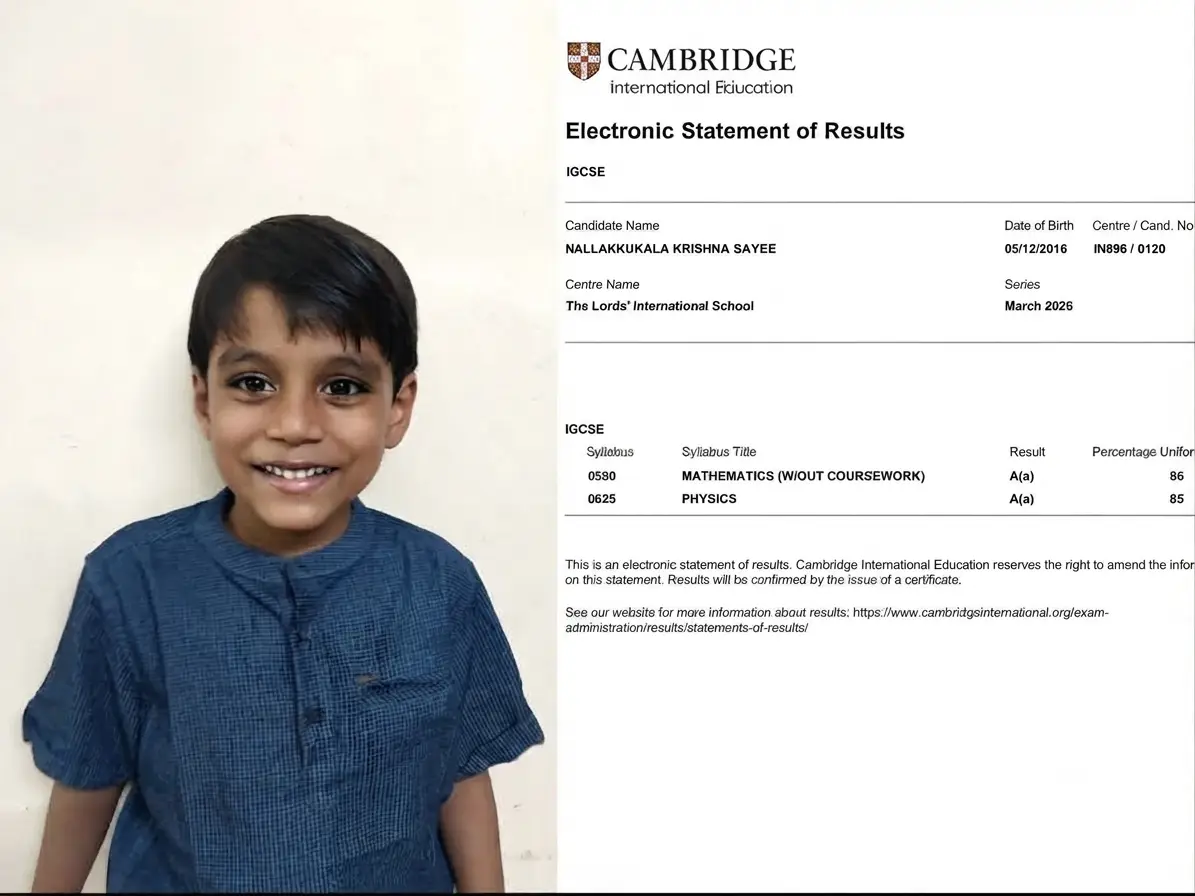)
9-year-old Chennai prodigy clears Cambridge IGCSE grade 10 exams
)
From severe mobility problems to recovery: Madhuri the elephant’s journey of wildlife care
)
BRICS Summit 2026: Chinese president Xi Jinping departs from New Delhi after attending BRICS summit
)
Why asking questions could be more important than memorising answers
)
BRICS Summit 2026: PM Modi to hold bilateral with leaders of seven countries
&im=FitAndFill=(700,400))
Why do air defence missiles explode near their target instead of hitting it?
)
BRICS Summit 2026: Global leaders of BRICS nations attend main open session
)
‘Partners, not rivals’: Xi outlines four point plan for stronger India-China ties
)
Ramanathaswamy temple takes centre stage as PM Modi welcomes world leaders at BRICS
)
800 million years old - Scientists discover 'fingerprints' of supercontinent Gondwana in ancient rocks
)
Osama Bin Laden ‘planned’ to target India, CIA reveals dozens of declassified documents
)
Celine Dion makes emotional stage comeback after six years: 'I'm so delighted to see you'
)
Why do wild animals need quiet places to survive?
)
How does the loss of forests affect the way wildlife lives and moves?
)
'He is popular...': Malaysian PM Anwar Ibrahim's praise for PM Modi during bilateral meeting | WATCH
)
Migration protests return to Portsmouth as rival demonstrations face off
)
Why dehydration is the hidden cause of travel fatigue on long flights
)
Trump says Canada eager to reach a deal, it could come ‘fairly soon’ if Ottawa treats US farmers better
)
Houthis launch cross-border strike on Saudi Arabia as Yemen war escalates
)
Top 5 places to visit in Goa beyond its famous beaches
&im=FitAndFill=(700,400))
Why Chinese PL-15 air-to-air missiles use dual-pulse motors compared to European interceptors
)
Could staying indoors all day affect your health?
Inquiry-based learning requires individuals to transition from passive listeners to active investigators. When people ask questions, examine evidence, and build their own understanding, they take ownership of their intellectual growth. This approach not only boosts performance but also encourages teamwork and collaboration.
Real-World Applications Over Textbook Answers
The accumulation of facts is no longer as valuable as the ability to find and apply information in varying situations. Educational data shows that active learning methods yield significantly higher achievement rates than traditional lectures. In fact, one study found that failure rates were 55 per cent higher in traditional teaching setups compared to active learning environments.
- People who ask questions are better equipped to solve complex problems and adapt to new challenges.
- Fostering higher-level thinking through inquiry builds leadership abilities that simple memorisation cannot match.
- Continuous feedback in inquiry-based settings helps individuals understand their thought processes and learn from mistakes.
The shift from memorisation to questioning is essential for future success. By encouraging a persistent culture of inquiry, we develop confident, creative individuals ready to tackle complex challenges.
