&imwidth=800&imheight=600&format=webp&quality=medium "'Deceived': Did White House put at risk the journalists travelling with Trump during plane switch? What they say")
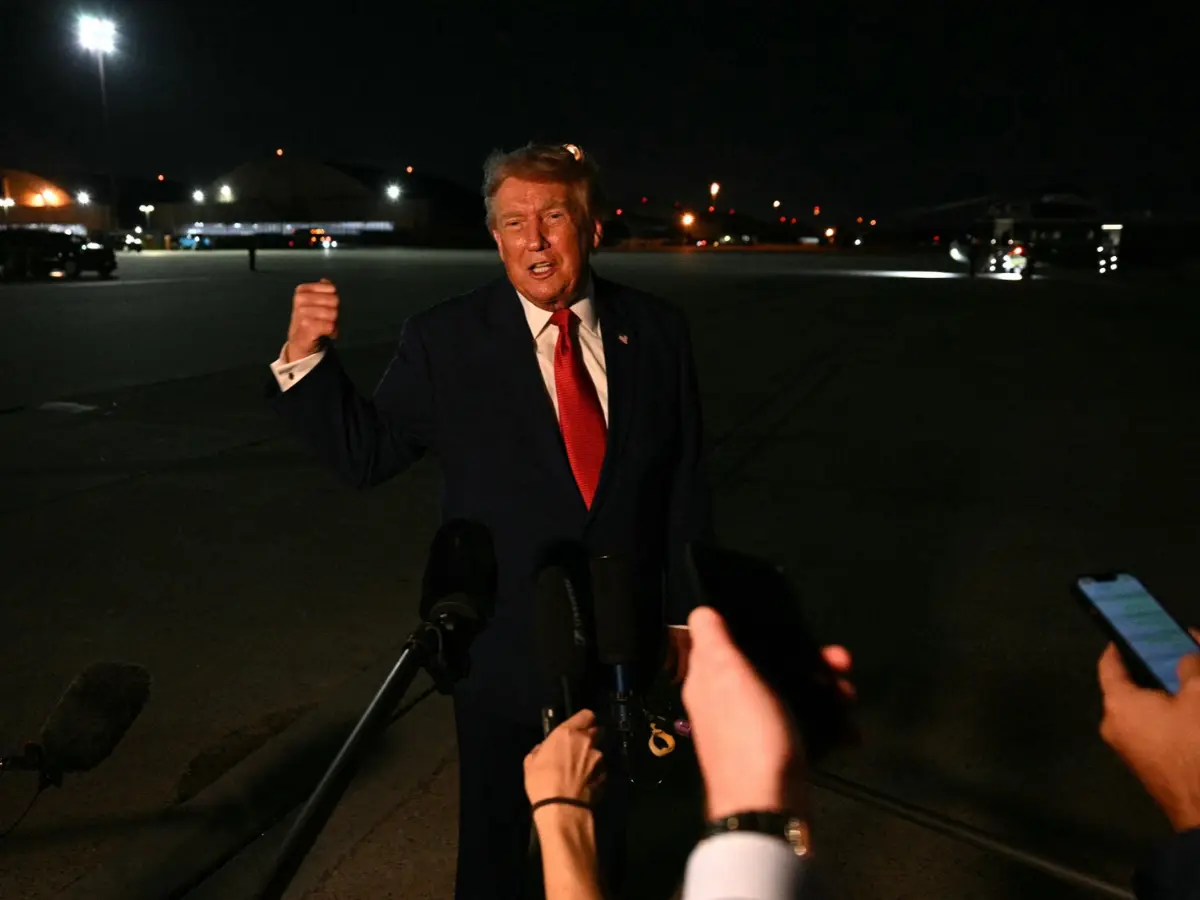
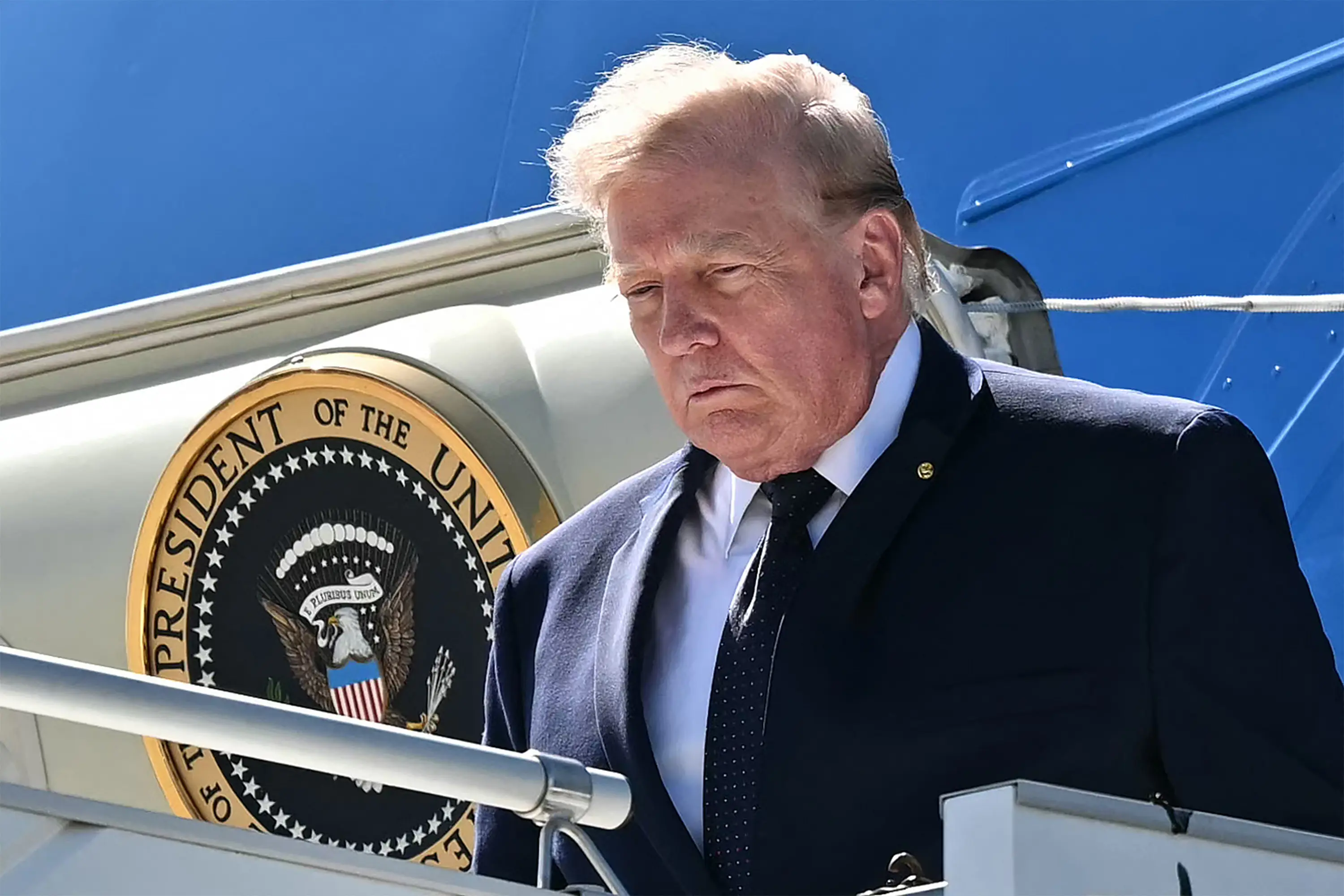
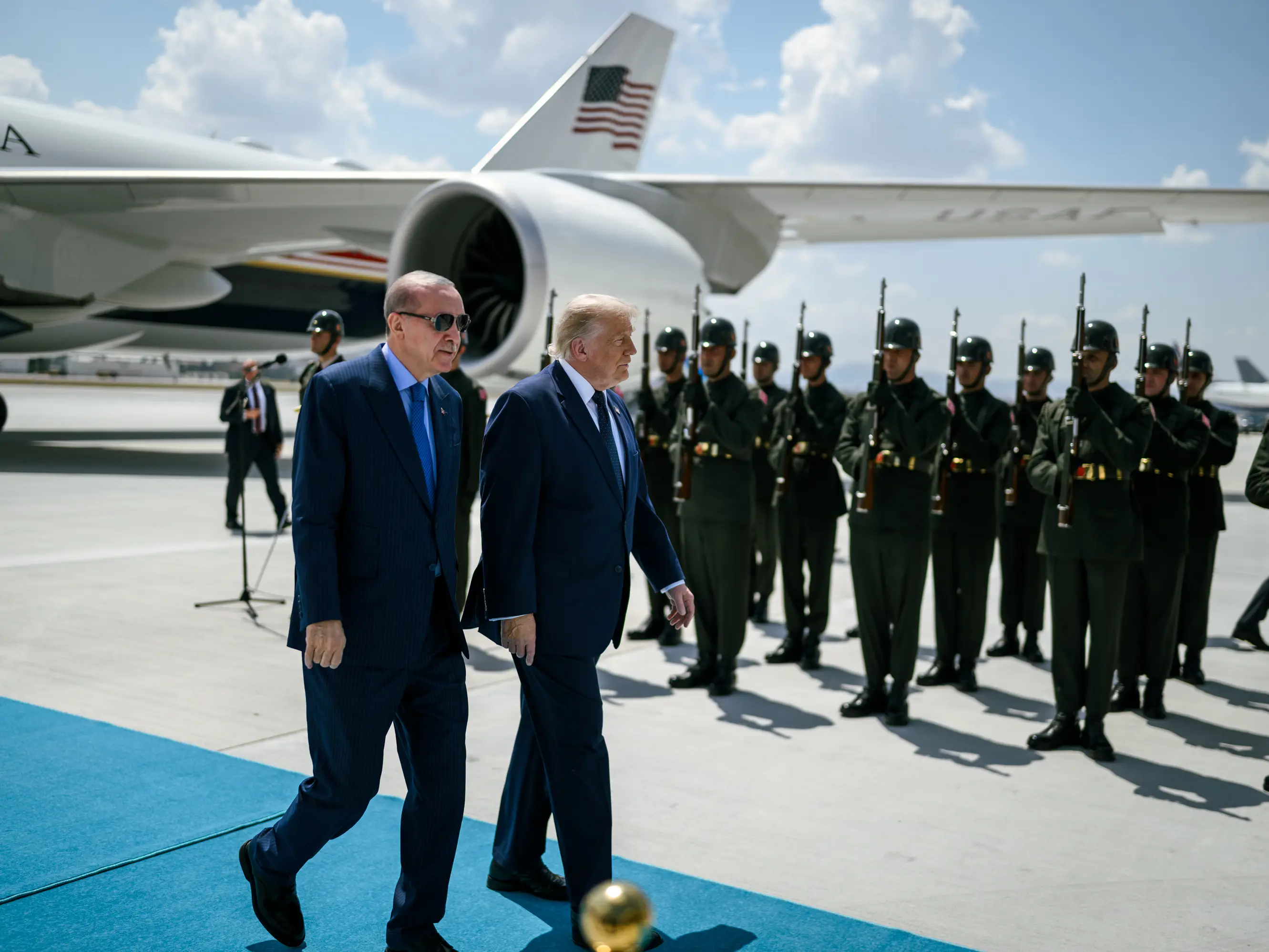
The journalists travelling with Donald Trump from Turkey to the UK in July, when he decided to switch planes over security concerns, were unaware that the US president had secretly left Air Force One in a catering van before moving to another aircraft. In the July incident, Trump was moved to the new, Qatari-gifted Air Force One in Britain, amid intelligence inputs that Iran was aware of his exact location. Reports suggested a possible assassination attempt. It was not clear whether the journalists or government staff aboard Air Force One faced a direct threat.
What happened to the journalists' plane in Turkey?
About a dozen journalists travelled with Trump to Ankara to cover Trump's foreign trip that included attending the NATO summit. They represented ABC News, Agence France-Presse (AFP), the Associated Press (AP), Bloomberg, Getty, The New York Times, NPR, Politico, Reuters and One America News.

Some noticed unusual activity before take-off. Three of them saw a catering truck positioned unusually close to the aircraft.
“You’re not really looking for the president to be slipping into a catering van,” one journalist said.
Trending Stories
&im=FitAndFill=(700,400))
National Handloom Day 2026: From Alia Bhatt to Samantha Ruth Prabhu; Actresses who celebrated India's textile heritage as brides
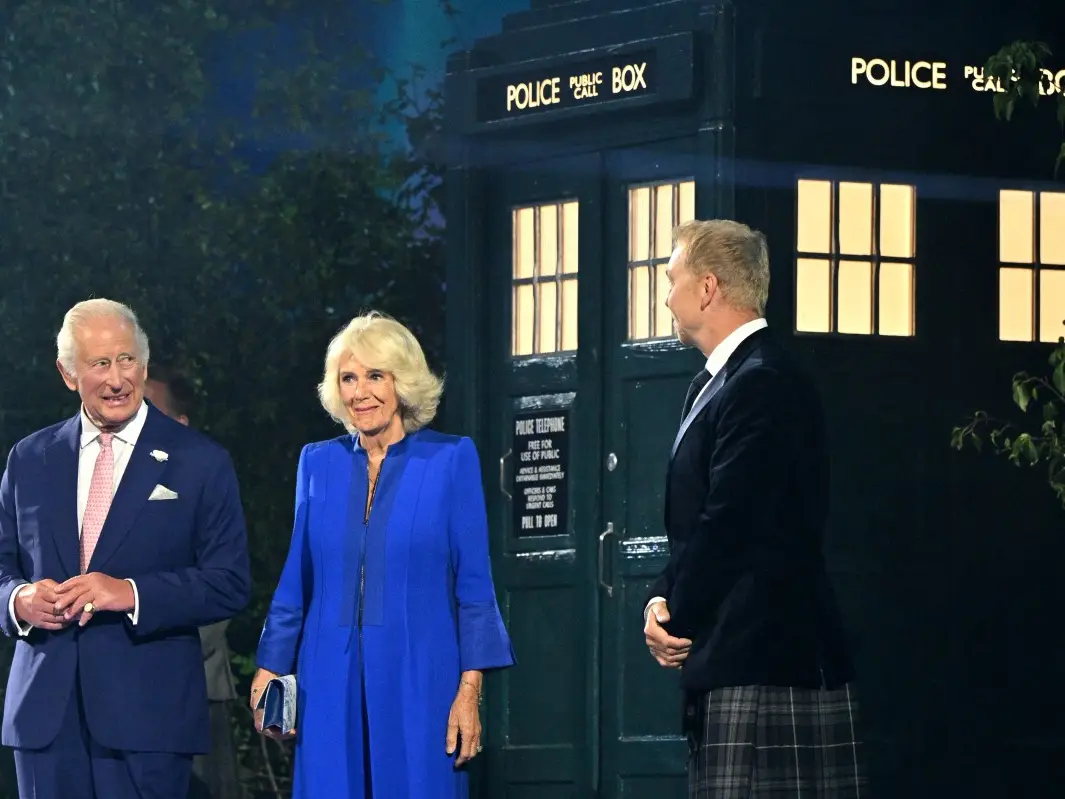)
The Royals enter the Doctor Who universe: King Charles and Queen Camilla beam into Commonwealth Games in TARDIS
)
Unitree Robotics targets $9 billion valuation in landmark IPO backed by DeepSeek and Tencent
)
India names 27 sites in Arunachal Pradesh
)
Bharat Bhhagya Viddhaata OTT: When will Kangana Ranaut's film stream online?
&im=FitAndFill=(700,400))
How many soldiers operate one S-400 battery?
)
Shakib Al Hasan ready to return to Bangladesh—under one condition
)
‘Fake news’: MEA rejects report claiming India sought defence pact with Israel after Pakistan, Saudi Arabia, Turkey deal
)
Rockstar to unveil GTA 6 extended look ahead of November launch
)
Russia forms Ukrainian Volunteer Spetsnaz Brigade to fight Ukraine
)
Drug-resistant fungus that hides in hair and enters bloodstream reported in 23 US states
)
Technology transfer deal boosts India's defence manufacturing ambitions
)
Border row erupts in Europe after Ceuta crossings, Spain imposes border controls on Italy
)
Morale plummets on USS Abraham Lincoln: Are US sailors reaching a breaking point? | GRAVITAS
)
'Security can't be bought with Pakistan, Turkey deal': Iran tells Saudi Arabia
)
Baba Vanga's 2026 prophecy: 2 predictions 'already came true', 3 terrifying ones remain. Details inside
)
Colombia’s new president Abelardo de la Espriella vows to ‘defeat narco-terrorists’, signals hardline shift
&im=FitAndFill=(700,400))
New Friday OTT releases (August 7, 2026): Operation Safed Sagar, Vadhandhi, Main Vaapis Aaunga- 6 movies and TV shows on Netflix, Prime Video and more
)
Squadron Leader Bhawana Kanth scripts history as Indian Air Force gets its first woman ‘Top Gun’ pilot
)
RSS says Gen Z protests reflect genuine distress
)
Trump says Iranian school bombing photos could be AI-generated - 'I don’t think...'
)
IAF officer held for sharing sensitive information in 'honey trap' case, booked under Official Secrets Act
)
Stray Kids under scrutiny? Fans react to Grammy submission silence after BTS boycott
&im=FitAndFill=(700,400))
Why the Su-30MKI doesn't need external fuel tanks to fly vast distances
)
Jugal Hansraj reunites with Shekhar Kapur after 40 years for Masoom: The Next Generation
)
New speed limits, automatic challans: Big traffic change coming to Delhi-Meerut Expressway. All you need to know
)
India officially names 27 places in Arunachal to counter China's renaming claims
)
Trump calls White House ballroom ruling a 'national disgrace' as court says Congress approval needed
)
US sanctions Iran’s crypto network after Strait of Hormuz attacks, offers $15m bounty for intel on IRGC finance
&im=FitAndFill=(700,400))
Why the Su-30MKI is one of the heaviest fighters ever built
)
Uttarakhand young innovator builds India's own flying vehicle, conducts first test flight: WATCH
)
Chilling video shows students take cover as teen opens fire at Thai school
)
Reese Witherspoon's father hospitalised after poolside incident in Nashville: Report
After take-off, staff instructed passengers to keep their window shades closed without explaining why. Journalists noted that such instructions were more familiar from flights to or from war zones.
One reporter noticed that Trump boarded unusually quickly, while another was surprised that he did not brief the press before the first leg of the journey. Trump later spoke to reporters.
The Boeing 747 carrying the press and officials has defensive systems, including flares designed to counter missiles. Two US officials also said F-16 fighter jets escorted the aircraft, with one saying some fighters flew near Trump's plane for part of the journey.
The Post reported that the Central Intelligence Agency (CIA) had “low confidence” in an Iranian threat.
What journalists travelling with Trump said about his plane switch
The Washington Post cited four journalists as saying that they noticed unusual details during the flight that only made sense in hindsight. The White House neither briefed them during the journey nor explained the operation afterwards, leaving some feeling disappointed and deceived and questioning whether their safety had been properly considered. “We never were provided any opportunity to consent to being used like this,” The Post cited one journalist as saying.
The journalist added that they were neither Air Force nor Secret Service personnel and had not signed up to put themselves at risk to protect the president.
An issue of trust between the White House and the press corps
Press organisations criticised the operation. National Press Club president Mark Schoeff Jr said that leaving reporters aboard an aircraft as part of a security deception was “deeply troubling”.
Committee to Protect Journalists representative José Zamora said transparency should be the norm when safety is at stake.
Calling the episode “outright deception”, New York Times Washington bureau chief Richard W Stevenson said it set a “terrible precedent” because journalists and staff were unknowingly exposed to a potential threat.
AFP regional director Marc Lavine said it was concerning when a media organisation discovered it had been misled, particularly when the safety of its reporters was involved.
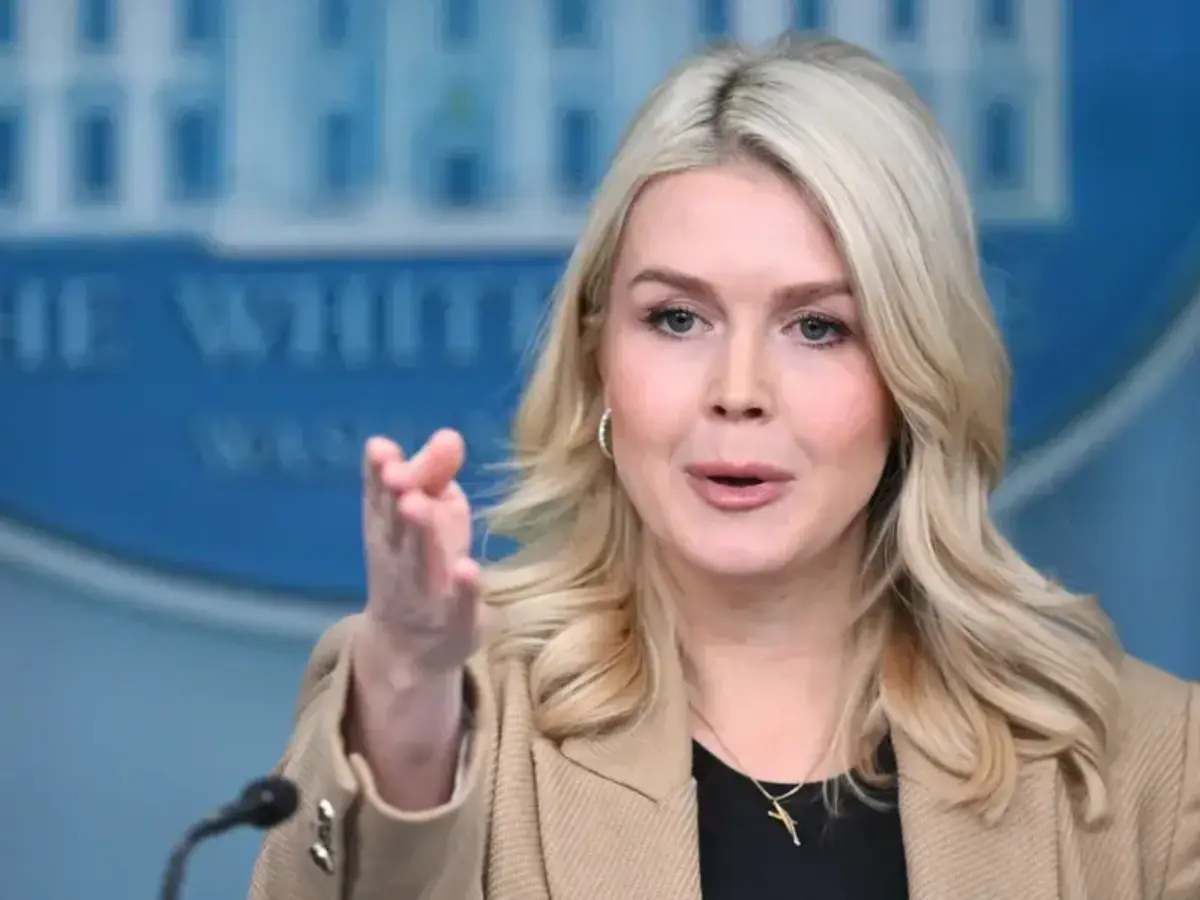
White House Correspondents’ Association president Jacqui Heinrich said reporters should have a way to correct inaccurate or misleading information once a security operation has ended. Without such a mechanism, she said, journalists could question whether information they independently observe and report “can be relied upon.”