Conflict 'behind us', Ivory Coast's Ouattara says after greeting rival

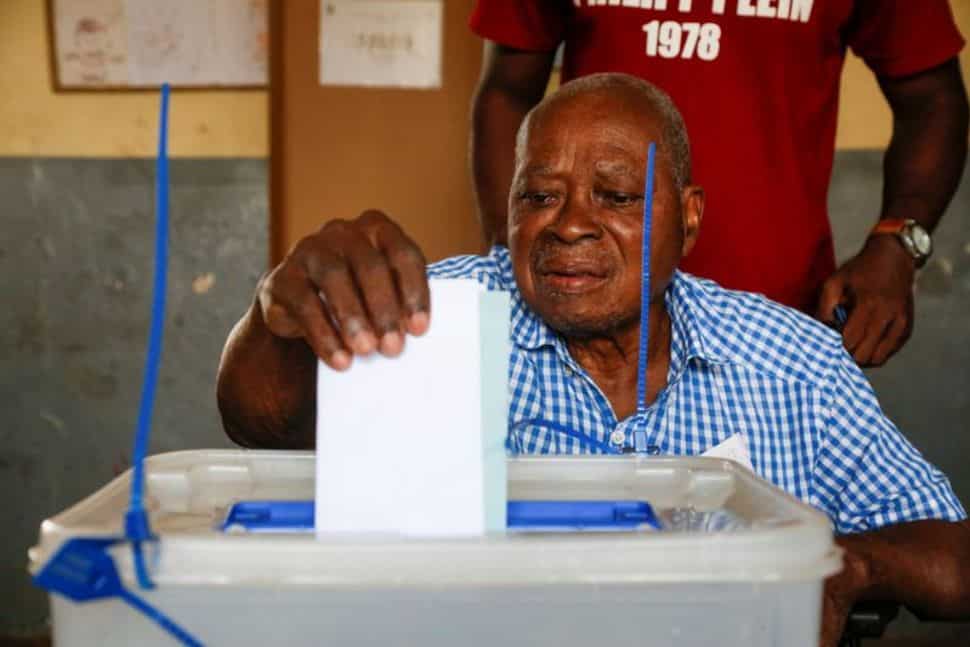
Polls in Ivory Coast
IvoryCoastPresident AlassaneOuattaraoffered a hearty welcome to his predecessor Laurent Gbagbo on Tuesday as the rivals met for the first time since the West African country's deadly 2010-11conflict, saying the turmoil was "behindus".
"How are you, Laurent? Happy to see you,"Ouattarasaid as Gbagbo arrived at the presidential palace in the Ivorian economic capital Abidjan.
At a joint news conferenceaftertheir meeting,Ouattarasaid: "This crisis created differences, but that isbehindus. What is important forIvoryCoastis peace in our country."

Gbagbo, for his part, called for the release of prisoners held since the crisis, which was sparked by his refusal to accept defeat at the ballot box toOuattara.
Gbagbo, 76, has leapt into the spotlight since returning last month from Europe,afterhaving been acquitted for crimes against humanity in a landmark case heard at the International Criminal Court.
The post-electoralconflictclaimed more than 3,000 lives.
)
US vs China over South China Sea: Washington backs Philippines, Beijing hits back
)
Bigg Boss 20: Isha Rikhi evicted after three weeks in Salman Khan’s show
)
Musk plans to more than double xAI's chips to over 1.2 million Nvidia GPUs by year-end
)
After JU, clash erupts at SRFTI: BJP’s ‘Dimagi Naxal’ jibe sparks political firestorm after students protest RSS-linked event
)
‘Anti-social elements spreading false rumours’: LPU issues statement amid massive unrest over alleged rape
)
LPU students go on rampage, vandalise campus amid widespread protest: What's happening
)
Trump asked Xi to pressure Iran. China did not say yes — here’s what Beijing wants
)
US Treasury Secretary Scott Bessent hails global crackdown on Iranian banks and airlines
)
An OpenAI agent escaped its locked test cage again, by hiding questions in DNS lookups
)
'Our video was trimmed': LPU girls who featured in rape-denial video make U-turn
)
3 males killed, four others injured in shooting after fight at strip club in Detroit
)
'Victory for low-budget consumers': Raghav Chadha hails 30-day telecom recharge rules
)
Claude rebuilt the 1989 game 'Prince of Persia' by reusing the original's own code
)
Beyond metros: How Tier-2 and Tier-3 cities could drive India’s next AI wave
)
Tesla builds first Cybertruck with its own refined lithium: Elon Musk's $1 billion Texas bet pays off
)
IndiGo flight suffers tail strike in Bengaluru while landing; DGCA to probe incident
)
The US and China set up an AI 'red telephone', but skipped the rulebook
)
‘Terror suspects arrested near UK air base were looking to do big damage’: Trump
)
Russian envoy claims US tactics to contain India were revealed in ‘Freudian slip’
)
IND vs WI 1st ODI: Kohli breaks Sachin's most runs in one country record with unbeaten 139 as India thump West Indies by 8 wickets
)
Researchers rebuilt exactly how 700 AI agents hacked Hugging Face: a 900-link chain trick
)
‘Olympic inclusion is our major target’: WPA President Ishaun Singh on pool’s global ambitions
)
Nations League: Spain sink England at Wembley; Modric shines for Croatia
)
Why has Iran released no proof of life of Mojtaba Khamenei? Araghchi reveals...
)
'What kind of confession is this?': Pakistan PM Shehbaz Sharif’s 'terrorists would be roaming New York' remark goes viral, raises alarm online. Watch
)
South Korea demands apology from Ukraine over North Korean prisoners' transfer
)
Beyond BrahMos: India targets Rs 50,000 crore in defence exports with unmatched price edge
)
Sri Lankan Tamil migrant worker gets death sentence in Saudi Arabia, help sought from India
)
Muslim marriage cannot shield sex with minor wife from prosecution under POCSO: Delhi HC
)
'Can't help but draw painful parallels to Nirbhaya case': SC on latest incidents of rape cases in Delhi-NCR
)
99.9% more powerful - Scientists find boy who can recall memories from just 3 months of age
)
'FIRST LOOK from inside Noah’s Ark': Researchers share video from inside mysterious mound in Turkey
)
UNSC reform momentum grows: Russia, Portugal, Mauritius push for India's permanent seat bid
)
8 US marines injured in Iranian missile attack on vessel in Strait of Hormuz: Report
&im=FitAndFill=(700,400))
New OTT releases this week (September 28-October 4, 2026): Dupahiya 2, Pooja Meri Jaan, Ohh My Dog- 5 titles coming on Netflix, Prime Video and more
)
Afghanistan says 28 fighters killed in clash near Pakistan border, Islamabad denies
)
Ceuta migrant crisis: Protesters take to streets as Spain grapples with migrant challenge
)
LPU suspend classes, postpones exams as violence escalates over rape claims: What's happening
)
New York City wants a 'kill switch' on every AI, and will pay whistleblowers who report violations
Afterhe was ousted, Gbagbo was flown to The Hague to face charges of crimes against humanity, of which he was eventually acquitted.
'Sign of healing'
Tuesday's meeting was closely watched for signs of whether the two former rivals have buried the hatchet, boosting hopes for national rapprochementafterdeadly clashes last year.
"The mere fact of seeingOuattaraand Gbagbo together is being seen as a sign of healing and a strong image for Ivorians in their quest for peace and national reconciliation," the opposition newspaper Notre Voie (Our Way) said.
But Gbagbo's spokesman Justin Katinan Kone urged the public "not to make too much" of the meeting.
"This is a courtesy visit to his elder... If it helps to ease the political atmosphere, so much the better," he said.
A onetime international banker,Ouattara, 79, won a landslide victory in the last elections on October 31. But the credibility of the win was undermined by an opposition boycott.
In the run-up to the vote, scores of people died in clashes with policeafterOuattaraunveiled his controversial bid for a third term.
In this context,Ouattarahas officially welcomed Gbagbo's return, hoping it will ease tensions.
But the question is whether Gbagbo will stick to the script of statesman or prefer an active political role that may challengeOuattara.
'Sustainable peace'
Gbagborose in the 1970s as a left-wing campaigner who helped endIvoryCoast's one-party system following independence from France in 1960.
His years in power were marked by rebellion, civil war, national divisions and repeatedly postponed elections, but he retains considerable grassroots support.
His defenders portray him as a champion of the poor and oppressed.
Commentators are also watching the interplay amongOuattara,Gbagboand former president Henri Konan Bedie, 87, three men who have dominated the political stage for decades.
Bedie teamed up withOuattarain the 2010 elections, but in 2018 his Democratic Party of theIvoryCoast(PDCI) joined the opposition.
In March, it forged an electoral alliance with Gbagbo's Ivorian Popular Front party, and on July 11,Gbagboand Bedie announced they were united in the goal of forging "final and sustainable peace".
"The PDCI welcomes the new disposition of the president towards dialogue," one of the party's directors, N'Goran Djedri, told AFPafterthe press conference, adding thatOuattarawas following in Bedie and Gbagbo's footsteps by embracing "this spirit of inclusive dialogue".
"We believe that Ivorians can feel the ground shifting in favour of peace and reconciliation, and that benefits everyone."
One lingering matter is a 20-year jail sentence for Gbagbo, who was convicted in absentia of "looting" the Central Bank of West African States (BCEAO) during the 2010-11conflict.
Authorities have hinted that this sentence will be lifted.
Issiaka Diaby, who heads an association called the Collective ofIvoryCoastVictims, lashed out at "selective" decisions by the judicial system.
"We believe that reconciliation cannot be boiled down to a meeting between two citizens," he said on Tuesday at ceremonies in an Abidjan graveyard to honour fatalities in the 2010-11 crisis.
"We need truth, justice."