

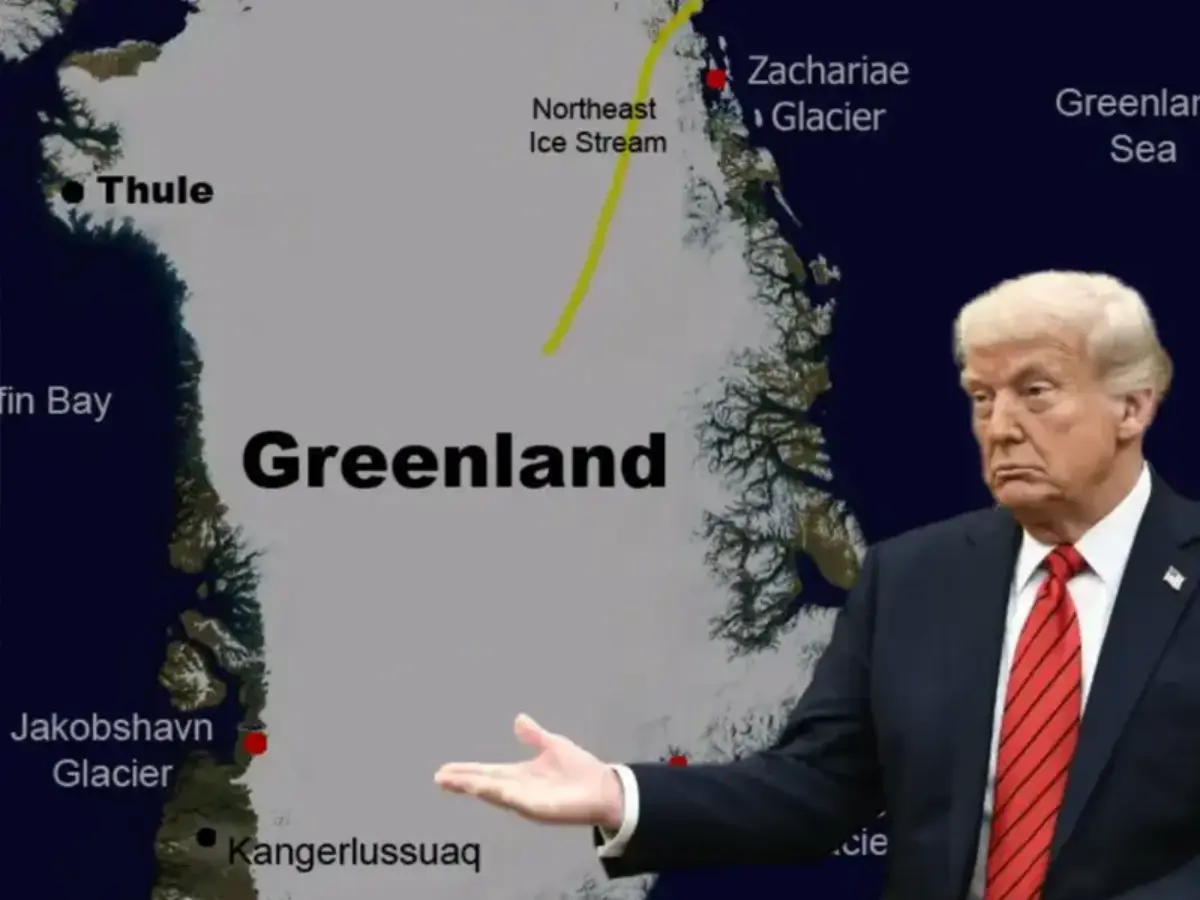
&imwidth=800&imheight=600&format=webp&quality=medium "'Greenland vital for the Golden Dome we are building', says president Donald Trump")
Donald Trump has reignited controversy by declaring it would be ‘unacceptable’ for Greenland to fall under the control of any nation other than the United States, once again pressing his demand to bring the Arctic island under US authority. His comments came just hours before senior Danish and Greenlandic officials were set to meet top US leaders in Washington for sensitive discussions about the territory’s future.
Posting on social media, Trump argued that Greenland is essential to American national security and claimed Nato should support US control of the island. He said the alliance would be stronger and more effective if Greenland were under Washington’s authority, adding that the territory is crucial to the “Golden Dome” missile defence system his administration is developing.
The remarks coincided with preparations for talks in Washington between Denmark’s foreign minister, Lars Lokke Rasmussen, Greenland’s foreign minister, Vivian Motzfeldt, US vice-president JD Vance, and Secretary of State Marco Rubio. While the meeting was initially requested by Denmark and Greenland, it was later reshaped after Vance asked to join and then host the discussions.
Trump first floated the idea of acquiring Greenland during his first presidency in 2019, but his language has become far more aggressive since his return to office last year. He has suggested the US would obtain the island “one way or another,” alarming European allies and Nato partners.
The president has refused to rule out the use of force, despite Greenland being a semi-autonomous territory of Denmark, a member of both the EU and Nato. Greenland is strategically important due to its Arctic location and untapped mineral resources, factors that have intensified US interest. Danish and Greenlandic leaders have consistently rejected the idea of a takeover, stating that the island is not for sale and accusing Washington of exerting undue pressure on a close ally. They have also pointed out that a 1951 defence agreement already permits the US to expand its military footprint on the island if needed.
Trending Stories
&imwidth=180&imheight=135&format=webp&quality=medium)
Atlantic hurricane Isaias could make landfall as a strong Category 2 storm, tornado warnings issued
&imwidth=180&imheight=135&format=webp&quality=medium)
Trump honours Microsoft CEO Satya Nadella with top technology honour amid immigration scrutiny
&imwidth=180&imheight=135&format=webp&quality=medium)
Thai Actors Fourth Nattawat, Gemini Norawit face racism accusations from Indian fans over viral Bollywood act
&imwidth=180&imheight=135&format=webp&quality=medium)
‘Never-ending flow of cheap labour’: JD Vance hits back at Indian-origin Congresswoman over US green card curbs for major tech companies
&imwidth=180&imheight=135&format=webp&quality=medium)
Nigeria govt rolls out 30-day NNPC petrol discount, insists it is not a subsidy
&imwidth=180&imheight=135&format=webp&quality=medium)
New York ICE shooting sparks protests as Mamdani to call on Trump to halt ICE operations
&imwidth=180&imheight=135&format=webp&quality=medium)
Trump has a new 'enemy': Anyone who calls it 'artificial intelligence'. Here's what we wants instead
&imwidth=180&imheight=135&format=webp&quality=medium)
BTS agency HYBE announces first-ever Weverse Con Festival in India
&imwidth=180&imheight=135&format=webp&quality=medium)
Zendaya gives The Odyssey white lace jacket a stylish twist at Paris Fashion Week 2026
&imwidth=180&imheight=135&format=webp&quality=medium)
US suspends Microsoft, Infosys, Tata, Wipro from green card programme over alleged H-1B abuse
&imwidth=180&imheight=135&format=webp&quality=medium)
Nana Patekar's #MeToo controversy: From Tanushree Dutta’s allegations to court ruling
&imwidth=180&imheight=135&format=webp&quality=medium)
24-year-old Sri Lankan man sentenced to death for blasphemy in Saudi Arabia
&imwidth=180&imheight=135&format=webp&quality=medium)
'Nidal Hasan's firing-squad execution to be livestreamed', says Pentagon; first US military execution since 1961
&imwidth=180&imheight=135&format=webp&quality=medium)
Russia president Putin promises to 'do everything' to help settle Middle East conflict as US-Iran negotiations stall
&imwidth=180&imheight=135&format=webp&quality=medium)
Air India, Air India Express increase fuel surcharge on domestic, international flights amid rising ATF costs
&imwidth=180&imheight=135&format=webp&quality=medium)
French students light European bonfire, protests erupt in Belgium, Italy & Greece | Gravitas
&imwidth=180&imheight=135&format=webp&quality=medium)
France student protests: Over 500 arrested, govt promises 3,000 substitute teachers
&im=FitAndFill=(700,400)&imwidth=180&imheight=135&format=webp&quality=medium)
435 House seats, 35 Senate races: The numbers behind US midterms 2026
&im=FitAndFill=(700,400)&imwidth=180&imheight=135&format=webp&quality=medium)
From Kramatorsk buses to Yandex fire: Russia-Ukraine war in the last 48 hours
&imwidth=180&imheight=135&format=webp&quality=medium)
Man prays to Satan at an Iowa city council, pastor rushes to 'reverse the curse'
&imwidth=180&imheight=135&format=webp&quality=medium)
AUS vs SA: 'That's fine,' says Cummins on Khawaja's book contents about Sandpapergate
&imwidth=180&imheight=135&format=webp&quality=medium)
A Love Other Than Yours: The temptation to cheat and what pushes people over the edge
&imwidth=180&imheight=135&format=webp&quality=medium)
Scientists find highly radioactive nuclear particles at Chernobyl 40 years after the disaster
&im=FitAndFill=(700,400)&imwidth=180&imheight=135&format=webp&quality=medium)
Fastest-growing Asian economies in 2026: Who tops the chart? Where does India rank?
&imwidth=180&imheight=135&format=webp&quality=medium)
New Cold War: Why is China buying more gold? Explained
&imwidth=180&imheight=135&format=webp&quality=medium)
Premier League: Haaland wants Manchester City to 'try to enjoy the situation and win the game'
&imwidth=180&imheight=135&format=webp&quality=medium)
Trump's naked 23-karat gold statue unveiled near European Parliament
&imwidth=180&imheight=135&format=webp&quality=medium)
OpenAI shuts down Russian, Iranian influence operations using ChatGPT to spread propaganda
&imwidth=180&imheight=135&format=webp&quality=medium)
Pakistan denies reports of PAF jets being used in attacks against Iran-backed Houthis in Yemen
&imwidth=180&imheight=135&format=webp&quality=medium)
‘Wait till you discover the other guy’: Rahul Gandhi takes a swipe as Musk's 'Ambani real boss of India' remark triggers X subscription cancellations
&imwidth=180&imheight=135&format=webp&quality=medium)
KATSEYE’s Sophia Laforteza to return in 2027 after hiatus, agency issues statement
&imwidth=180&imheight=135&format=webp&quality=medium)
Who is Nana Patekar's wife Neelakanti? The bank officer who earned Rs 2,500 when he earned Rs 50
&imwidth=180&imheight=135&format=webp&quality=medium)
Arizona congressional candidate claims she was sexually assaulted while repairing signs
&imwidth=180&imheight=135&format=webp&quality=medium)
'Something truly catastrophic will happen': Former OpenAI researchers sound the alarm, claim they were fired for prioritising AI safety
&imwidth=180&imheight=135&format=webp&quality=medium)
India at UN: Pak allows terror groups to operate from its soil
&imwidth=180&imheight=135&format=webp&quality=medium)
'Understood consequences of a few mistakes': Ishan Kishan reflects on journey back to India team
&imwidth=180&imheight=135&format=webp&quality=medium)
Flydubai flight attack: Indian pilot Smit Machchhar to receive Israel's highest civilian bravery award for saving 174 lives
&imwidth=180&imheight=135&format=webp&quality=medium)
SC asks Centre to frame mechanism against unethical pharma marketing practices
European leaders have rallied behind Denmark. European Commission president Ursula von der Leyen stressed that Greenland belongs to its people and that their wishes must be respected. French President Emmanuel Macron warned that any challenge to the sovereignty of an EU member state would have unprecedented consequences, pledging France’s full support for Denmark.
Denmark’s defence minister, Troels Lund Poulsen, has sought to reassure Washington by highlighting increased Danish military activity in Greenland and ongoing discussions with allies about strengthening Nato’s Arctic presence.
Greenland’s prime minister, Jens-Frederik Nielsen, made the island’s position clear, saying Greenland chooses to remain aligned with Denmark, Nato, and the EU. He emphasized that Greenland seeks cooperation and dialogue, not confrontation, and rejected any notion of governance from Washington.
Danish Prime Minister Mette Frederiksen echoed those sentiments, saying Denmark has faced unacceptable pressure from its closest ally and warning that international borders cannot be changed through coercion or force.
Despite Trump’s insistence that US ownership of Greenland is psychologically and strategically necessary, public opinion at home appears skeptical. A recent Reuters/Ipsos poll found that only 17% of Americans support his efforts to acquire the island, while overwhelming majorities across both political parties oppose using military force. Nearly half of the respondents disapproved outright, and only a tiny fraction viewed armed annexation as a good idea.

