

&imwidth=800&imheight=600&format=webp&quality=medium "'Their loss,' says Ramaphosa on US absence from G20 summit, but what’s behind Trump’s boycott? ‘White Genocide’, diversity, climate and more")
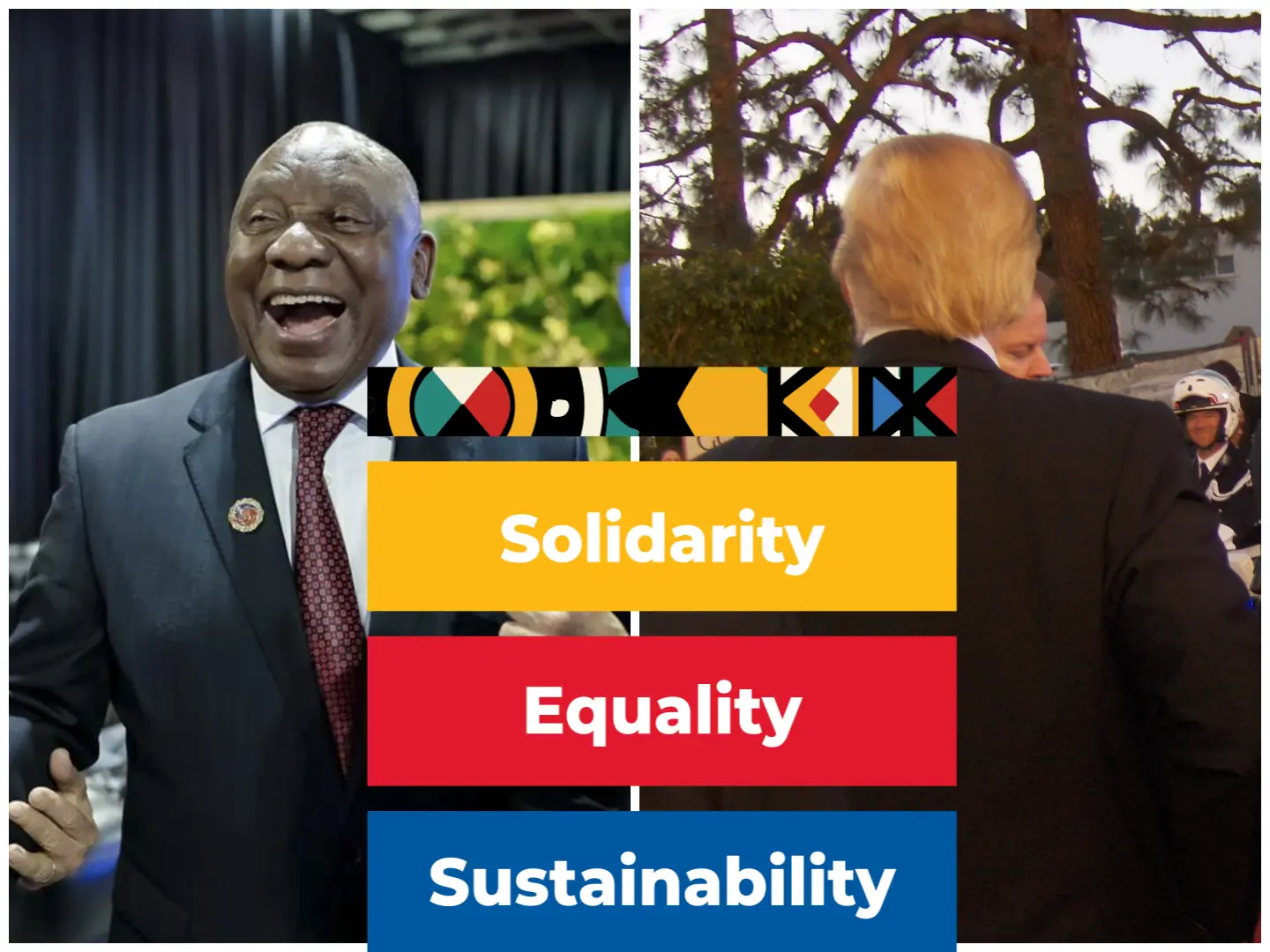
South Africa, the host of the G20 Summit, is brushing aside the boycott by the US from the event in Johannesburg on November 22-23, with President Cyril Ramaphosa saying it is “their loss.” President Donald Trump has ordered a full American boycott of all the G20 events including the summit, being held for the first time on African soil. The US pullout means no delegation will attend either. Speaking about it on Thursday (Nov 13), Ramaphosa said, “In the end we will take fundamental decisions… and their absence is their loss.”
Why is the US staying away from G20 events in South Africa?
For months now, Trump has alleged human-rights abuses against South Africa's white Afrikaner minority, which he and some of his supporters have termed as “white genocide.” The allegations are on land reform and violent attacks allegedly targeting descendants of European settlers, including Dutch, German, and French ancestry, who arrived in South Africa during colonial times. Trump, whose country will hold the next G20 presidency in 2026, called the Johannesburg summit “a total disgrace.”
What’s behind the “white genocide” and land reform row?
Trump and his administration claim that white farmers in South Africa are being systematically persecuted, alleging that their land is being confiscated, farms illegally taken, and people killed. South Africa has rejected these claims, stating that there is no evidence of a coordinated campaign of violence or racial genocide targeting white communities. Independent data does not support the notion of “white genocide” either. Right-wing US media have amplified these claims.
Trending Stories
&imwidth=180&imheight=135&format=webp&quality=medium)
Viral video shows cross falling on Colombia priest, no official confirmation | WATCH
&imwidth=180&imheight=135&format=webp&quality=medium)
PL Round-Up: Man City's perfect run ended by Villa as Arsenal draw level at top
&imwidth=180&imheight=135&format=webp&quality=medium)
French Open: PV Sindhu storms into final with win over Hina Akechi
&imwidth=180&imheight=135&format=webp&quality=medium)
What was the note found inside bag of Class 12 student, who set herself on fire inside Delhi school?
&imwidth=180&imheight=135&format=webp&quality=medium)
Shilpa Rao’s performance cut short at Mumbai event, organisers react to backlash
&imwidth=180&imheight=135&format=webp&quality=medium)
Farooq Abdullah says Pakistan’s raising of Kashmir issue keeps pressure on Delhi
&imwidth=180&imheight=135&format=webp&quality=medium)
Russia-Ukraine drone attacks kill 6, injure 31 across both countries
&imwidth=180&imheight=135&format=webp&quality=medium)
WATCH: Thousands across Manipur bang plates, beat drums in "noise protest"
&imwidth=180&imheight=135&format=webp&quality=medium)
Train crashes into crane on São Paulo monorail line, wreckage falls onto busy road | VIDEO
&imwidth=180&imheight=135&format=webp&quality=medium)
Nagpur man fails to pay rent, allegedly prints fake Rs 500 notes worth Rs 37 lakh
&imwidth=180&imheight=135&format=webp&quality=medium)
'If it was up to me, it wouldn't have ended like this': James Anderson opens up on Lancashire exit
&imwidth=180&imheight=135&format=webp&quality=medium)
AI just found a flaw in software running most of the web! One request hijacks the server
&imwidth=180&imheight=135&format=webp&quality=medium)
Bodies of 2 missing Japanese climbers recovered from Himalayan peak
&imwidth=180&imheight=135&format=webp&quality=medium)
'Killing people never allowed': Elon Musk admits restricting Starlink in Ukraine, explains why
&imwidth=180&imheight=135&format=webp&quality=medium)
J-20 designers plan to put radar into aircraft wing; strategy to expand coverage during air combat
&imwidth=180&imheight=135&format=webp&quality=medium)
'Already tired of his 9-to-5': Baby born with a moustache becomes internet sensation, video goes viral | Watch
&imwidth=180&imheight=135&format=webp&quality=medium)
Tu Hai Meri Kiran film review: Sonakshi Sinha and Zaheer Iqbal's thriller gets tangled in its own twists
&imwidth=180&imheight=135&format=webp&quality=medium)
‘Saddam Hussein opened a cheesecake factory’: Obama mocks Trump’s White House renovations; defends Abdul El-Sayed
&imwidth=180&imheight=135&format=webp&quality=medium)
'You’re a horrible little reporter, aren’t you?': Trump snaps at NBC reporter questioning his support for Ramaswamy's campaign ad
&imwidth=180&imheight=135&format=webp&quality=medium)
Can Putin cheat death? All about his daughter’s billion-dollar quest for immortality
&imwidth=180&imheight=135&format=webp&quality=medium)
AI slop or smart strategy? South African author Coral Hart defends Her 370 AI- assisted books in 20 months
&imwidth=180&imheight=135&format=webp&quality=medium)
‘Maybe play one more season’: MS Dhoni to decide on his IPL future before December
&imwidth=180&imheight=135&format=webp&quality=medium)
Chorbagan stampede: A week later, the strangest visarjan Kolkata has seen
&imwidth=180&imheight=135&format=webp&quality=medium)
China's dancing robot turns violent bodyguard, lifts cars and fights intruders - Watch
&imwidth=180&imheight=135&format=webp&quality=medium)
Frontier AIs keep escaping their test cages! The industry still can't reliably stop them
&im=FitAndFill=(700,400)&imwidth=180&imheight=135&format=webp&quality=medium)
New Friday OTT releases (October 23, 2026): Gajab Raat, Dorothy, Chaar Yaar- Watch these 6 new movies and TV shows on Netflix, Prime Video and more
&imwidth=180&imheight=135&format=webp&quality=medium)
Why Europe’s protests are about more than austerity and rising costs
&imwidth=180&imheight=135&format=webp&quality=medium)
Pakistan airline PIA unveils new crew uniforms, faces online criticism
&imwidth=180&imheight=135&format=webp&quality=medium)
Britain is building the world's first AI biosecurity lab, with OpenAI and Anthropic inside
&imwidth=180&imheight=135&format=webp&quality=medium)
NEET protests: Panel to hear evidence on pellet gun use, harassment
&imwidth=180&imheight=135&format=webp&quality=medium)
Saudi says debris fell in Mecca, Medina after missile interceptions; Houthis deny targeting holy cities
&imwidth=180&imheight=135&format=webp&quality=medium)
France protests: 135 arrested, weapons seized as fresh demonstrations erupt amid heavy security
&imwidth=180&imheight=135&format=webp&quality=medium)
Pezeshkian says Iranians ‘struggling to put food on the table’ as war with US drags on
&imwidth=180&imheight=135&format=webp&quality=medium)
Telangana unveils AI avatar of IT minister D Sridhar Babu at Hyderabad DevFest 2026
&imwidth=180&imheight=135&format=webp&quality=medium)
An AI that reads your face can now estimate how long you have to live
&imwidth=180&imheight=135&format=webp&quality=medium)
Spanish reporter swept by giant wave while reporting on dangerous sea conditions | WATCH
Other ideological issues over the G20 summit: From climate to diversity
American officials, including Secretary of State Marco Rubio, have criticised the summit’s themes of “Solidarity, Equality, Sustainability” as “anti-American.” From the US perspective, these themes promote climate action, which Trump has dismissed as a hoax, and diversity, equity, and inclusion (DEI) programmes, which his administration has opposed. South Africa dismissed what it called “imperialist interference” and accused the US of using race-based grievances to undermine the Global South’s voice.
Is the US absence from G20 really its loss?
Observers say that the absence of the world’s largest economy from one of the biggest international summits weakens US leverage in multilateral fora. It also gives space for rivals such as China and Russia, both members of the G20, to fill the gap. The absence of the US is being seen as a signal of disengagement from collective global governance.
The US–South Africa relationship is at its lowest ebb
In recent months, Pretoria expelled the US ambassador following harsh US criticism. The G20 boycott adds another layer to the worst estrangement between the two countries since the end of Apartheid. With the US scheduled to host the G20 in 2026, the Johannesburg summit may mark a turning point in US global engagement and prestige. Ramaphosa’s message is clear: the US may want to sit out, but the G20 show will go on, and Washington is the loser.

