‘Economic practices must be fair and transparent’: Jaishankar at BRICS meet amid tariff turmoil

&imwidth=600&imheight=450&format=webp&quality=medium "‘Economic practices must be fair and transparent’: Jaishankar at BRICS meet amid tariff turmoil")
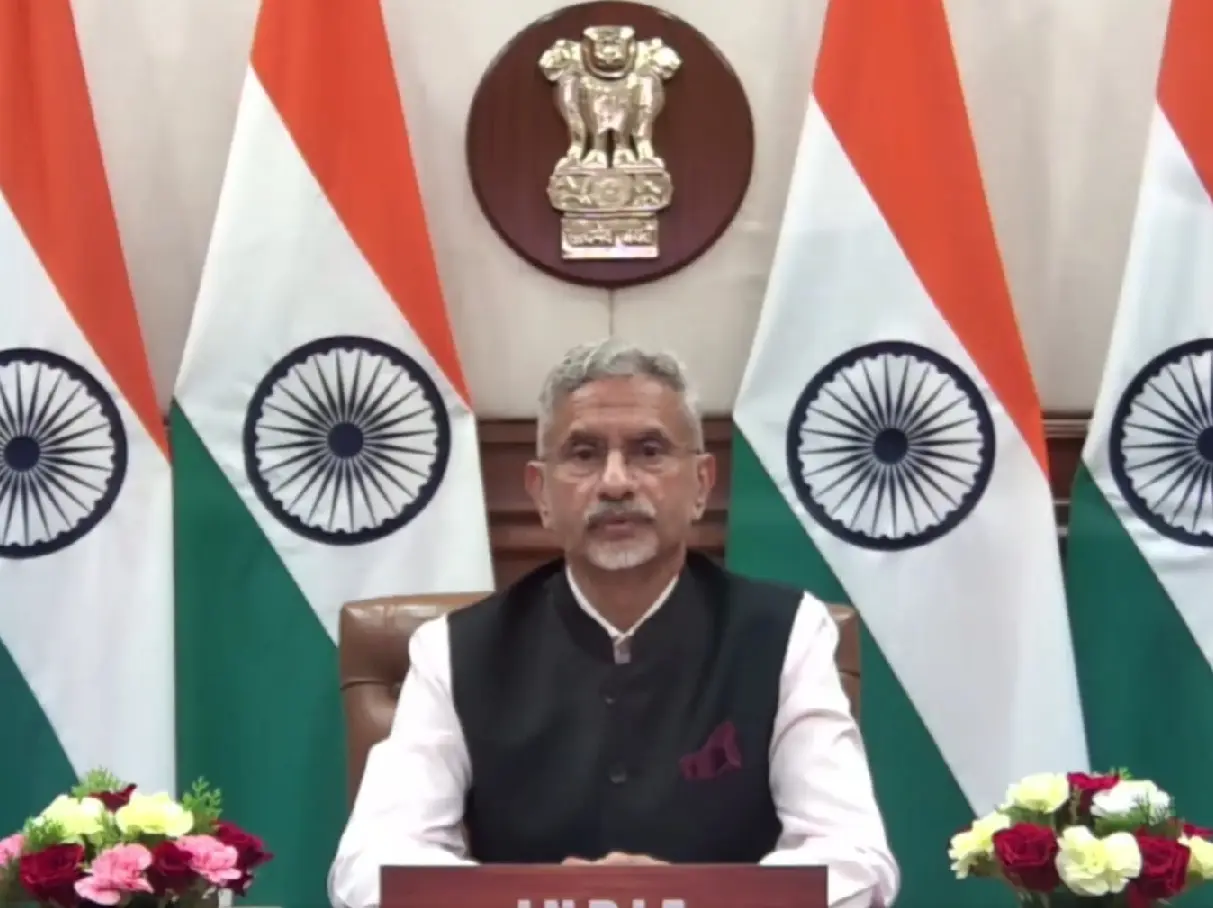
India’s External Affairs Minister S Jaishankar addressing the BRICS Summit on Monday. Photograph: (Screengrab from video on X)
Jaishankar said the international trading system is based on the foundational principles of open, fair, transparent, non-discriminatory, inclusive, equitable and a rules-based approach with special and differential treatment for developing countries.
India’s External Affairs Minister S Jaishankar addressed the BRICS Summit on Monday and said economic practices must be fair, transparent, and for everyone’s benefit and called for creating more resilient and reliable supply chains at a time when there are multiple disruptions amidst an environment of global uncertainty. Speaking at the virtual meeting on behalf of Prime Minister Narendra Modi, Jaishankar said that the objective of BRICS should be to create a more resilient supply chain at this juncture when there are multiple disruptions.
“It is imperative that economic practices are fair, transparent, and to everyone’s benefit. When there are multiple disruptions, our objective should be to proof it against such shocks. That means creating more resilient, reliable, redundant, and shorter supply chains,” Jaishankar said.
‘Essential to encourage manufacturing and production in different geographies’
He further said that it is also essential to encourage manufacturing and production in different geographies, as it will contribute to regional self-sufficiency and relieve anxieties in times of uncertainty.
Highlighting the various global disruptions ranging from the devastating impact of the Covid pandemic, major conflicts in Ukraine and West Asia, extreme climate events, and volatility in trade and investment flows, Jaishankar said that the multilateral system appears to be failing the world.
“Today, the focus is on stabilising the international economy and the world order. But it is equally essential that we turn our attention to ongoing conflicts, not least because they have direct developmental and supply chain implications. Furthermore, as we head towards the next UN General Assembly Session, an exchange of views on reforming multilateralism would be appropriate,” he added.
‘Some of our biggest trade deficits are with BRICS partners’
Jaishankar said the world requires constructive and cooperative approaches to promote trade that is sustainable. “Increasing barriers and complicating transactions will not help. Neither would the linking of trade measures to non-trade matters. The BRICS itself can set an example by reviewing trade flows among its member states. Where India is concerned, some of our biggest deficits are with BRICS partners, and we have been pressing for expeditious solutions. We hope that this realisation will be part of the takeaways from today’s meeting.”
Trending Stories
)
)
)
)
)
)
)
)
)
)
)
)
)
)
)
)
)
)
)
)
)
)
)
)
)
)
)
)
)
)
)
)
)
)
&im=FitAndFill=(700,400))
)
)
)
)
The EAM said that the international trading system is based on the foundational principles of open, fair, transparent, non-discriminatory, inclusive, equitable and a rules-based approach with a special and differential treatment for developing countries. “India strongly believes that this should be protected and nurtured,” he added.
WATCH: Afghanistan Earthquake: Taliban's 'No Skin Contact With Males' Rule Leaves Women Under Rubble
‘Ongoing conflicts need urgent resolution’
The EAM also drew attention to the ongoing conflicts and pressed for their urgent resolution. He said, “The world today also seeks an urgent resolution of ongoing conflicts. The Global South has experienced a deterioration in its food, energy, and fertiliser security. Where shipping is targeted, not just trade but livelihoods also suffer. A selective protection cannot be a global answer. An early end to the hostilities and undertaking diplomacy to ensure a durable solution is the obvious pathway before us.”
Jaishankar also pointed out major shortfalls in the working of international organisations in many areas. “These experiences have only made the case for reformed multilateralism generally, and that of the United Nations and its Security Council specifically, more urgent.”