Why are liquid-cooled GPUs becoming important for modern AI data centres?

Liquid cooling is essential for modern AI data centres because next-gen GPUs generate extreme heat fluxes up to 600 watts per square centimetre. Direct-to-chip systems efficiently manage 130kW racks where traditional air cooling fails.
The Thermal Wall of Air
Traditional data centre cooling systems rely on forced air to dissipate heat, hitting a strict physical wall at roughly 20 to 30 kilowatts per rack. With modern artificial intelligence workloads pushing server densities far higher, traditional fans can no longer prevent hardware from overheating.
Unprecedented Die Heat Flux
Next-generation artificial intelligence accelerators, such as Nvidia’s Blackwell architecture, generate extreme thermal concentrations. Individual processor dies produce heat fluxes reaching 500 to 600 watts per square centimetre, matching the thermal intensity of nuclear reactor fuel rods.

Mandatory Rack-Scale Architecture
Flagship systems like the GB200 NVL72 pack 72 advanced processors into a single rack consuming up to 130 kilowatts of power. Because air cooling cannot manage this immense thermal output, direct-to-chip liquid cooling is now an absolute mandatory engineering requirement.
Direct-to-Chip Efficiency
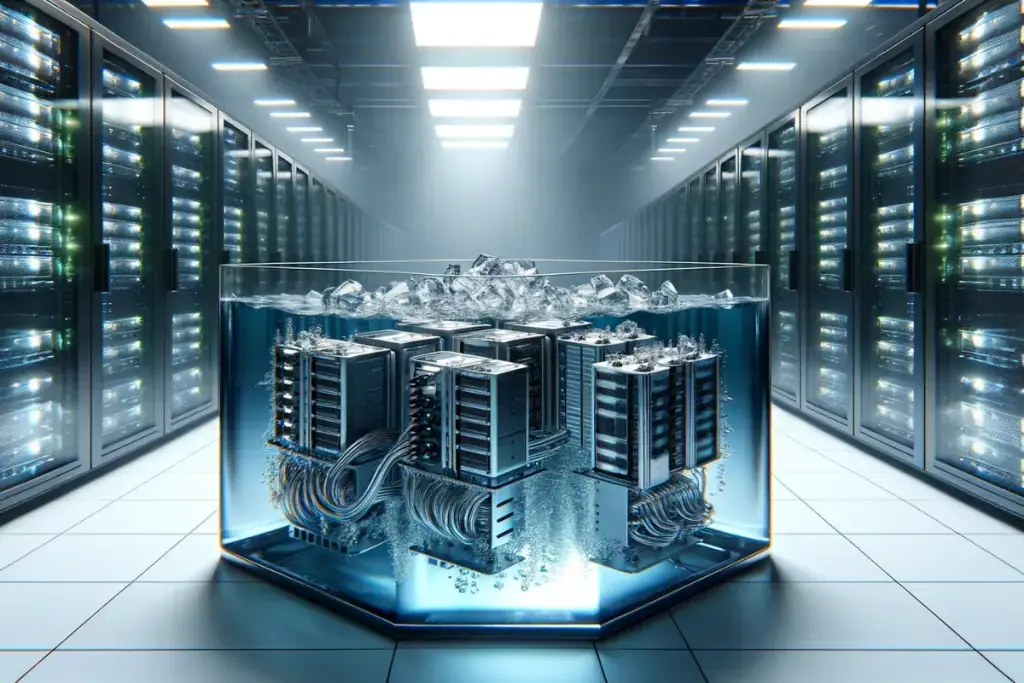
Liquid cooling systems circulate specialized coolants directly through precision-engineered copper cold plates mounted on top of the processors. This targeted method removes heat up to thousands of times more efficiently than air, maintaining stable operating temperatures under heavy continuous loads.

Slashing Facility Energy Costs
While setting up liquid infrastructure requires substantial upfront capital, it drastically lowers long-term operational expenses. By eliminating the need for massive industrial air fans, facilities can reduce overall cooling energy consumption by up to 30 to 50 per cent.
Maximising Compute Density
Liquid cooling allows operators to pack significantly more processing power into a much smaller physical footprint. Facilities can support high-density clusters exceeding 100 kilowatts per rack, saving valuable floor space in cramped enterprise data halls.
The Foundation of Future AI
As artificial intelligence models grow exponentially larger, hardware power requirements will continue to rise. Liquid cooling has officially shifted from an experimental alternative to the undisputed foundational standard for all next-generation data centre infrastructure.