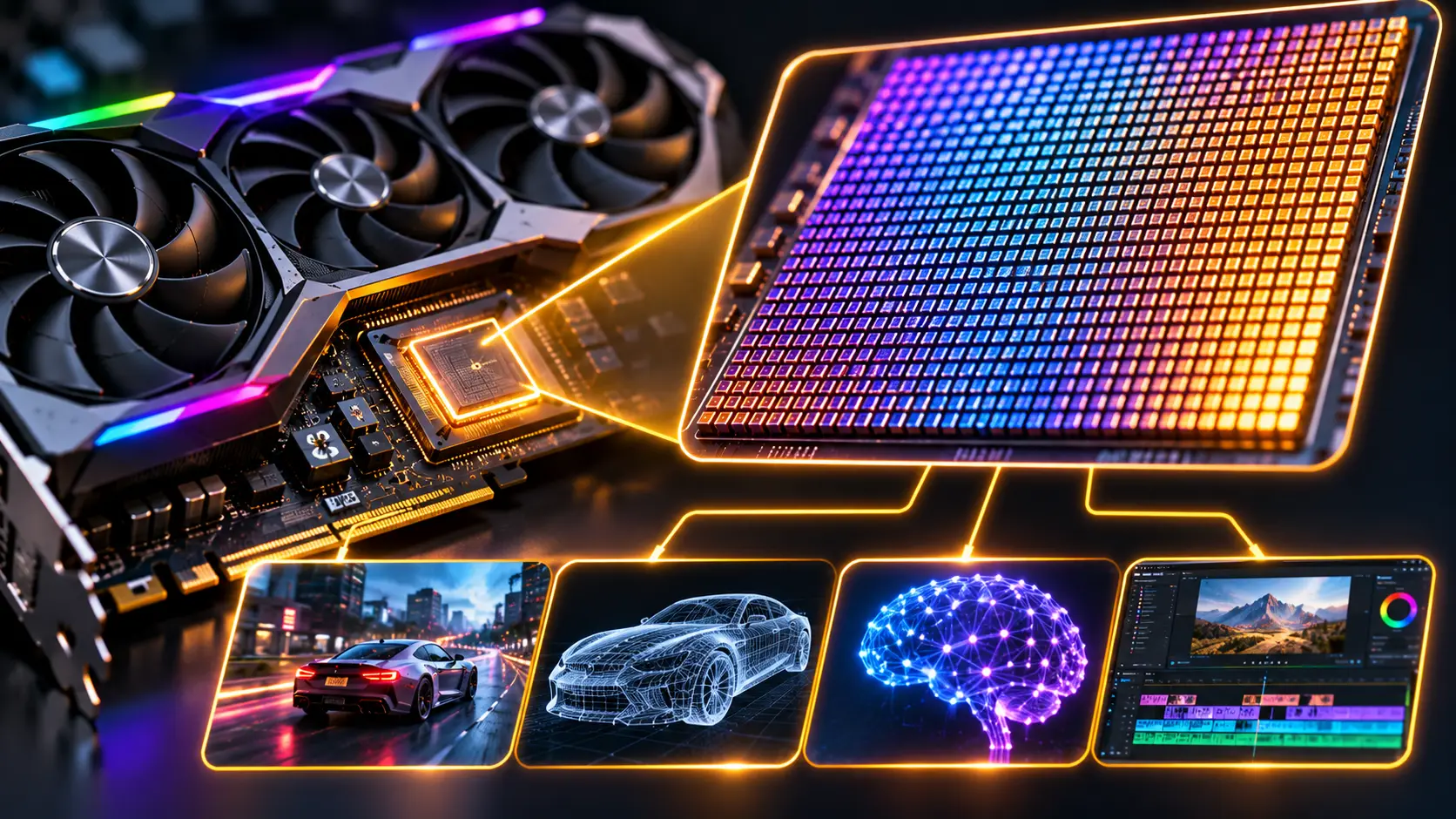
Why is the United States trying to control China's access to advanced AI chips?

The United States restricts advanced AI chip exports to China primarily to protect national security and curb foreign military modernization. Washington aims to preserve its global technological lead amidst intense geopolitical rivalry.

Protecting National Security
The primary driver behind strict U.S. export controls is national security. Washington aims to prevent foreign military powers from acquiring or producing the world's most powerful computing chips to safeguard its strategic interests.

Curbing Military Modernisation
Advanced artificial intelligence processors do more than just power commercial apps. U.S. officials argue that these high-end chips can be weaponised to accelerate military simulations, autonomous drone swarms, and advanced cyber warfare capabilities.
Preserving the Tech Lead
Beyond direct defense concerns, the restrictions form part of a broader geopolitical superpower rivalry. The United States and its allies are determined to maintain their technological supremacy in sectors vital for future economic and military dominance.

Targeting the Chokepoints
Managed by the Department of Commerce's Bureau of Industry and Security, the rules are precisely targeted. They restrict access not just to finished high-performance graphics processors, but also to the complex semiconductor manufacturing equipment required to build them.
Closing Global Loopholes
Export restrictions extend far beyond direct hardware shipments. Current regulations prohibit U.S. citizens and companies from supporting the development or production of advanced semiconductors at specific Chinese facilities, even without physical transfers.

The Shadow Black Market
Despite sweeping federal bans, high demand has fuelled a thriving underground economy. Investigations reveal that hundreds of thousands of restricted high-end processors have been smuggled or diverted through third-party intermediaries to feed China's massive AI hunger.
A High-Stakes Global Battle
As lawmakers push for even tighter oversight and remote-access controls on cloud data centres, the chip blockade remains a central battleground. This high-stakes technological friction will define whether Washington or Beijing leads the next era of artificial intelligence.