Why do powerful graphics cards need so much electricity?

Powerful graphics cards demand massive electricity because they pack billions of cores running simultaneously. Pushing for peak performance and handling sudden millisecond power spikes drives modern flagship units past 500 watts.

The Scale of Silicon
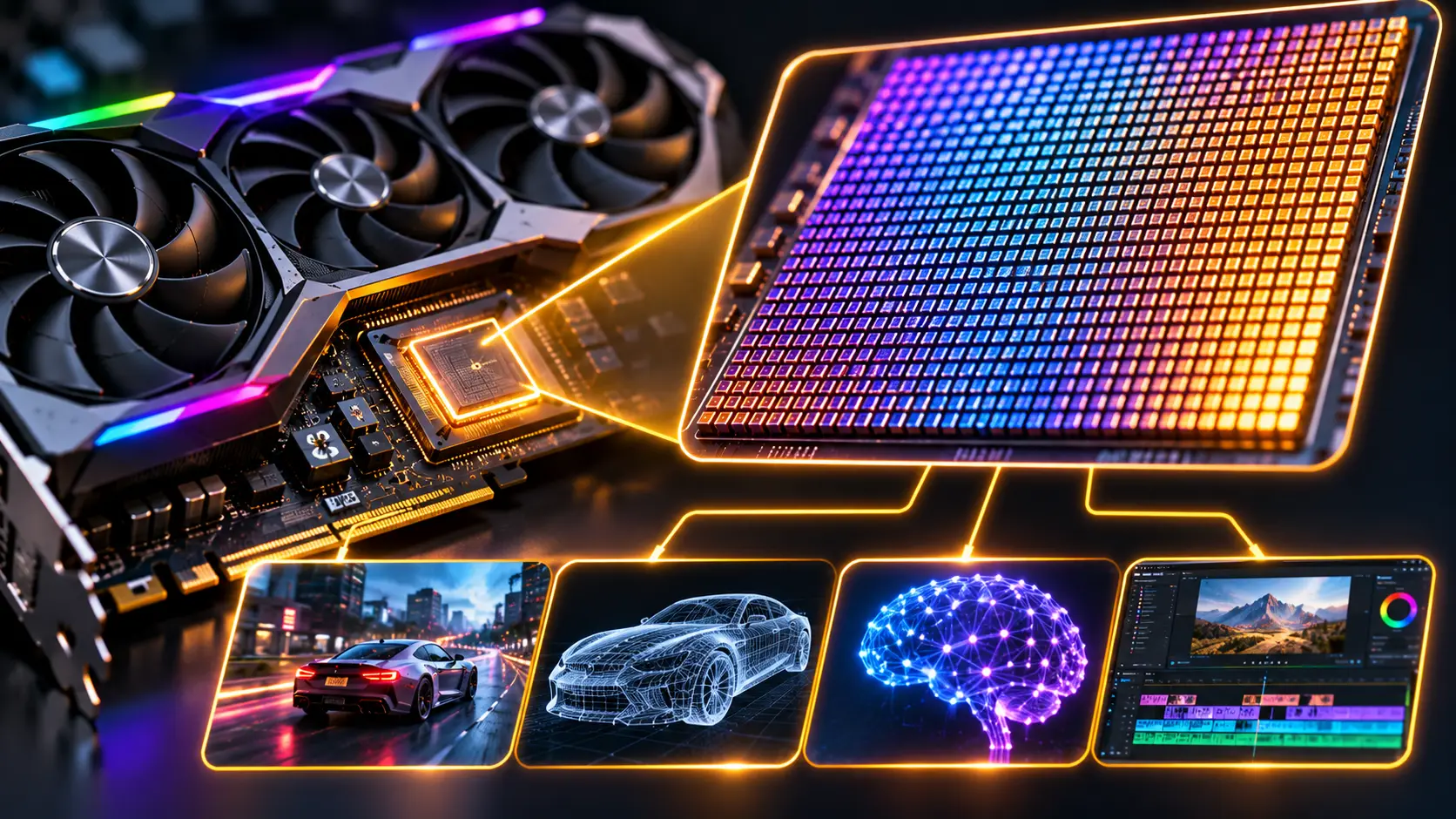
Modern flagship graphics cards are physical behemoths containing tens of billions of microscopic transistors packed onto a single silicon die. Keeping all of those miniature switches firing simultaneously requires an immense, continuous stream of electrical current.

Billions of Simultaneous Calculations
Unlike a traditional central processor that executes tasks one after another, a GPU deploys thousands of cores at once. Power consumption scales almost linearly with active core count, meaning raw computational output directly demands higher wattage.

Chasing the Last Ten Per Cent
Manufacturers intentionally push high-end silicon chips past their optimal sweet spot to squeeze out maximum frame rates. Pumping extra voltage into the card yields a tiny ten per cent boost in speed, but requires a disproportionate twenty-five per cent spike in power.
Dangerous Millisecond Spikes
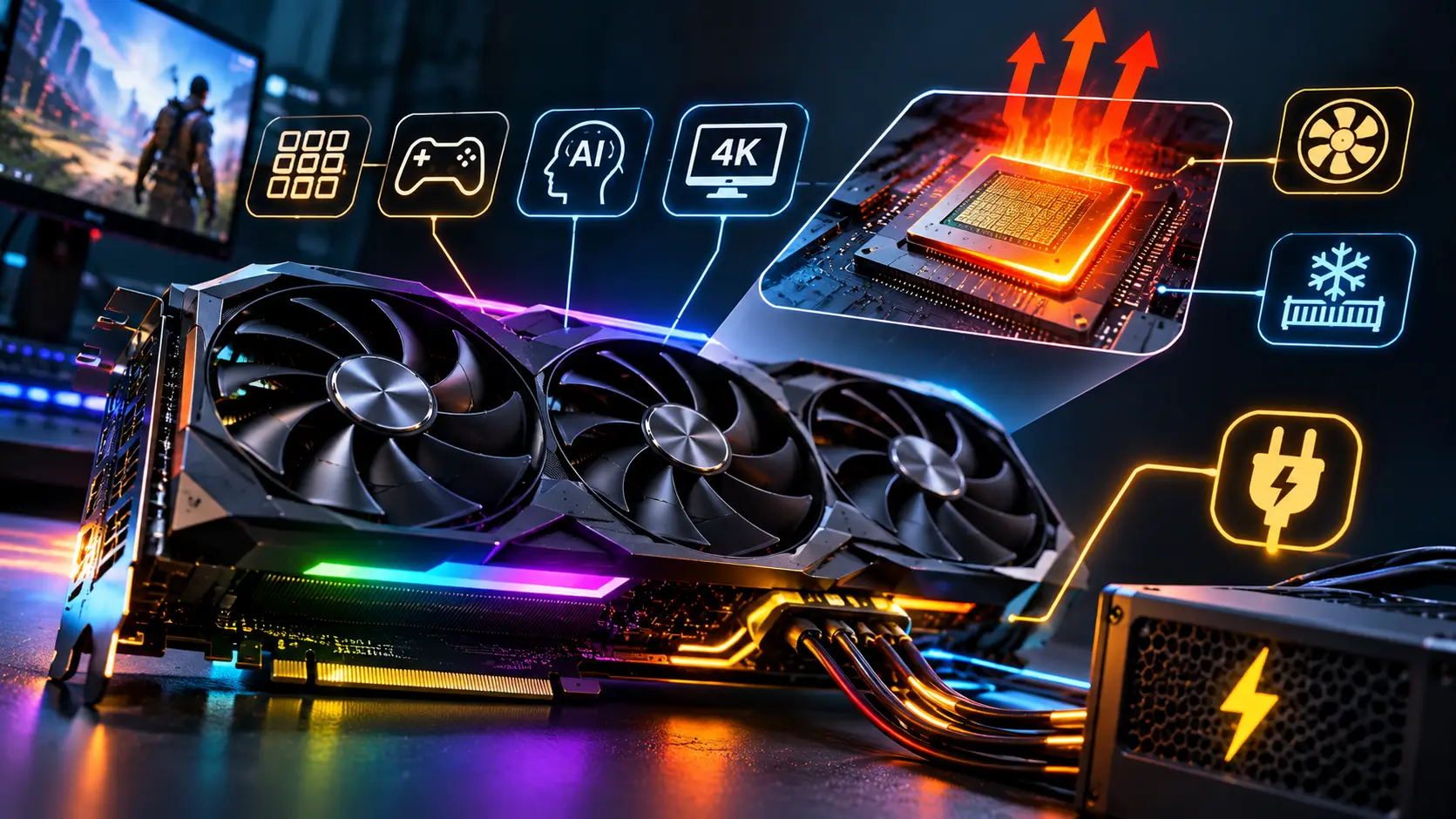
Rated thermal design power only measures sustained workloads, masking extreme operational fluctuations. High-end graphics processors routinely draw transient power spikes reaching up to 200 to 300 per cent of their rated TDP for a few milliseconds.

Feeding the AI Revolution
The transition from simple video game rendering to heavy artificial intelligence training has completely transformed power demands. Training massive neural networks keeps every single execution unit fully saturated around the clock, driving continuous peak electrical draw.

Managing Extreme Heat
Higher electrical wattage directly translates into massive thermal output that must be actively dissipated. Advanced cooling systems, vapour chambers, and high-RPM fans consume additional power just to keep the silicon from thermally throttling or degrading.
The Power Supply Toll
Because top-tier cards like the flagship RTX 5090 demand up to 575 watts or more, entire computer builds now require specialized power supplies. Choosing high-efficiency 80 PLUS Platinum or Titanium units is essential to prevent system shutdowns and tame electricity waste.