Explained | Europe’s deepest base metal mine to be turned into ‘gravity energy’ store

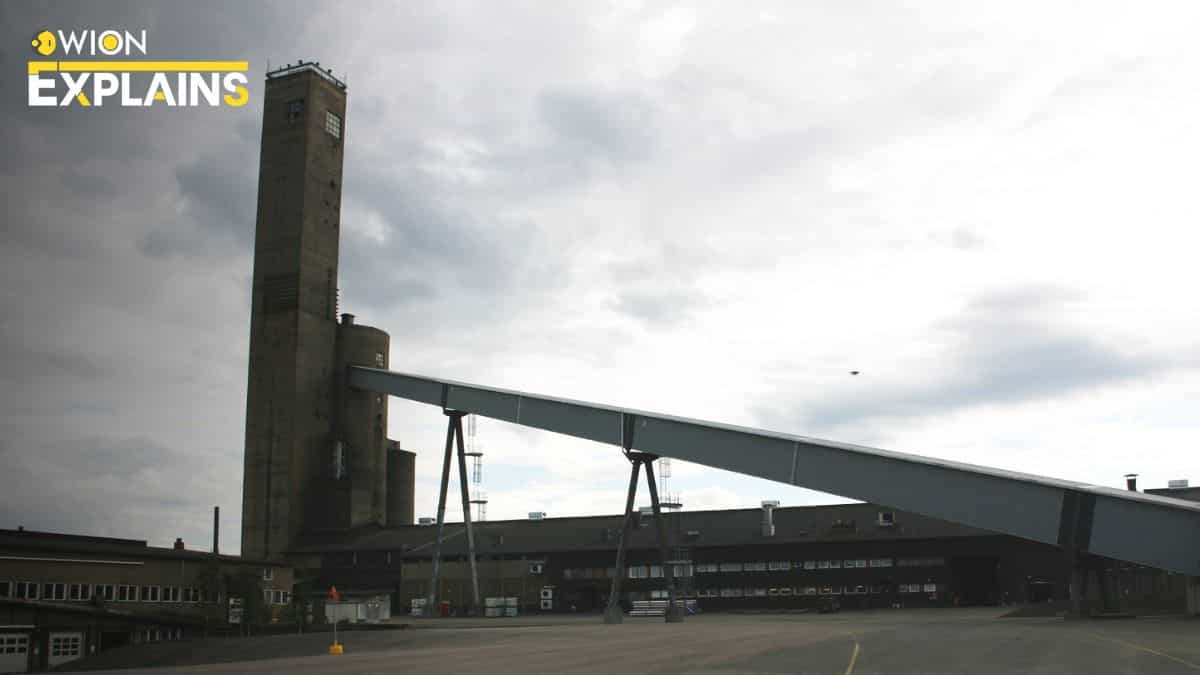
Pyhäsalmi Mine
As the world shifts to renewable energy and discards or reduces its reliance on fossil fuels, mining has gone down. With this, mines across the globe have to be decommissioned, recycled or discarded. The process of decommissioning a mine that is no longer in use is expensive and time-consuming, and requires a huge number of resources. In India, the average cost as per EE Power stands at a staggering $58 million, while in the United States, it reaches approximately $117 million.
To make better use of these mines, a United Kingdom-based firm has come up with a unique solution: an underground energy store. The firm, Gravitricity, is now turning a disused mine in Finland into its first full-scale prototype gravity energy store. Here's all you need to know.
Europe's deepest mine turns energy store

Pyhäsalmi Mine, which happens to be Europe's deepest base metal mine, is located in the small Finland town called Pyhäjärvi. The mine, which has a depth of 4,738 feet (1,444.14 metre) is now being transformed into an underground energy store that will use gravity to retain excess power.
The mine was opened in 1962 and over its lifetime; it was the source of more than 60 million tonnes of ore. Once a treasure trove of zinc and copper, it was decommissioned in August 2022.
Also read |Sweden ends Nord Stream sabotage probe over 'lack of jurisdiction', hands evidence to Germany
)
Fed raises rates for first time in 3 years, Kevin Warsh defies Trump as inflation mounts
)
All Indian goods to get duty-free access to New Zealand
)
Formula One reveals the 2027 race calendar; Monaco to host sprint race for the first time
)
Sydney Sweeney defends provocative ad choice, the internet is still not impressed
)
240-million-year-old bizarre 'pig with a tusk' creature creates new dilemma over origin of dinosaurs
)
US trade tariff: 100% tariff targets Russian buyers amid trade tensions
)
Former India player Diana Edulji wants Smriti Mandhana to replace Harman as skipper at the earliest
)
AUS vs SA: Steve Smith still gets 'little flashbacks' from sandpaper gate
)
Pak batter Rizwan's petition against being questioned by cyber crime agency rejected by court
)
Pakistan naval vessel returns to harbour with 'severe damage' after collision with Indian warship in Arabian Sea
)
Abhishek Sharma rises to No. 2 in T20Is; ENG’s Robinson 3rd after record Pakistan Tests
)
No Pandya as Auqib Nabi earns maiden ODI call-up; Mayank returns for WI T20Is| check full squads
)
Want to get married within a year? Why 18 lakh people rush to Jaipur for ‘sacred henna’
)
Protests erupt over migrant housing plan in Piddington
)
UN General Assembly 2026: What is veto power. Which countries have it and how does it work?
)
Saudi vs Houthis: Riyadh claims to have shot Houthi drone targeting Mecca
)
US Treasury rallies global financial institutions for Op Economic Outcast to isolate Iran
)
Former OpenAI researcher warns of growing risks from Artificial Intelligence
)
Taiwan seeks deeper India ties as direct flights restart soon and chip projects advance
)
Trump calls Canada-EU associate membership plan ‘laughable’ and threatens 'very serious tariffs'
)
Veteran actor Anant Nag honoured with Indian cinema’s highest award
)
Pakistan boycotts chess match against Israel at Olympiad
)
Hong Kong unveils 11 new measures to boost birth rates, offers higher cash bonuses and housing perks
)
Shahzad Bhatti Network declared terrorist organisation under UAPA: Govt order
)
Wildfire tears through forests in Spain's Valencia
)
Bigg Boss 20: Mahhi Vij reveals she lost Yuva role to Kareena Kapoor; 'didn’t work out in my favour'
)
‘Imagine 50 AI fighters cornering one manned jet’: India’s mobbing doctrine eyes a new era of air warm
)
The Early Spring season 2 is happening, but fans have one request - 'don't change the actors'
)
Daayra movie review: Kareena Kapoor, Prithviraj Sukumaran shine in Meghna Gulzar’s cop-versus-cop crime thriller
)
Pakistan: Imran Khan's sons Kasim & Sulaiman claim their father is 'tortured' in jail
)
Europe wants a common playbook for security threats, seeks security beyond NATO
)
Ebola outbreak: WHO sees encouraging signs in fight against Ebola outbreak
)
US House votes 417-3 to pass Ratepayer Protection Act targeting AI data center electricity costs
)
Trump praises India’s Opium crackdown, hails anti-drug efforts
)
India breaks silence on US Russia sanctions bill, 100% tariff threat: ‘Committed to energy security’ for 1.4 billion
&im=FitAndFill=(700,400))
New OTT releases this week (September 14-20, 2026): Lust Stories 3, Waiting Hai, Irumudi- 5 new titles coming on Netflix, Prime Video and more
)
Saudi Vs Houthis: Yemeni military rebels clash with Houthis
)
Lionel Messi for 2026 Ballon d’Or over Mbappe and Yamal, says Diego Simeone
)
Trump gets new power to hit India, China with up to 100% tariffs as US Senate clears Russia sanctions bill
&im=FitAndFill=(700,400))
Suriya and Jyothika say ‘I do’ again after 20 years! See their dreamy wedding pics
)
PM Modi’s 76th birthday: From Akshay Kumar to Shilpa Shetty, Bollywood celebs extend warm wishes
)
Katrina Kaif’s postpartum weight is not the problem; your gaze is
Now, it is being given a new lease on life with what the Scottish company Gravitricity says are "some of the best characteristics of lithium-ion batteries and pumped hydro storage".
How will the battery work?
The battery, as per Euro News, will store excess power, for example, from wind turbines on a windy day.
GraviStore, as the underground battery is called, raises and lowers heavy weights in underground shafts.
Imagine weights being hoisted up the towering 530-metre auxiliary shaft of the Pyhäsalmi mine when surplus power is available. Then, when needed, these weights are released, activating the winches, which now function as generators, producing electricity either in short bursts or a steady stream, depending on demand.
This innovative energy system boasts a capacity to store a whopping 2MW of power, seamlessly integrating into the local energy grid.
Why decommissioned mines?
As per the report, a recent study by a team of international researchers found that gravity batteries in decommissioned mines could be a cost-effective, long-term solution for storing energy.
This, as per scientists from the International Institute for Applied Systems Analysis (IIASA) is especially true as we transition to renewable power.
As per their estimates, abandoned mine shafts could serve as storage for around 70TWh of power, or roughly how much the daily global consumption is. This discovery underscores the untapped potential of repurposing old mining infrastructure for sustainable energy initiatives.
Local community
With the decommissioning of the Pyhäsalmi Mine, several hundred people lost their jobs and their livelihoods. Now, in Pyhäjärvi, the local community is embracing this opportunity for revitalisation. They have set up a development company andsigned a contract with Gravitricity to transform the old mine shaft.
As per the report, Martin Wright, the executive chairman of Gravitricity, envisions this project not only as a technological milestone but also as a catalyst for economic regeneration.
"This project will demonstrate at full scale how our technology can offer reliable long-life energy storage that can capture and store energy during periods of low demand and release it rapidly when required," said Wright.
"This full-scale project will provide a pathway to other commercial projects and allow our solution to be embedded into mine decommissioning activities, offering a potential future for mines approaching the end of their original service life," he added.
By providing "low carbon jobs" in an area grappling with the fallout from the closure of mining operations, the project seeks to breathe new life into the community.
The dangers of abandoned mines
As per EE Power, in 2024, experts predict a meagre 466 million tonnes of coal extraction, marking a historic low since 1962. While this is good for the planet, it comes with its own set of problems.
Idle or abandoned mines are not mere inactive plots but rather ticking time bombs of decay and deterioration if left unattended.
Shockingly, millions of Americans reside within a mile of these abandoned coal mines, according to estimates from the US Department of the Interior.
Experts warn that there are approximately 159,735 abandoned metal mines, each of which presents its own set of environmental hazards.
These neglected mines pose grave risks to local water sources. Mines associated with precious metals can leach mercury, contaminating sediments and seeping lead into the soil. Meanwhile, sulphide mines contribute to acidic mine drainage, further exacerbating environmental woes. Furthermore, records show hundreds of fatalities and injuries from accidents involving collapsing mine structures.

