Melting Antarctica: Sea-ice records new low as scientists fear collapse of WAIS

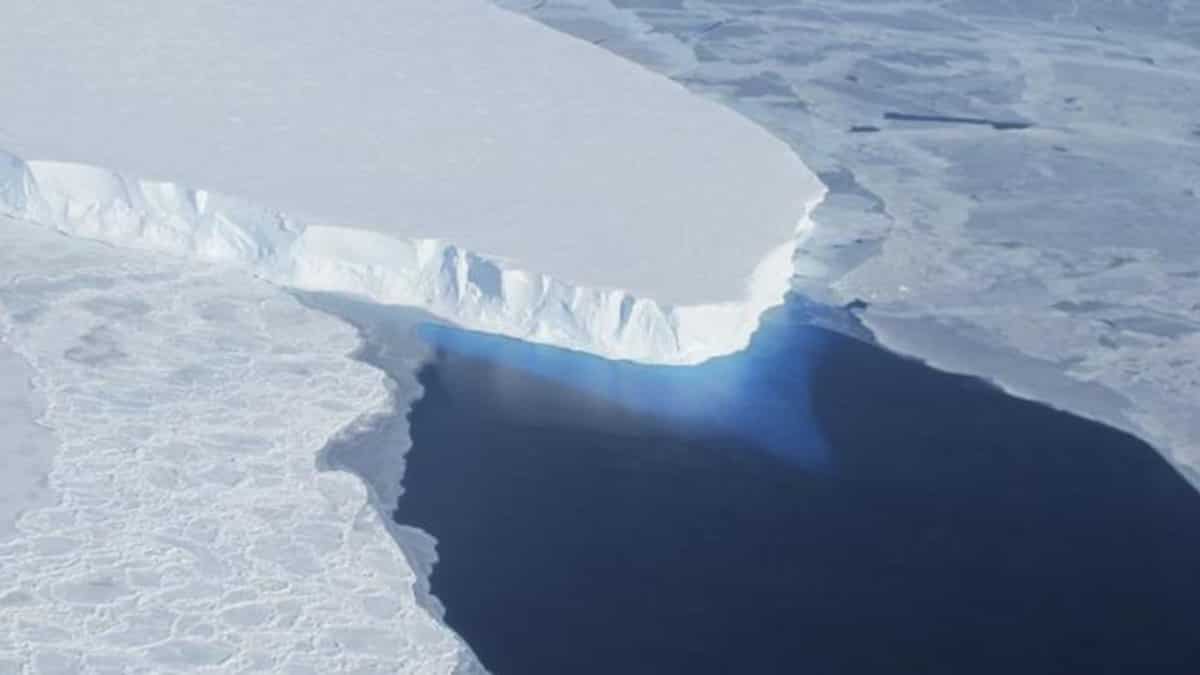
Antarctica's sea ice records a historic low.
The sea ice surrounding the Antarctic continent is now at its lowest in history since the time people began measuring it using satellites in the late 1970s. National Snow and Ice Data Centre said that less sea ice is expected during the southern hemisphere summer, however, this year is exceptional. The coverage has been reduced to just 1.91 million square km (737,000 sq miles) by warm air, winds and water. What is more worrisome is that the melt has to continue till this summer.
Last year, Antarctica had not touched the previous record-breaking minimum of 1.92 million sq km till February 25. In the last seven years, three record-breaking years for low sea ice have been 2017, 2022 and now 2023.\
ALSO READ | 'Greater London-sized' 1,550 sq km iceberg breaks off of Antarctic ice shelf. Watch!

These “remarkable” losses of Antarctic sea ice indicate the increasing level of heat in the ocean and such changes in weather patterns reflect that a climate crisis is evident in the observations.
Scientists have already expressed their concern about the melting ice in Antarctica. Climate models, dating back to 2014, have suggested that the continent's giant West Antarctic Ice Sheet (WAIS) is bound to collapse because of increasing levels of global heating.
The researchers have warned that the ice sheets and their glaciers are exposed to waves due to the increasing loss of sea ice, which further accelerates melting and disintegration.
)
Trump says Russia has ‘lost control’ of its diesel industry, calls for end to ‘ridiculous, never-ending’ war
)
Putin's United Russia party wins 355 seats in Duma election; 4 other parties cross threshold to enter parliament
)
Delhi Air pollution: Strict crackdown on waste burning
)
‘0% chance’: Nvidia CEO Jensen Huang dismisses AI extinction fears by 2030
)
Samay Raina-Mukesh Chhabra controversy explained: What happened over girlfriend joke on India's Got Latent?
)
Trump's helipad event overshadowed by audio failure as major TV networks suspend pool coverage
)
Russia-Ukraine war: Russian strikes knock out three of Ukraine's largest steel plants
)
Four decades after leaving Kolkata, the Birlas may be coming back for more
)
Glitch in the matrix caught on camera: Woman vanishes after talking to reporter
)
IIT Bombay tensions ease after three-hour open house; director’s assurances pacify students
)
Samsung raises Galaxy S26 prices by Rs 20,000: Here’s what each model now costs
)
J&K Assembly Session begins amid chaos: BJP, ruling alliance clash as statehood demand dominates
)
Bessent meets China’s He Lifeng to prepare for Trump-Xi summit
)
8,000 bees worth over $20,000 stolen from hives in Queensland
)
US and China vie for AI dominance as calls grow for regulation | Gravitas
)
FIFA chief Infantino wants to reform governing body with consultation from federations
)
The Verdict | The Mecca Agreement is under scrutiny as Houthis attack Saudis
)
Saudi Arabia exits China-led mBridge digital currency platform amid Saudi-Houthi conflict
)
'Lot of things to learn from experienced players': Jayasuriya backs Rohit, Virat for 2027 ODI World Cup
)
Taylor Swift has a 'proud wife' moment as Travis Kelce scores first touchdown of season: 'That’s my husband!'
)
North Korea's nuclear tests triggered 1,399 earthquakes: Earth is still shaking | Gravitas
)
Mahabharat actor Saurav Gurjar arrested in Hyderabad, sent to 14-day judicial custody in sexual exploitation case
&im=FitAndFill=(700,400))
New OTT releases this week (September 21-27, 2026): Shaque: Trust No One, Hunkkaar, Don’t Be Shy- 5 new titles coming to Netflix, Prime Video and more
)
From ‘communist’ to ‘great mayor’: Trump praises Mamdani after New York meeting, discusses immigration and housing
)
WATCH | Mysterious lights over Tehran caught on video. Drone, aircraft or something else?
)
White House TV pool halts Trump coverage after CNN barred from UNGA events
)
Iranian airlines to shut worldwide on Sept 23, Bessent warns of US banking ban
)
China expels top generals Zhang Youxia, Liu Zhenli over ‘disloyalty’, corruption
)
Pilot recreates Mona Lisa in sky over Oklahoma and Arkansas in four-hour flight: VIDEO
)
UK PM Burnham agrees to 'defensive' military support for Saudi Arabia against Houthis
)
Jailer 2: Vidya Balan joins Rajinikanth's upcoming film as Kantha | Watch
)
Microsoft executive called AI training the ‘largest theft of labour in human history’
)
Medieval books contain traces of a 3,700-year-old virus that recently killed 500,000 animals
)
40-foot waves crash into cruise ship in dangerous stretch near Antarctica. Watch
)
US-Iran war, peace deals and more: What to expect from Trump's UNGA 2026 speech
)
Explainer: Why rare-earth export licences and Board of Trade are US priorities ahead of Trump-Xi summit
)
BTS fans mock iHeartRadio’s day 2 turnout after short set controversy
)
The Scandal: Why so scandalous? Ji Chang Wook leaves you gasping for air
WATCH | Antarctica's 'doomsday glaciers' is in trouble
Prof Karsten Gohl, who works at Alfred Wegener Institute's Helmholtz Centre for Polar and Marine Research in Germany and had visited the region for the first time in 1994, said, “I have never seen such an extreme, the ice-free situation here before.”
Gohl, who was on the research vessel Polarstern in Antarctica, said: “The continental shelf, an area the size of Germany, is now completely ice-free. It is troubling to consider how quickly this change has taken place.”
Helmholtz Centre's Prof Christian Haas also said, “The rapid decline in sea ice over the past six years is quite remarkable since the ice cover hardly changed at all in the 35 years before.”
You cannow write for wionews.comand be a part of the community. Share your stories and opinions with ushere.
WATCH WION LIVE HERE