Furor in scientific community over claims that small-brained early humans were intelligent

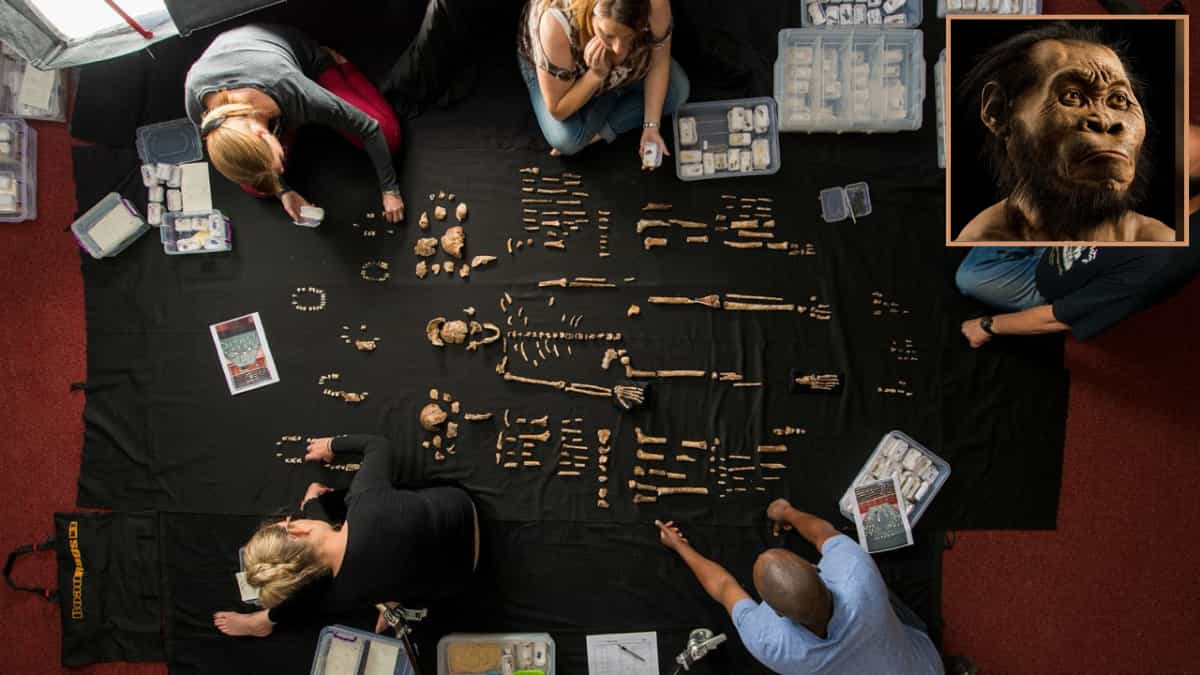
Homo naledi
A row has erupted nearly a month after scientists claimed that the ancient human species Homo naledi displayed sophisticated behaviour, despite having much smaller brains than us, the Homo sapiens. The study, which was not peer-reviewed then, had opened a conversation about human evolution and whether we had got some aspects wrong. The tide, however, has turned now.

Peer reviews of the H. naledi study are in and they are scathing in their assessment - accusing the researchers of overexaggerating the facts.
“These claims are inadequate, incomplete and are largely assumption-based – rather than evidence-based,” said one, while another called the papers "imprudent and incomplete". Meanwhile, a third dismissed the finding saying the papers “do not present convincing evidence”.
“I have no issue with the idea that non-Homo sapiens species disposed of their dead, but I do have an expectation that there is robust scientific evidence to support such statements before scientists go on massive media campaigns regarding these ideas,” palaeoanthropologist Andy Herries of La Trobe University in Melbourne was quoted as saying byThe Guardian.
)
India ‘deeply concerned’ as Houthi strikes hit Saudi civilian & energy sites
)
Three labourers killed as DU student loses control of his car, rams into them on Dwarka Expressway
)
Pentagon revives mandatory testosterone testing for male troops aged 30 and above
)
FACT CHECK: Why did PM Modi ask Xi ‘is it okay’ at BRICS Summit? New video reveals...
)
India seeks to build a full semiconductor supply chain
)
North Korea's last nuclear test in 2017 set off 1,399 earthquakes over 8 years, each stronger than previous
&im=FitAndFill=(700,400))
From Abhishek Sharma to Sahil Chauhan, 5 batters with fastest T20I hundreds
)
Indian activist-lawyer Prashant Bhushan's post brings focus on ‘conflict of interest’ appointments of ex-govt officials at Reliance, Adani groups
)
US And Denmark reach Greenland deal, Trump announces expanded military presence
)
Former India player Diana Edulji wants Smriti Mandhana to replace Harman as skipper at the earliest
)
China may have gained access to US's classified F-35 jets; parts meant for repairs diverted to Hong Kong, sparking Pentagon inquiry
&im=FitAndFill=(700,400))
Meet top 5 batters in the latest ICC T20I Rankings
)
Godfather of AI Geoffrey Hinton gives US lawmakers a one-year warning on AI
)
US F-16 fighter jet crashes in Michigan during training mission, pilot ejects safely
)
Shivakumar attends 79th Kalyana Karnataka Utsav in Kalaburagi
)
Trump signs Russia sanctions law: India faces fresh 100% tariff threat over Russian oil
)
Why Ranveer Singh’s Dhurandhar missed India’s Oscar entry; FFI jury member reveals what happened
)
Hong Kong extends newborn cash support scheme by three years
)
‘Will go to any extent’: Pakistan vows to defend Saudi Arabia amid Houthi attacks
)
'He will always be ahead': India coach Gambhir says Sooryavanshi won't walk into team ahead of Samson
)
The Verdict | When precision fails: US commits war crime in Minab school strike, UN finds
)
Trump signs Russia sanctions bill into law, targets Moscow’s energy sector
&im=FitAndFill=(700,400))
New Friday OTT releases (September 18, 2026): Lust Stories 3, You+Me, Best of the Best- 8 new titles coming on Netflix, Prime Video and more
&im=FitAndFill=(700,400))
Which country has the most F-35s outside America?
)
Africa is splitting, and a lot sooner than estimated, giving way to a new ocean
)
'Gangsta' crab shoves knife blade at man and his dog in Florida - Watch
)
Trump bans CNN, MS NOW and Politico from White House over ‘FAKE NEWS’
)
Trump 2.0: Dark days ahead for America’s ‘imperial presidency’
)
Laura Wolvaardt sets new world record for most WT20I runs in a year
)
Trump's Greenland dream comes true? POTUS announces 'Infinite Life' deal with Denmark, claims permanent US control
)
Drone strikes cooling tower at Russia's Kursk Nuclear Plant, IAEA confirms
)
Who is Khalilur Rahman? All you need to know about 81st UN General Assembly President
&im=FitAndFill=(700,400))
Meet top 5 bowlers in latest ICC T20I rankings
)
Cristiano Ronaldo returns to Portugal squad for Nations League under new coach
&im=FitAndFill=(700,400))
Meet top 5 Indian batters with fastest T20I centuries
)
Ukraine plans record $109 bn defence spending, nearly two thirds of budget amid Russia war
Some displayed their displeasure saying the Netflix documentary, Unknown: Cave of Bones, based on the findings, screened last week, could detract from the study of the site in future.
“Rising Star is such a great site and thenaledimaterial is so wonderful that there was really no need to over-egg the pudding,” said Prof Chris Stringer of the Natural History Museum, London, adding, “It’s going to cause problems of credibility in future, which may even affect funding for more work.”
“To push a notion that is so unsubstantiated that it has met with rejection by the scientific community is irresponsible,” added Paige Madison, a researcher at Arizona State University.
WATCH |Ancient human civilisation needed three attempts & 12,000 years to colonise Europe: Study
What did the study claim?
Last month, three studies, published in the journal eLife claimed that H naledi not only buried their dead but made engravings deep within a cave system in southern Africa some 300,000 years ago.
Paleoanthropologist Lee Berger, who first reported the discovery of Homo naledi in 2013inside the Rising Star cave system 25 miles northwest of Johannesburg, was responsible for the new claims.
Berger and his team found more than 1,800 bone fragments deep in an underground chamber reachable only by a four-story vertical drop. The only plausible explanation for the situation seemed like a burial which may push the "body burials" timeline by at least 10,000 years, the research argued.
"The position and intactness of some skeletal remains suggested that the dead may have been carefully laid out on the floor of the chamber rather than tossed down the Chute to collect as a jumble of bones at its base," read the report.
Despite the negative reaction from the scientific community, Berger's book Cave of Bones will be published by National Geographic next month.
(With inputs from agencies)
WATCH WION LIVE HERE: