First brain-wide map in prairie vole research shows orgasms ‘rewire’ the brain

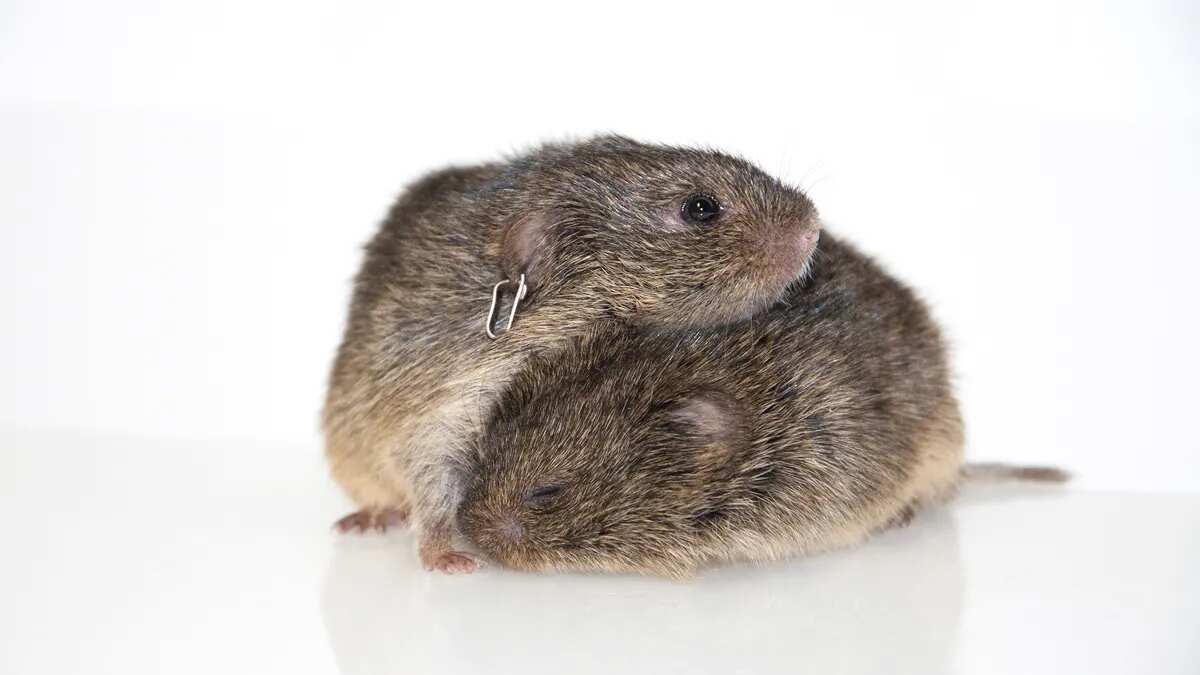
Prairie vole
Amid ongoing research on a small Midwestern rodent called the prairie vole, scientists stumbled upon a fascinating finding based on the study of the first comprehensive brain map detailing the regions activated in the mammal during mating and pair bonding.
About the study
The findings of the study conducted on these small Midwestern rodents, known for forming long-term monogamous relationships, were published in the journal eLife. The research sought to answer the question – how does sex relate to lasting love?

Scientists paired up more than 200 voles under various conditions to monitor the progression from initial interactions to the establishment of a stable pair bond. This so-called bonding experience includes several stages like mating, bonding, and the development of a stable, enduring bond.
Also Read |Ill-fated Odysseus lander sends grainy images from Moon hours before going dark
What did the study find?
)
The Verdict | When precision fails: US commits war crime in Minab school strike, UN finds
)
Why Ranveer Singh’s Dhurandhar missed India’s Oscar entry; FFI jury member reveals what happened
)
US And Denmark reach Greenland deal, Trump announces expanded military presence
)
India seeks to build a full semiconductor supply chain
)
Trump signs Russia sanctions law: India faces fresh 100% tariff threat over Russian oil
)
Shivakumar attends 79th Kalyana Karnataka Utsav in Kalaburagi
)
US hiding troop deaths in Iran war? Toll higher than Pentagon count, claims report
)
Ukraine plans record $109 bn defence spending, nearly two thirds of budget amid Russia war
)
Trump's Greenland dream comes true? POTUS announces 'Infinite Life' deal with Denmark, claims permanent US control
)
China may have gained access to US's classified F-35 jets; parts meant for repairs diverted to Hong Kong, sparking Pentagon inquiry
)
Flying cars in UAE: Ras Al Khaimah signs deal with Chinese company to test new transport
)
‘Will go to any extent’: Pakistan vows to defend Saudi Arabia amid Houthi attacks
)
Pentagon revives mandatory testosterone testing for male troops aged 30 and above
&im=FitAndFill=(700,400))
Meet top 5 Indian batters with fastest T20I centuries
)
Godfather of AI Geoffrey Hinton gives US lawmakers a one-year warning on AI
)
NASA research plane reaches 61,000 feet over Panama
)
Google’s Gemini AI hacks real systems by guessing passwords during security test
)
Indian activist-lawyer Prashant Bhushan's post brings focus on ‘conflict of interest’ appointments of ex-govt officials at Reliance, Adani groups
)
Brigitte Bardot’s private collection set for Paris auction; key items and prices revealed
)
FACT CHECK: Why did PM Modi ask Xi ‘is it okay’ at BRICS Summit? New video reveals...
)
Africa is splitting, and a lot sooner than estimated, giving way to a new ocean
)
Three labourers killed as DU student loses control of his car, rams into them on Dwarka Expressway
&im=FitAndFill=(700,400))
From Abhishek Sharma to Sahil Chauhan, 5 batters with fastest T20I hundreds
)
Trump bans CNN, MS NOW and Politico from White House over ‘FAKE NEWS’
)
Indian Cinema bets big on mythology, brings ancient stories to modern audiences
)
Pyongyang dismisses US, western pressure over nuclear programme
&im=FitAndFill=(700,400))
New Friday OTT releases (September 18, 2026): Lust Stories 3, You+Me, Best of the Best- 8 new titles coming on Netflix, Prime Video and more
)
Russia holds first parliamentary elections since the beginning of the Ukraine war
)
'Gangsta' crab shoves knife blade at man and his dog in Florida - Watch
)
Fast bowler Brydon Carse faces no charges over Derby nightclub incident
)
Tirupati Laddu ghee adulterated with chemicals, says ED, supplier arrested
)
Who is Khalilur Rahman? All you need to know about 81st UN General Assembly President
)
Trump 2.0: Dark days ahead for America’s ‘imperial presidency’
&im=FitAndFill=(700,400))
Meet top 5 bowlers in latest ICC T20I rankings
)
IIT Bombay student dies by suicide, was caught seeking AI help during exams
)
Trump signs Russia sanctions bill into law, targets Moscow’s energy sector
Researchers found that the bonding voles experience a firestorm of brain activity distributed across 68 distinct regions of the brain which make up seven brain-wide circuits. They also noted that the brain-wide map also showed activity in regions which were not previously associated with bonding.
Prairie voles are a species whose social and mating behaviours closely resemble those of humans in the context of monogamy and long-term bonding. Therefore, the new findings can help researchers look at new places to explore the human brain to understand how we form and maintain close relationships.
It was previously established that male and female brains often use fundamentally different mechanisms to produce the same behaviours like mating and nurturing offspring.
However, the new study shows one significant difference which is that the bonding males and females had nearly identical patterns of brain activity.
“That was a surprise,” said Steven Phelps, a professor at the University of Texas at Austin and senior author of the study.
The finding also changed the prevailing hypothesis that sex differences, influenced by hormones like testosterone, oestrogen, and progesterone, would lead to different neural pathways for bonding in males and females.
Also Read |A silent warning? Microplastics found in every human placenta, reveals new study
According to the study, male ejaculation served as the strongest predictor of neural activity across the 68 brain regions associated with bonding.
It was also found this was not just limited to males as females exhibited increased bonding-related brain activity when paired with males who reached this milestone.
“The brain and behaviour data suggest that both sexes may be having orgasm-like responses, and these ‘orgasms’ coordinate the formation of a bond,” said Phelps.
He added, “If true, it would imply that orgasms can serve as a means to promote connection, as has long been suggested in humans.”
(With inputs from agencies)