
&imwidth=800&imheight=600&format=webp&quality=medium "The bone in the throat: Munir's unwinnable war against Imran Khan")
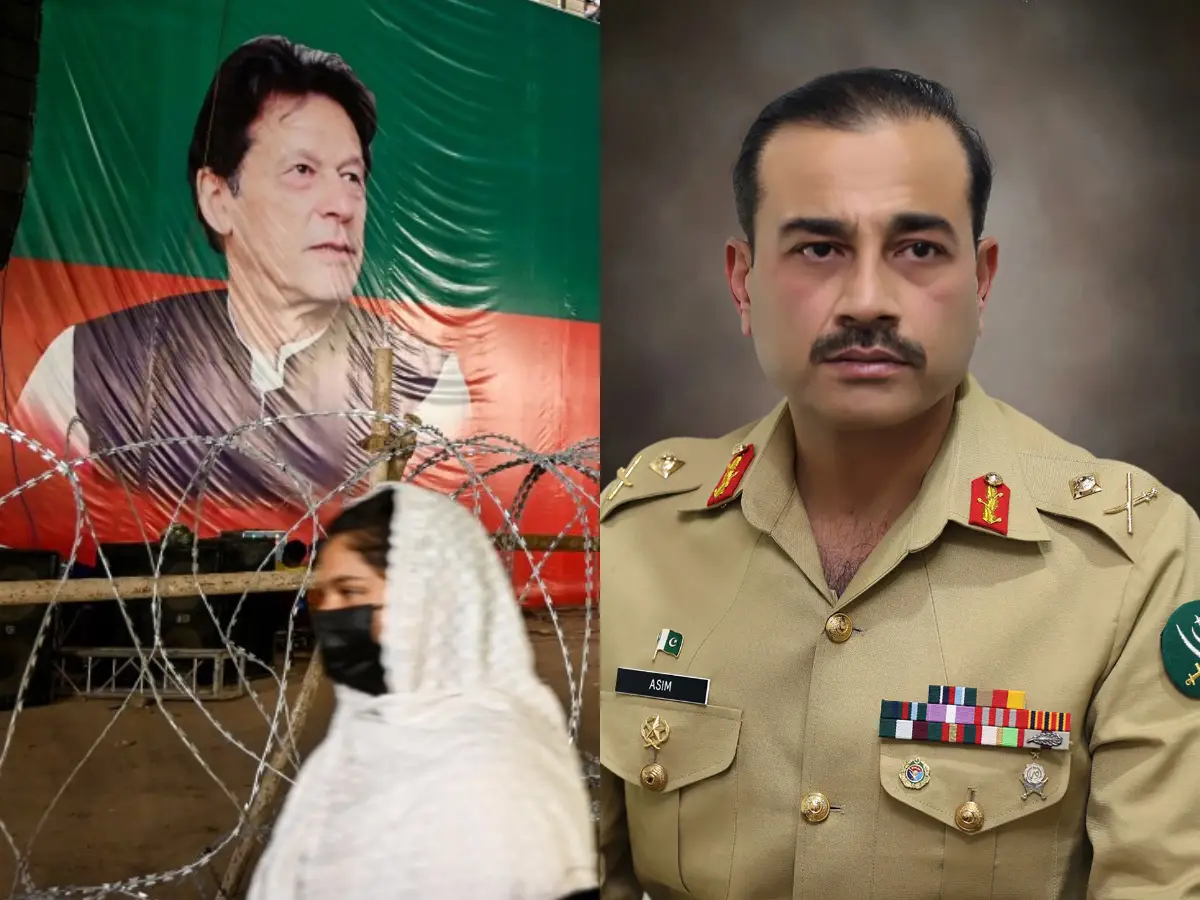
On November 27, thousands of angry people gathered outside Adiala Jail in Rawalpindi. They were shouting, demanding answers, refusing to leave. An Afghan news outlet had just reported something shocking: Imran Khan, Pakistan's jailed former Prime Minister, might be dead. Nobody had seen or heard from him in four weeks. No family visits, no lawyer meetings, no phone calls. Complete silence. The rumour spread like wildfire, and suddenly Pakistan's military government had a crisis on its hands. They rushed to deny it, but the damage was done. The question everyone asked was simple: if Imran Khan is alive, why are you so afraid to show him?
This wasn't the first time death rumours about Khan had circulated, but this time felt different. Court orders allowing weekly family visits were simply ignored. His wife, his party leaders, even his lawyers had no idea whether he was alive or dead. Jail officials had no explanation. Punjab's senior police officers stayed silent. For a government that claims to be in control, the panic was obvious. And the man behind this secrecy is General Asim Munir, Pakistan's Army Chief, who controls the entire country but is absolutely terrified of one prisoner.
The hatred between Munir and Khan is deeply personal, and it goes back years. Asim Munir isn't like other Pakistani generals. Most come from elite military families and train in British or American academies. Munir's father was a school principal and mosque imam who fled Jalandhar during Partition. Young Munir studied first in an Islamic madrasa, memorised the entire Quran, and became a Hafiz-e-Quran. He didn't attend Pakistan's prestigious Military Academy but graduated from a lesser-known training school. Ramanathan Kumar, who led the Pakistan desk in India's intelligence agency R&AW from 2015 to 2020, told The Indian Express that Munir is Pakistan's first "mullah general". He's a product of General Zia-ul-Haq's Islamic era, when beards grew longer and Quranic verses appeared on army notice boards. Today, Munir quotes Islamic teachings in fluent Arabic during speeches, presenting himself as a religious warrior leading a holy army.

But in 2018, when Munir became ISI chief, Pakistan's most powerful spy agency, religion didn't stop him from making enemies. He reportedly wanted to investigate corruption allegations against Bushra Bibi, Imran Khan's wife. Khan, who was then Prime Minister, was furious. He forced the Army Chief at that time, General Bajwa, to remove Munir from the ISI after just eight months, the shortest tenure ever. Munir was humiliated, sent off to command a regular corps in Gujranwala. For someone who had controlled Pakistan's deadliest intelligence network, this was an insult he would never forget.
The tables turned dramatically in November 2022 when Munir became Army Chief, just three days before his planned retirement. Within months, Imran Khan was ousted from power through a no-confidence vote that many believe the army orchestrated. By August 2023, Khan was behind bars on corruption charges his supporters call completely fake. Since then, he's been locked up for over 840 days, and Munir has made sure Khan stays there.
But here's the twist that makes this story explosive. Despite controlling Pakistan's entire military machine, Munir is terrified of Khan. Why? Because Khan isn't just a politician or former cricket hero. He's a Pathan, a Pashtun, and he represents something guns and tanks cannot defeat. Pakistan has always been dominated by Punjabis who run the army, government, and economy. Pathans have felt pushed aside for decades, angry since the 1970s about being treated as second-class citizens in their own country. That resentment has only grown worse. Today, many Pashtuns are joining Baloch separatists, openly challenging what they see as Punjabi military oppression.
Trending Stories
Imran Khan has become the living symbol of Pathan resistance. When the November 27 death rumours spread, the reaction proved exactly what Munir fears most. Thousands instantly mobilised. If Khan had actually been killed, experts warned that riots could erupt from Khyber to Kandahar. Indian filmmaker Abhilash Badli told India Today that the regime fears even a thirty-second video of Khan could trigger nationwide protests. If a government is scared to show a prisoner's face, something is seriously wrong.
The situation is getting worse for Munir. Pakistan recently bombed Afghanistan, killing civilians in Khost and Paktika. They've forced millions of Afghan refugees back in freezing weather. Pashtuns on both sides of the border are calling it Punjabi aggression. Meanwhile, targeted killings in Balochistan and Khyber Pakhtunkhwa have become routine. Militants hijacked the Jaffar Express train, killing sixty-four people. The country is falling apart, and Munir knows releasing Khan could cause an explosion he cannot control.
Munir recently gave himself sweeping powers through a constitutional amendment, becoming Chief of Defence Forces with lifetime immunity. He's legally untouchable now. Yet one imprisoned man keeps him awake at night. Khan's party said it perfectly: a powerless and insecure dictator pretending to be a general cannot silence a nation awakened by truth.
The brutal irony is that jailing Khan has backfired completely. Instead of breaking his spirit, it's made him a martyr. His popularity keeps growing. For Munir, Khan is like a bone stuck in the throat—impossible to swallow, impossible to remove. This battle reveals Pakistan's deepest wound: Punjabi military control versus Pathan pride, an old dictator versus a new generation's rage. And right now, the general with all the power is losing to the prisoner with nothing but his voice.
