Non-Functional Financial Upgradation (NFFU) is a pay parity mechanism introduced on the recommendations of the Sixth Central Pay Commission (6th CPC), effective 01 January 2006 and applicable to officers of organised Group A Central Services.
Officers of the Indian Armed Forces, who face the steepest promotion pyramid and the earliest compulsory retirement ages in the Central Government, remain the sole excluded category, despite the 7th CPC’s recommendation to the contrary. This article examines the origins of NFFU, the resulting pay disparity, and the case for its priority extension to the armed forces.
NFFU was introduced by the 6th CPC with effect from 01 January 2006 to remedy pay stagnation among officers of organised Group A Central Services.

Under the scheme, when an IAS officer of a particular batch is empanelled to a grade at the Centre, officers of other organised Group A Services from a senior batch receive financial upgradation to that grade - irrespective of whether they hold the functional responsibilities of that post. By the time of the 7th CPC, 53 civilian services were covered, including the IAS, IPS and Indian Forest Service.
Officers of the Indian Army, Navy and Air Force remain excluded. This exclusion persists despite the 7th CPC Chairman recommending extension to defence forces and despite a Supreme Court judgment (February 2019) and Cabinet decision (July 2019) extending NFFU to Central Armed Police Forces (CAPFs) with retrospective effect from 2006. The armed forces are now the sole category to whom this benefit has been denied – an anomaly two decades old.
The structural pay disparity
Trending Stories
&im=FitAndFill=(700,400))
National Handloom Day 2026: From Alia Bhatt to Samantha Ruth Prabhu; Actresses who celebrated India's textile heritage as brides
)
The Royals enter the Doctor Who universe: King Charles and Queen Camilla beam into Commonwealth Games in TARDIS
)
No connection between Jantar Mantar protesters and Pakistan-based ISI terror module, Punjab Police clarify
)
'Massive attack coming... wait, never mind': Iran mocks US 'theatre diplomacy,' rejects Trump's claim of Hormuz progress
)
Reels vs Results: Why political messaging alone won't win over India's young voters
)
Major relief for TN CM Vijay as wife Sangeetha withdraws infidelity and divorce petition
)
France offers deal for 114 Rafale fighter jets, with 94 to be made in India
)
Ukrainian astronomers see gargantuan objects dashing at 39,600 kmph on the Moon - 'They can reach Earth in 20 minutes'
)
Drug-resistant fungus that hides in hair and enters bloodstream reported in 23 US states
)
India avoids higher US tariff, secures lower 10% rate. Here's how
)
Explained | Can India reach WTC final with a series win in Sri Lanka?
)
'Security can't be bought with Pakistan, Turkey deal': Iran tells Saudi Arabia
)
Primetime trailer: Robert Pattinson channels Chris Hansen in A24's dark crime thriller
)
Zendaya and Tom Holland celebrate their marriage with private reception in England
)
Vishal Bhardwaj to develop film on Tarun Tejpal case after latest court verdict: Report
&im=FitAndFill=(700,400))
Can an S-400 operate in the desert?
)
Lightning bolt strikes football field in Thailand, killing a player during a match
)
Thailand teen killed grandparents before shooting teachers at school – What we know about suspect
&im=FitAndFill=(700,400))
New Friday OTT releases (August 7, 2026): Operation Safed Sagar, Vadhandhi, Main Vaapis Aaunga- 6 movies and TV shows on Netflix, Prime Video and more
)
The genetic roots of Tamils: 75,000 DNA markers decoded in latest study of Sangam-era settlement
)
NZ female politician joins meeting from bathroom with underwear hanging - 'You can see my washing, you can see me'
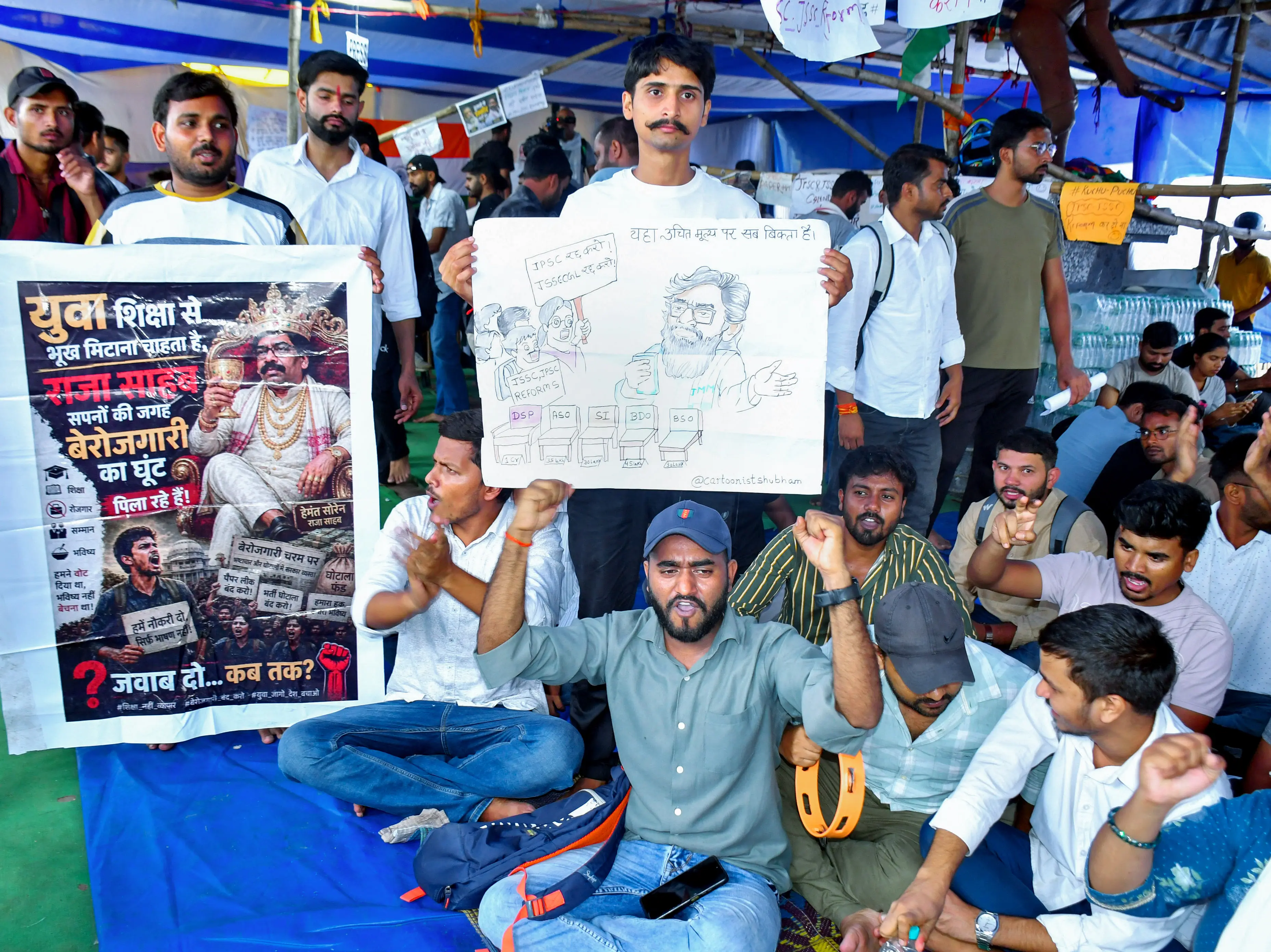)
‘We are ready to talk’: Jharkhand CM Hemant Soren reaches out to protesting students
)
Squadron Leader Bhawana Kanth scripts history as Indian Air Force gets its first woman ‘Top Gun’ pilot
)
Trump says Iranian school bombing photos could be AI-generated - 'I don’t think...'
)
Bluefly: Priyanka Chopra joins Russell Crowe for new sci-fi action thriller
)
'Dhoni Made Fleming Great': Panesar says ECB made the wrong choice for England Test coach
&im=FitAndFill=(700,400))
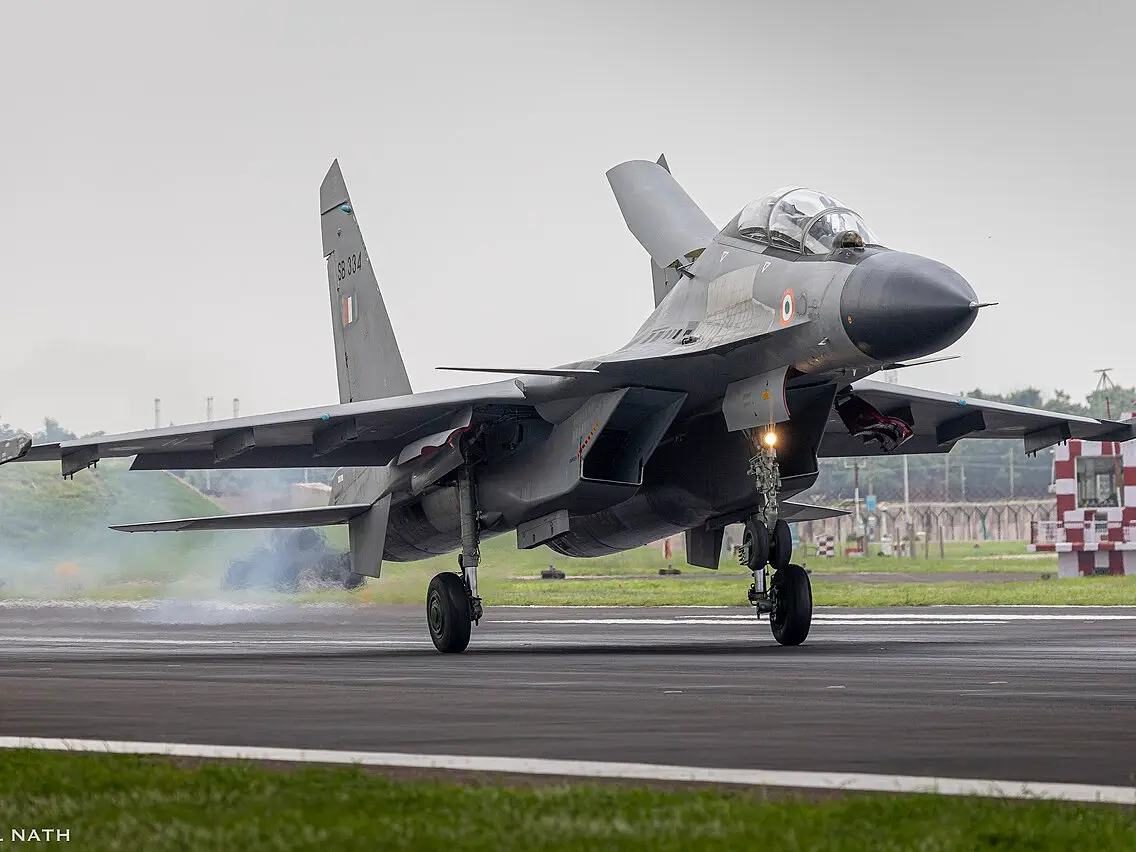
Why the Su-30MKI doesn't need external fuel tanks to fly vast distances
)
Born in the USA? Trump targets 'birth tourism' with new birthright citizenship executive order
)
Michael 2 plans revealed: Makers to start filming soon with THIS release window
)
OpenAI reportedly building donut-shaped ChatGPT smart speaker for homes
)
‘Certain munitions are unlimited, others...’: Did Trump admit some US weapons supplies were limited?
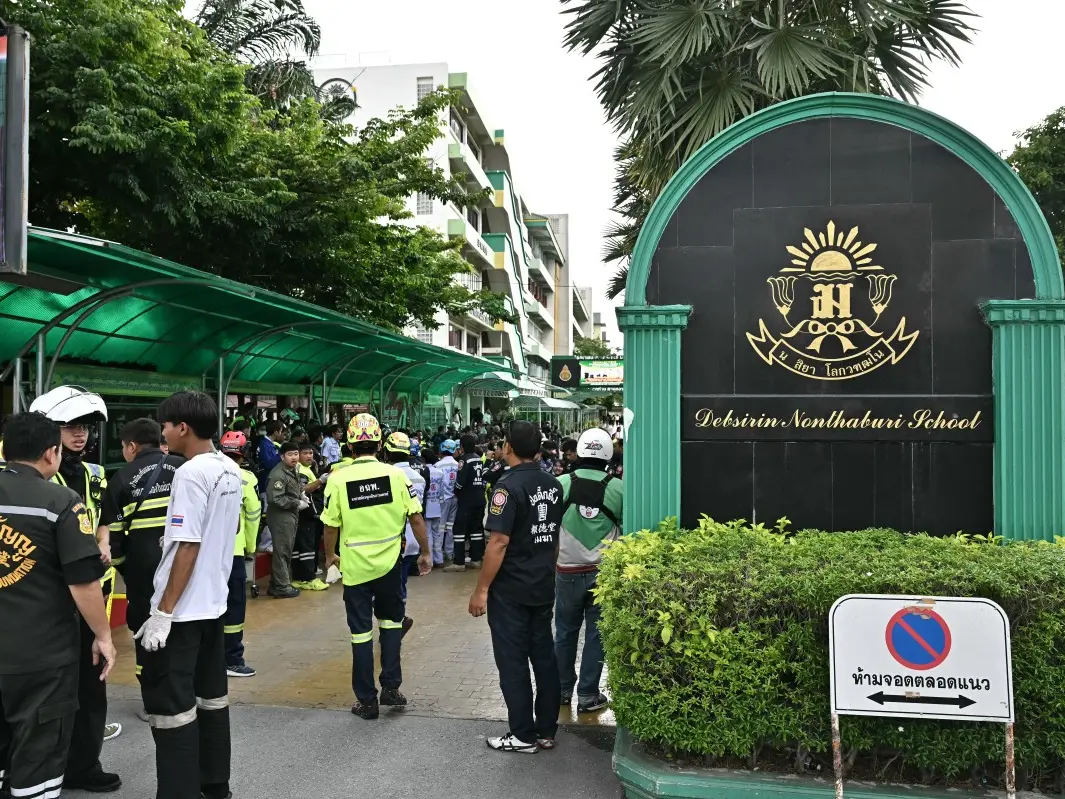)
At least 4 killed 15 injured in shooting at school near Bangkok
)
US may force more visa applicants to make social media accounts public under Trump's new plan
&im=FitAndFill=(700,400))
Why the Su-30MKI is one of the heaviest fighters ever built
Under the 7th CPC defence pay matrix, a Colonel draws basic pay at Level 13 (Rs. 1,30,600 per month); Brigadier, the next rank, is at the distinct Level 13A (Rs. 1,39,600). A counterpart IAS officer of equivalent seniority, extended NFFU will draw financial benefits at Level 14 (Joint Secretary) or Level 15 (Additional Secretary) without necessarily holding those functional posts. This disparity compounds over a career when factoring in the pension, which is calculated on the last pay drawn.
The inequity is compounded by the military’s service conditions. A Colonel retires at 54 and a Brigadier at 56, against a uniform civilian superannuation age of 60. Promotion to Colonel requires Selection Board clearance after at least 15 years of service; promotion to Brigadier (Level 13A) is a further competitive hurdle at approximately 25 years, with a small fraction of Colonels progressing. The majority of military officers thus face sustained pay stagnation at the precise career stage where NFFU would otherwise provide relief.
Grounds for priority extension to Armed Forces
Constitutional equity: Article 14 of the Constitution prohibits arbitrary discrimination. Withholding a structural benefit from a service where the qualifying condition, i.e., promotional stagnation, is more acutely present than in services that receive it cannot be justified on any rational basis.
The Supreme Court’s 2019 CAPF judgment affirmed that the 6th CPC had recommended NFFU precisely because stagnation made its denial inequitable; that reasoning applies with greater force to the armed forces. Pay Commissions have consistently assessed military officers as equivalent in status to civilian counterparts at corresponding grades; denial of NFFU contradicts this equivalence.
Officer retention: The Indian Army faces a persistent officer deficit. As of July 2024, it had 42,095 officers against a sanctioned strength of 50,538; a shortfall of 16.71%, as disclosed to the Parliamentary Standing Committee on Defence.
Across the three services, the shortfall at field officer levels exceeds 11,000. Pay and status concerns relative to civil services have been cited as a material driver of declining intake and rising premature release applications. NFFU extension would directly address this structural perception of inequality.
Morale and institutional cohesion: Military morale is substantially influenced by the officer’s perception of the state's reciprocal obligations. The 7th CPC itself observed that denial of NFFU undermined the status and morale of armed forces officers.
An officer who observes that CAPF counterparts receive financial upgradation that the armed forces are denied experiences a corrosive erosion of institutional faith; with measurable consequences for initiative, risk-taking and long-term effectiveness.
Policy recommendation and conclusion
Extension of NFFU to the armed forces does not require a new Pay Commission. The July 2019 Cabinet decision for CAPFs demonstrates that executive action via the Ministry of Defence in consultation with the Department of Expenditure is legally and administratively sufficient. A tailored framework substituting the IAS-empanelment trigger with service-seniority benchmarks appropriate to the military's cadre structure is feasible and implementable without awaiting the 8th CPC.
NFFU has been progressively extended over two decades - first to IPS and IFoS, then to 53 civilian services, and finally to CAPF officers. The Indian Armed Forces alone remain excluded, despite facing more demanding service conditions, steeper promotion pyramids and earlier retirement ages than every service now covered.
This is not a principled policy choice; it is an administrative failure with measurable costs to morale, retention, and national security. The case for priority extension is unambiguous. It is a correction whose time has long passed.
(Disclaimer: Views expressed by the author are his own and do not reflect the views of ZMCL.)