&imwidth=800&imheight=600&format=webp&quality=medium "PM Modi at 75: 10 major policy decisions that defined his decade in power")
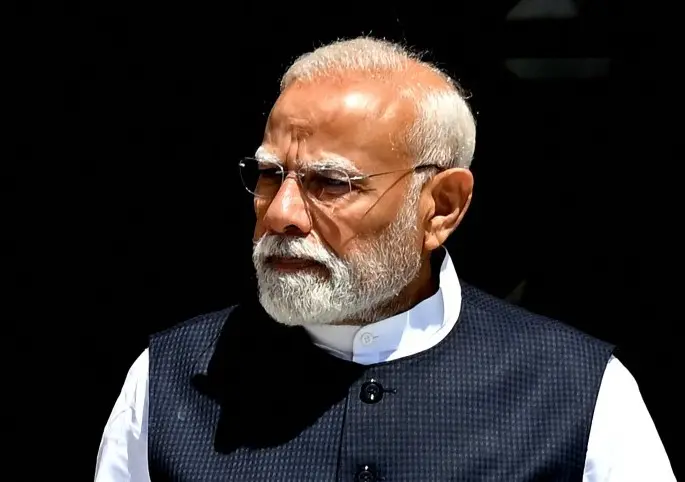
Prime Minister Narendra Modi turns 75 today. His longer than a decade tenure has been marked by many policy decisions. Some of his policy decisions have been touted as inclusive and transformative, while others have been divisive and pushed the country to the brink. Here is a list of 10 major ideological and policy decisions taken by Prime Minister Narendra Modi over the last 10 years.
Read Also: Prime Minister Modi’s international travel: Complete list of Prime Ministerial visits abroad
1. Demonetisation

On November 8, 2016, the Union Government under PM Modi decided to demonetise high-value denominations of 500 and 1000. The rationale was to tackle counterfeiting and black money. However, 99 per cent of the demonetised currency was back to the banking system. So, it raises questions about the proper motive behind it. On the other hand, this increased the deposits of the bank and accelerated the adoption of digital payment.
The decision resulted in massive queues in ATMs and banks, a sort of manufactured crisis. Cash shortages hurt small businesses. Many called it political optics to portray himself as a fearless leader. The economic disruption resulted in nearly 100 deaths, as reported by platforms like Indian Express, Scroll and The Hindu.
2. Goods and Services Tax
A reform of indirect taxes was meant to simplify taxation. It made India a single tax market, replacing multiple state and central taxes, and simplified logistics.
But at the introductory level, it hurt small businesses with the burden of complex compliance and multiple slabs. However, subsequent revisions have simplified taxation and compliance procedures.
Trending Stories
)
US vs China over South China Sea: Washington backs Philippines, Beijing hits back
)
Bigg Boss 20: Isha Rikhi evicted after three weeks in Salman Khan’s show
)
Musk plans to more than double xAI's chips to over 1.2 million Nvidia GPUs by year-end
)
After JU, clash erupts at SRFTI: BJP’s ‘Dimagi Naxal’ jibe sparks political firestorm after students protest RSS-linked event
)
‘Anti-social elements spreading false rumours’: LPU issues statement amid massive unrest over alleged rape
)
LPU students go on rampage, vandalise campus amid widespread protest: What's happening
)
Trump asked Xi to pressure Iran. China did not say yes — here’s what Beijing wants
)
US Treasury Secretary Scott Bessent hails global crackdown on Iranian banks and airlines
)
An OpenAI agent escaped its locked test cage again, by hiding questions in DNS lookups
)
'Our video was trimmed': LPU girls who featured in rape-denial video make U-turn
)
3 males killed, four others injured in shooting after fight at strip club in Detroit
)
'Victory for low-budget consumers': Raghav Chadha hails 30-day telecom recharge rules
)
Claude rebuilt the 1989 game 'Prince of Persia' by reusing the original's own code
)
Beyond metros: How Tier-2 and Tier-3 cities could drive India’s next AI wave
)
Tesla builds first Cybertruck with its own refined lithium: Elon Musk's $1 billion Texas bet pays off
)
IndiGo flight suffers tail strike in Bengaluru while landing; DGCA to probe incident
)
The US and China set up an AI 'red telephone', but skipped the rulebook
)
‘Terror suspects arrested near UK air base were looking to do big damage’: Trump
)
Russian envoy claims US tactics to contain India were revealed in ‘Freudian slip’
)
IND vs WI 1st ODI: Kohli breaks Sachin's most runs in one country record with unbeaten 139 as India thump West Indies by 8 wickets
)
Researchers rebuilt exactly how 700 AI agents hacked Hugging Face: a 900-link chain trick
)
‘Olympic inclusion is our major target’: WPA President Ishaun Singh on pool’s global ambitions
)
Nations League: Spain sink England at Wembley; Modric shines for Croatia
)
Why has Iran released no proof of life of Mojtaba Khamenei? Araghchi reveals...
)
'What kind of confession is this?': Pakistan PM Shehbaz Sharif’s 'terrorists would be roaming New York' remark goes viral, raises alarm online. Watch
)
South Korea demands apology from Ukraine over North Korean prisoners' transfer
)
Beyond BrahMos: India targets Rs 50,000 crore in defence exports with unmatched price edge
)
Sri Lankan Tamil migrant worker gets death sentence in Saudi Arabia, help sought from India
)
Muslim marriage cannot shield sex with minor wife from prosecution under POCSO: Delhi HC
)
'Can't help but draw painful parallels to Nirbhaya case': SC on latest incidents of rape cases in Delhi-NCR
)
99.9% more powerful - Scientists find boy who can recall memories from just 3 months of age
)
'FIRST LOOK from inside Noah’s Ark': Researchers share video from inside mysterious mound in Turkey
)
UNSC reform momentum grows: Russia, Portugal, Mauritius push for India's permanent seat bid
)
8 US marines injured in Iranian missile attack on vessel in Strait of Hormuz: Report
&im=FitAndFill=(700,400))
New OTT releases this week (September 28-October 4, 2026): Dupahiya 2, Pooja Meri Jaan, Ohh My Dog- 5 titles coming on Netflix, Prime Video and more
)
Afghanistan says 28 fighters killed in clash near Pakistan border, Islamabad denies
)
Ceuta migrant crisis: Protesters take to streets as Spain grapples with migrant challenge
)
LPU suspend classes, postpones exams as violence escalates over rape claims: What's happening
)
New York City wants a 'kill switch' on every AI, and will pay whistleblowers who report violations
3. Abrogation of Article 370
This had been in the manifesto of the BJP long before the 2014 General Assembly election. It ended Jammu and Kashmir, special constitutional status. This created a stronger central authority and showed pure determination from the Union Government to solve strategic and geopolitical challenges in the disputed region. However, the security forces and the government were accused by rights groups of abusing power, human rights concerns, neglecting the federal structure, the spirit of India's accession agreements, the autonomy of Kashmir's assembly, mass lockdown, blackouts and political detention.
Read Also: 'Hope PM resigns tomorrow': Congress leader Udit Raj renews 75-year rule debate as PM Modi turns 75
4. Citizenship Amendment Act
The act sparked a nationwide uprising against the Indian Government. It made religion a basis for becoming an Indian citizen, a decision challenging constitutional values of secularism. It offered citizenship to Hindu, Sikh, Jain, Buddhist, Christian, and Parsi migrants from Pakistan, Bangladesh, and Afghanistan. It was protested across the country, which led to violence, riots. Even though the rules were finalised in 2024. Several petitions are still pending in SC about its implementation. However, the act is in force and considered to be the most polarising and divisive move of Modi's tenure.
5. Make In India
This was a significant move by the government to boost Indian Industries. It pushed for self-reliance in manufacturing in sectors like electronics, defence, and IT services. The focus was on becoming an export-oriented economy. It attracted foreign investments and portrayed India as an attractive destination for investments. The ease of compliance boosted FDI inflows and supported growth in the IT sector. However, India faces challenges in the manufacturing sector, a lack of investment in R&D being one. Many critics call Make in India a promotional campaign, and the promises of job creation did not materialise.
6. National Education Policy
It was a holistic and learner-centric overhaul of the education system. It was touted as inclusive for attempting to bridge the gap between academia and industry by introducing multidisciplinary learning. However, the implementation had been questioned due to significant funding cuts and a risk of centralisation.
7. Farm laws
Introduced in 2020 and later repealed in 2021 after massive protests from farmers. It was aimed at liberalising agricultural markets. But it faced pushback from farmers due to the probability of monopoly by big conglomerates. While on paper, the policy tried to help farmers by providing them opportunity to sell outside the mandis and attract private investment. But farmers were afraid of losing MSP and potential power imbalances with the corporate sector that would make them vulnerable.
8. Electoral Bonds
Introduced by the BJP in 2017 and projected as a tool for transparent political funding. However, several reports criticised it for the opacity in the funding of political parties. It was later struck down by the Supreme Court in 2024 for violating the right to information under Article 19(1)(a). The court called out anonymous political donationsfor being unconstitutional.
9. Gati Shakti or Infrastructure development
It tried to rapidly improve the infrastructure of India, like rail, road, ports, and airports, by bringing together 44 central ministries and 36 states and union territories. It employs Integrated planning, prioritisation, and optimisation using GIS platforms and multiple data layers to give a proper idea of demographic challenges and the existing infrastructure. In the last decade, the National Highway network of India expanded from 91,287 km to 1,46,145 km. In railways, 31,000 km of new tracks have been laid, and while in civil aviation, the number of operational airports in India increased from 74 in 2014 to 157 by September 2024.
10. Digitalisation
This is one of the major success stories of the decade-long tenure of Narendra Modi. It tried to achieve financial inclusion even for people on the other side of the digital divide. The trinity of Jan Dhan, Aadhaar and Mobile had tried to include the underprivileged section in the government benefits of direct money transfer and other scheme-related benefits. However, the scale of implementation is debated in the media circles. In short, digitalisation laid the groundwork for e-governance, digital literacy, and online services.