NALSAR row: BCI chairman Mishra apologises after backlash over advocate registration order

&imwidth=600&imheight=450&format=webp&quality=medium "NALSAR row: BCI chairman Mishra apologises after backlash over advocate registration order")
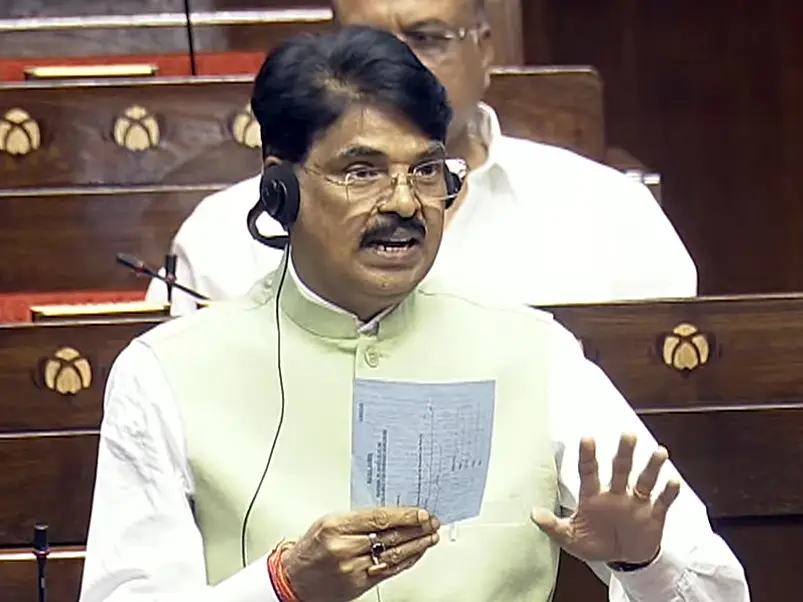
Bar Council of India (BCI) chairman and BJP MP Manan Kumar Mishra speaks in the Rajya Sabha during the Monsoon session of Parliament. Photograph: (ANI)
BCI chairman Manan Kumar Mishra expressed regret and apologised to law students amid backlash over the withdrawn directive against NALSAR graduates, while calling for dialogue and respect for students' views.
Bar Council of India (BCI) chairman Manan Kumar Mishra on Saturday expressed regret over the “concern and anguish” among a section of law students following the controversy surrounding NALSAR University of Law.
The controversy began after the BCI directed state units not to register 2026 graduates of Hyderabad's NALSAR as advocates over their objection to Chief Justice of India Surya Kant attending their convocation. The BCI later withdrew the order.
The directive triggered widespread criticism, with the CJI also rebuking the BCI on Friday. He said the events at NALSAR were “a dialogue between students and me”.
Mishra, who is also a BJP Rajya Sabha member, said students' concerns must receive attention whenever they feel aggrieved.
He said, “If anything connected with the present controversy, any of my words, or letter, has hurt the feelings of our law students, I sincerely regret and apologise for the same.”
“An expression of regret is not a matter of prestige or ego”, and described it as “simply an acknowledgement that the feelings and concerns of our students matter,” he added.
Trending Stories
)
)
)
)
)
)
)
)
)
)
)
)
)
)
)
)
)
)
)
)
)
)
)
)
)
)
)
)
)
)
)
)
)
)
&im=FitAndFill=(700,400))
)
)
)
)
The NALSAR row
The controversy erupted on August 13 when Mishra directed state Bar Councils to prevent NALSAR's 2026 graduating class from enrolling as advocates.
He also asked the university's Vice Chancellor to conduct an inquiry into students, faculty members and alumni who had opposed the CJI's proposed presence as chief guest at the convocation.
A later modified letter allowed the graduates to enrol but retained the inquiry and alleged that a “handful of teachers and outsiders” had “instigated innocent students”.
Following strong public criticism, Mishra announced on X that all proceedings against NALSAR had been cancelled.
Earlier on Saturday, more than 700 students and alumni of the National Law School of India University (NLSIU), Bengaluru, expressed support for NALSAR students.
The NLSIU statement demanded an unconditional apology from the BCI to NALSAR students and faculty over what it called an attempt to restrict their freedom of speech and expression.
On the convocation issue, Mishra urged students to make their own choices without pressure. “No student should be compelled to attend, and no student should feel compelled to abstain,” he said,
He also called for the dispute to be resolved through dialogue and mutual respect instead of taking on a “political or extraneous colour through outside influence”.
Mishra urged institutions to respect students' independent thinking and provide space for “dialogue and moving forward without bitterness”.