Mamata Banerjee refuses to resign from West Bengal's top post: Is it constitutionally valid for CM to stay on?

&imwidth=600&imheight=450&format=webp&quality=medium "Mamata Banerjee refuses to resign from West Bengal's top post: Is it constitutionally valid for CM to stay on?")
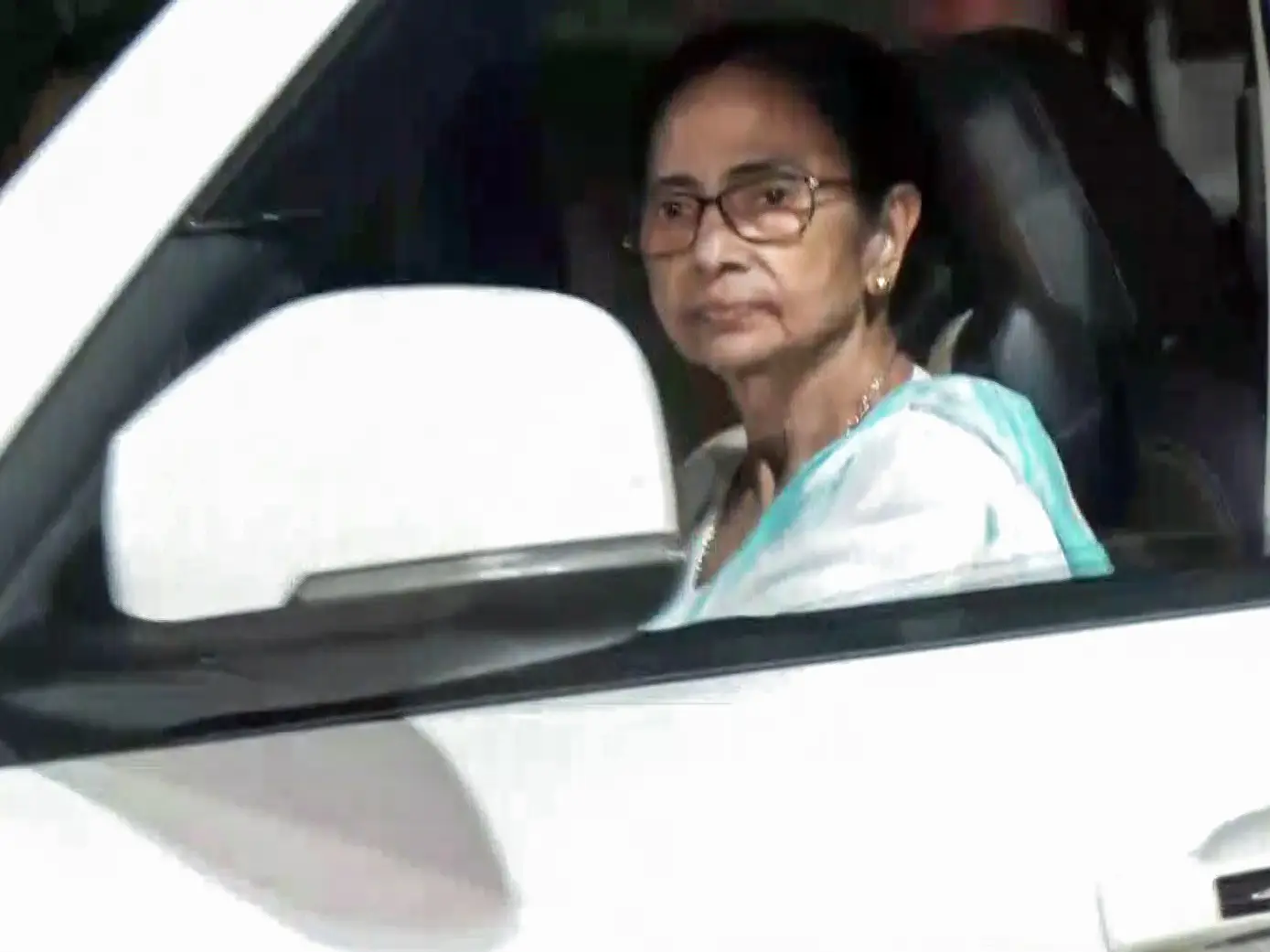
Trinamool Congress (TMC) chief Mamata Banerjee Photograph: (ANI)
After TMC’s defeat in the 2026 West Bengal polls, Mamata Banerjee refused to resign as Chief Minister, alleging unfair elections. However, under constitutional convention and Article 164, a CM must prove majority or step down, leaving the Governor to decide the next course.
A day after the Trinamool Congress (TMC) party chief Mamata Banerjee refused to resign from the post of Chief Minister, claiming that her party has not lost and elections had not been “fair", all spotlight is on the powers of a CM in the Indian Constitution. Banerjee alleged Prime Minister Narendra Modi and Home Minister Amit Shah were “directly interfering” in the West Bengal elections, and Chief Election Commissioner Gyanesh Kumar was the “villain of this election”. BJP has severely criticised Mamata Banerjee’s statement saying whether she resigns or not, she would not be the member of the Assembly as the present assembly ends on May 7. But can a state CM refuse to resign after losing?
What Mamata said?
West Bengal Chief Minister Mamata Banerjee has refused to step down from the post of Chief Minister and declared that she would not resign despite latest lection debacle faced by TMC. Addressing the press, Mamata Banerjee on May 5 said, “I will not resign, I did not lose, I will not go to Raj Bhavan...The question doesn’t arise. No. Now, I also want to say that we didn’t lose the election. It is their attempt to defeat us. Officially, through the Election Commission, they can defeat us, but morally, we won the election." She directly targeted the Chief Election Commissioner, alleging bias. “The CEC became the villain of this election, to loot the democratic rights of the people and to loot the EVM,” she said. Raising doubts over electronic voting machines, she questioned their functioning. “Can you tell me that after voting, the EVM has an 80–90% charge? How is it possible?” she asked.
How BJP reacted?
BJP leader Bimal Shankar Nandi, while speaking to Akashvani, said that Mamata will not succeed in creating stalemate and making mockery of democracy. He stressed that there are provisions in our constitution to tackle such unwanted situation. On Mamata’s allegation that BJP is taking control and capturing their party offices in various places Shri Nanda said it is a blatant lie.
Trending Stories
&im=FitAndFill=(700,400))
)
)
)
)
)
)
)
)
)
)
)
)
)
)
&im=FitAndFill=(700,400))
)
)
)
)
)
)
)
)
)
)
)
)
)
&im=FitAndFill=(700,400))
Can a CM refuse to resign after losing?
Under India’s constitutional framework, the continuation of a Chief Minister is guided largely by convention rather than a step-by-step legal rulebook. The core principle is political legitimacy, not just technical tenure. Political legitimacy is decided according to the mandate the leader receives during the polls. A Chief Minister must enjoy the confidence of the State Legislative Assembly. Once election results show that the incumbent no longer has majority support, constitutional convention requires the Chief Minister to resign and submit the Council of Ministers’ resignation to the Governor.
If a Chief Minister does not resign voluntarily, the Governor is empowered to intervene. Under Article 164(1), ministers hold office “during the pleasure of the Governor,” which allows action if majority support is lost. In such a scenario, the Governor can invite the leader of the majority party or coalition to form the government, or ask a claimant to prove their majority through a floor test in the Assembly.
In West Bengal, results indicate that the Trinamool Congress no longer commands a majority. If Mamata Banerjee refuses to resign, the Governor can assess the numbers based on final tallies and party positions. If it is clear that the government lacks majority support, the Governor can withdraw “pleasure” under Article 164(1) and dismiss the Council of Ministers, paving the way for a new government.

