

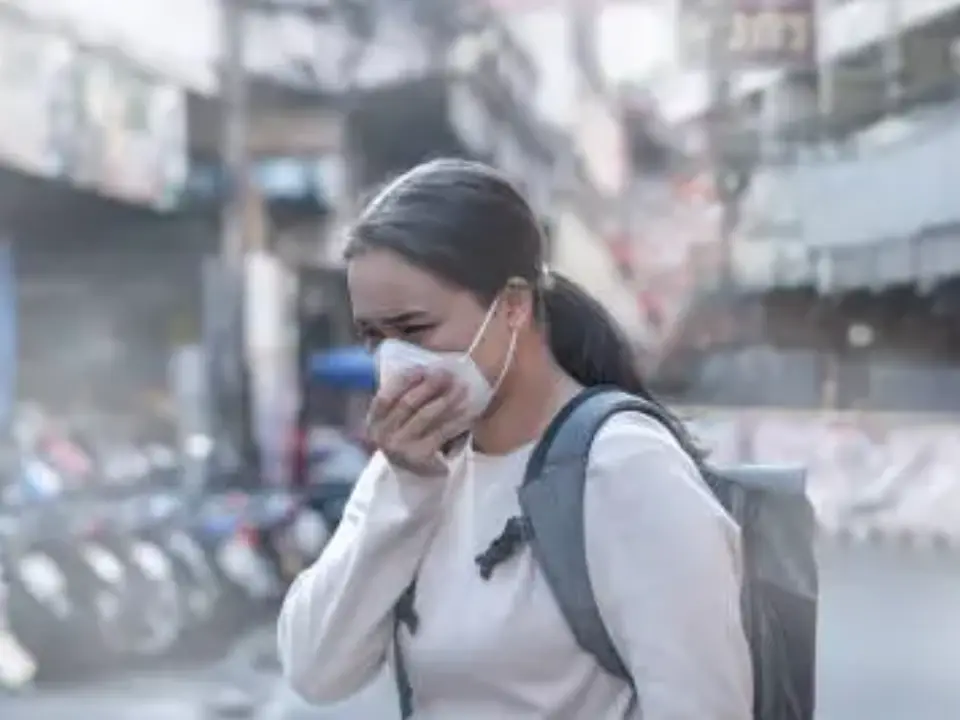
&imwidth=800&imheight=600&format=webp&quality=medium "Smog alert! Doctors explain the truth about masks, air purifiers and indoor plants ahead of Diwali")
Diwali is almost here, and this is the time to light up our homes and celebrate with loved ones. But the days following the festival can leave many cities struggling with hazy skies, rising pollution levels and air that is difficult to breathe. Firecrackers add to the problem, alongside the falling temperatures, vehicle emissions, construction dust and other sources of pollution.
For many people, the effects begin with burning eyes, a scratchy throat or an irritating cough. However, the impact of polluted air is not always immediately noticeable and can extend beyond these initial symptoms. To understand the health risks associated with air pollution and how to stay safe during smog season, WION reached out to doctors, who explain its effects on the body and share simple ways to protect yourself and your family.
How does smog affect your body?
Dr Neerav Tyagi, HOD of Pulmonology at Manipal Hospital, Ghaziabad, explains that smog is a combination of fog and smoke, with pollution from sources such as crop burning, firecrackers, construction activities and industrial waste contributing to the problem. The health consequences, he warns, can extend well beyond a seasonal cough or breathing difficulty.
Air pollution does not affect only the lungs. Fine particulate matter and harmful gases can enter the respiratory system, with some tiny particles passing into the bloodstream and affecting other parts of the body.
Trending Stories
&imwidth=180&imheight=135&format=webp&quality=medium)
Brendan Taylor overtakes Andy Flower to become Zimbabwe’s leading ODI run-scorer
&imwidth=180&imheight=135&format=webp&quality=medium)
Pakistan to head IMF, World Bank boards after 74 years amid persistent economic crisis
&imwidth=180&imheight=135&format=webp&quality=medium)
"The scariest thing was"... flydubai Captain Smit Machchhar recalls cockpit fight and how he thought of his son and daughter
&imwidth=180&imheight=135&format=webp&quality=medium)
'We are not sitting in ivory towers, we are aware': SC issues notice to Rahul Gandhi, Akhilesh Yadav
&imwidth=180&imheight=135&format=webp&quality=medium)
6-year-old among 2 killed as vehicle crashes into youth soccer game in US
&imwidth=180&imheight=135&format=webp&quality=medium)
‘I have very severe problems’: Trump fuels health speculation during address to firefighters
&imwidth=180&imheight=135&format=webp&quality=medium)
Lizard people? Ex-US Army sniper claims soldier killed by 'reptilian beings' in battle near Area 51
&imwidth=180&imheight=135&format=webp&quality=medium)
Ankita Bhandari murder case: Parents meet CBI, seek impartial investigation
&imwidth=180&imheight=135&format=webp&quality=medium)
Bangladesh resort fire kills 10 tourists, including a 5-year-old child
&imwidth=180&imheight=135&format=webp&quality=medium)
At least 19 killed in stampede-like situation after part of Kolkata Durga Puja pandal collapses
&imwidth=180&imheight=135&format=webp&quality=medium)
Rajinikanth remembers late composer Deva, recalls his kindness and musical legacy
&imwidth=180&imheight=135&format=webp&quality=medium)
Rain washes out 5th T20I as India-West Indies share honours 2-2
&imwidth=180&imheight=135&format=webp&quality=medium)
'Reason UN has lost credibility': Amid SIR protests India hits out at report alleging 'youth repression'
&imwidth=180&imheight=135&format=webp&quality=medium)
Pope Leo XIV discharged from hospital in Rome after cancer surgery
&imwidth=180&imheight=135&format=webp&quality=medium)
‘My president, I mean my husband’: Trump's new press secretary Katie Zacharia's first briefing goes off the rails in 14 minutes
&imwidth=180&imheight=135&format=webp&quality=medium)
China responds to Trump's Press Secretary Katie Zacharia after toilet remark: 'Visit China more often'
&imwidth=180&imheight=135&format=webp&quality=medium)
UAE agrees with Saudi Arabia to rejoin Yemen fight as Houthi strikes rattle Riyadh
&imwidth=180&imheight=135&format=webp&quality=medium)
COVID-19 pandemic led to increase in divorce cases, observes Madras High Court
&imwidth=180&imheight=135&format=webp&quality=medium)
'Let’s go to France, no riots, no revolutions': Trump mocks France protests, Vance blames it on immigration
&imwidth=180&imheight=135&format=webp&quality=medium)
At least 400 arrested as protests turn violent in France; PM blames far left
&imwidth=180&imheight=135&format=webp&quality=medium)
Explosion and fire at military base in Canada's Alberta, casualties feared
&imwidth=180&imheight=135&format=webp&quality=medium)
WATCH | iPhones, luxury perfumes floating in Hormuz? Iranian fishermen make bizarre discovery
&imwidth=180&imheight=135&format=webp&quality=medium)
Two students die, 14 injured at Dandiya event in Hyderabad: Know what happened? VIDEO
&imwidth=180&imheight=135&format=webp&quality=medium)
'keep telling him you will get your opportunities': Iyer opens up on conversations with Sooryavanshi
&imwidth=180&imheight=135&format=webp&quality=medium)
WATCH | Zelensky gives cheeky response when asked if Trump is making him a scapegoat ahead of US midterms
&imwidth=180&imheight=135&format=webp&quality=medium)
No Ravindra Jadeja, Yashasvi Jaiswal in India’s 2027 ODI World Cup plans: Report
&imwidth=180&imheight=135&format=webp&quality=medium)
Kolkata Durga Puja stampede: PM Modi announces Rs 2 lakh ex-gratia for kin of dead, Amit Shah to visit injured
&imwidth=180&imheight=135&format=webp&quality=medium)
Taylor Swift performs at star-studded Academy Museum Gala 2026 in stunning Dior ensemble
&imwidth=180&imheight=135&format=webp&quality=medium)
Anirudh Ravichander-Kavya Maran wedding: Telangana CM reveals Chennai reception date
&im=FitAndFill=(700,400)&imwidth=180&imheight=135&format=webp&quality=medium)
Inside Tesla's Roadster: 10 features of Elon Musk's 'flying car' that push the limits of electric vehicles | In Pics
&imwidth=180&imheight=135&format=webp&quality=medium)
Ranbir Kapoor visits North Bombay Durga Puja pandal, offers prayers
&imwidth=180&imheight=135&format=webp&quality=medium)
One species, two lineages: Why Sri Lanka’s spectacled cobra differs genetically from Indian variant
&imwidth=180&imheight=135&format=webp&quality=medium)
Oil tanker carrying over 2M barrels of crude hits mine in Strait of Hormuz, catches fire, says Iran
&imwidth=180&imheight=135&format=webp&quality=medium)
2 injured in plane crash on busy California highway
&imwidth=180&imheight=135&format=webp&quality=medium)
'It's a joy to see the makers bring it on such a grand scale': SS Rajamouli on Ramayana
&imwidth=180&imheight=135&format=webp&quality=medium)
13 dead after truck mows down devotees, crashes into temple gate in Madhya Pradesh's Gwalior
&imwidth=180&imheight=135&format=webp&quality=medium)
IND-W vs ZIM-W, 2nd T20I: When and where to watch live streaming in India?
&imwidth=180&imheight=135&format=webp&quality=medium)
Kolkata puja pandal stampede: 7 arrested, section 163 restrictions imposed in north Kolkata
Dr Tyagi explains that the effects can build up gradually. Frequent headaches, burning eyes, throat irritation and disturbed sleep may develop over time and are often dismissed as minor discomforts.
Long-term exposure to polluted air is associated with a number of serious health problems, including asthma, chronic bronchitis, chronic obstructive pulmonary disease (COPD), lung cancer, heart disease and stroke. Research has also linked air pollution to kidney problems and an increased risk of cognitive decline, including dementia.
The damage may not always be obvious in the early stages, which is why reducing exposure matters even when you feel healthy.
Dr Dinraj T V, Consultant Thoracic Surgeon at Narayana Health City, Bengaluru, says the early signs of smog exposure can include eye and throat irritation, coughing, breathlessness, chest tightness and unusual fatigue.
“People with respiratory or cardiovascular conditions may notice their symptoms worsening, even after brief exposure. Persistent coughing or difficulty breathing should not be ignored,” he says.
Heart, brain and kidneys also need protection
The lungs are often the first organs people associate with air pollution, but the health risks extend much further.
According to Dr Tyagi, polluted air can affect the brain, potentially contributing to strokes, memory problems and dementia in older age. The eyes, nose and throat may experience redness, swelling and itching, while prolonged exposure can also affect kidney function and increase the risk of chronic kidney disease.
Air pollution can be especially concerning for the heart. Fine particles entering the bloodstream can trigger inflammation, raise blood pressure and place additional strain on the cardiovascular system.
Over time, polluted air can damage blood vessels, contribute to the narrowing of arteries and accelerate the buildup of fatty deposits. If a blood clot blocks a blood vessel supplying the heart or brain, it can trigger a heart attack or stroke. Air pollution may also interfere with the heart's electrical activity, increasing the risk of an irregular heartbeat.
Dr Dinraj stresses, "People with existing heart conditions should limit outdoor activity during periods of high pollution, avoid strenuous exercise outdoors, use a well-fitted N95 mask when outside, and take prescribed medication regularly. They should monitor symptoms closely and seek medical advice if their condition worsens."
Pregnant women and children also need particular attention. Dr Tyagi notes that exposure to polluted air is associated with preterm birth, low birth weight and impaired lung growth in children.
Is a morning walk safe during smog season?
A morning walk or jog may be part of your daily routine, but it is worth reconsidering outdoor exercise when pollution levels are high.
Pollution can remain trapped close to the ground, while traffic and weather conditions may contribute to poor air quality.
Dr Rajesh Kumar Gupta, Director of the Yashoda Institute of Respiratory Medicine and Interventional Pulmonology at Yashoda Medicity, explains, "The result is irritation of the airways and symptom aggravation, especially in those with asthma, COPD, or other lung conditions.”
His advice is to check the Air Quality Index (AQI) before heading outdoors and avoid outdoor exercise when the air quality is poor or worse. On heavily polluted days, indoor exercise may be a better option.
Should you keep your windows open in the morning?
Opening windows is usually considered a simple way to freshen up a home. During smog season, however, the timing matters.
Dr Harish Kumar Verma, Director of Pulmonary Medicine and Critical Care at ShardaCare – Healthcity, cautions, "Opening the windows when the air is bad can bring fine particles into your homes and lungs.”
Therefore, check local AQI readings and open windows when outdoor air quality improves. Keep windows and doors closed as much as practical during periods of high pollution.
Additionally, smoking, burning candles or mosquito coils, and cooking fumes can also worsen the air inside your home.
Using an exhaust fan that vents outdoors, where appropriate, and wiping surfaces with a damp cloth can help reduce indoor pollutants and dust.
Do air purifiers really help?
Air purifiers can be helpful during the smog season. However, choosing the right device and using it correctly are important.
“A HEPA filter air purifier with the right size for the room can clean the air of particulate matter like PM2.5 in a closed room,” said Dr Gupta. Its effectiveness depends on factors such as room size, clean air delivery rate (CADR), filter condition and the amount of outdoor air entering the space.
Dr Verma also recommends a good-quality HEPA air purifier for bedrooms and other commonly used areas. “It's important to remember that indoor plants are great to have but they're not a solution to indoor air pollution.”
Although some laboratory studies suggest plants can absorb certain airborne pollutants, their effect is too small to meaningfully clean the air in an average home. Overwatering plants can also encourage mould growth, which may trigger allergies or asthma in some people.
Air purifiers cannot remove every gaseous pollutant, and they do not make a home completely pollution-free. Keep doors and windows closed when outdoor air quality is poor.
Can a cloth mask protect you from smog?
Not all masks offer the same level of protection against air pollution.
Dr Gupta explains that ordinary cloth masks and surgical masks do little to filter out the tiniest airborne particles, including PM2.5, which can travel deep into the lungs.
“A tight-fitting N95 (or similar) respirator worn over your nose and mouth and genuine can be effective at filtering PM2.5.”
A respirator must fit properly to work effectively. Gaps around the face, an uncovered nose or mouth, and facial hair interfering with the seal can reduce its effectiveness.
Even a well-fitting N95 mask does not provide complete protection from pollution. Dr Gupta advises limiting outdoor exposure, especially for people with asthma, COPD or existing heart conditions.
Tips to stay healthy from Diwali’s smog
Daily AQI Readings
Check the local Air Quality Index each day, especially before traveling, exercising or spending time outdoors. When pollution levels are poor or worse, reduce unnecessary outdoor activity and shift workouts indoors.
Reduce indoor pollution
Keep windows and doors closed when outdoor air quality is poor. Use a properly sized HEPA air purifier in frequently used rooms, avoid smoking indoors and minimise pollution from candles, mosquito coils and cooking fumes. Ventilate your home when outdoor air quality improves.
Wear the right mask when outdoors
If you must go outside during periods of high pollution, a genuine, well-fitting N95 or equivalent respirator can help filter fine particles. Regular cloth and surgical masks do not effectively block PM2.5.Even with a mask on, it’s still important to reduce exposure.”
For those with pre-existing health conditions
People with asthma, COPD, heart disease or other chronic conditions should continue to take their prescribed medicines and keep their inhalers handy, if they use them. Avoid strenuous outdoor activity when pollution is high and seek medical advice if symptoms worsen.
When to seek medical advice
Do not dismiss persistent coughing, increasing breathlessness or chest discomfort as normal effects of smog. If breathlessness persists, the cough worsens, or chest discomfort develops, medical attention should be sought, Dr Dinraj said. If you have sudden chest pain, severe difficulty breathing, dizziness or fainting, get medical help immediately. Sudden weakness can also signal a serious medical emergency.

