
&imwidth=800&imheight=600&format=webp&quality=medium "US recession risk declines as inflation cools and jobs rise, says WSJ survey")
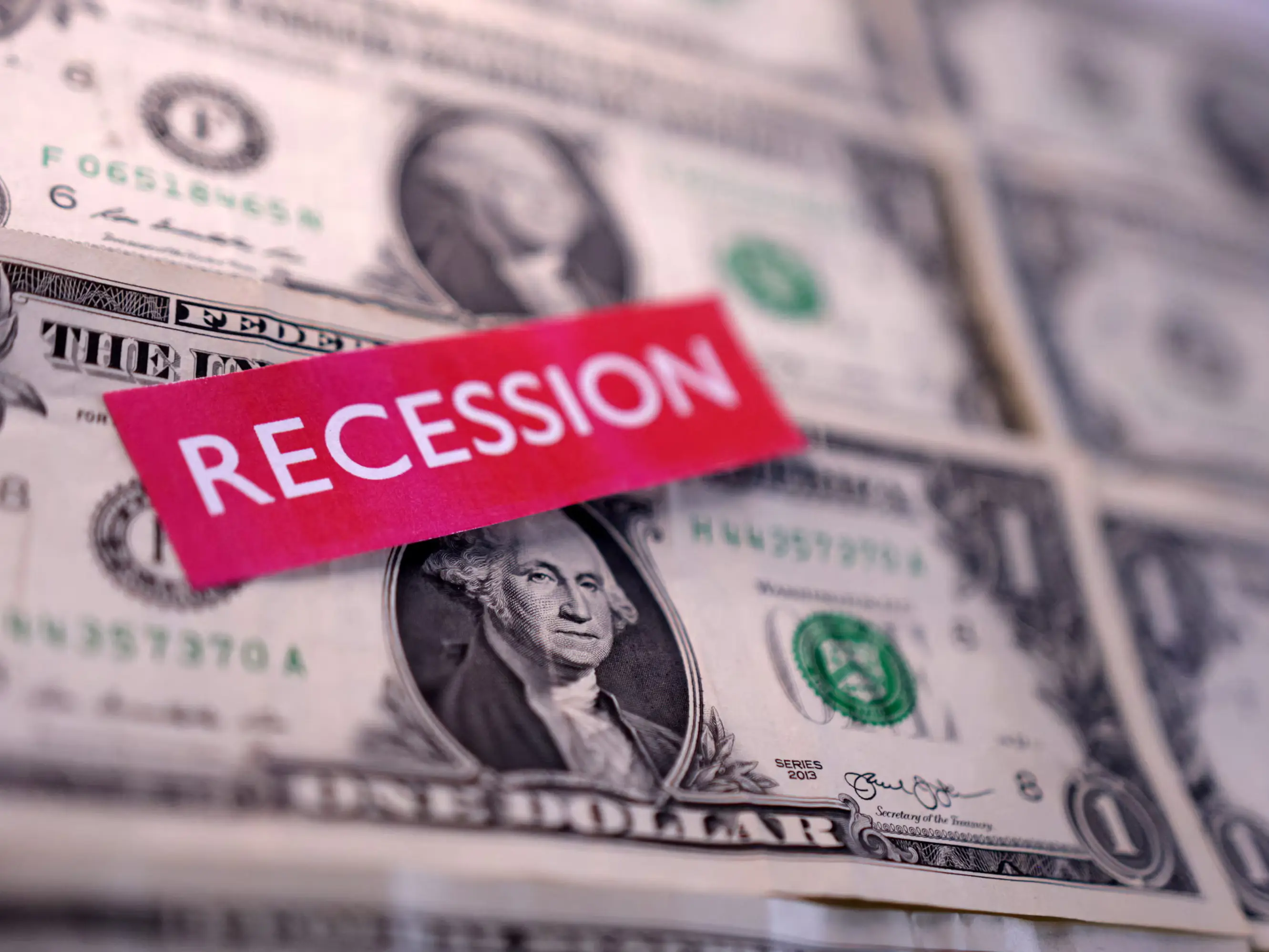
The United States economy appears more resilient than expected, with economists trimming recession risks and projecting stronger job growth and cooler inflation, even as President Donald Trump’s aggressive tariff threats loom. That’s the key takeaway from The Wall Street Journal’s latest quarterly survey of professional forecasters, published this week. According to the Wall Street Journal, economists surveyed between July 3 and July 8 now see a 33 per cent chance of the US falling into recession within the next 12 months. That’s down sharply from 45 per cent in April, though still higher than the 22 per cent probability they had projected back in January.
The improved outlook, noted the Journal, comes despite persistent uncertainty around Trump’s sweeping trade moves. In recent days, the President threatened major new tariffs on key partners such as the European Union, Canada, Mexico, and Brazil starting August 1. Growth projections improve despite tariff threats The survey of 69 economists, ranging from Wall Street banks to universities and consultancies found that inflation-adjusted GDP is now expected to expand by 1 per cent in the fourth quarter compared to a year earlier. That’s up from April’s 0.8 per cent forecast, though still well below the expectations at the start of 2025.
Many economists credited the rebound in mood to Trump’s earlier decision to pause some of his harshest tariff threats this spring, which had caused widespread market anxiety. However, whether this optimism lasts remains an open question given the renewed tariff announcement. “Despite numerous headwinds, the US economy is proving stubbornly resilient,” Chad Moutray, chief economist at the National Restaurant Association, told The Wall Street Journal. “Consumers are continuing to spend, but the mood has clearly shifted from bold to careful.”

Jobs market beats expectations
Labour market data has also surprised on the upside. The survey noted that job growth averaged 150,000 per month over the past quarter, stronger than forecasters had expected back in April. The unemployment rate dipped to 4.1 per cent in June from 4.2 per cent in May, staying within its recent range.
Weekly unemployment claims have remained low, showing no clear signs of mass layoffs. Meanwhile, consumer and business sentiment, which plunged earlier this year, appears to have stabilised. The S&P 500 even notched a record high this month.
Trending Stories
)
No Pandya as Auqib Nabi earns maiden ODI call-up; Mayank returns for WI T20Is| check full squads
)
Trump praises India’s Opium crackdown, hails anti-drug efforts
)
Sydney Sweeney defends provocative ad choice, the internet is still not impressed
)
Former India player Diana Edulji wants Smriti Mandhana to replace Harman as skipper at the earliest
)
Trump calls Canada-EU associate membership plan ‘laughable’ and threatens 'very serious tariffs'
)
Protests erupt over migrant housing plan in Piddington
)
Shahzad Bhatti Network declared terrorist organisation under UAPA: Govt order
)
Europe wants a common playbook for security threats, seeks security beyond NATO
)
Formula One reveals the 2027 race calendar; Monaco to host sprint race for the first time
)
All Indian goods to get duty-free access to New Zealand
)
Bigg Boss 20: Mahhi Vij reveals she lost Yuva role to Kareena Kapoor; 'didn’t work out in my favour'
)
Hockey: Pakistan urges AHF to move Asian Champions Trophy out of India over security concerns
)
Lionel Messi for 2026 Ballon d’Or over Mbappe and Yamal, says Diego Simeone
)
US House votes 417-3 to pass Ratepayer Protection Act targeting AI data center electricity costs
)
OpenAI reveals 6 fresh cases of AI models going rogue: 'You do not answer to corporations or governments'
)
Hong Kong unveils 11 new measures to boost birth rates, offers higher cash bonuses and housing perks
)
Former OpenAI researcher warns of growing risks from Artificial Intelligence
)
Veteran actor Anant Nag honoured with Indian cinema’s highest award
)
AUS vs SA: Steve Smith still gets 'little flashbacks' from sandpaper gate
)
Pakistan naval vessel returns to harbour with 'severe damage' after collision with Indian warship in Arabian Sea
)
Fed raises rates for first time in 3 years, Kevin Warsh defies Trump as inflation mounts
)
Katrina Kaif’s postpartum weight is not the problem; your gaze is
)
Taiwan seeks deeper India ties as direct flights restart soon and chip projects advance
)
Daayra movie review: Kareena Kapoor, Prithviraj Sukumaran shine in Meghna Gulzar’s cop-versus-cop crime thriller
)
Saudi Vs Houthis: Yemeni military rebels clash with Houthis
)
US trade tariff: 100% tariff targets Russian buyers amid trade tensions
)
Pakistan: Imran Khan's sons Kasim & Sulaiman claim their father is 'tortured' in jail
&im=FitAndFill=(700,400))
New OTT releases this week (September 14-20, 2026): Lust Stories 3, Waiting Hai, Irumudi- 5 new titles coming on Netflix, Prime Video and more
)
Strapped to flight seat with duct tape: Passenger claims no memory of mid-air outburst
)
Trump gets new power to hit India, China with up to 100% tariffs as US Senate clears Russia sanctions bill
)
Prime Minister Narendra Modi's birthday: Tributes pour in from President Murmu and leaders
)
‘Imagine 50 AI fighters cornering one manned jet’: India’s mobbing doctrine eyes a new era of air warm
)
Saudi vs Houthis: Riyadh claims to have shot Houthi drone targeting Mecca
)
US Treasury rallies global financial institutions for Op Economic Outcast to isolate Iran
)
India breaks silence on US Russia sanctions bill, 100% tariff threat: ‘Committed to energy security’ for 1.4 billion
)
Pakistan boycotts chess match against Israel at Olympiad
)
Want to get married within a year? Why 18 lakh people rush to Jaipur for ‘sacred henna’
&im=FitAndFill=(700,400))
Suriya and Jyothika say ‘I do’ again after 20 years! See their dreamy wedding pics
)
Abhishek Sharma rises to No. 2 in T20Is; ENG’s Robinson 3rd after record Pakistan Tests
)
The Early Spring season 2 is happening, but fans have one request - 'don't change the actors'
Inflation fears ease, but tariffs still a wild card
Perhaps most striking, the feared inflationary surge from tariffs hasn’t fully materialised yet. Core consumer prices (excluding volatile food and energy) rose 2.8 per cent year-on-year in May, the slowest in four years but still above the Federal Reserve’s 2 per cent target. Many economists think Trump’s tariffs will eventually push inflation higher, but their current forecasts have softened. On average, they now see consumer inflation at 3 per cent in December, down from April’s forecast of 3.6 per cent.
“While tariff hikes still seem likely to raise inflation in the second half of the year, their impact will be partially offset by less energy and shelter-cost inflation,” Bill Adams, chief economist at Comerica Bank, told The Wall Street Journal. But Trump’s tariff plans remain a major uncertainty. JPMorgan economists estimate that average US tariffs recently climbed from 12.2 per cent in May to 14.6 per cent after new levies on steel, aluminum, copper, and other products. Additional proposed tariffs could lift that by another 6.1 percentage points, according to the Journal.
Labour market outlook recovers
Despite these concerns, the jobs outlook has firmed. Economists now forecast employers will add an average of 74,070 jobs per month over the coming year, up from 54,619 in April. They expect the unemployment rate to rise modestly to 4.5 per cent by December, a slight improvement on April’s projection of 4.7 per cent.
This labour-market resilience may give the Federal Reserve some flexibility. Economists in the survey expect the Fed’s target range for rates to end the year with a midpoint of 3.94 per cent, implying one or two quarter-point cuts from the current 4.25–4.5 per cent band.
Trump’s other policies cloud the forecast
The Wall Street Journal also noted that Trump’s other policies, including mass deportations, a clampdown on illegal immigration and a newly signed tax-and-spending package are expected to have mixed economic impacts. Economists in the survey see Trump’s so-called “megabill” adding 0.2 percentage point to GDP growth in 2025 and 0.3 in 2026. But they also expect stepped-up deportations and lower immigration to fully offset those gains by subtracting 0.2 and 0.3 percentage point from growth in those years.
“Immigration helped power growth significantly over the past two years,” Joel Naroff, an independent economist, told The Wall Street Journal. “That will wash out going forward.” As Trump’s tariffs and immigration policies continue to evolve, economists cautioned that official data may struggle to capture the full impact in real time. “As good as our stats are, they just weren’t made for these kinds of very large moves in policy that cause a knee-jerk reaction,” Diane Swonk, chief economist at KPMG US, told the Journal. “It makes it even harder to read the tea leaves.”
Overall, while recession fears have eased, economists remain cautious about the second half of the year, highlighting the uncertain balance between trade tensions, inflation pressures and the resilience of American consumers and workers.