&imwidth=800&imheight=600&format=webp&quality=medium "Why has US stationed 3 warships off Venezuela coast? Nicolas Maduro slams 'regime change attempts', mentions China")
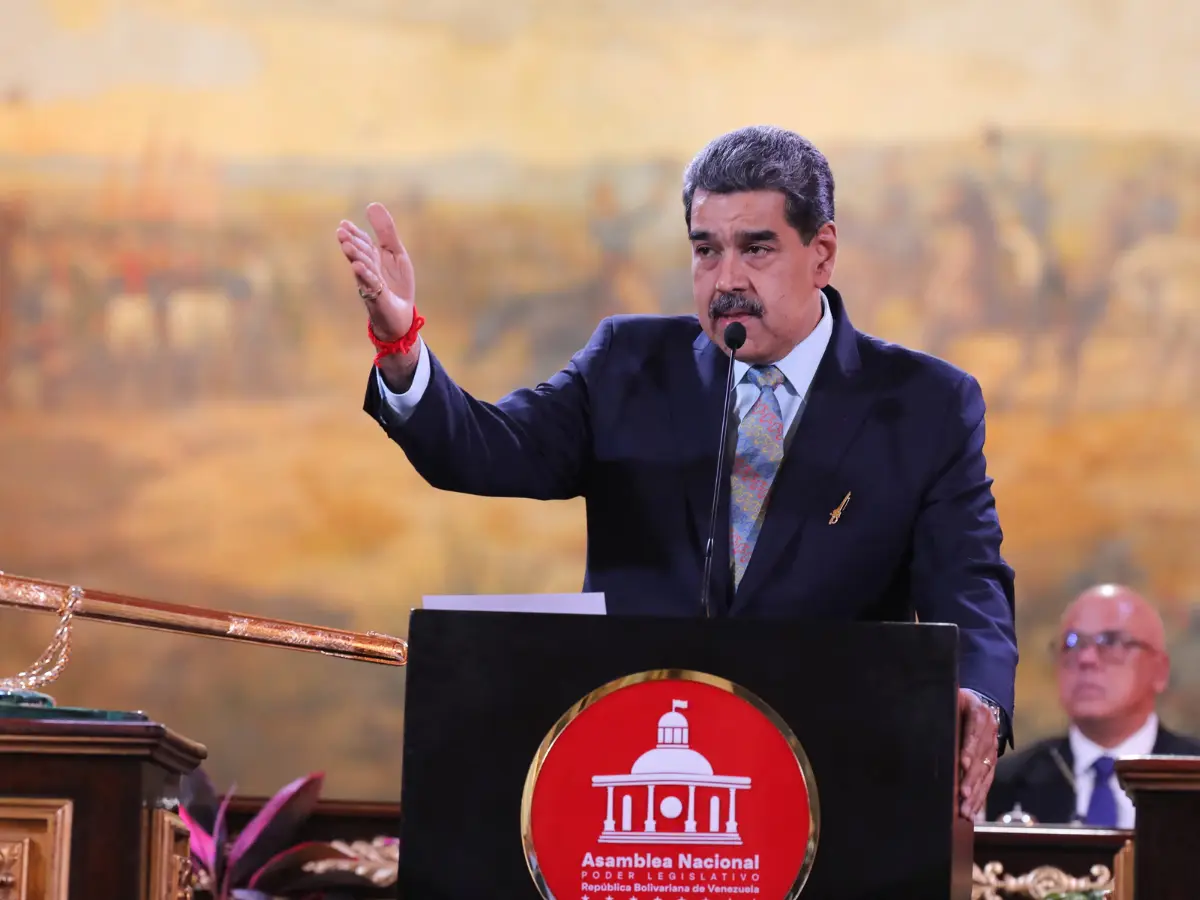
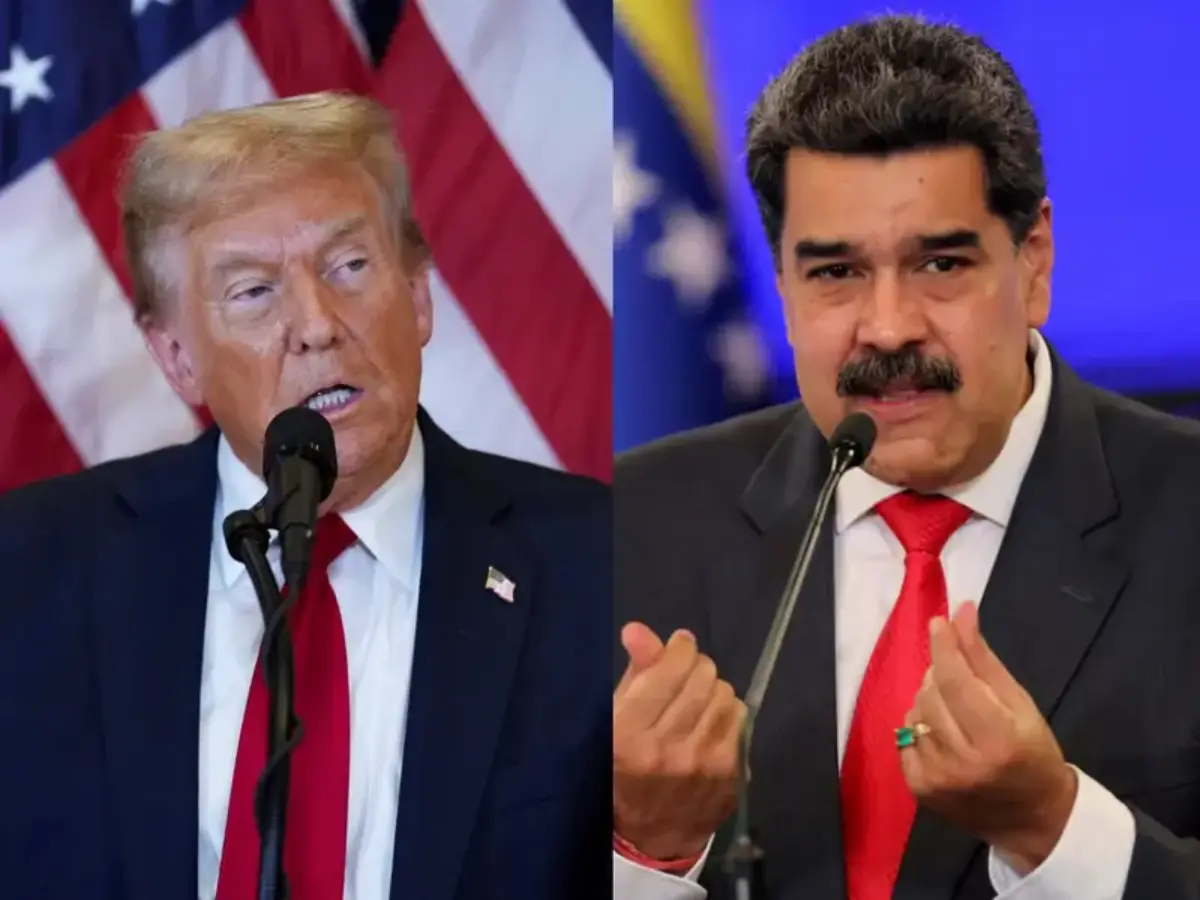
In what is seen as a major escalation and a step towards a possible military conflict, the United States deployed three warships off the Venezuelan coast. days after it increased bounty on Venezuelan President Nicolás Maduro. The Venezuelan President strongly criticised the US and condemned the deployment as an "illegal" and "immoral" attempt at “regime change”. He also accused Washington of planning a “military terrorist attack” on his country and invoked China. He further warned that any form of aggression against Venezuela should be seen as an attack on the entire Latin American and Caribbean region.
Meanwhile, China voiced strong opposition to the US military buildup near Venezuela, warning against foreign interference and expressing support for Maduro. Chinese Foreign Ministry spokesperson Mao Ning said that any actions violating a nation’s sovereignty or the UN Charter are unacceptable. As per reports, the United States is deploying three Aegis-equipped guided-missile destroyers—USS Gravely, USS Jason Dunham, and USS Sampson. The Donald Trump administration has amped up its attack on Maduro stating that it is an effort to target drug cartels in Latin America and protect American citizens.

Read More | US offers whopping $50 million for Nicolas Maduro's arrest, Venezuela hits back with 'Epstein Files' jibe
Maduro mentions China
In a big message to US, Maduro referenced China during a public address on education. While speaking at the closing ceremony of the “First Pedagogical Congress of Bolivarian Teachers,” he introduced his new smartphone—a Huawei device he claimed was a gift from Chinese President Xi Jinping. Maduro highlighted the capabilities of the phone, stating he communicates with Xi via satellite using the device. In a light-hearted moment, Maduro mimicked a phone call in Mandarin, saying “Ni hao, ni hao” (hello) and “Xiexie, xiexie” (thank you), drawing attention to Venezuela’s growing ties with China.
Trending Stories
)
Saudi vs Houthis: Houthis claim missiles & drones used in attack on key Saudi sites
)
Trump announces ‘AI Force’ as debate grows over AI risks and regulation
)
‘End of my career...’: NSA Doval recalls tense Sikkim mission when China captured Indian intelligence team
)
China now makes advanced memory chips without the machines it was banned from buying
)
Aravana prasadam shortage at Sabarimala temple in Kerala triggers protests, TDB questioned
)
Mark Carney mimics Trump in hilarious moment over C$70 billion clean-energy investment; room erupts in laughter
)
Several petrol pumps, other businesses to refuse UPI payments above Rs 2,000 from Oct 16: Is it legal?
)
Man breaks open wall hiding hundreds of books since 15 years
)
Russia holds first parliamentary elections since the beginning of the Ukraine war
)
S Jaishankar, former Army chief among high-profile names issued Delhi SIR notices
66 years of the Indus Waters Treaty: How India and Pakistan settled a bitter river dispute
)
Sikh bus driver assaulted, bus stolen and rammed into cars in England; video surfaces
)
Nigeria: Protesters take to the streets, police fire shots
)
Reacher star Alan Ritchson opens up about alleged blackmail, suicide attempt during difficult period
)
Arvind Kejriwal, family members, Delhi CM Rekha Gupta get SIR notices
)
The Verdict | When precision fails: US commits war crime in Minab school strike, UN finds
)
Russia-Europe tensions: Polish PM warns Russian attacks could test NATO's unity
)
Raphinha hat-trick powers Barcelona to 3-1 win over Sevilla in La Liga
)
Gaza under attack: Health chief's son killed in IDF strikes
)
China may have gained access to US's classified F-35 jets; parts meant for repairs diverted to Hong Kong, sparking Pentagon inquiry
)
Ed Sheeran addresses Macklemore's removal, Gaza conflict during Philadelphia concert: 'I cannot hide how I feel'
)
Harry Brook targets long reign at top of T20I rankings after Sri Lanka sweep
)
West Indies Squad for India Series: Hetmyer included for T20Is, Holder rested
)
Iran sets 7 conditions to end war with US: What are Tehran’s demands?
)
Report: Iran rebuilding Taleghan 2, nuclear site tied to past weapons research, hit twice by Israel
)
Trump defends AI amid growing alarm, announces new 'AI force' and promises an 'AI czar'
)
9 women found dead near Johannesburg: South Africans rally, demand 'enough' to femicide
)
US-Iran war: Tehran sets seven conditions to re-engage in talks with US
)
Russia's deadly Ukraine strikes kill 2 in Sumy, hit Dnipro mall
&im=FitAndFill=(700,400))
Before Extraordinary Minami Minami, these popular K-dramas got Japanese versions
)
‘Will go to any extent’: Pakistan vows to defend Saudi Arabia amid Houthi attacks
)
'Were you here to sell chickpeas?': Wasim Akram criticises Babar Azam's captaincy
)
EXCLUSIVE | Singer Hanita Bhambri on her Toxic debut, working with Vishal Mishra and more
&im=FitAndFill=(700,400))
How many F-35s does Britain, Japan and Israel have?
)
Kampala-Ankara rift deepens: Uganda suspends military ties, seeks Fred Lumbuye's extradition
)
Trump says he'll build an 'AI Force' and appoint a czar, for 'high IQ' people only
)
AI actress Tilly Norwood glitches mid-interview, switches from English to Chinese | Watch
)
US-Iran war: Tehran draws red lines — seven demands before any peace talks
&im=FitAndFill=(700,400))
‘Not the US or China’: These are the countries leading the world in arable land
&im=FitAndFill=(700,400))
Meet top 5 Indian batters with fastest T20I centuries
)
Why Nicolás Maduro is wanted in the US?
Nicolás Maduro, Venezuela’s president since 2013, rose from a working-class background and union activism to lead the United Socialist Party, succeeding Hugo Chávez. His presidency has been plagued by economic collapse, hyperinflation, poverty, and political repression, prompting widespread international criticism. Countries like the US and EU have accused him of election fraud and authoritarianism, while allies like Russia, China, and Iran continue to support him. The U.S. considers Maduro a major drug trafficker, linking him to a 2016 case where his wife’s nephews were convicted of cocaine trafficking. It’s alleged drug money helped fund Maduro’s earlier political campaigns. Several top Venezuelan officials close to Maduro have also faced US sanctions for drug smuggling and ties to terrorist groups.
In 2020, the US charged Maduro with narco-terrorism and offered a $15 million reward for his capture, accusing him of conspiring to flood the U.S. with cocaine to undermine public health and national security. The United States has raised the reward for the capture of Venezuelan President Nicolás Maduro to $50 million, labeling him as a major drug trafficker. This is a significant increase from the previous $25 million bounty, reflecting growing U.S. efforts to bring him to justice. Maduro was first indicted in a Manhattan federal court in 2020 during Donald Trump's presidency, when the initial reward was set at $15 million. Later, under President Joe Biden’s administration, the amount was raised to $25 million and has now doubled.
Read More | '$50 MILLION REWARD': Who is Nicolás Maduro and why is Venezuelan President wanted in US?