

&imwidth=800&imheight=600&format=webp&quality=medium "Those touting India, Russia, China alliance, HOLD YOUR HORSES and read this. It's not...")
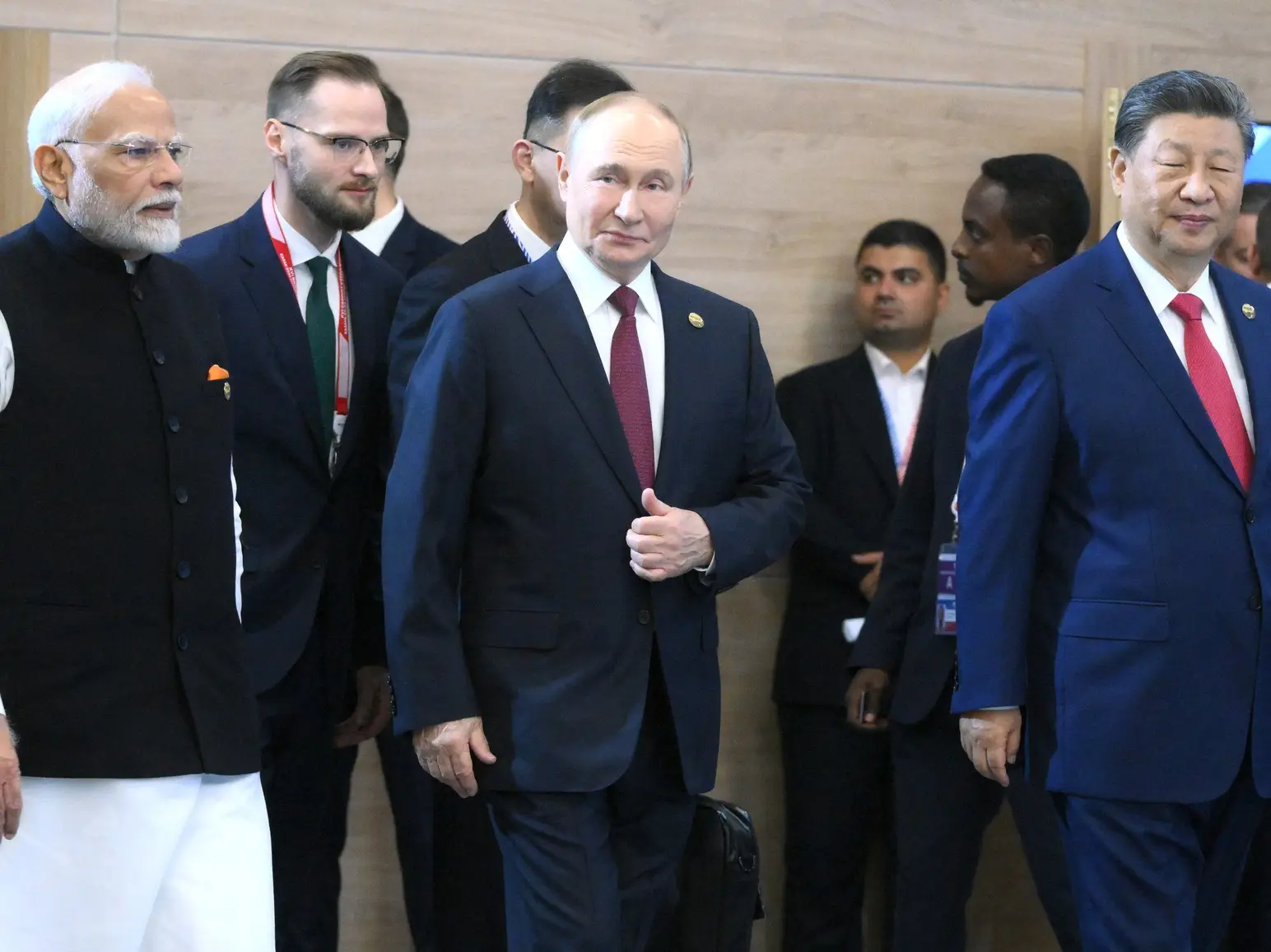
Indian media is awash with stories of how RIC - an imagined alliance of Russia, India and China - could take on the Donald Trump-led US amid tariff threats by the American president against New Delhi. While it might be a good clickbait headline for articles and videos, it is a bad idea. In case you are too busy, here is the fast answer: India-China trust deficit, low alignment of strategic goals, and huge disparities in the economies are factors. The public and political opinion in India is against China. India, China and Russia do not have military capabilities that can take on the US. Political values are different: India is the only true democracy among the three. India’s alliances are generally West-leaning, and therefore the threat perception against the US and West is almost non-existent for it, and not aligned with that of China and Russia.
If you have more time, let me break it down for you.
Why a likely RIC alliance of Russia, India and China against the US is strategically flawed
If formalised, RIC would have the goal of countering the US under Trump’s administration. But it is a deeply flawed and unrealistic geopolitical idea because of mistrust, differing national interests, incompatible economic goals, and asymmetric power dynamics among India, Russia and China.
India-China hostility and mistrust trump even Trump tantrums
There's a massive trust deficit between India and China in spite of their continuing economic cooperation and current alignment against the US. The two countries still have unresolved border disputes, particularly in Ladakh and Arunachal Pradesh, and military tensions despite recent attempts at a thaw.
Trending Stories
&im=FitAndFill=(700,400)&imwidth=180&imheight=135&format=webp&quality=medium)
What is the real meaning behind Pete Hegseth's tattoos?
&imwidth=180&imheight=135&format=webp&quality=medium)
Man marries off wife of 17 years to her lover in Uttar Pradesh
&imwidth=180&imheight=135&format=webp&quality=medium)
Boeing 737 MAX10 gets FAA certification, deliveries expected to begin in 2027
&imwidth=180&imheight=135&format=webp&quality=medium)
Shastri backs Shami comeback; lauds Bhuvi and warns Bumrah on format workload ahead of World Cup
&imwidth=180&imheight=135&format=webp&quality=medium)
US Midterm 2026: What do opinion polls and prediction markets say less than two weeks before voting
&imwidth=180&imheight=135&format=webp&quality=medium)
US midterms 2026: Red seats once deemed safe now appear shaky as Republicans spend big on ads
&imwidth=180&imheight=135&format=webp&quality=medium)
WATCH | Albania protesters set Supreme Court on fire as anti-Rama riots escalate
&imwidth=180&imheight=135&format=webp&quality=medium)
'Tap dancing through a minefield': Musk backs SpaceX-Tesla merger as AI boom fuels rocket firm's first profit
&imwidth=180&imheight=135&format=webp&quality=medium)
Dandiya Nite ’26: Indian High Commissioner hails diaspora as bridge between India and Nigeria
&imwidth=180&imheight=135&format=webp&quality=medium)
Trump says Ilhan Omar 'could go to jail' amid federal probe, calls Somalia a 's***house'
&imwidth=180&imheight=135&format=webp&quality=medium)
Punjab CM Bhagwant Mann allegedly detained for three hours at Delhi airport, fined ₹50,000: AAP
&imwidth=180&imheight=135&format=webp&quality=medium)
What the Mecca Joint Defence Agreement says about withdrawal and military support. Read full text of the pact here
&imwidth=180&imheight=135&format=webp&quality=medium)
Musk ordered Starlink restrictions that caught Ukraine off guard amid escalating tensions: Report
&imwidth=180&imheight=135&format=webp&quality=medium)
Far-left parties, global networks among 54 groups linked to France protests, only 16 are youth outfits: Report
&imwidth=180&imheight=135&format=webp&quality=medium)
Trump calls Le Pen France’s ‘conservative voice’ after riots, but holds back on endorsement
&imwidth=180&imheight=135&format=webp&quality=medium)
Trump considers removing White House press corps to restore historic indoor swimming pool
&imwidth=180&imheight=135&format=webp&quality=medium)
Tiger Shroff firing incident: Four arrested in arms supply probe, two women allegedly sent weapons to Mumbai
&im=FitAndFill=(700,400)&imwidth=180&imheight=135&format=webp&quality=medium)
Priyanka Chopra to Shilpa Shetty: 6 Bollywood actresses and their fitness secrets
&imwidth=180&imheight=135&format=webp&quality=medium)
'US will never part with niche technology' former IAF assistant chief on India's fighter jet ambitions
&imwidth=180&imheight=135&format=webp&quality=medium)
Pujara says 'Samson and Vaibhav cannot be in Playing XI' for India on NZ tour
&imwidth=180&imheight=135&format=webp&quality=medium)
'What's wrong with you? Are you a sick person?': Trump at it again as he snaps at reporters, faces backlash
&imwidth=180&imheight=135&format=webp&quality=medium)
Over 100 US lawmakers urge FBI to probe foiled Hindu temple shooting as hate crime
&im=FitAndFill=(700,400)&imwidth=180&imheight=135&format=webp&quality=medium)
New OTT releases this week (October 19-25, 2026): Gajab Raat to Chaar Yaar-8 titles to watch during Dussehra week on Netflix, Prime Video and more
&imwidth=180&imheight=135&format=webp&quality=medium)
Ukrainian drone airlifts wounded soldier in what is likely a world first
&imwidth=180&imheight=135&format=webp&quality=medium)
Trump says he wants Zelensky to 'make a deal' with Russia, asks Putin to release American prisoner Stephen Hubbard
&imwidth=180&imheight=135&format=webp&quality=medium)
The Verdict | Trump, Putin and Xi: A superpower triangle that could reshape global diplomacy
&imwidth=180&imheight=135&format=webp&quality=medium)
India moves to buy 10,000 more AI chips for a national compute pool open to startups
&imwidth=180&imheight=135&format=webp&quality=medium)
After France unrest, Italy tightens security amid violent protests in Milan
&imwidth=180&imheight=135&format=webp&quality=medium)
'They are not even telling us' - Mysterious metallic object discovered in Minnesota field
&imwidth=180&imheight=135&format=webp&quality=medium)
Cattle-feed bran in biscuits, detergent in milk: FSSAI acts against 3 companies
&imwidth=180&imheight=135&format=webp&quality=medium)
US midterms 2026: With Republicans spending big, Bloomberg opens his wallet for Democrats. Here's how much he is pouring
&imwidth=180&imheight=135&format=webp&quality=medium)
Iran rejects US talks until demands are met, rules out moving enriched uranium out of the country
&imwidth=180&imheight=135&format=webp&quality=medium)
Feds obtain DNA evidence that could prove Ilhan Omar married her brother: Report
&imwidth=180&imheight=135&format=webp&quality=medium)
Ramayana advance booking: Ranbir Kapoor, Yash's film cross $500K ahead of Diwali release
The 2020 Galwan Valley clash led to casualties on both sides, severely damaging diplomatic trust, coming close on the heels of the Doklam clash along the border with Bhutan. Despite ongoing diplomatic engagements since 2024, India and China have not fully restored trust.
Indian public and politicians view China with suspicion
In the court of Indian public opinion, China is still the enemy. Any move toward an alliance involving China would lead to political backlash in India, and public outrage.
India is not anti-US, per se, but seeks to maintain its strategic autonomy. India has acted as a democratic counterbalance to China in the Indo-Pacific, which in fact is the reason why it's seen by the West as an important player in the region, and is invited to all kinds of strategic alliances like the Quad.
China, on the other hand, seeks regional hegemony, and given the context of Taiwan invasion fears and South China Sea territorial ambitions, can best be called a regional bully. Beijing dreams of a China-led world order under the single-party rule of communism, which fundamentally clashes with India's multi-party democratic ethos.
Russia and China jointly oppose the US-led world order, while India selectively aligns with the West when in its interest: this is why India is invited to G7, and is a key player in the G20.
India is an active partner of the US and West
India is an active partner in the India-US-Japan-Australia Quad, which is fundamentally about checkmating China in the region.
The IPEF or Indo-Pacific Economic Framework, is another grouping that goes against a potential India-China alignment. India supports a rules-based international order and freedom of navigation, things that are in contrast to China’s assertiveness in the Indo-Pacific.
Russia’s tilt towards China at India’s expense
Russia and China have increasingly been sharing notes for a strategic alignment against the West's opposition to them, particularly since the Ukraine war.
Russia has become economically and strategically dependent on China, specifically in oil and gas trade, where Beijing is the biggest buyer.
China remains the economic lifeline for Russia amidst Western sanctions over the war. This has led Russia to covertly support China on Taiwan and the South China Sea. In both of these, India does not share the positions of China and Russia.
Russia-China friendship can impact India-Russia ties
While India has had a long-standing economic and defence partnership with Russia, the question remains if Russia will be neutral in an India-China conflict scenario.
India has not had the best treatment recently in groupings like the Shanghai Cooperation Organisation. SCO, which is dominated by China and Russia, recently disappointed India by not including language on terrorism in the wake of the Pahalgam attack, during a ministerial meeting.
India has also been diversifying defence suppliers away from Russia, buying its fighter jets from France and drones from the US and Israel, for instance. India's defence purchase dependence on Russia is already waning.
Except for the current downturn, the India-US strategic partnership has been growing
In the post-9/11 world, India and the US extended their cooperation in defence with arrangements and pacts like BECA and COMCASA. The two nations continue intelligence sharing, counterterrorism operations, and have advanced technology cooperation, like in the iCET initiative.
In spite of the Trump-led tensions, the US is India’s largest export market, worth over $130 billion.
The current levels of India-US cooperation in investment, technology, education and people-to-people cooperation cannot immediately be replaced by Russia or China.
Suddenly aligning against the US could jeopardise India's critical economic sectors and affect its national development.
No meaningful economic convergence between India, China and Russia
India and China are regional economic competitors, not partners. India has a major trade deficit with China. The Chinese infrastructure project, the Belt and Road Initiative (BRI) was seen by India as a geopolitical threat. Except for energy and defence deals, there's not much that Russia’s economy can offer India.
An issue of values and political systems: Democratic India vs autocratic Russia and China
India is a vibrant democracy with civil liberties, electoral institutions, and a free press, while China is a single-party authoritarian regime, and Russia has become increasingly autocratic with one ruler, Vladimir Putin, at the helm for decades now. Thus, India is a natural ally of liberal democracies in the West rather than with authoritarian regimes. An alliance with Russia and China could damage India’s credibility as a leader of the democratic world.
Can India, China and Russia have a military or strategic alliance?
It's tough as the ingredients for such an alliance are missing: a shared threat perception, mutual trust, and operational compatibility.
India does not trust China, and Russia lacks the capacity or neutrality to bridge this gap. There is no institutional structure or commitment, or military planning to coordinate the three nations in case of a joint external threat.
China is really the big brother among the three
With Russia boxed in by years of sanctions and economic apartheid from the West, China is really the big brother among the three, both in military and money.
China’s GDP is nearly 10 times that of India. In spite of Western rhetoric, China still has more than 30 per cent of global manufacturing, while India is only 3 per cent. Russia's economic dependency on China is making it a junior partner in the arrangement.
India could be marginalised or relegated to a junior role in a China-dominated alliance.
US would retaliate against any strategic alliance between India, Russia and China
US retaliation to any strategic, defence or economic alliance between India, Russia and China could be severe. Already, Trump has threatened BRICS - a grouping of the three nations that also includes South Africa and Brazil. He has slapped tariffs on India, China and Brazil.
Any alignment by India with China and Russia might draw New Delhi into foreign conflicts it has nothing to do with, particularly Ukraine and Taiwan.
Furthermore, it would be a contradiction of India’s non-alignment policy.
A huge risk for India's international standing
Any alignment with Russia and China would dent India's aspirations to play a global role. India's participation in groupings and fora like G7, G20, BRICS, Quad, IPEF will be affected. India's continuing aspiration for a permanent seat at the UN Security Council could take a hit.
India’s image as a responsible, independent, democratic actor in the international system would be damaged if it aligns with Russia and China, and undermines India’s leadership of the Global South.
Don't buy into the RIC narrative
Therefore, next time you see that YouTube video with a thumbnail that screams ‘India, China, Russia to take on Trump’, please take these factors into account. RIC is neither feasible nor beneficial for India. It would be unstable and counterproductive.
India’s current strategy is the best: multiple alignments, balancing relations with the West while having open lines with Russia and regional powers. Keeping its strategic autonomy intact is the way forward for India. Attempting to join an authoritarian bloc to counter the US - and probably only as long as Trump is in power - would undermine India’s global aspirations, harm its economy, alienate vital partners, and trap it in alliances that serve others’ interests more than its own.

