
&imwidth=800&imheight=600&format=webp&quality=medium "Trump's dream prison in trouble? Judge halts ‘Alligator Alcatraz’ construction to protect Florida panthers and endangered bats")
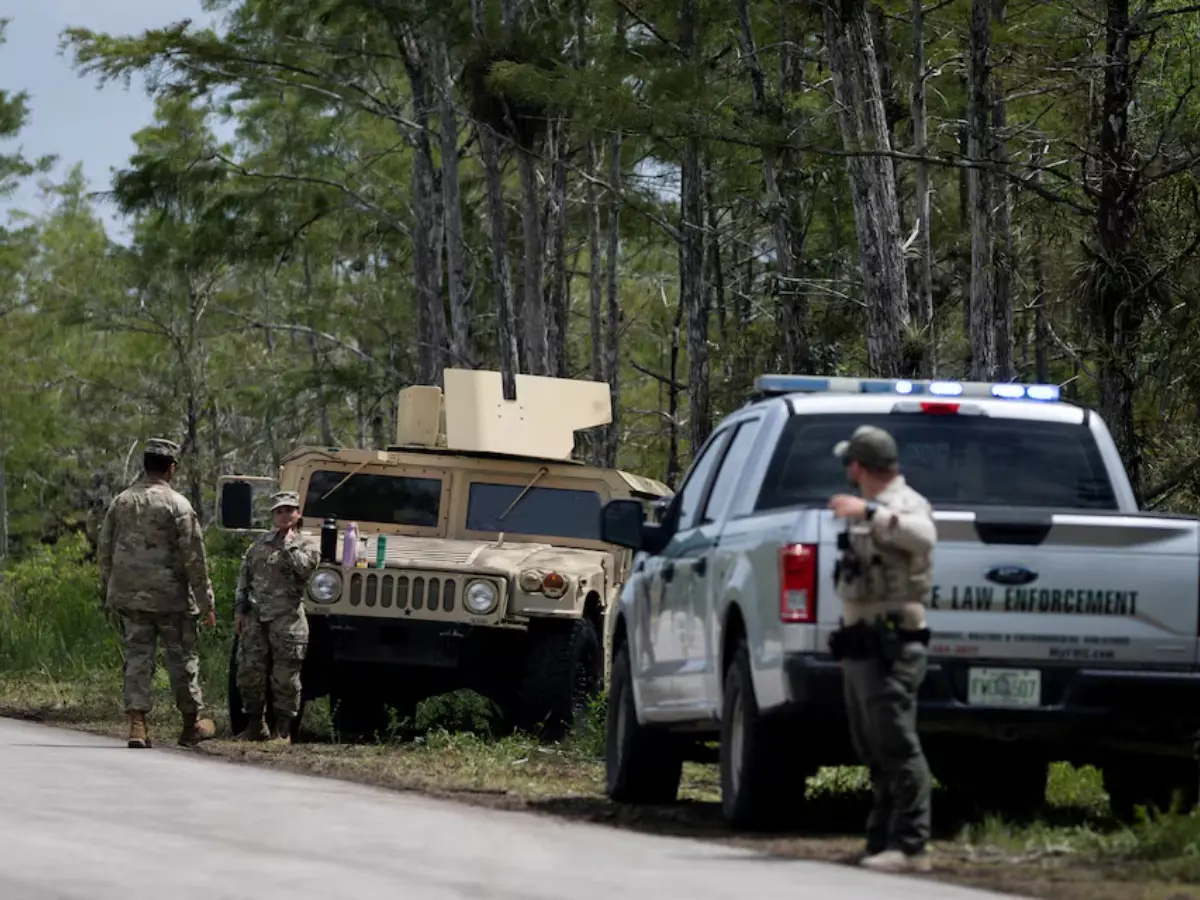
A federal judge has ordered a temporary halt to construction work at a controversial detention centre in Florida’s Everglades, nicknamed “Alligator Alcatraz”, over concerns it could be damaging the fragile ecosystem. US District Judge Kathleen Williams ruled on Thursday that all new development at the site must stop for at least 14 days while court hearings continue. She said the plaintiffs, who include several environmental groups, had shown enough evidence of “ongoing environmental harms” to justify the pause.
“I think that evidence is sufficient to support the plaintiffs’ claims,” said Judge Williams, an Obama-era appointee. She pointed out how many US presidents had supported efforts to keep the Everglades “pristine”.
Also read: Can Trump order a new census? US president pushes to leave out ‘illegal' undocumented immigrants

What work is now on hold?
The judge’s order halts any further paving, lighting installation, filling, fencing or excavation at the site, which is near the Big Cypress National Preserve, a protected area that is home to endangered animals like the Florida panther and Florida bonneted bat. She described the plaintiffs’ request for a restraining order as “pretty reasonable” and noted the importance of avoiding further damage while legal arguments play out.
What the environmental experts are saying
Trending Stories
)
Trump says Russia has ‘lost control’ of its diesel industry, calls for end to ‘ridiculous, never-ending’ war
)
Asian Games: Indian women's hockey team thrash Indonesia 17-1, blasts 36 goals in 2 matches
)
Putin's United Russia party wins 355 seats in Duma election; 4 other parties cross threshold to enter parliament
)
Delhi Air pollution: Strict crackdown on waste burning
)
'I never imagined…': Bihar-born Japan cricketer Abhishek Anand on historic India clash
)
‘0% chance’: Nvidia CEO Jensen Huang dismisses AI extinction fears by 2030
)
Samay Raina-Mukesh Chhabra controversy explained: What happened over girlfriend joke on India's Got Latent?
)
Trump's helipad event overshadowed by audio failure as major TV networks suspend pool coverage
)
Russia-Ukraine war: Russian strikes knock out three of Ukraine's largest steel plants
)
Four decades after leaving Kolkata, the Birlas may be coming back for more
)
Glitch in the matrix caught on camera: Woman vanishes after talking to reporter
)
IIT Bombay tensions ease after three-hour open house; director’s assurances pacify students
)
Samsung raises Galaxy S26 prices by Rs 20,000: Here’s what each model now costs
)
J&K Assembly Session begins amid chaos: BJP, ruling alliance clash as statehood demand dominates
)
Bessent meets China’s He Lifeng to prepare for Trump-Xi summit
)
8,000 bees worth over $20,000 stolen from hives in Queensland
)
US and China vie for AI dominance as calls grow for regulation | Gravitas
)
The Verdict | The Mecca Agreement is under scrutiny as Houthis attack Saudis
)
Saudi Arabia exits China-led mBridge digital currency platform amid Saudi-Houthi conflict
)
'Lot of things to learn from experienced players': Jayasuriya backs Rohit, Virat for 2027 ODI World Cup
)
Taylor Swift has a 'proud wife' moment as Travis Kelce scores first touchdown of season: 'That’s my husband!'
)
Chancellor Friedrich Merz vows to stay on as exit polls signal major poll setback
)
North Korea's nuclear tests triggered 1,399 earthquakes: Earth is still shaking | Gravitas
)
Mahabharat actor Saurav Gurjar arrested in Hyderabad, sent to 14-day judicial custody in sexual exploitation case
&im=FitAndFill=(700,400))
New OTT releases this week (September 21-27, 2026): Shaque: Trust No One, Hunkkaar, Don’t Be Shy- 5 new titles coming to Netflix, Prime Video and more
)
From ‘communist’ to ‘great mayor’: Trump praises Mamdani after New York meeting, discusses immigration and housing
)
WATCH | Mysterious lights over Tehran caught on video. Drone, aircraft or something else?
)
White House TV pool halts Trump coverage after CNN barred from UNGA events
)
Iranian airlines to shut worldwide on Sept 23, Bessent warns of US banking ban
)
China expels top generals Zhang Youxia, Liu Zhenli over ‘disloyalty’, corruption
)
Pilot recreates Mona Lisa in sky over Oklahoma and Arkansas in four-hour flight: VIDEO
)
Fitna Al-Khawarij: Decoding biggest security threat to Pakistan | Gravitas
)
Jailer 2: Vidya Balan joins Rajinikanth's upcoming film as Kantha | Watch
)
Microsoft executive called AI training the ‘largest theft of labour in human history’
)
Medieval books contain traces of a 3,700-year-old virus that recently killed 500,000 animals
)
40-foot waves crash into cruise ship in dangerous stretch near Antarctica. Watch
)
Explainer: Why rare-earth export licences and Board of Trade are US priorities ahead of Trump-Xi summit
)
BTS fans mock iHeartRadio’s day 2 turnout after short set controversy
)
The Scandal: Why so scandalous? Ji Chang Wook leaves you gasping for air
Experts told the court on Thursday that the newly paved areas were already affecting the landscape. Using aerial photos and videos, they warned of increased stormwater runoff and pollution caused by the fresh pavement, which they said does not allow water to soak in. Wetlands ecologist Christopher McVoy explained that water in the flat Everglades can rise up to two feet in the rainy season, carrying oil and debris from the roads into the sensitive ecosystem.
“It’s like pouring water on glass,” McVoy said, referring to the non-porous pavement. “It doesn’t go in; it runs off. And wherever it runs into is potentially a concern,” he added. Geologist Dillon Reio estimated that more than 20 acres of pavement had been added and warned that this would lead to chemicals contaminating the land and water, harming both aquatic and land-based species.
What happens next in court?
This was the second day of hearings about the environmental impact of the detention facility. The state has yet to present its witnesses, with the next court session set for Tuesday. Although Judge Williams offered to continue hearings into Thursday afternoon to avoid a restraining order, state lawyers had already released their witnesses and were not prepared to proceed. The case has drawn significant attention due to the sensitive location of the site within America’s largest wetlands and its proximity to endangered wildlife habitats.
